The proposal that humans domesticated themselves, selecting over many generations against aggression and for tolerance, and that this produced our anatomy, our temperament and possibly our capacity for culture. The pattern it points to is real. The mechanism is contested.
Domesticated animals share a set of traits that have nothing obviously to do with what they were bred for.
Smaller teeth and jaws. Shortened faces. Reduced sexual dimorphism. Smaller brains relative to body size. Floppy ears, curly tails, and patches of white or unpigmented fur. Extended juvenile behaviour into adulthood, including play and curiosity. Reduced reactive aggression, and often altered reproductive cycling.
This cluster appears in dogs, cattle, pigs, horses, rabbits and others, selected by different people for different purposes at different times. That it recurs suggests a common developmental cause rather than a common breeding goal.
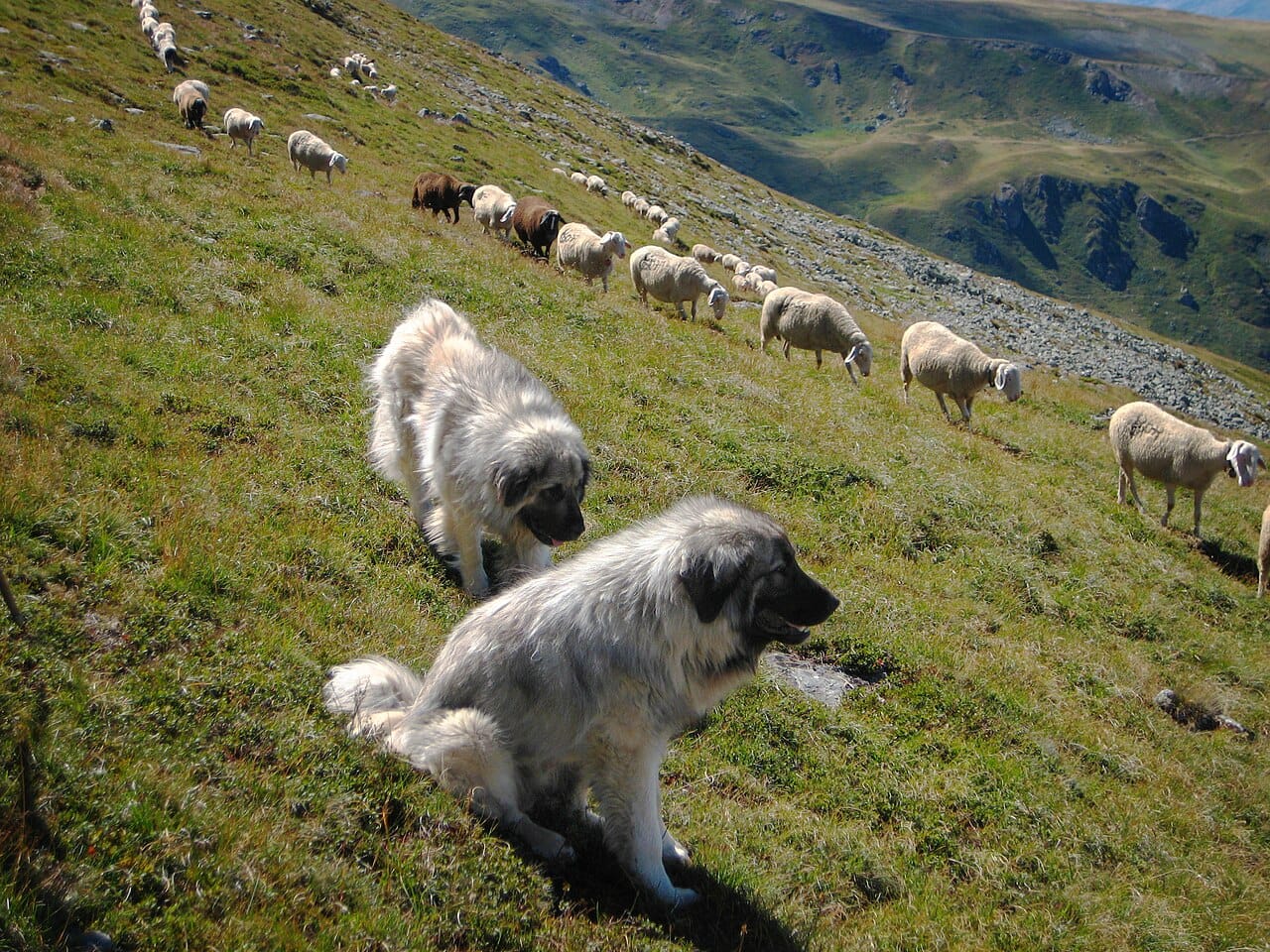
Dmitry Belyaev's fox experiment, begun in Siberia in 1959, tested this directly. Silver foxes were selected on one criterion only, tolerance of human approach. Within a few dozen generations the selected line showed floppy ears, patched coats, curled tails, shortened snouts and altered hormone cycling, none of which was selected for. The experiment has been criticised because the founding population came from fur farms and may already have been partly tame, which weakens but does not remove the result.
The leading explanation is developmental. Adrian Woodward and Richard Wrangham, following Belyaev, propose that selecting for tameness selects for reduced neural crest cell activity during embryonic development. Neural crest cells contribute to the adrenal glands, to pigment cells, to cartilage in the face and ears, and to parts of the nervous system, so a single developmental change would produce the whole cluster.
Anatomically modern humans show the same pattern relative to earlier Homo and to Neanderthals.
Faces became shorter and less projecting. Brow ridges reduced substantially. Teeth became smaller. Sexual dimorphism decreased. Brain size actually declined somewhat over the last twenty thousand years. Skeletal robusticity fell.
Wrangham's proposal, developed at length in The Goodness Paradox in 2019, is that this results from selection against reactive aggression within groups.
His proposed mechanism is specific and is what distinguishes the hypothesis from a vague claim about becoming gentler. Language allows conspiracy. Once individuals can coordinate covertly, a group of subordinates can plan and execute the killing of a domineering individual with little risk to themselves. Wrangham argues that capital punishment of aggressive males by coalitions is the selective agent, and that this is a form of selection no other species can exert.
The result on this account is a species with unusually low reactive aggression, sudden and unprovoked violence, and unusually high proactive aggression, planned and coordinated violence including warfare. Wrangham argues the two are dissociated in humans in a way that explains what otherwise looks contradictory.
Bonobos are the strongest supporting case, because they appear to have undergone the same process without any human involvement.
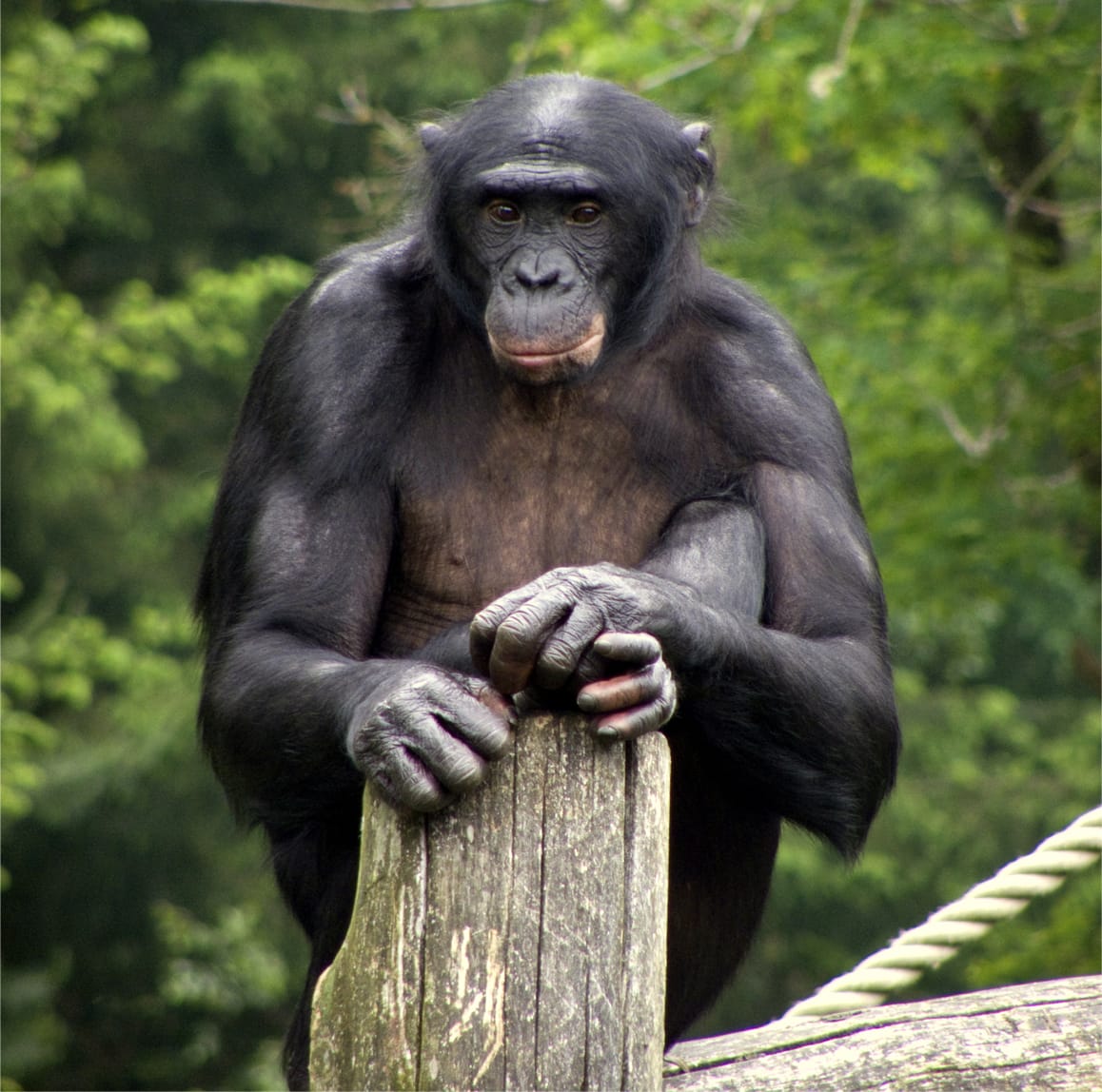
Relative to chimpanzees, with whom they share a recent ancestor, bonobos show reduced aggression, smaller canines, retained juvenile skull features, greater tolerance of strangers, and a social structure in which coalitions of females constrain male behaviour.
Brian Hare and colleagues have argued this is self-domestication driven by ecology: bonobos live south of the Congo River in an environment with less feeding competition and no gorillas, which reduced the payoff to aggression. Selection for tolerance followed, and the syndrome came with it.
The domestication syndrome itself has been challenged. A 2020 analysis by Kathryn Lord and colleagues argued that the evidence for the syndrome as a coherent cluster is weaker than assumed, that the traits do not co-occur as reliably as claimed across species, and that the neural crest explanation is not well supported. This is a challenge to the foundation rather than to the human application.
The human anatomical changes have alternative explanations. Reduced facial robusticity is plausibly a consequence of cooked and processed food requiring less chewing force. Reduced brain size correlates with reduced body size and may reflect that rather than domestication.
The execution mechanism is difficult to evidence. Ethnographic accounts of coalitional killing of aggressive individuals exist in several forager societies, but reconstructing the frequency and consistency of such selection over the required timescale is not currently possible.
And the direction of the argument is hard to test. Since the hypothesis predicts a suite of traits that have several other candidate causes, observing the traits does not distinguish it from the alternatives.
The hypothesis makes at least one prediction that can be examined: that human and bonobo populations should show genetic signatures of selection on genes implicated in neural crest development. Some studies have reported such signals in both species, and the finding is not yet firmly established.
It is classified as a hypothesis because the pattern is well documented, the proposed cause is coherent and specific, and the evidence connecting them is correlational. It sits alongside the grandmother and endurance running hypotheses as an account of human evolution that explains a great deal, predicts less, and awaits a test that would separate it from its competitors.