The safe management of human waste. It has saved more lives than any medical treatment, it is the least discussed of the major public health measures, and roughly a fifth of the world's population still lacks it.
Faecal contamination of water and food transmits cholera, typhoid, dysentery, hepatitis A, polio and a long list of parasitic worms.
Separating human waste from drinking water breaks that route, and it does so for the whole population at once rather than one patient at a time.
The historical effect is large and measurable. Mortality in industrial cities fell substantially in the late nineteenth and early twentieth centuries, and analyses of the timing attribute much of the decline in infectious disease death to water and sanitation improvements rather than to medical treatment, most of which arrived later.
Diarrhoeal disease remains among the leading causes of death in children under five worldwide, and it is overwhelmingly a sanitation and water problem rather than a treatment problem.
Sanitation also affects nutrition. Repeated intestinal infection in early childhood impairs absorption and is associated with stunted growth, so its consequences persist after the infections resolve.
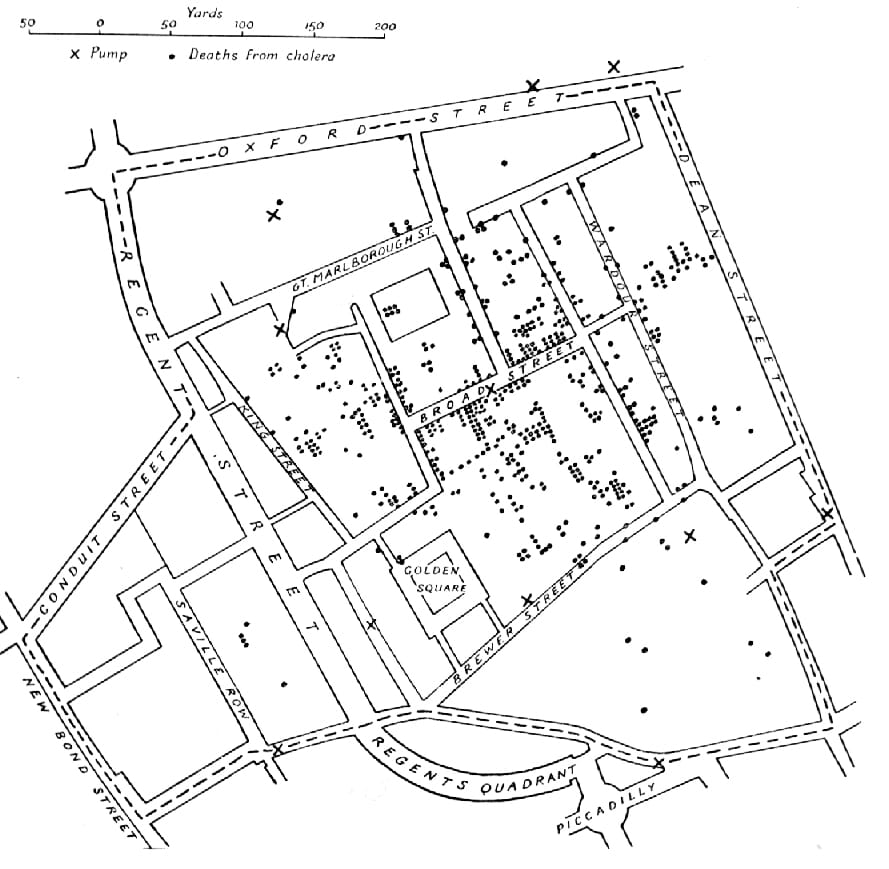
The 1854 cholera outbreak in Soho, London, is the founding case of epidemiology, and the details are more interesting than the summary.
Prevailing opinion held that cholera spread through bad air. John Snow argued it spread through contaminated water and had published that argument before the outbreak without persuading anyone.
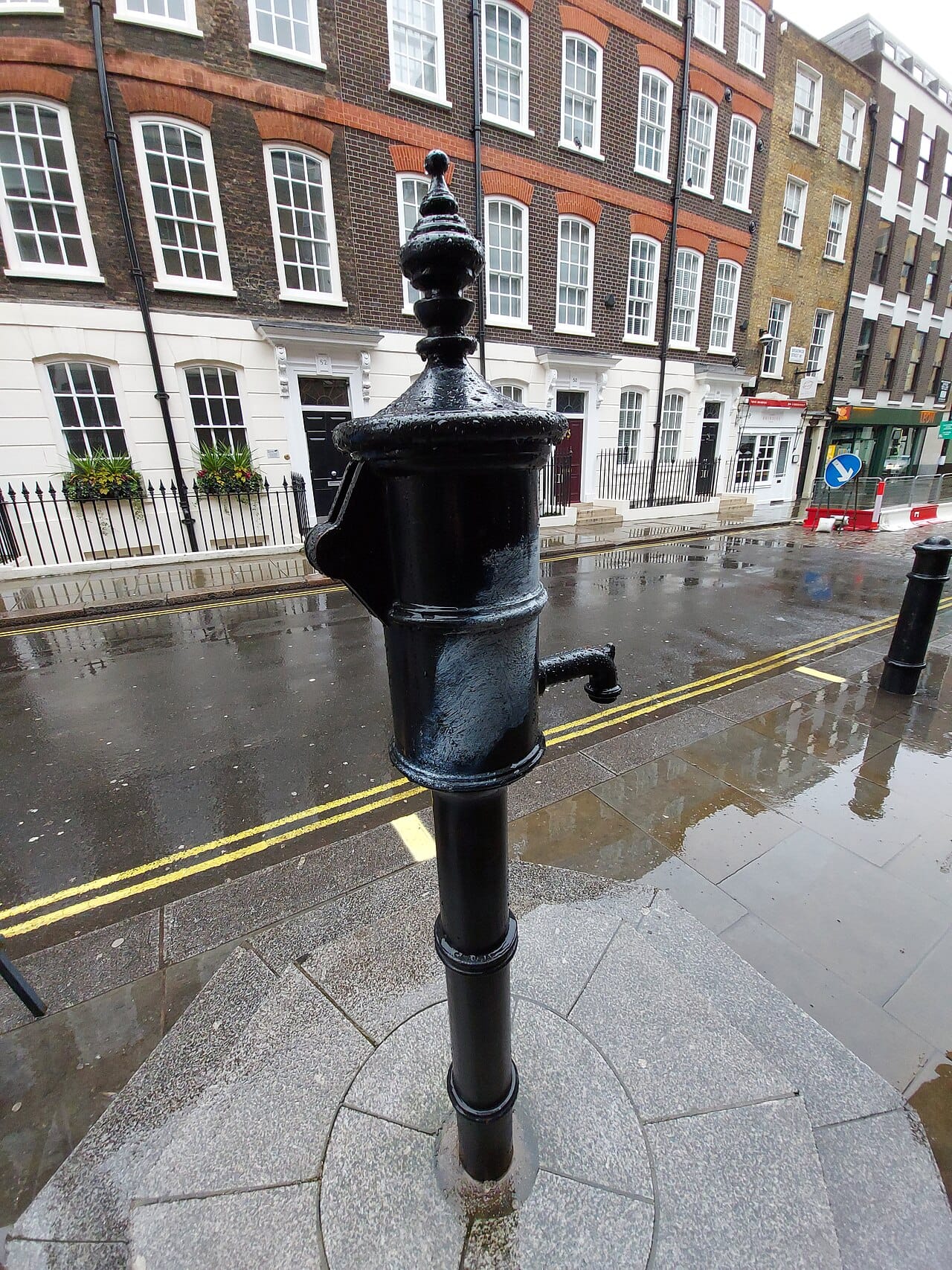
He mapped deaths and found them clustered around one public pump on Broad Street. He also pursued the anomalies, which is the part usually omitted: a workhouse in the middle of the cluster had few cases and had its own well, and a brewery had none, its workers drinking beer. A woman who had died in Hampstead turned out to have had Broad Street water delivered because she preferred the taste.
He persuaded the parish to remove the pump handle. The outbreak was already declining, so the removal probably ended fewer cases than the story implies, and the map and the anomalies were the real contribution.
Snow's larger study compared households supplied by two water companies drawing from different points on the Thames, one above and one below the main sewage outfall, and found death rates differing by roughly a factor of eight. That is the stronger evidence, and it was still not immediately accepted.
London's sewage discharged into the Thames, which was also a water source. The summer of 1858 was hot, the river stank so badly that Parliament considered relocating, and funding for a sewer system was approved within about eighteen days after decades of inaction.
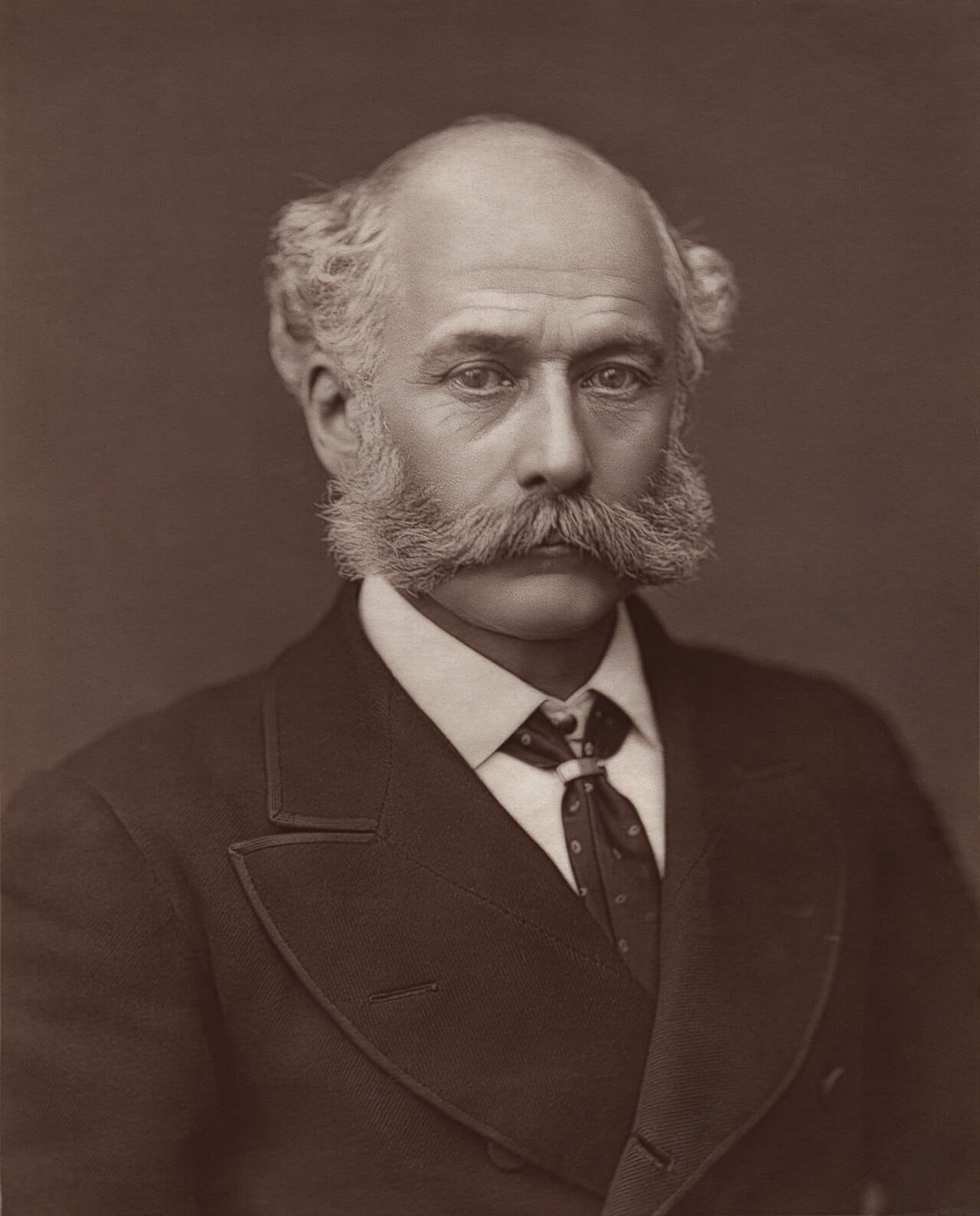
Joseph Bazalgette designed a system of interceptor sewers running parallel to the river, carrying sewage downstream of the city, driven by gravity with pumping where needed.
He sized the pipes for the largest flow he could foresee and then doubled the diameter, on the reasoning that unforeseen things always happen. The system served a city several times larger than the one it was built for and much of it is still in use, and the decision is a standard example in engineering teaching of designing for a future you cannot specify.
The motivation was the smell rather than the science. The work proceeded on the miasma theory, which was wrong, and it worked anyway because removing sewage from the water supply prevents cholera regardless of why you thought it would.
Containment separates waste from people at the point of use. This can be a sewer connection, a septic tank or a well-built pit latrine, and an unsafe pit is not sanitation.
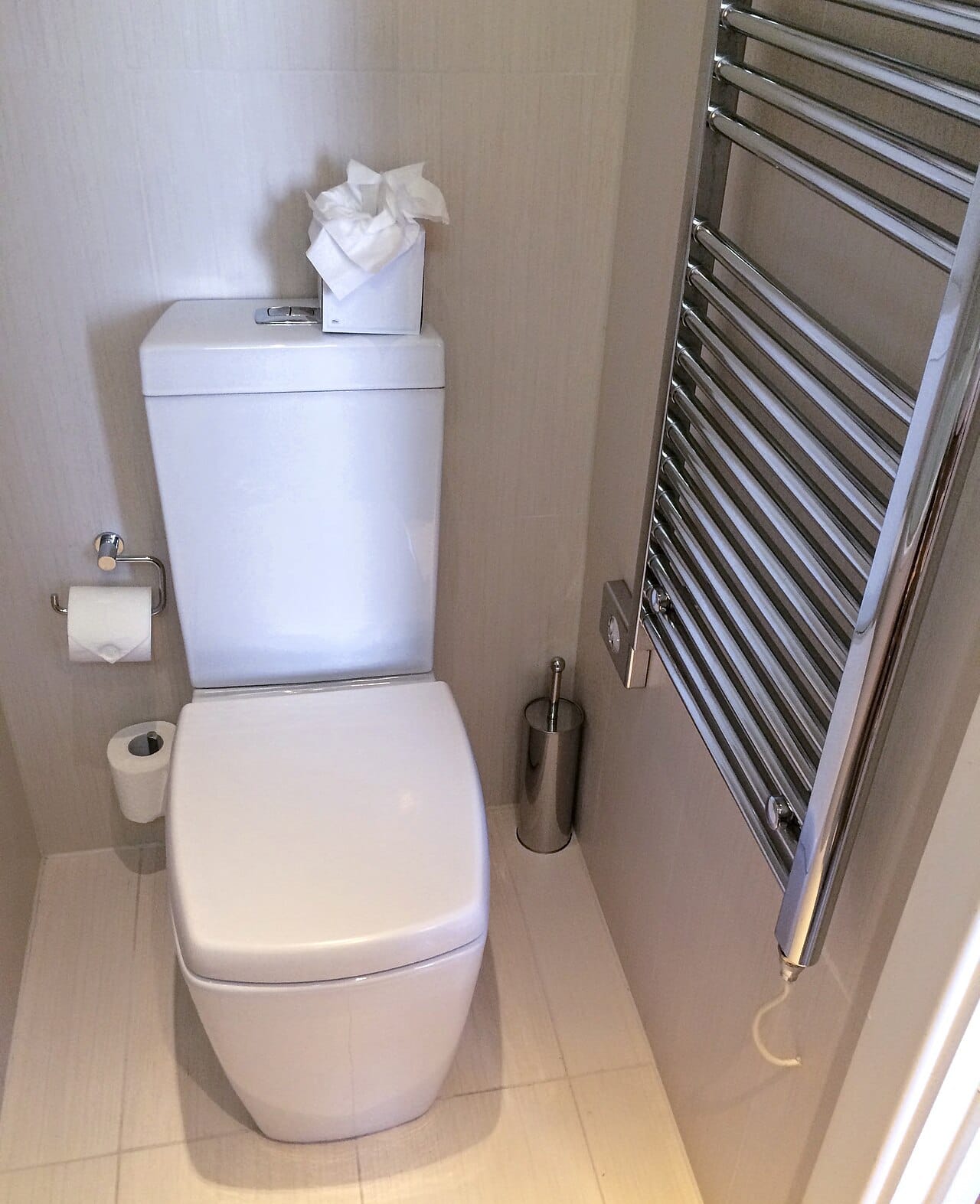
The water seal, a bend holding water that blocks gas from the sewer, is a small component with a large effect, and drying out is how disused drains admit smells and vermin.
Conveyance moves waste away, by sewer or by emptying.
Treatment removes solids, then uses bacteria to break down organic matter, then disinfects. Discharging untreated sewage into a river simply relocates the problem downstream.
Safe disposal or reuse of the final sludge closes the chain, and reuse in agriculture requires treatment sufficient to kill pathogens.
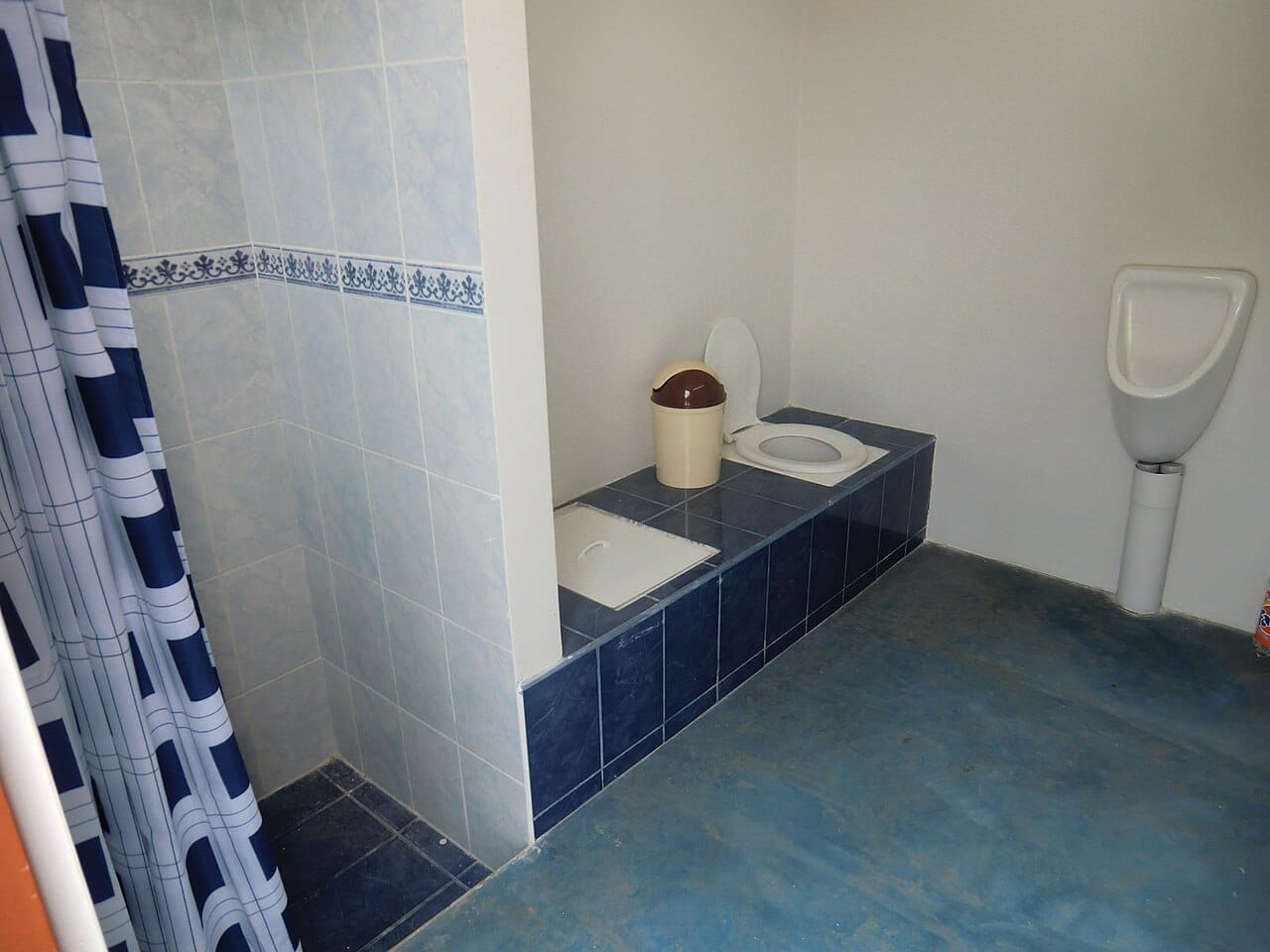
Sewered systems are not the only answer and are frequently the wrong one. They need abundant water, dense settlement and continuous power, and container-based and dry systems can be safer where those are absent. The cover image shows a urine-diverting dry toilet, which separates urine from faeces so the solids dry rather than putrefy.
Roughly three and a half billion people lack safely managed sanitation, and hundreds of millions still practise open defecation, though that number has fallen substantially.
Progress has been faster on water than on sanitation, partly because water is more visible and more politically rewarding.
Building toilets is not sufficient. Programmes that constructed latrines without addressing use, maintenance and emptying have repeatedly found them unused or abandoned, and approaches focused on changing behaviour and on community commitment have generally outperformed construction targets, with the evidence on specific methods being mixed and contested.
Faecal sludge management is the neglected half. Many cities have toilets connected to tanks that nobody empties safely, so the waste reaches the environment anyway, and the sanitation statistics can look better than the reality.
Sanitation is the intervention with the best evidence and the least glamour. It prevents disease rather than treating it, it works on whole populations, and its benefits appear as things that do not happen.
The Broad Street story is also the standing lesson in what evidence can do before a mechanism is known. Snow was right about transmission decades before anyone identified the organism, and Bazalgette solved the problem while holding a theory that was wrong, which is a reminder that acting on a pattern can be justified before the explanation arrives.