Identifying the people an infected person may have exposed, so they can be tested, treated or asked to isolate before they infect others. It is a core public health method, it is labour-intensive, and its effectiveness depends heavily on the disease.
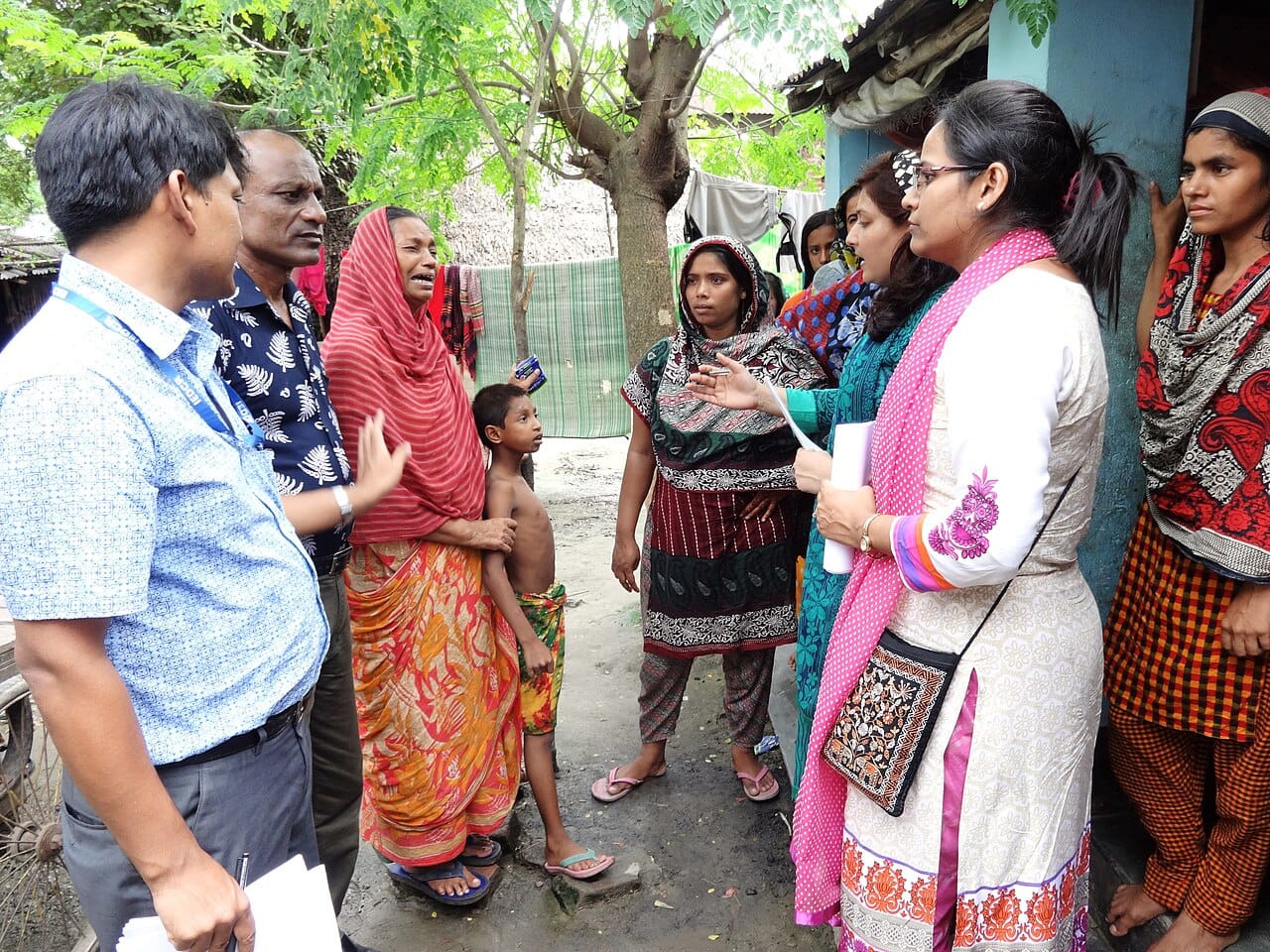
A confirmed case is interviewed to establish where they have been and whom they have been near during the period they were infectious.
Contacts are then classified by exposure risk, and the definition varies by disease, typically involving proximity, duration and setting.
Contacts are notified, which is usually done without identifying the index case, and are offered testing, prophylaxis or vaccination where these exist, and are asked to monitor for symptoms or to isolate for the incubation period.
Contacts who become cases are then traced in turn, which is what makes the method a chain rather than a single step.
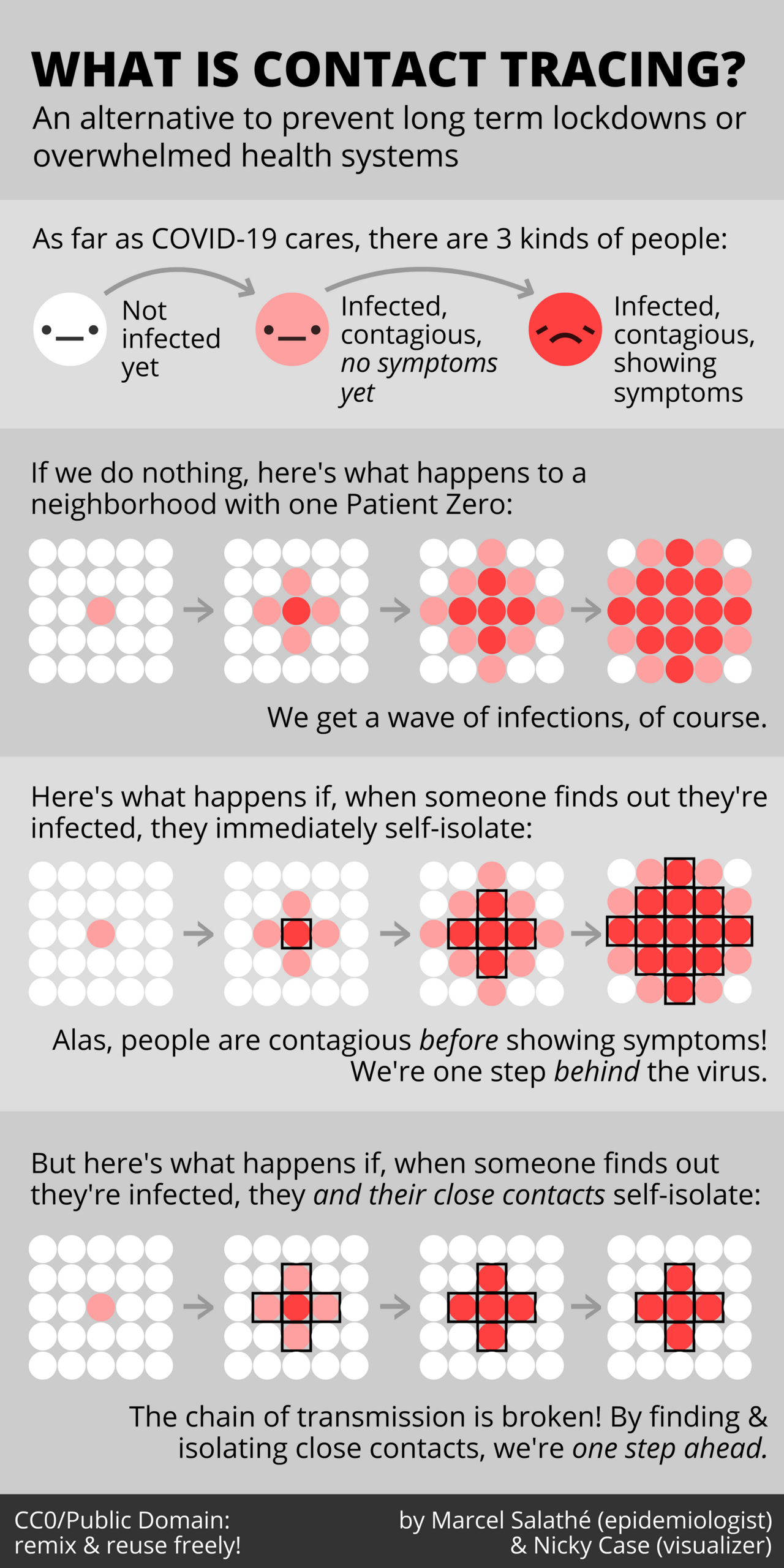
The purpose is to intervene before onward transmission occurs, so timeliness governs everything. A contact reached after they have already infected others has been reached too late.
Three properties of a disease determine whether tracing can control it.
The proportion of transmission occurring before symptoms appear. If most transmission happens after a person feels ill, they will usually have sought care and can be traced in time. If a substantial share occurs before symptoms, contacts are exposed before anyone knows to look for them.
The incubation period relative to how fast tracing can be completed. A longer incubation period gives more time to reach contacts before they become infectious.
The number of contacts per case. A disease requiring close prolonged contact produces a tractable list; one transmitted through casual contact in crowded settings does not.
This is why tracing works well for tuberculosis, sexually transmitted infections and Ebola, and poorly for influenza and for respiratory viruses with substantial pre-symptomatic transmission.
Ebola is the clearest success. Transmission requires contact with bodily fluids and occurs mainly once a person is visibly ill, so contacts are identifiable and reachable, and tracing combined with isolation has repeatedly ended outbreaks.
The most consequential application was the eradication of smallpox.
Mass vaccination alone was not achieving elimination in the highest-burden regions. The strategy shifted to surveillance and containment: find every case, isolate them, and vaccinate their contacts and their contacts' contacts, forming a ring of immunity around each outbreak.
This required far fewer vaccinations than universal coverage and worked because smallpox had characteristics that suited it, including a distinctive rash making cases identifiable and transmission occurring after symptoms began.
Smallpox was declared eradicated in 1980, and ring vaccination is the reason it was achieved rather than merely approached. The same approach was used in the 2014 to 2016 Ebola vaccine trials.
The COVID-19 pandemic prompted large-scale attempts at digital contact tracing, using Bluetooth signal strength between phones to record proximity without location tracking.
Systems built on decentralised protocols kept contact records on the device and notified users directly, which addressed the main privacy objection.
Assessments of effectiveness have been mixed. Uptake was the binding constraint in most countries, since the number of exposures detected scales roughly with the square of the fraction of the population participating, so partial adoption produces disproportionately little benefit. Some deployments have been credited with averting meaningful numbers of cases and others with very little.
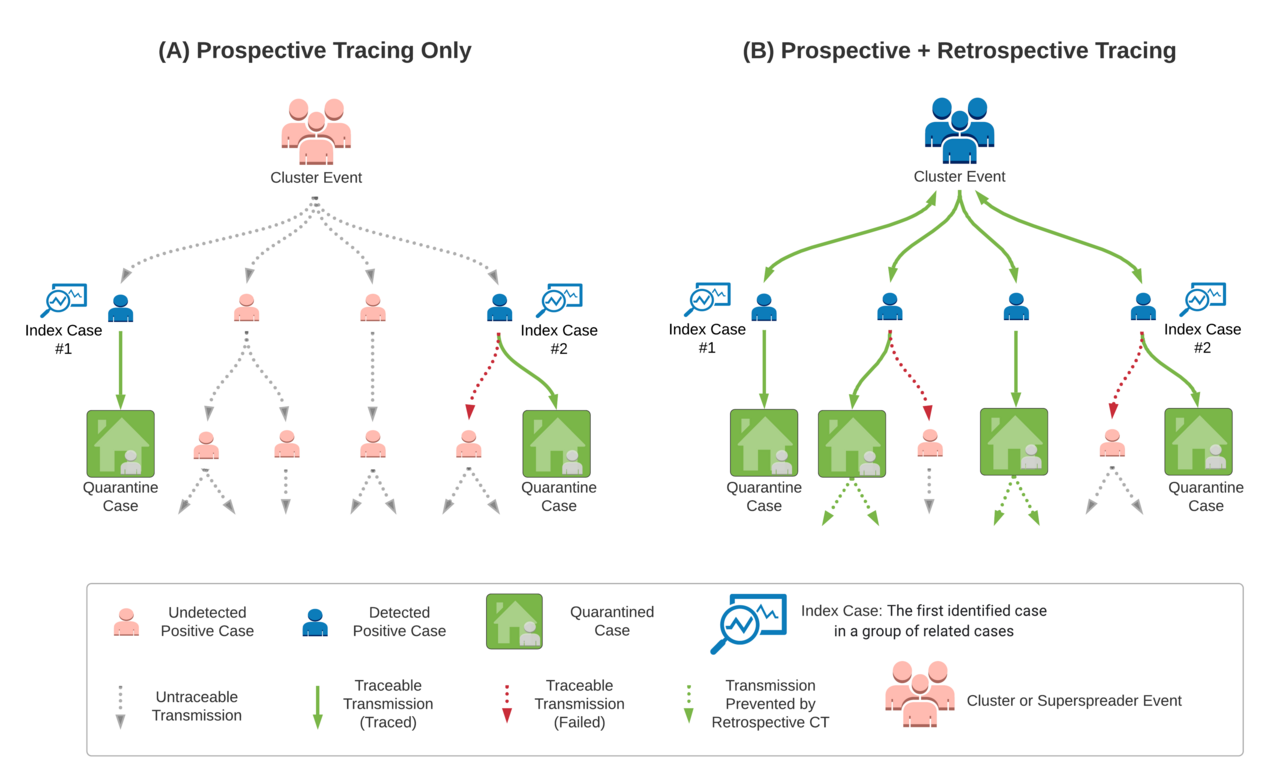
Backward tracing, which looks for the source of an infection rather than only forward to those exposed, received attention during the pandemic. Where transmission is highly overdispersed, meaning a minority of cases cause most infections, finding the source is likely to find a cluster, which makes backward tracing more efficient than forward tracing alone.
Tracing is labour-intensive. Each case requires interviewing, follow-up and monitoring, and systems that function at low case numbers are overwhelmed when incidence rises, which is precisely when they are most needed.
It depends on cooperation. People must answer honestly about their movements and contacts, and this fails where the disease is stigmatised, where contacts are people the case does not wish to name, or where the population distrusts the authority asking.
It requires support for those asked to isolate. Where isolation means lost income without compensation, compliance falls in a predictable and well-documented way.
Privacy concerns are legitimate and have historical grounding, since the same infrastructure that identifies disease contacts identifies associations generally.
Contact tracing is the method that ended smallpox, and it remains standard practice for tuberculosis, sexually transmitted infections and outbreak response worldwide.
It also illustrates a general point about public health measures: whether a method works is a property of the disease as much as of the effort applied, and applying a tool outside the conditions it suits produces the appearance of failure that belongs to the choice rather than the tool.