Recurring celebrations marking events in a religious calendar. They structure time, transmit tradition, and are among the most widely observed collective practices in existence, frequently by people who do not hold the associated beliefs.
Festivals mark time. A calendar of recurring observances divides an otherwise undifferentiated year, and the pattern of anticipation, observance and return is a substantial part of how communities experience time.
They transmit tradition. Practices repeated annually are learned by children through participation rather than instruction, which is a more durable transmission mechanism than teaching.
They reinforce community. Collective participation in the same practice at the same time is among the most reliable producers of group cohesion, and the effect does not depend on belief.
They mark seasonal or agricultural transitions. A great many festivals fall at solstices, equinoxes, harvests or the beginning of agricultural cycles, which is why comparable festivals occur at comparable times across unrelated traditions.
They permit inversion. Many involve suspension of ordinary rules, including licensed disorder, role reversal and behaviour otherwise prohibited, which anthropologists have analysed as a controlled release that reinforces the ordinary order rather than threatening it.
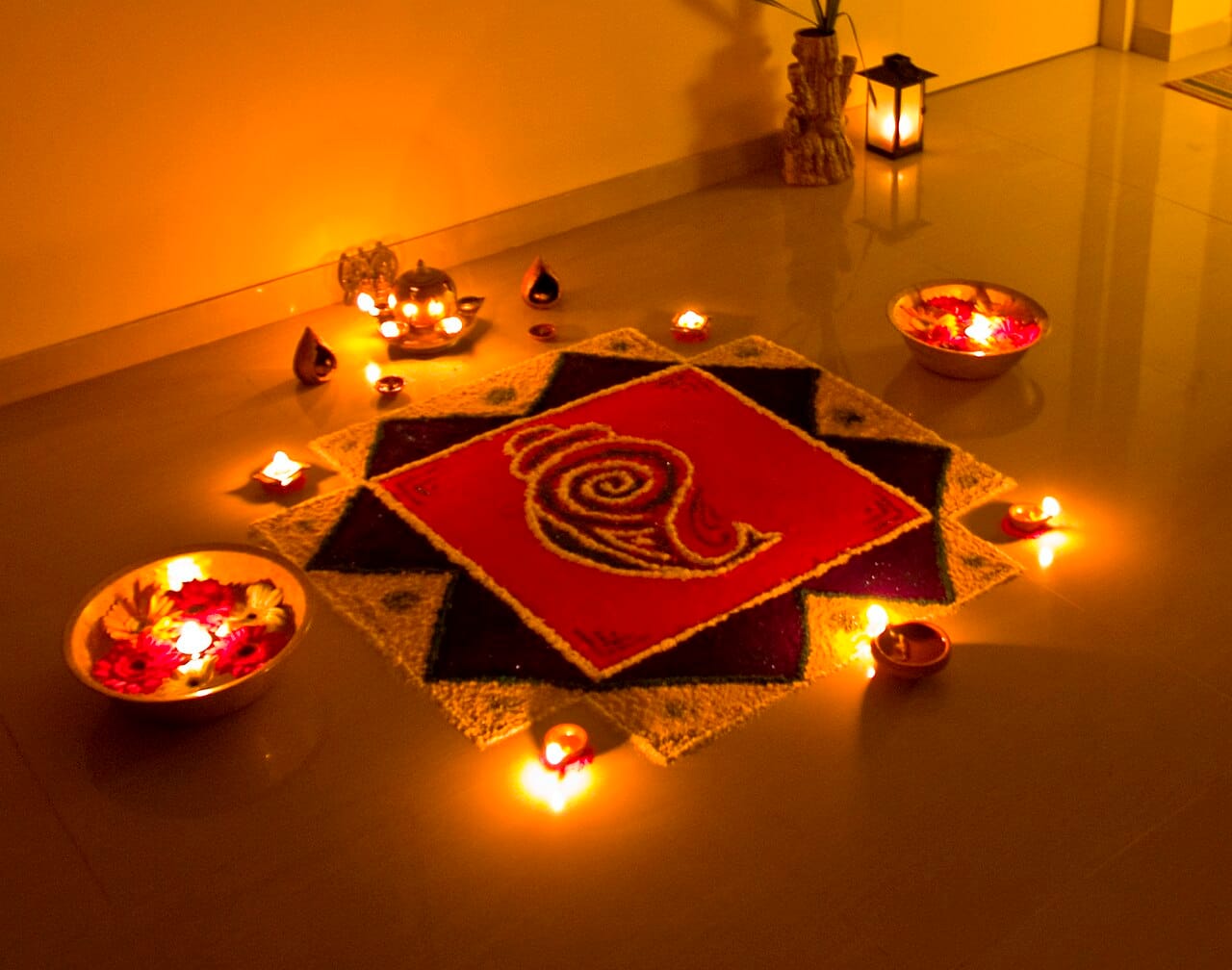
Diwali, observed across Hindu, Sikh, Jain and Buddhist traditions, marks light overcoming darkness and falls in autumn. It involves lamps, fireworks, sweets and family gathering, and is among the most widely observed festivals in the world.
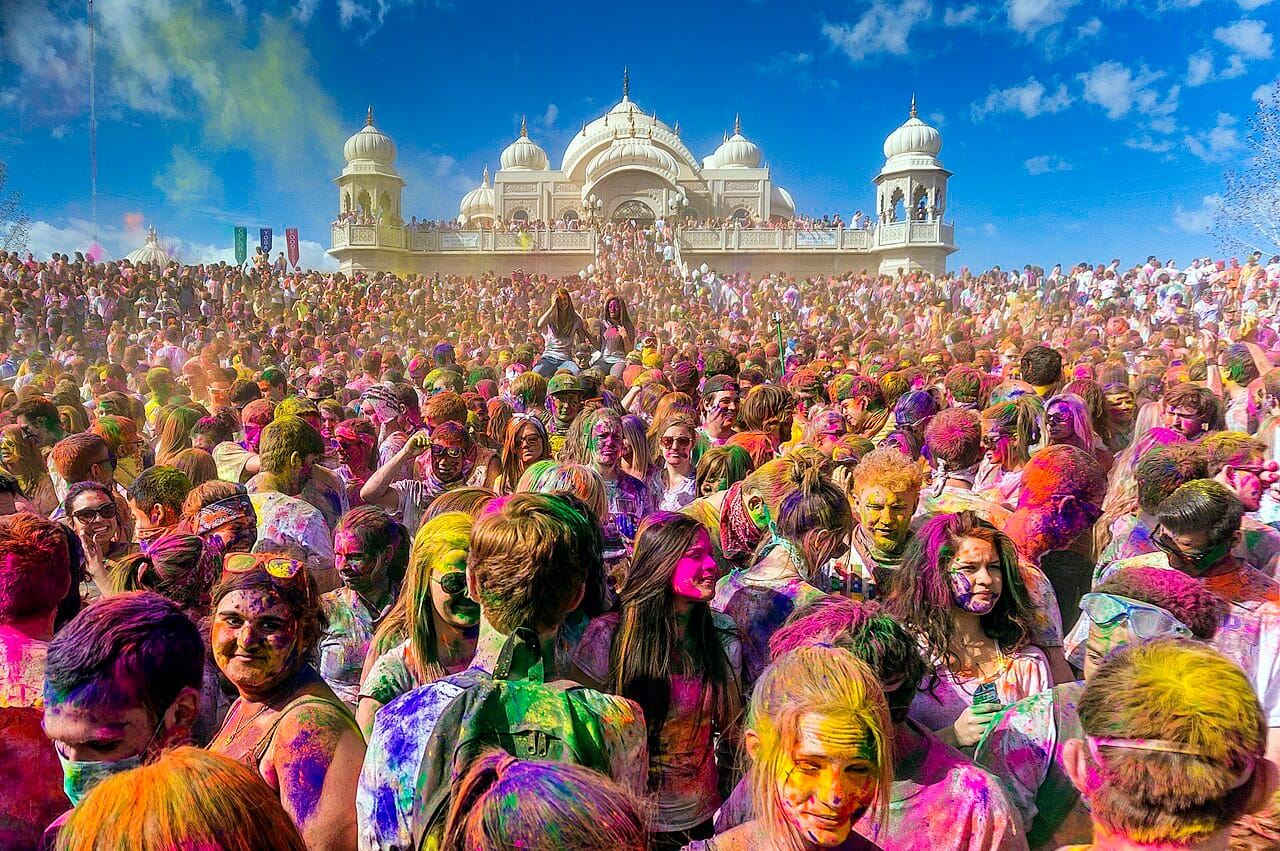
Holi marks the arrival of spring with coloured powder and public celebration, and is a clear instance of licensed inversion, with ordinary distinctions of status temporarily suspended.
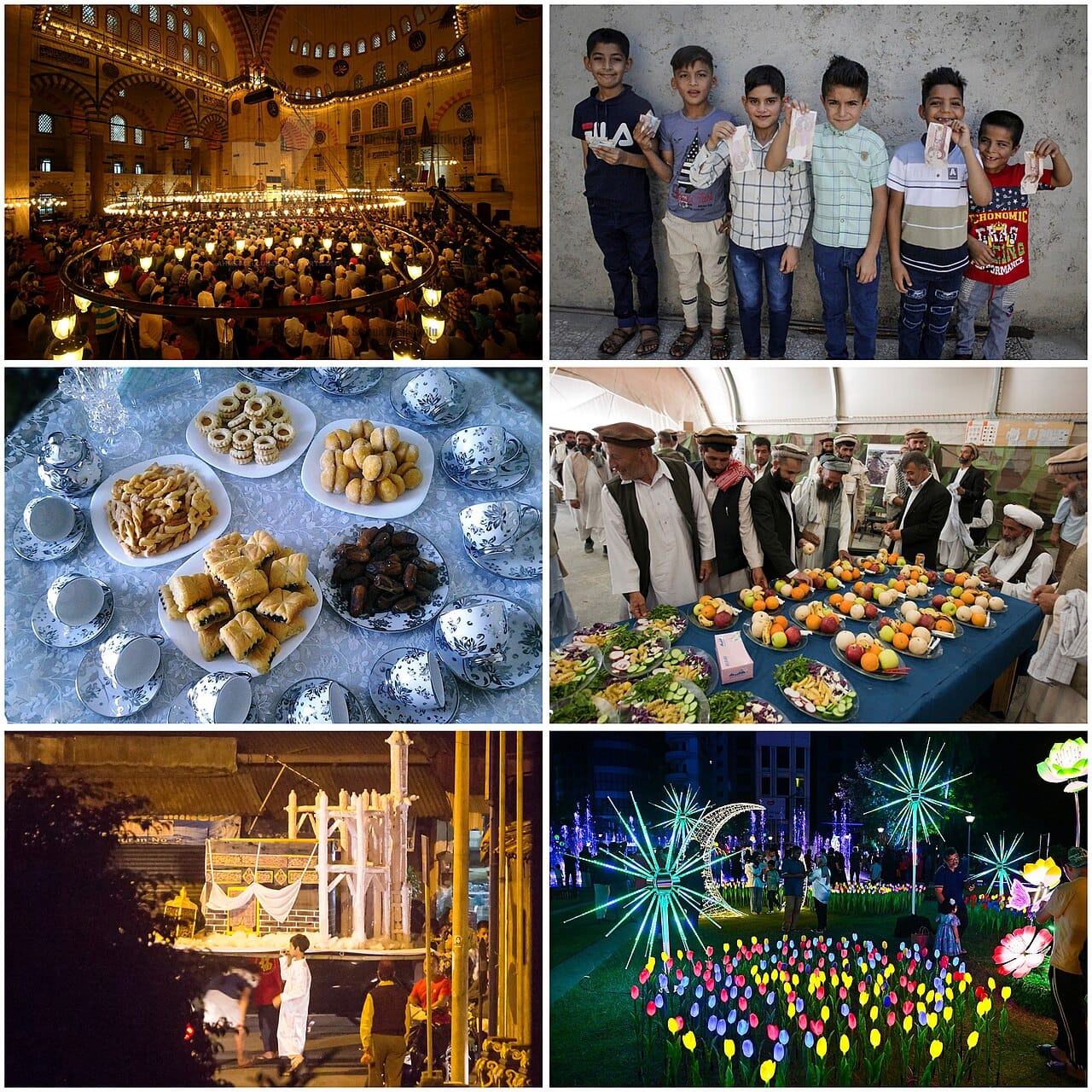
Eid al-Fitr marks the end of Ramadan, the month of fasting, and Eid al-Adha commemorates Abraham's willingness to sacrifice his son. Both involve communal prayer, charity and shared meals.
Passover commemorates the Exodus and is observed through a structured meal built around narration, which is an unusually explicit instance of a festival as a device for transmitting a story.
Christmas and Easter mark the birth and resurrection of Jesus. Christmas absorbed elements of pre-existing midwinter observances, and its date was not fixed early, which is well documented and is the origin of much of its material culture.
Vesak commemorates the birth, enlightenment and death of the Buddha.
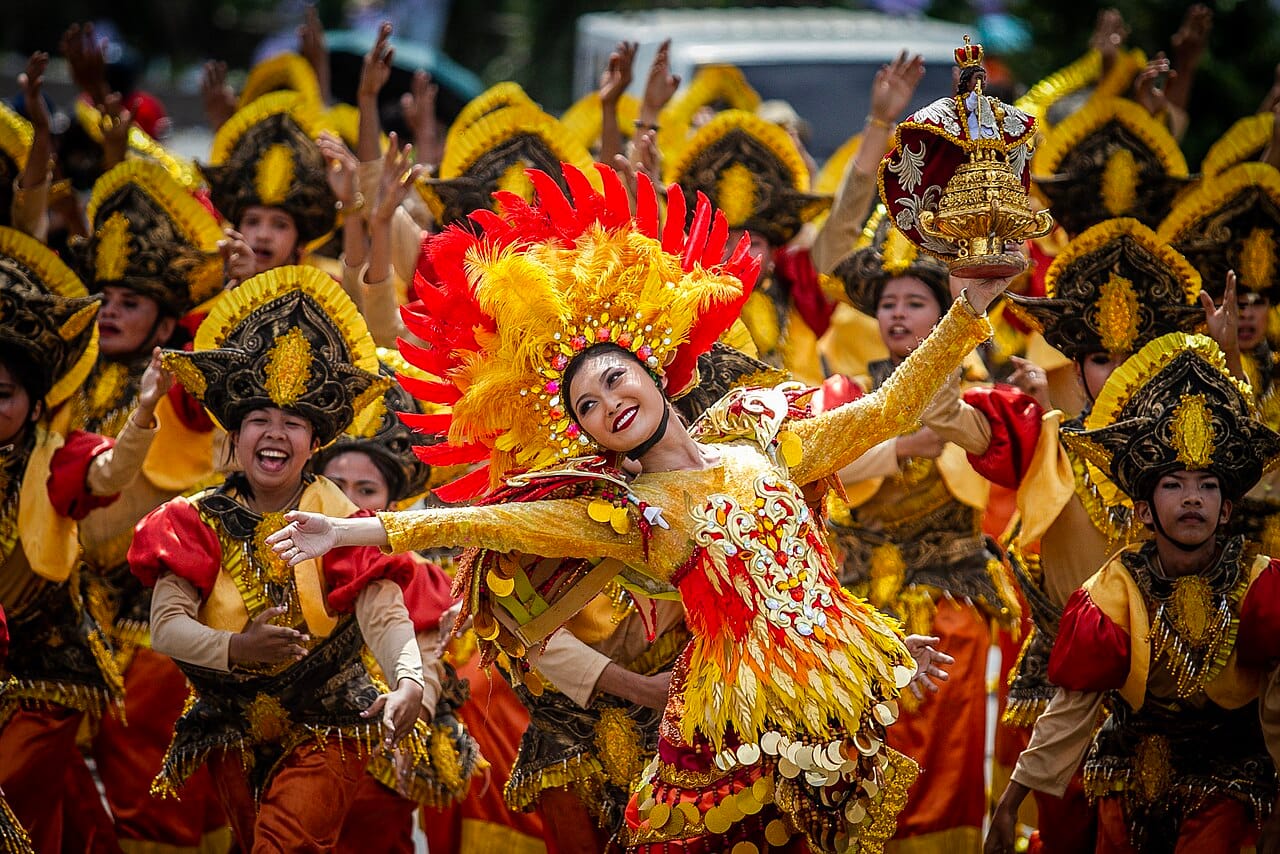
Local and syncretic festivals are extremely numerous, frequently combining formal religious observance with practices of separate origin, and are often the most vigorously observed.
Calendars determine when festivals fall, and different traditions use different ones.
Solar calendars track the year and keep festivals in the same season. The Gregorian calendar is solar, which is why Christmas is always in December.
Lunar calendars track months by the moon and are about eleven days shorter than the solar year. The Islamic calendar is purely lunar, which is why Ramadan moves through the seasons over a thirty three year cycle.
Lunisolar calendars use lunar months with periodic extra months inserted to keep pace with the solar year. Hebrew, Hindu and Chinese calendars work this way, which is why Passover, Diwali and Lunar New Year move within a range but stay in the same season.
Some dates depend on observation rather than calculation, including the sighting of the new moon determining the start and end of Ramadan, which is why the date can differ between countries.
Many festivals are observed by people who do not hold the associated beliefs, and this is not a modern development, though its scale is.
Commercialisation has been substantial, and complaints about it are considerably older than usually assumed.
Public holidays generally follow the festivals of the majority tradition in a country, which has produced ongoing argument in religiously plural societies about whose observances are accommodated.
Festivals have also travelled. Diwali, Lunar New Year and Eid are publicly marked in cities well beyond the populations that originated them, generally as a result of migration.
Religious festivals are among the most widely practised collective activities in human societies, and they persist across secularisation because they perform functions, including marking time and sustaining community, that are not dependent on belief.
Their calendrical basis also has a practical consequence that is easy to miss. The astronomical problem of reconciling lunar months with the solar year is what drove much early astronomy, and the requirement to determine festival dates accurately was among the earliest sustained applications of mathematics.