Removing heat from a space to keep it below the surrounding temperature. It is the technology that changed what people eat more than any other, and it works by moving heat rather than by making cold, which is the point most often misunderstood.
There is no such thing as cold to be added. Heat flows from warmer to cooler by itself, and refrigeration moves it the other way, which requires work.
The mechanism in almost every refrigerator is the same cycle. A fluid evaporates inside the cabinet, absorbing heat as it does so, because evaporation requires energy. The vapour is compressed, which raises its temperature. It then condenses in coils outside, releasing that heat to the room. The liquid passes through an expansion valve back to low pressure, and the cycle repeats.
The heat is therefore not destroyed but relocated, which is why the back of a refrigerator is warm and why a refrigerator with its door open warms a closed room rather than cooling it: the work of the compressor adds heat that was not there before.
The second law of thermodynamics sets the limit. Moving heat uphill requires work, and no arrangement can do it for free, which the thermodynamics capsule treats.
Absorption refrigeration achieves the same result using a heat source instead of a compressor, which is why gas-powered refrigerators exist and why they are used where electricity is unreliable.
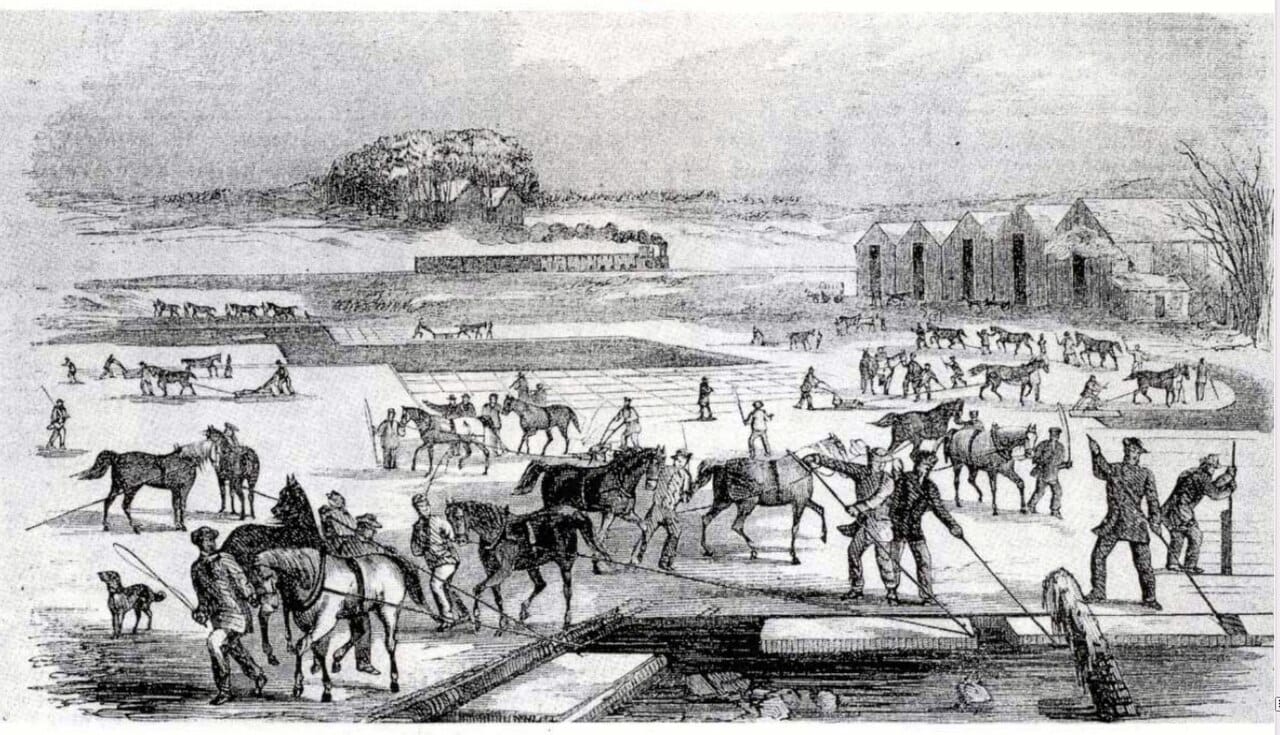
Natural ice was cut from lakes and rivers in winter and stored in insulated ice houses, and it kept through summer far better than intuition suggests because a large mass of ice loses heat slowly relative to its volume.
The trade was substantial and international. Ice cut in New England was shipped to the Caribbean, to Europe and as far as India through the nineteenth century, packed in sawdust, and the losses in transit were tolerable enough for the business to be profitable.
Evaporative cooling was used for millennia in dry climates, using porous vessels whose contents cool as water evaporates through the walls. The same principle appears in the yakhchal structures of Persia, which combined evaporative cooling, shading and thermal mass to make and store ice in a desert climate.
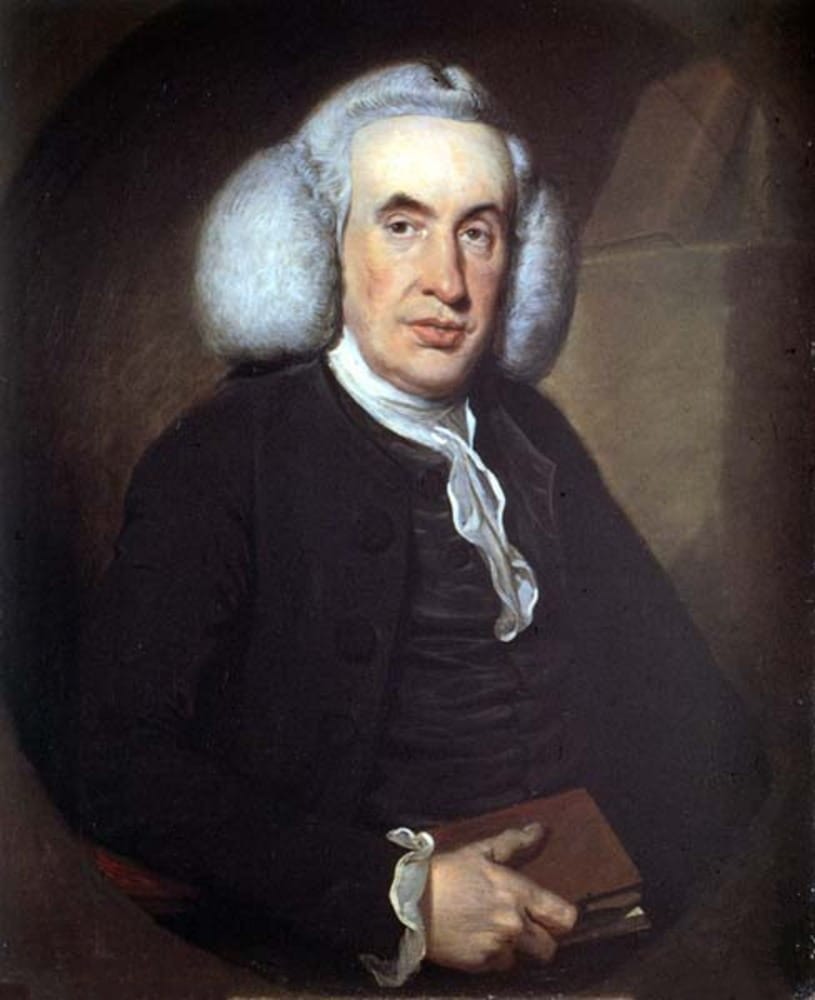
William Cullen demonstrated the principle at Glasgow in 1755, producing a small quantity of ice by evaporating a liquid under reduced pressure. It was a laboratory demonstration with no practical application at the time.
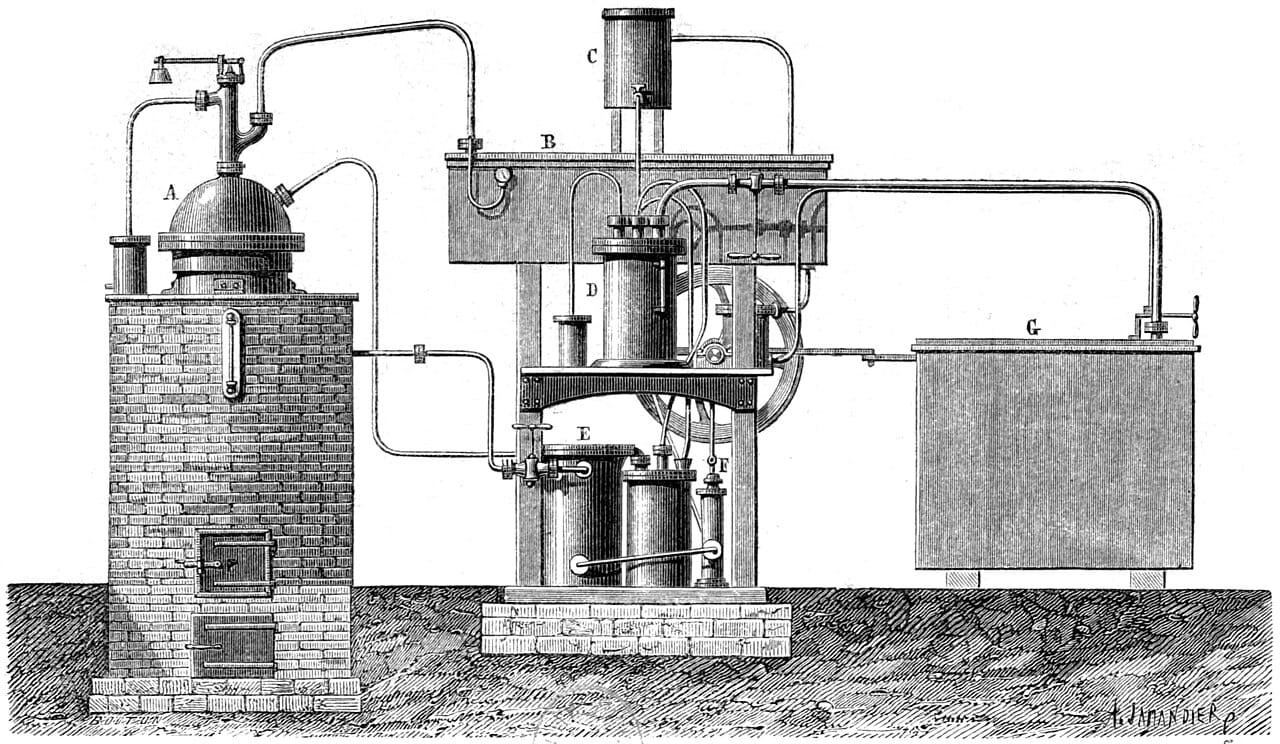
Practical machines followed in the mid nineteenth century, using ether, ammonia and later other refrigerants, and the first commercial applications were brewing, meat packing and the transport of chilled meat by sea, which restructured world agriculture by allowing Australian, Argentinian and New Zealand meat to reach European markets.
Domestic refrigerators became common from the 1920s and 1930s in the United States and later elsewhere, and they replaced the household ice box and the daily shopping it required.
Early refrigerants were toxic or flammable, and deaths from leaking methyl chloride and sulphur dioxide were reported. Chlorofluorocarbons were introduced in the 1930s specifically because they were stable and non-toxic, and that stability turned out to be the problem: they persist long enough to reach the stratosphere, where ultraviolet light breaks them down and the released chlorine destroys ozone catalytically. Their replacement under the Montreal Protocol is the most successful environmental treaty to date.
The replacements are not innocent either. Many hydrofluorocarbons are extremely potent greenhouse gases, and the Kigali Amendment of 2016 commits countries to phasing them down in turn.
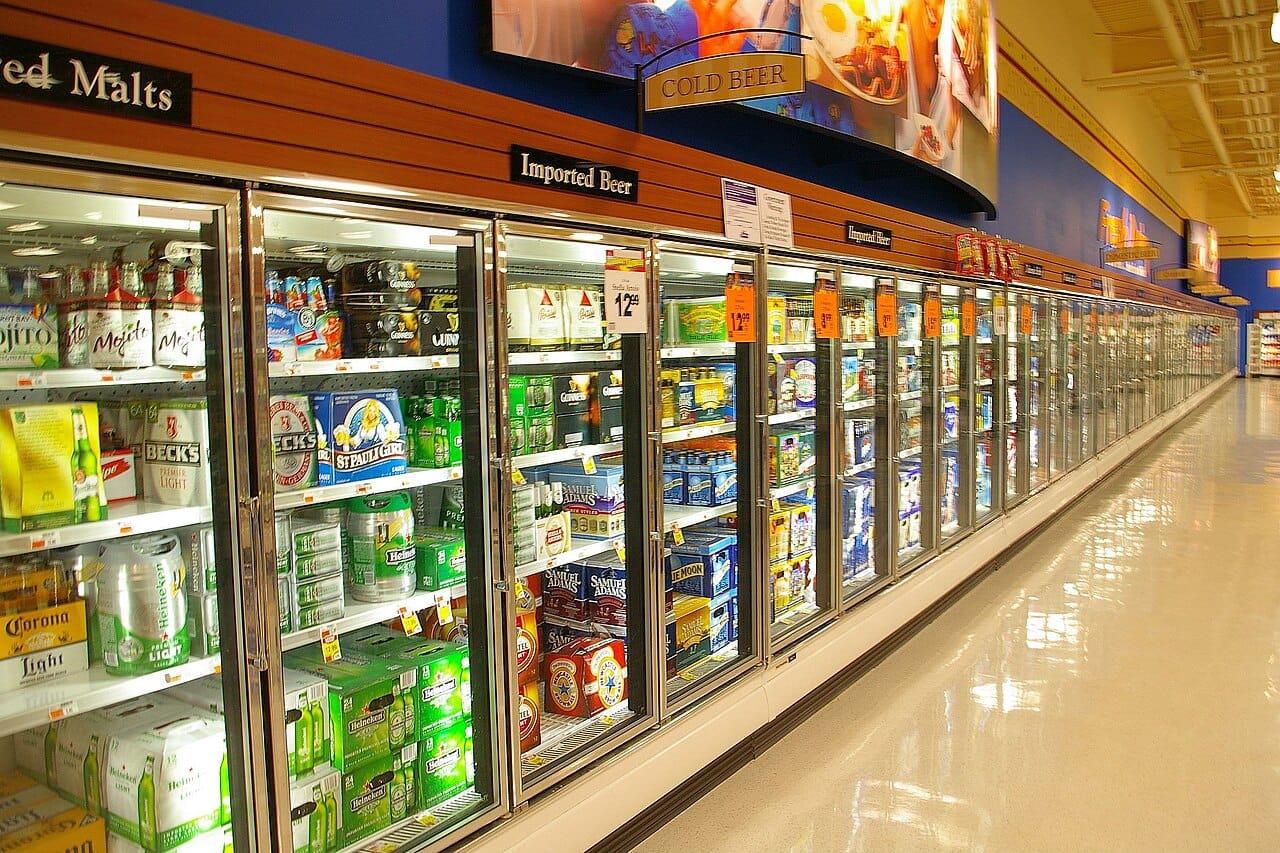
Diet changed fundamentally. Fresh meat, dairy, fruit and vegetables became available year round and far from where they were produced, and the seasonal and preserved diet that had been universal became optional.
Food safety improved, since bacterial growth slows greatly below about five degrees Celsius, and refrigeration is among the reasons foodborne illness declined.
Food waste is affected in both directions: refrigeration extends life, and the global cold chain also enables long supply chains in which a great deal is lost.
Medicine depends on it. Vaccines, blood, insulin and many drugs require continuous cold, and the cold chain is frequently the binding constraint on immunisation programmes in hot regions with unreliable power, which is why heat-stable formulations are a research priority.
Air conditioning is the same technology applied to occupied space, and it has made habitation viable at scale in hot and humid regions, changing where people live. It is also a substantial and growing electricity demand, and demand for it peaks precisely when heat is worst, which stresses grids exactly when they are least able to cope.
Refrigeration decoupled food from season and from distance, which is among the largest changes to daily life in the industrial period and is rarely listed among them.
It is also the technology whose side effects have twice been global. The refrigerants that made it safe indoors damaged the ozone layer, their replacements are powerful greenhouse gases, and the pattern of a solution creating a problem at a different scale is unusually well documented here.