The transmission of knowledge, history and literature by speech across generations, without writing. It sustained every human society before writing and remains the primary means of transmission in many, and it is considerably more accurate than literate cultures usually assume.
Oral tradition carries genealogies, law, land and water rights, technical knowledge, ritual, and narrative. It is not restricted to stories.
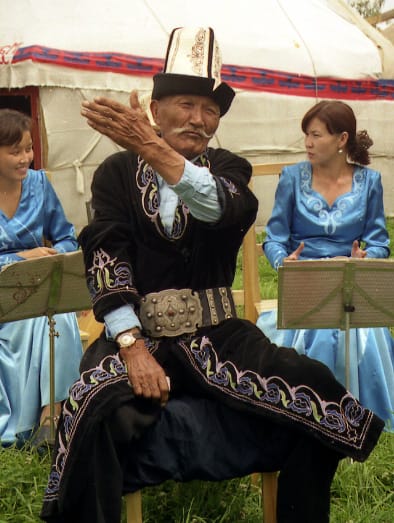
Epic poetry is the best studied form. The Homeric poems were composed and transmitted orally before being written. The Kyrgyz Epic of Manas runs to hundreds of thousands of lines, far longer than the Iliad and Odyssey combined, and specialist performers recite it over many hours.
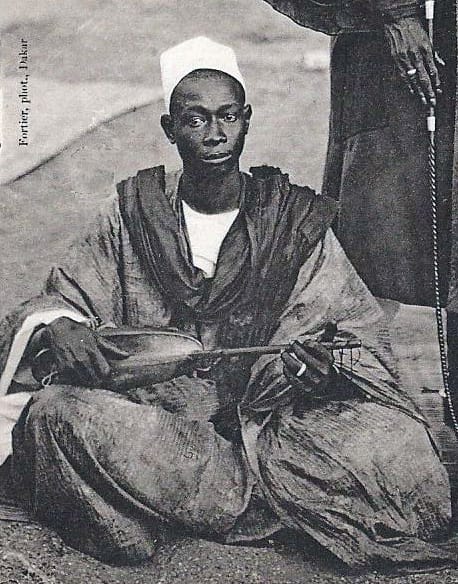
West African griots hold a hereditary professional office, maintaining genealogies and histories for families and communities over centuries, with obligations and privileges attached to the role.
Australian Aboriginal traditions encode geography, resource locations and law in song and story tied to specific places, forming systems that function simultaneously as history, map and legal record.
Oral transmission is not simply remembering, and the techniques that preserve it are identifiable.
Formulaic composition. Milman Parry and Albert Lord, studying living epic singers in Yugoslavia in the 1930s, found that performers did not memorise fixed texts but composed in performance from a stock of formulaic phrases fitted to the metre. This solved a long-standing question about how Homeric epic could have been composed without writing, and it explains the repeated epithets that had puzzled readers.
Structural constraint. Verse, metre, rhyme and melody restrict what can be substituted without the error being obvious, so the form itself resists corruption.
Specialist custodians. Where accuracy matters most, transmission is entrusted to trained specialists who undergo long apprenticeship and are accountable for errors.
Public correction. Recitation before an audience that knows the material means mistakes are caught, which is a mechanism literate transmission largely lacks.
Vedic recitation is the extreme case. Techniques developed to preserve the texts include reciting them in multiple permuted orders, which makes any alteration detectable, and the result is a transmission of very long texts over more than two millennia with remarkable fidelity.
Oral traditions have been checked against independent evidence and have sometimes proved accurate over long periods.
Australian Aboriginal traditions describing coastlines that are now submerged correspond to sea levels from the end of the last glacial period, which implies transmission over roughly seven to ten thousand years. The research making this argument has been published and debated, and it is treated seriously.
Klamath accounts of the formation of Crater Lake describe a volcanic event that geology dates to around 7,700 years ago.
Tsunami traditions on the Pacific coast, including in Japan and among Indigenous peoples of the Pacific Northwest, have been correlated with dated events, and in the latter case with a Japanese record of an orphan tsunami in 1700 caused by an earthquake off North America.
Norse sagas describing settlement in North America were treated as legend until excavation at L'Anse aux Meadows in Newfoundland confirmed a Norse presence.
These cases do not establish that oral tradition is uniformly reliable. They establish that it can preserve specific information over long periods, which is a stronger claim than the default scepticism allowed.
Oral tradition adapts to present circumstance, which is a strength for relevance and a complication for historical reconstruction. Genealogies may be adjusted to justify current claims, and this has been documented.
Chronology is generally weak. Traditions preserve that an event occurred and often its content, and are far less reliable about when, since there is no external dating framework.
Transmission is vulnerable in a way writing is not. The death of specialists without successors ends a line permanently, and language shift breaks transmission entirely, which is why the loss of a language destroys knowledge that exists nowhere else.
Oral testimony is accepted as evidence in some legal contexts. Canadian courts have recognised Indigenous oral histories as admissible evidence of historical fact in land claims, following the Delgamuukw decision in 1997, on the reasoning that requiring documentary proof would systematically exclude peoples whose records are oral.
UNESCO maintains a programme for intangible cultural heritage, and oral traditions are a substantial part of it.
For most of human history and for most human societies, oral transmission was the only means of preserving knowledge, so treating it as an inferior substitute for writing misdescribes the normal human condition.
It also carries a practical lesson about memory. The reliability achieved by trained oral specialists using structured techniques far exceeds what casual recall produces, which indicates that the unreliability of ordinary memory is a fact about how it is usually used rather than a fixed limit.