Ontario is the most populous province of Canada and the engine of its economy, lying in the centre of the country between the Great Lakes and the vast forests of the north. Home to nearly sixteen million people, it contains both Toronto, Canada's largest city and financial capital, and Ottawa, the national capital. A land of the Great Lakes, the rocky Canadian Shield, and the farms and cities of the south, Ontario sits at the heart of Canadian life.

Ontario's history runs from its Indigenous nations and the fur trade of New France, through the Loyalist founding of Upper Canada and the War of 1812, to a central role in Confederation and its rise as the industrial heartland of Canada.

For thousands of years the lands around the Great Lakes were home to Indigenous nations, among them the Anishinaabe and the Haudenosaunee, who lived by hunting, fishing, and farming and traded across the region. From the seventeenth century French explorers and traders pushed up the St Lawrence and along the lakes, drawing the region into the fur trade of New France.
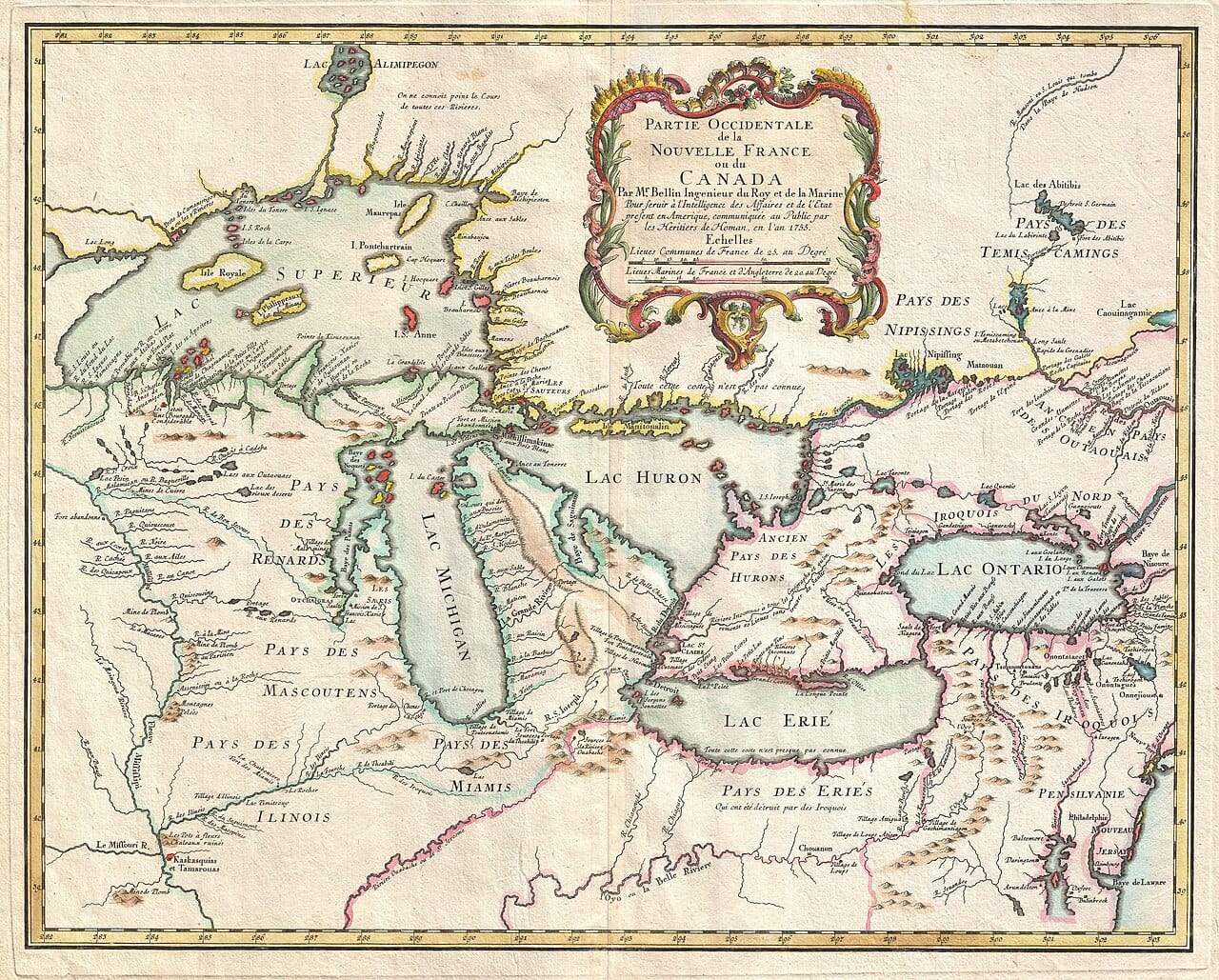
A 1755 French map of the Great Lakes, the waterways at the heart of Ontario. For generations the lakes and rivers carried the fur trade and linked the region's Indigenous nations with the French colony of New France.
A 1755 French map of the Great Lakes, the waterways at the heart of Ontario. For generations the lakes and rivers carried the fur trade and linked the region's Indigenous nations with the French colony of New France.Credit: Jacques-Nicolas Bellin (Public domain).

After Britain's victory over France, the region passed to British rule, and it was transformed by the arrival of the United Empire Loyalists, settlers loyal to the Crown who fled the American Revolution in the 1780s. To govern this new English-speaking population, Britain created the colony of Upper Canada in 1791, with its own assembly and English law.
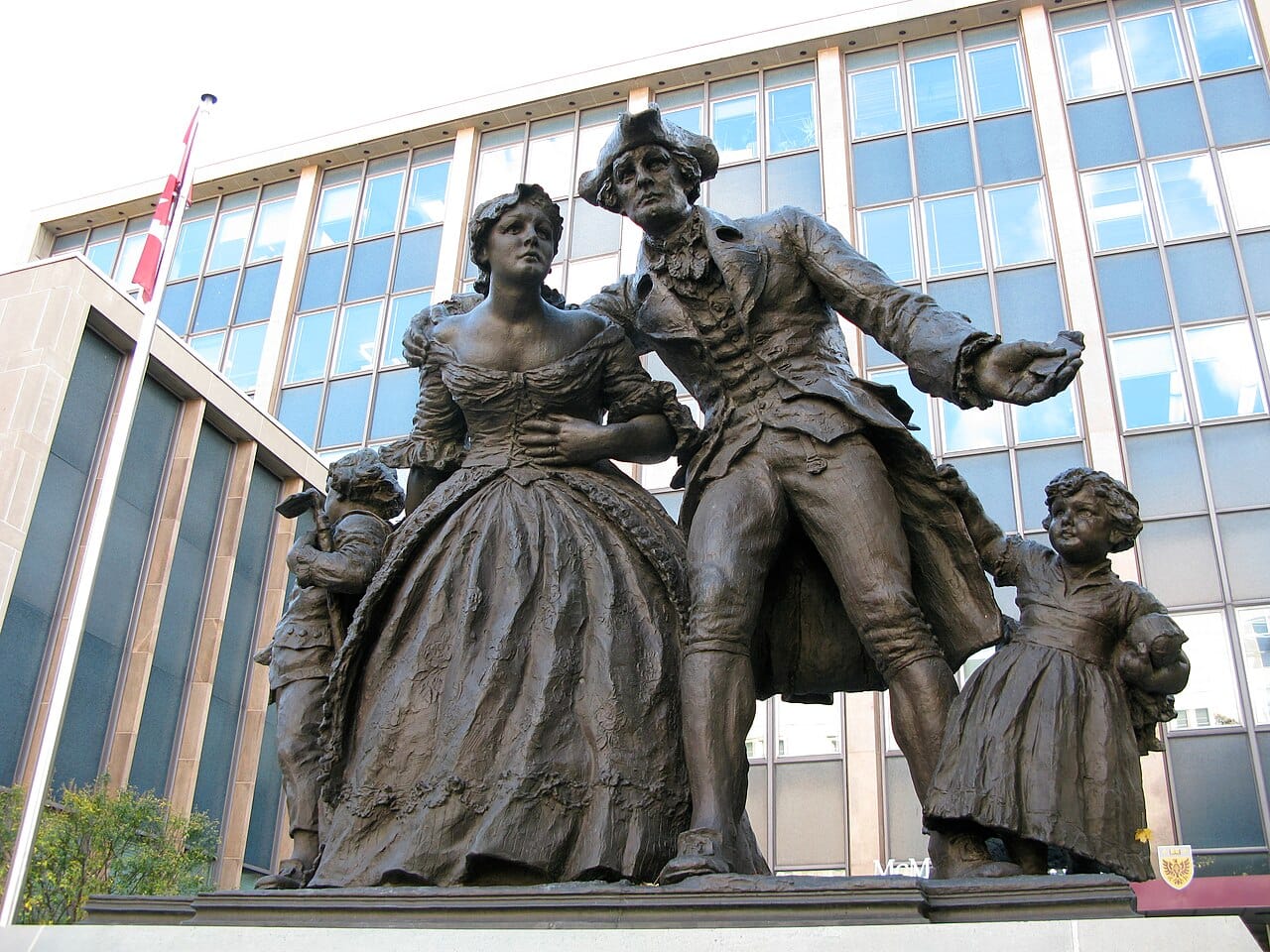
A statue in Hamilton honouring the United Empire Loyalists, settlers loyal to the Crown who fled the American Revolution and settled the region in the 1780s. They laid the foundations of English-speaking Ontario.
A statue in Hamilton honouring the United Empire Loyalists, settlers loyal to the Crown who fled the American Revolution and settled the region in the 1780s. They laid the foundations of English-speaking Ontario.Credit: User:Saforrest (CC BY 3.0).
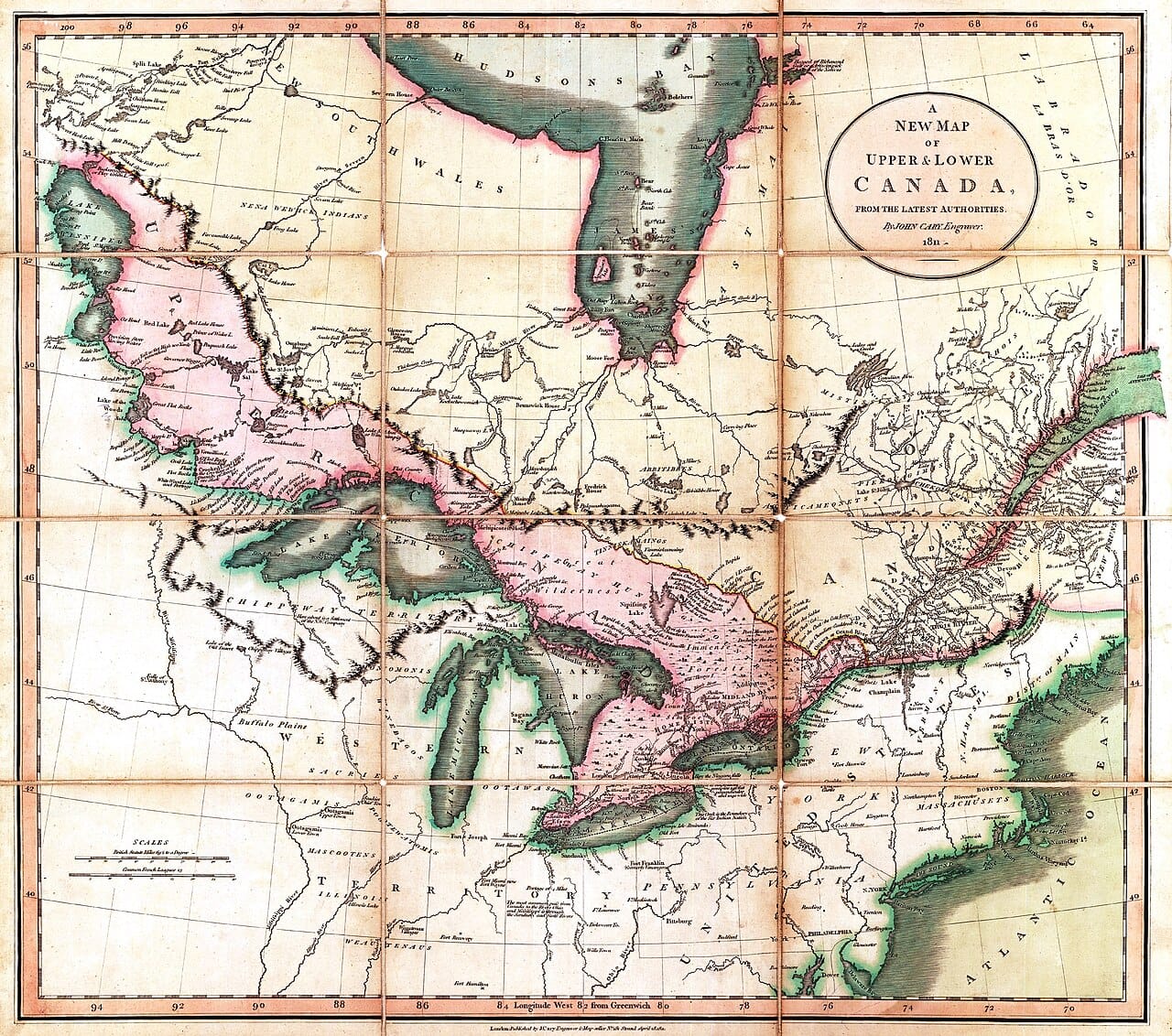
An 1811 map of Upper and Lower Canada. Upper Canada, roughly the southern part of today's Ontario, was created in 1791 as a home for the Loyalists, with its own government separate from French-speaking Lower Canada.
An 1811 map of Upper and Lower Canada. Upper Canada, roughly the southern part of today's Ontario, was created in 1791 as a home for the Loyalists, with its own government separate from French-speaking Lower Canada.Credit: John Cary (Public domain).

Upper Canada became a battleground in the War of 1812, when American forces invaded across the border. The colony's militia, British regulars, and Indigenous allies fought off the invasion, though the capital, York, later renamed Toronto, was captured and burned. The successful defence became a foundation of the province's sense of itself.
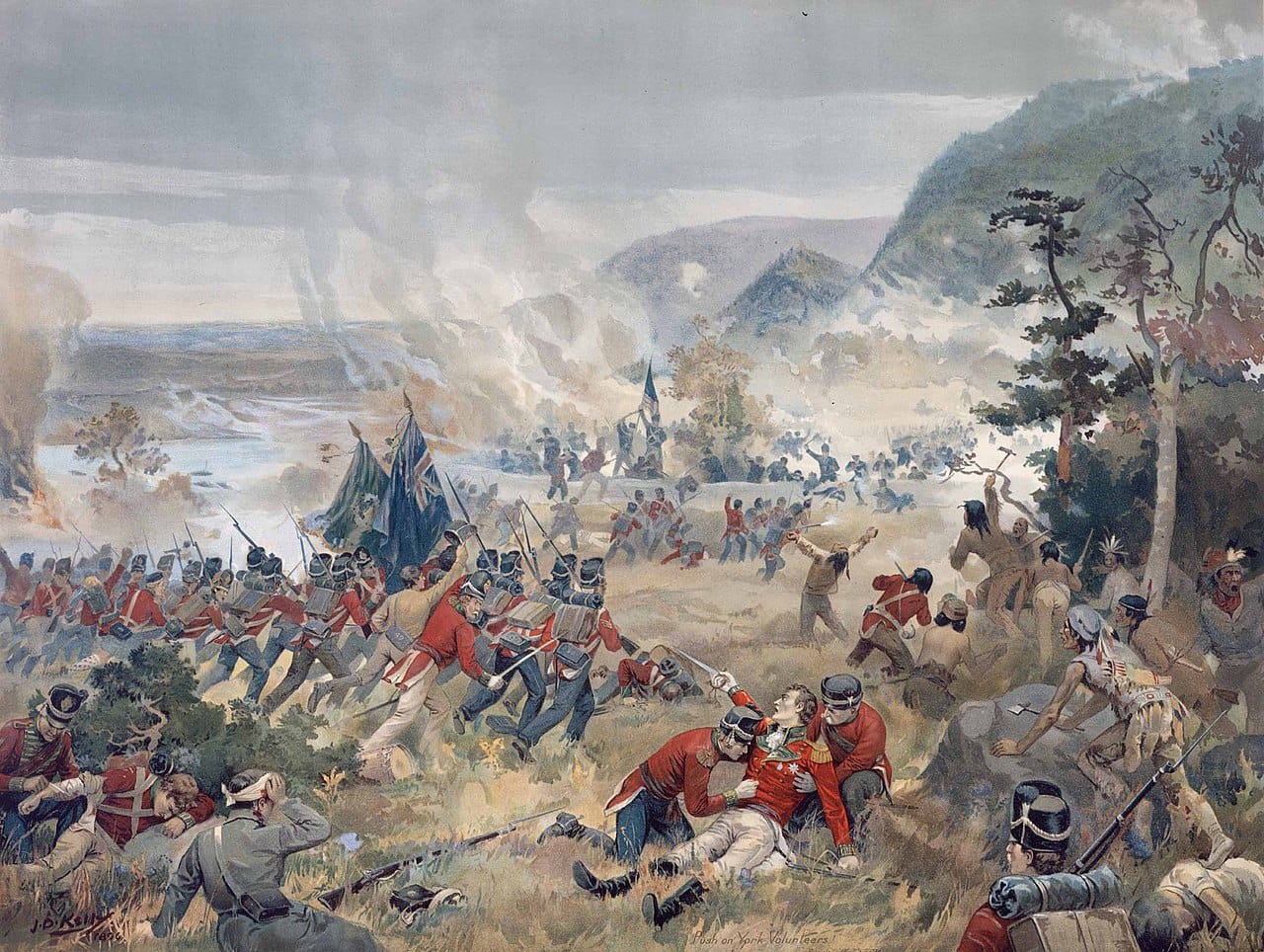
A depiction of Upper Canadian volunteers in the War of 1812, when American armies invaded the colony. The defence of the province, despite the burning of its capital York, became a lasting part of Ontario's identity.
A depiction of Upper Canadian volunteers in the War of 1812, when American armies invaded the colony. The defence of the province, despite the burning of its capital York, became a lasting part of Ontario's identity.Credit: John David Kelly (1862-1958) published 1896 (Public domain).

Reunited with Lower Canada and then reborn as the province of Ontario at Confederation in 1867, the region grew into the industrial and financial heartland of Canada. Its premiers, beginning with Oliver Mowat, fought to secure strong powers for the provinces, shaping the federation itself.
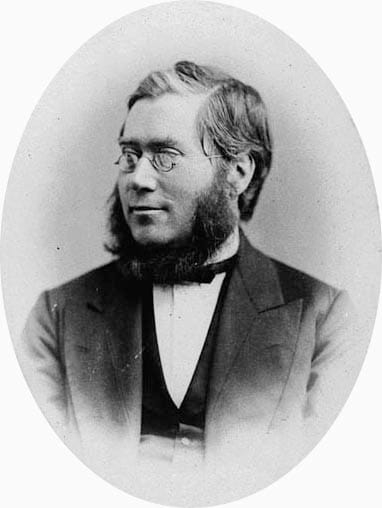
Oliver Mowat, premier of Ontario for much of the late nineteenth century and a Father of Confederation. He championed the powers of the provinces within the new Canadian federation.
Oliver Mowat, premier of Ontario for much of the late nineteenth century and a Father of Confederation. He championed the powers of the provinces within the new Canadian federation.Credit: Unknown (Public domain).

Ontario is a vast province of two very different halves. The populous south, cradled by four of the five Great Lakes, holds gentle farmland, the Niagara region, and the great cities strung along the lakeshore, in the mildest climate in the country. The north is a huge, thinly peopled expanse of the rocky Canadian Shield, a land of forests, tens of thousands of lakes, and rich minerals reaching up to the shores of Hudson Bay.
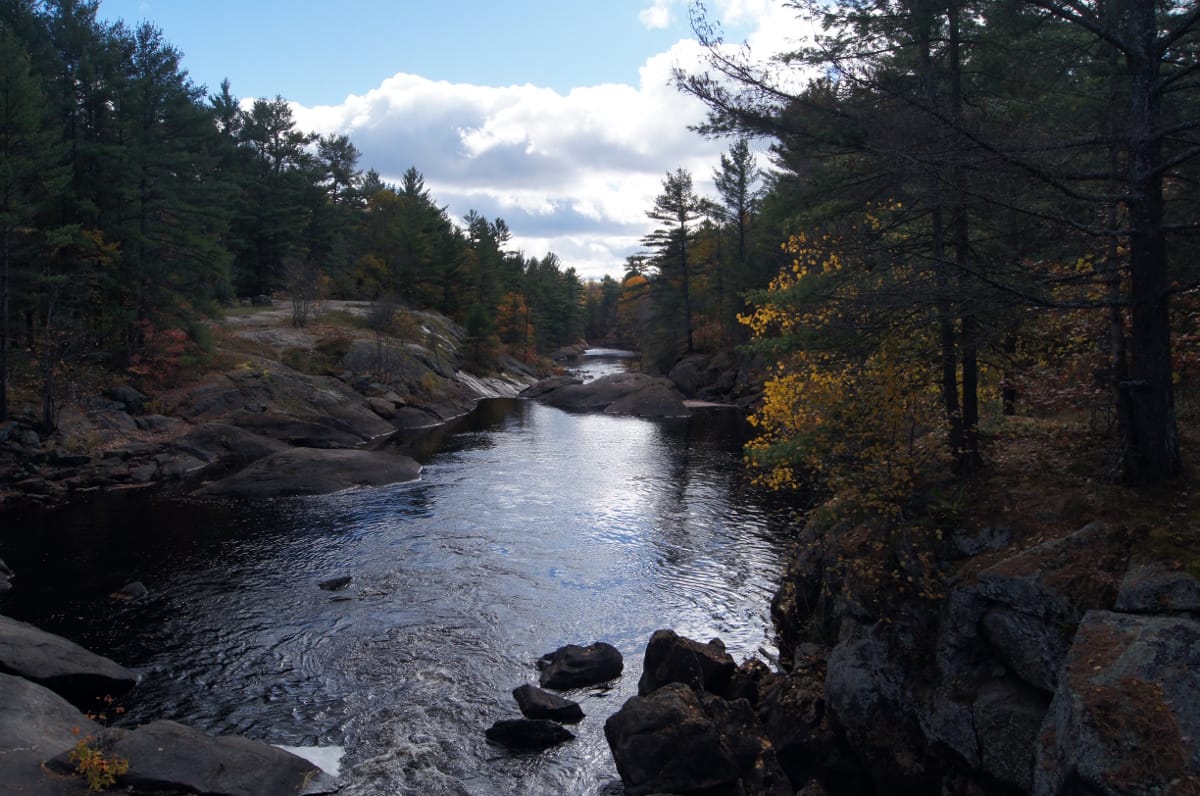
A river winding through the rock and forest of the Canadian Shield, which covers much of northern Ontario. This ancient landscape of lakes and woods stretches across the vast, thinly settled north of the province.
A river winding through the rock and forest of the Canadian Shield, which covers much of northern Ontario. This ancient landscape of lakes and woods stretches across the vast, thinly settled north of the province.Credit: Trick17 (CC BY-SA 4.0).
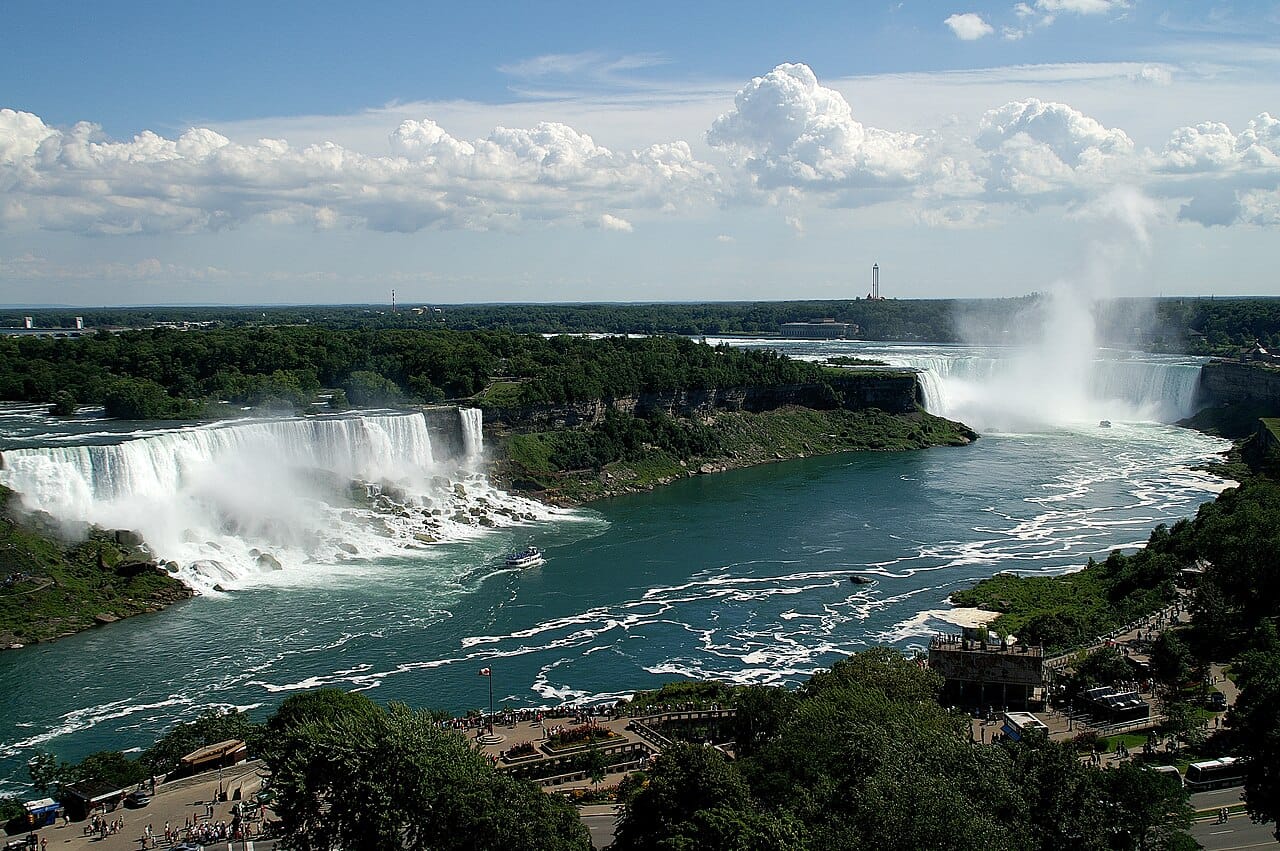
Niagara Falls on the border with the United States, one of the most famous waterfalls in the world. Fed by the Great Lakes, it draws millions of visitors and drives hydroelectric power for the province.
Niagara Falls on the border with the United States, one of the most famous waterfalls in the world. Fed by the Great Lakes, it draws millions of visitors and drives hydroelectric power for the province.Credit: Saffron Blaze (CC BY-SA 3.0).

Ontario is governed as a parliamentary democracy within the Canadian federation, with a single elected chamber, the Legislative Assembly, that sits at Queen's Park in Toronto. The party commanding its confidence forms the government under a premier, while a lieutenant governor represents the Crown. As of 2026 the premier is Doug Ford, leader of the Progressive Conservatives, re-elected to a third consecutive majority in 2025, and the lieutenant governor is Edith Dumont, the province's first francophone in the role. Ontario's large delegation makes it hugely influential in national politics.
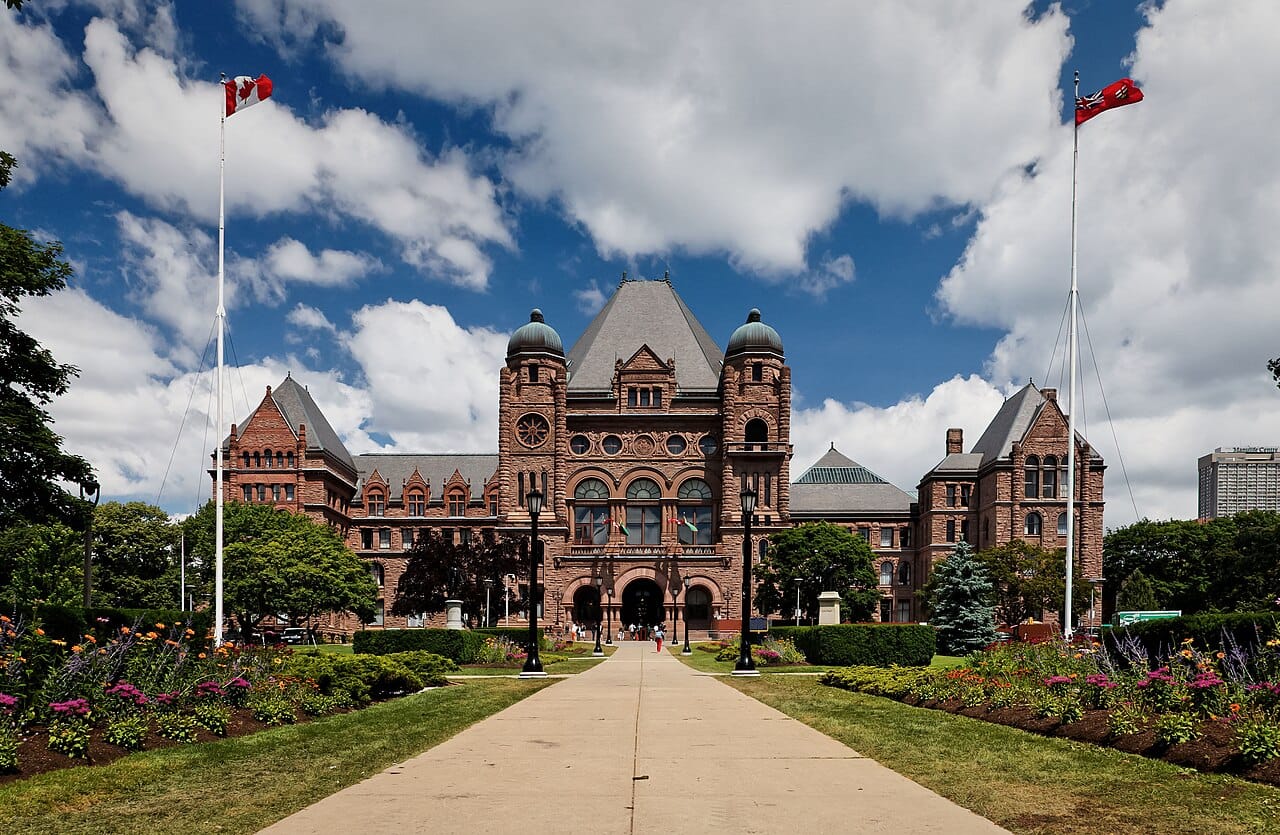

The Ontario Legislative Building at Queen's Park in Toronto, seat of the provincial parliament since 1893. Its pink sandstone halls are the centre of government for Canada's most populous province.
The Ontario Legislative Building at Queen's Park in Toronto, seat of the provincial parliament since 1893. Its pink sandstone halls are the centre of government for Canada's most populous province.Credit: Benson Kua from Toronto, Canada (CC BY-SA 2.0).
Doug Ford, premier of Ontario since 2018 and leader of the Progressive Conservatives, who won a third consecutive majority in 2025. The premier leads the government that sits at Queen's Park.
Doug Ford, premier of Ontario since 2018 and leader of the Progressive Conservatives, who won a third consecutive majority in 2025. The premier leads the government that sits at Queen's Park.Credit: Ambassador Pete Hoekstra (Public domain).

Ontario is the economic powerhouse of Canada, generating the largest share of the national economy. Toronto is the country's financial capital, home to its main stock exchange and big banks, and a fast-growing centre of technology. The province has long been the heart of Canadian manufacturing, especially the automobile industry clustered around the Great Lakes, while the north yields minerals and forestry and the south grows much of the country's fruit, vegetables, and other produce.

The flag of Ontario is a red ensign, with the Union Jack in the upper corner and the provincial shield on the fly. The shield bears the cross of Saint George above three golden maple leaves on a green ground, symbols of Canada and of the province. Ontario's floral emblem is the white trillium, a three-petalled spring flower of its woodlands, and the province takes its name from an Indigenous word linked to the Great Lakes, often rendered as beautiful water.

Ontario is Canada's most populous and one of its most diverse societies, its cities, above all Toronto, among the most multicultural on Earth, shaped by immigration from every part of the world. It is a major centre of Canadian arts, media, and sport. The province also holds a cherished place in the country's cultural imagination through the Group of Seven, the landscape painters who forged a national style from its northern wilds, and through the canoe country of its lakes and parks.
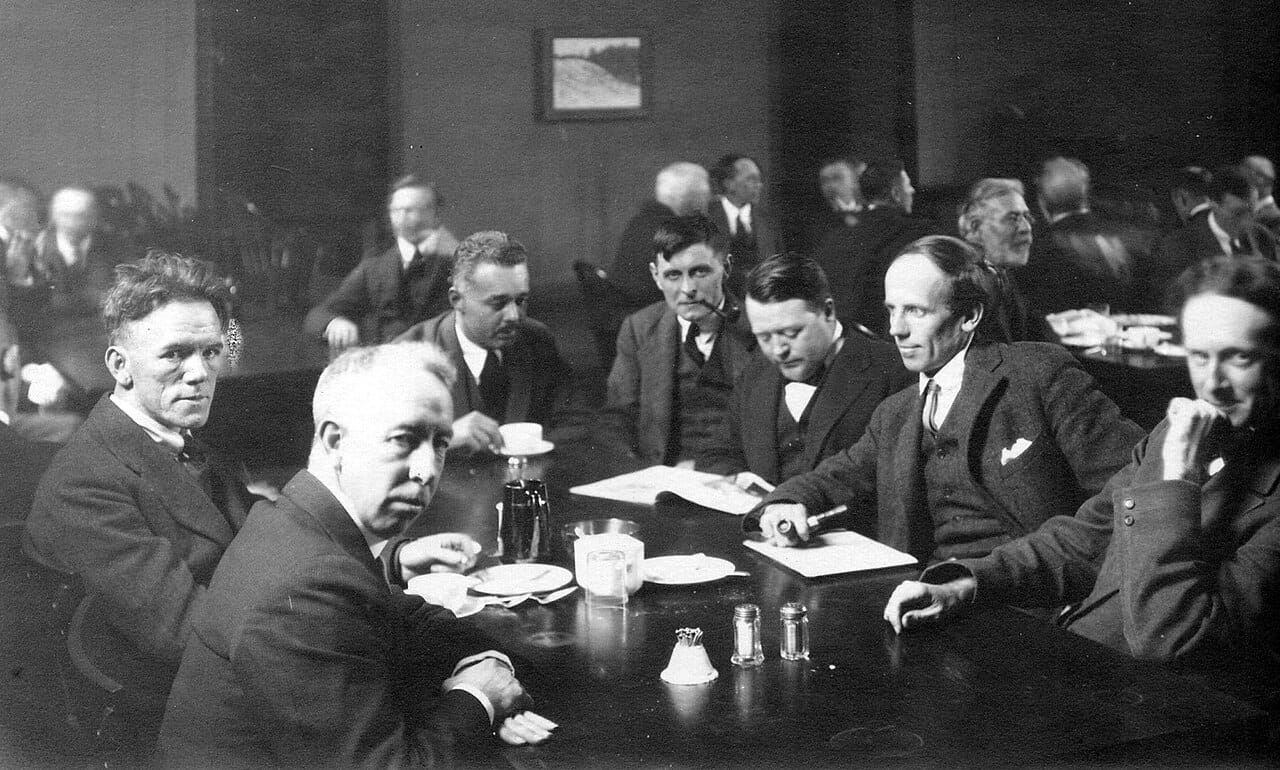
Members of the Group of Seven and their circle, the landscape painters who from around 1920 forged a bold national style from the wild scenery of Ontario and the north. They are among Canada's most celebrated artists.
Members of the Group of Seven and their circle, the landscape painters who from around 1920 forged a bold national style from the wild scenery of Ontario and the north. They are among Canada's most celebrated artists.Credit: Arthur Goss (Public domain).
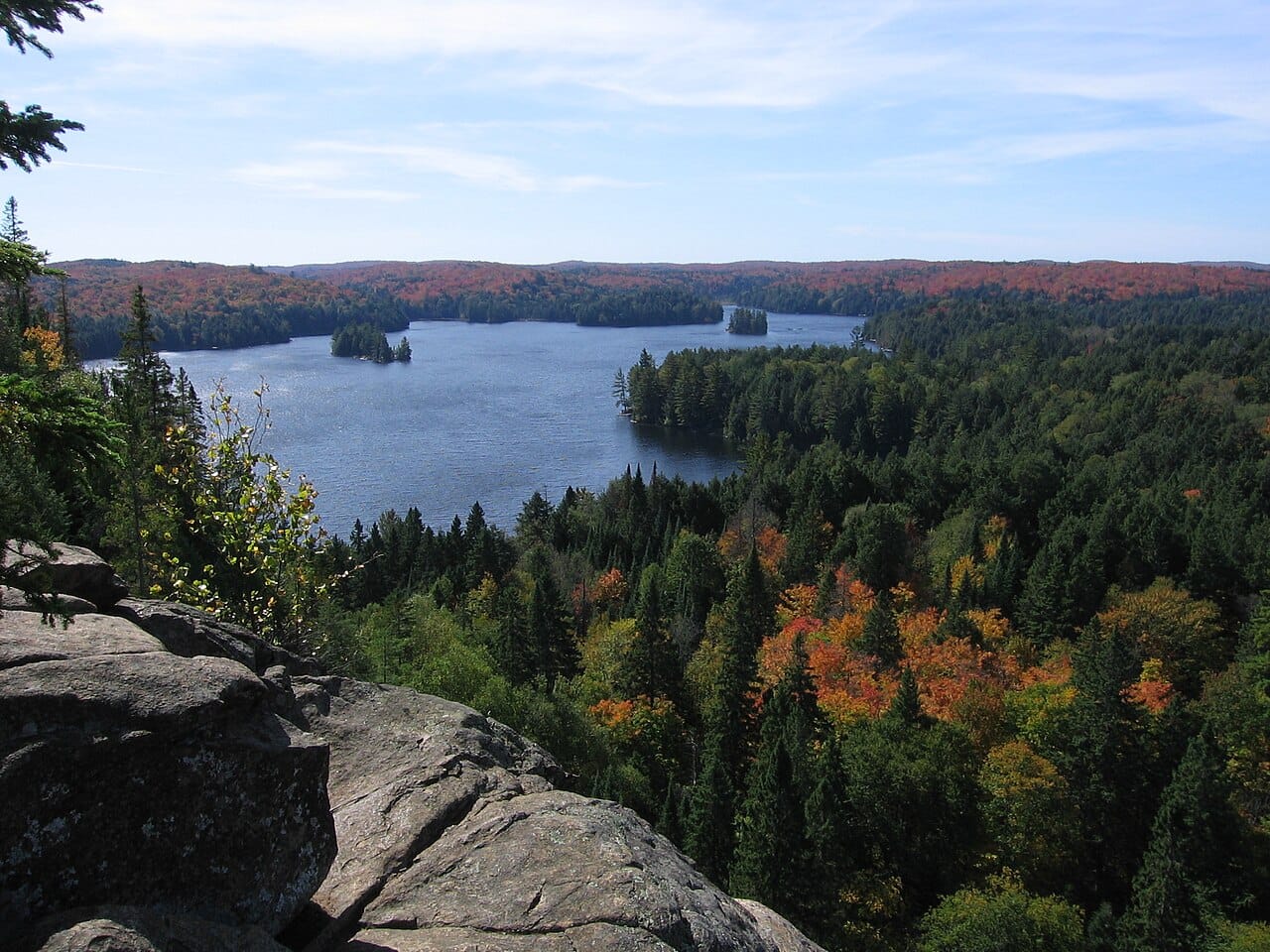
A lookout over Algonquin Provincial Park, the lakes and forests that inspired the Group of Seven. Ontario's oldest provincial park, it is a symbol of the wild northern beauty that shaped the province's art and identity.
A lookout over Algonquin Provincial Park, the lakes and forests that inspired the Group of Seven. Ontario's oldest provincial park, it is a symbol of the wild northern beauty that shaped the province's art and identity.Credit: Original uploader was Ptrbnsn at en.wikipedia (CC BY-SA 3.0).

Ontario has a population of nearly sixteen million people, by far the most of any Canadian province, more than a third of the national total. The great majority live in the south, especially in the Greater Toronto Area, one of the largest and most diverse metropolitan regions in North America, and along the shores of the Great Lakes. English is the main language, alongside a large French-speaking minority and the many languages of a population drawn from around the world, making Ontario the most cosmopolitan corner of Canada.