Nunavut is the largest and northernmost territory of Canada, a vast Arctic realm covering much of the country's far north and its Arctic islands, yet home to only around 40,000 people, the great majority of them Inuit. Created in 1999, it is the newest part of Canada, carved out to give the Inuit a homeland and a measure of self-rule. Its name means our land in Inuktitut, and it is a place of tundra, ice, and the enduring culture of a people who have lived in the Arctic for thousands of years.

Nunavut's history is the history of the Inuit, who have lived in the Arctic for millennia, and of their long journey to a homeland of their own within Canada.

For thousands of years the Arctic has been home to the Inuit and their ancestors, who developed an extraordinary way of life suited to one of the harshest environments on Earth, hunting seals, whales, and caribou and travelling by dog sled and kayak. Their skill and knowledge, from the building of the snow house, or igloo, to the reading of the land and ice, allowed them to thrive where few others could.
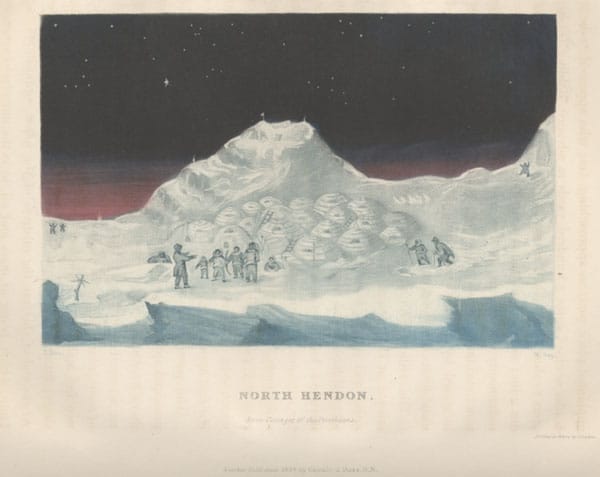
Igloos, the snow houses built by the Inuit as shelter on the winter land and ice. Their ingenious design is one of many ways the Inuit adapted to life in one of the harshest environments on Earth.
Igloos, the snow houses built by the Inuit as shelter on the winter land and ice. Their ingenious design is one of many ways the Inuit adapted to life in one of the harshest environments on Earth.Credit: Narrative of a second voyage in search of a north-west passage, and of a residence in the Arctic regions during the years 1829, 1830, 1831, 1832, 1833 par John Ross (Public domain).

Through the twentieth century the Inuit pressed for control over their homeland, and after decades of negotiation their land claim led to the creation of Nunavut on the first of April 1999, carved out of the eastern Northwest Territories. It was a historic act of reconciliation, giving the Inuit a territory in which they form the great majority and can shape their own future.
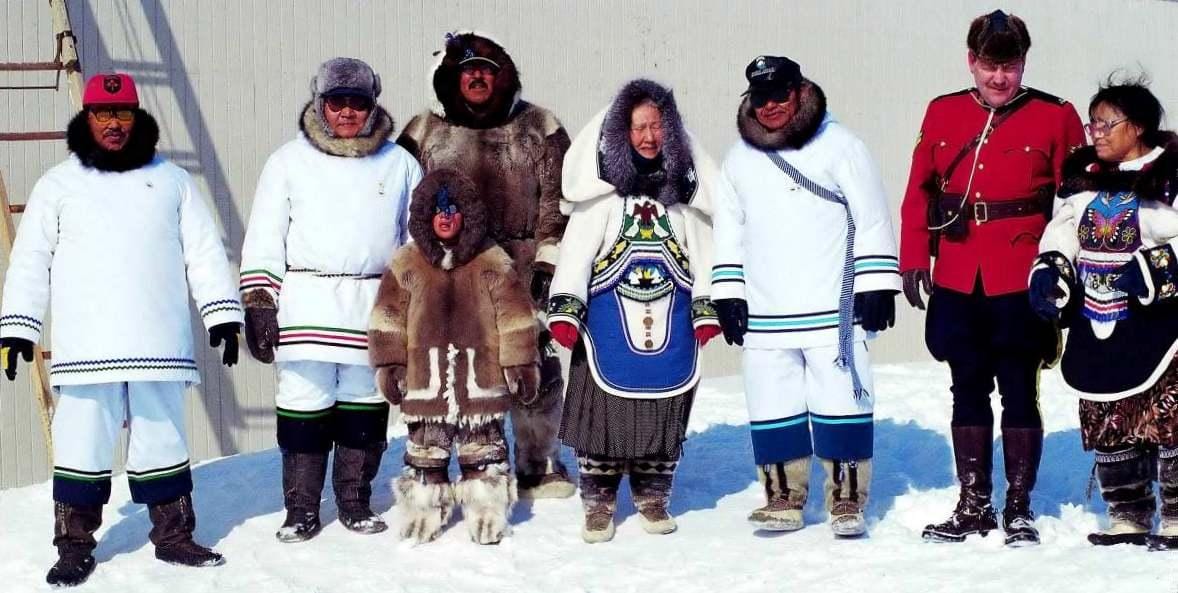
Celebrations marking the creation of Nunavut on the first of April 1999. Carved out of the Northwest Territories after decades of Inuit negotiation, it gave the Inuit a homeland in which they form the great majority.
Celebrations marking the creation of Nunavut on the first of April 1999. Carved out of the Northwest Territories after decades of Inuit negotiation, it gave the Inuit a homeland in which they form the great majority.Credit: Ansgar Walk (CC BY-SA 3.0).

Nunavut is immense, by far the largest territory, stretching across the Canadian Arctic from the treeline to the North Pole and taking in most of the Arctic Archipelago, including Baffin Island, the largest island in Canada. It is a land almost entirely of treeless tundra, rock, and ice, frozen for much of the year, with a scattering of communities along its coasts. Home to polar bears, seals, whales, and caribou, and lit by the midnight sun in summer and the long polar night in winter, it is one of the last great wildernesses on Earth.
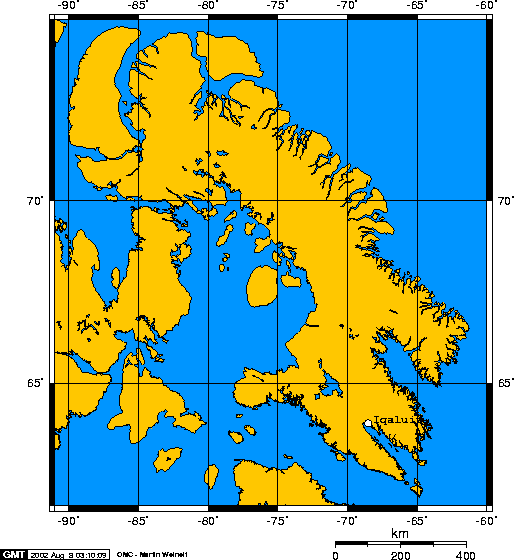
Baffin Island, the largest island in Canada, in the Arctic Archipelago that makes up much of Nunavut. The territory is a vast realm of treeless tundra, rock, and ice.
Baffin Island, the largest island in Canada, in the Arctic Archipelago that makes up much of Nunavut. The territory is a vast realm of treeless tundra, rock, and ice.Credit: created by Online Map Creation: http://www.aquarius.geomar.de/omc/omc_intro.html (CC BY-SA 3.0).
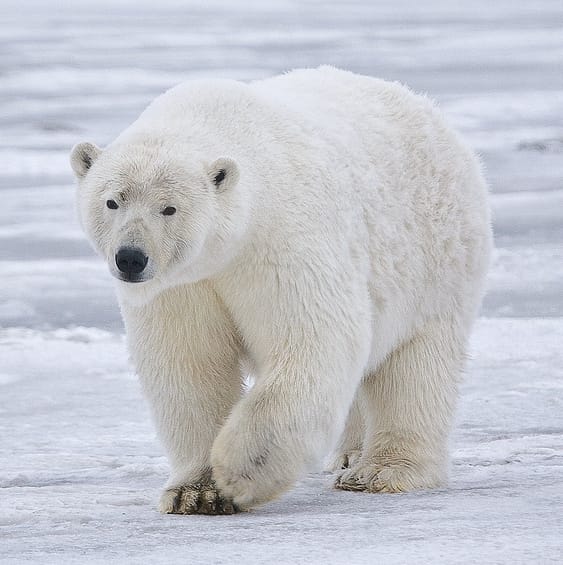
A polar bear on the Arctic ice. Nunavut's frozen seas and tundra are home to polar bears, seals, whales, and caribou, some of the most iconic wildlife of the far north.
A polar bear on the Arctic ice. Nunavut's frozen seas and tundra are home to polar bears, seals, whales, and caribou, some of the most iconic wildlife of the far north.Credit: Alan Wilson (CC BY-SA 3.0).

Nunavut's economy combines a traditional Inuit way of life, in which hunting and fishing still put food on many tables, with a modern wage economy centred on government and resource development. Rich deposits of gold, iron, and other minerals have brought mines to the tundra, an important but debated source of jobs and income. The territory faces great challenges, from the extreme cost of shipping goods to remote communities to high rates of poverty, and it works to build an economy that supports its people while honouring their culture.
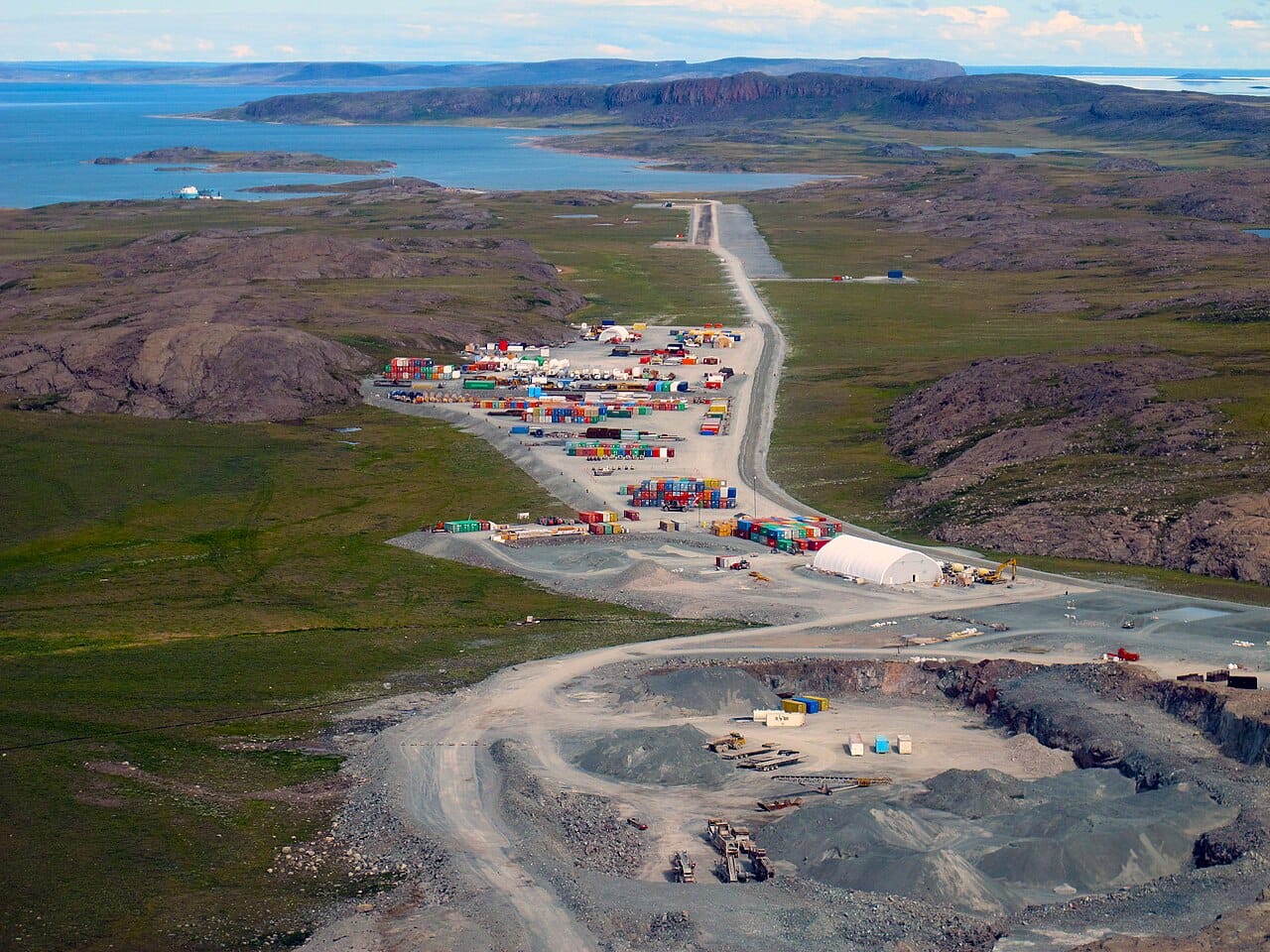
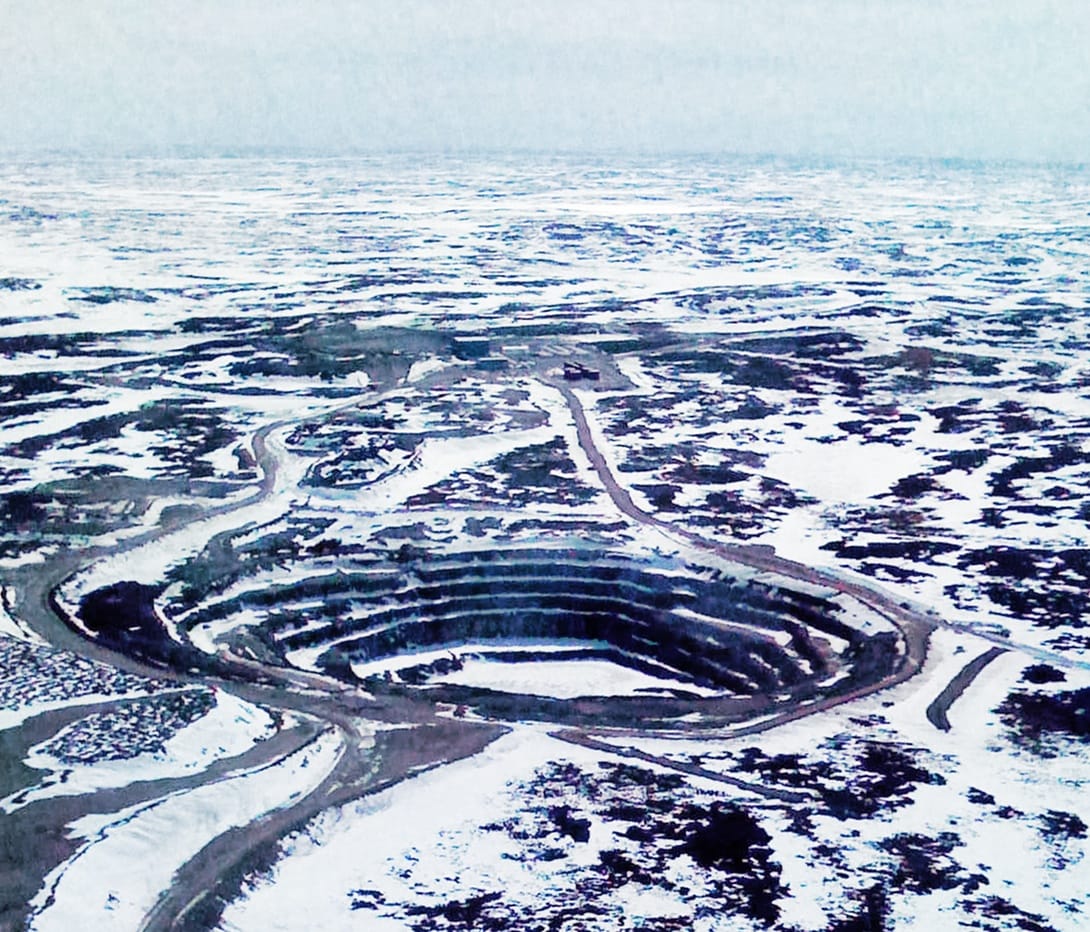
A gold mine in the tundra of Nunavut. Rich mineral deposits have brought mining to the territory, an important but debated source of jobs and revenue in a region with few roads.
A gold mine in the tundra of Nunavut. Rich mineral deposits have brought mining to the territory, an important but debated source of jobs and revenue in a region with few roads.Credit: Timkal (CC BY 3.0).
An open pit at a diamond mine in Nunavut. Alongside gold and iron, mining is a mainstay of the modern economy, though most communities still rely heavily on government and traditional harvesting.
An open pit at a diamond mine in Nunavut. Alongside gold and iron, mining is a mainstay of the modern economy, though most communities still rely heavily on government and traditional harvesting.Credit: Tom Churchill (Tomchurchill at en.wikipedia) (Public domain).

Nunavut is a territory whose powers are delegated by the federal government, and, like the Northwest Territories, it governs itself by consensus rather than through political parties, a system rooted in Inuit tradition. The members of its Legislative Assembly in the capital, Iqaluit, are elected as independents and together choose a premier and cabinet. As of 2026 the premier is John Main, chosen after the 2025 territorial election, and the commissioner, who represents the federal Crown, is Eva Aariak. The government works closely with Inuit organisations that hold rights under the land claim that created the territory.
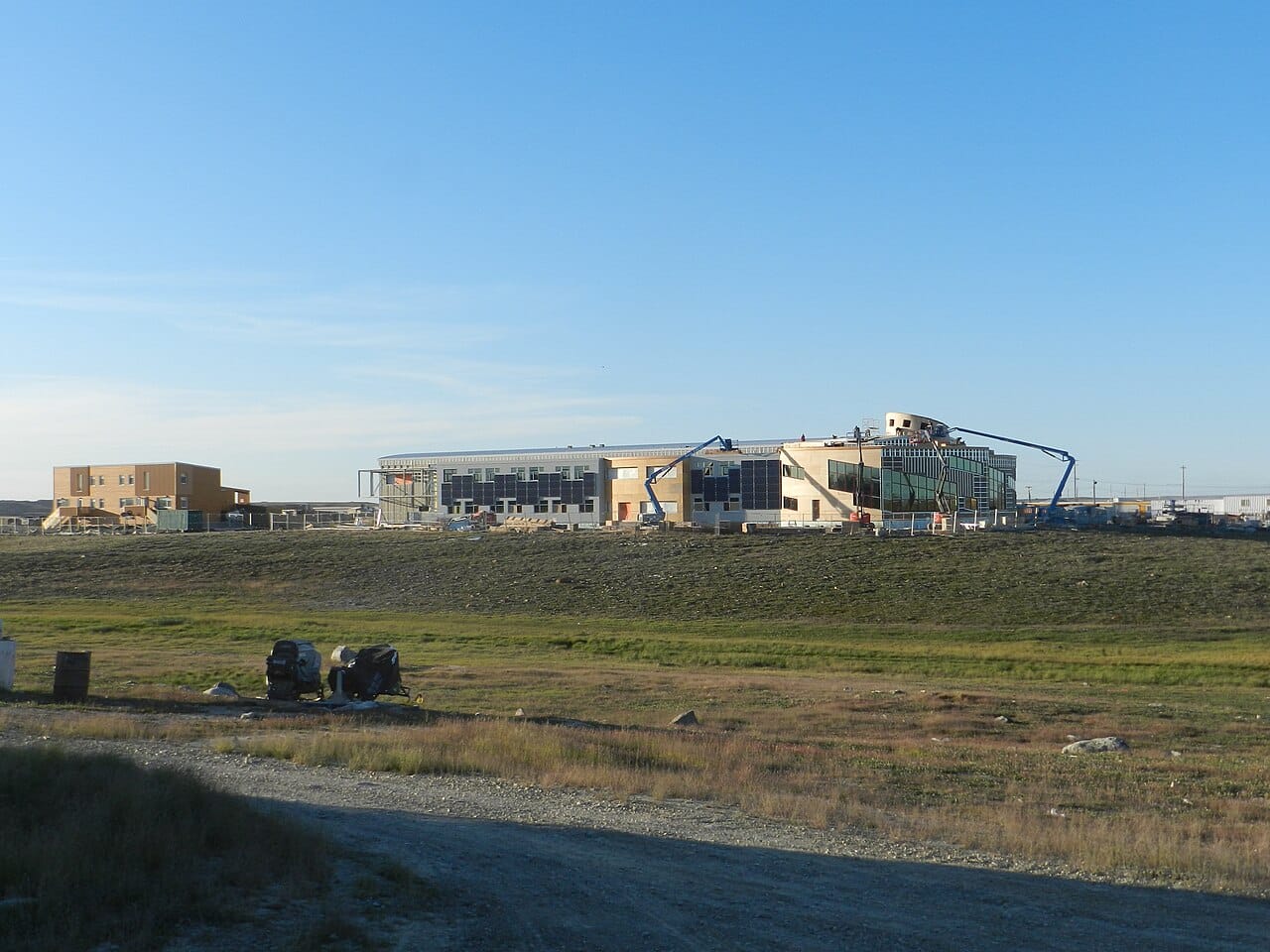
The Canadian High Arctic Research Station at Cambridge Bay. Nunavut is a centre for the study of the Arctic and its rapid change, work carried out in partnership with the Inuit who know the land best.
The Canadian High Arctic Research Station at Cambridge Bay. Nunavut is a centre for the study of the Arctic and its rapid change, work carried out in partnership with the Inuit who know the land best.Credit: CambridgeBayWeather (CC BY-SA 4.0).

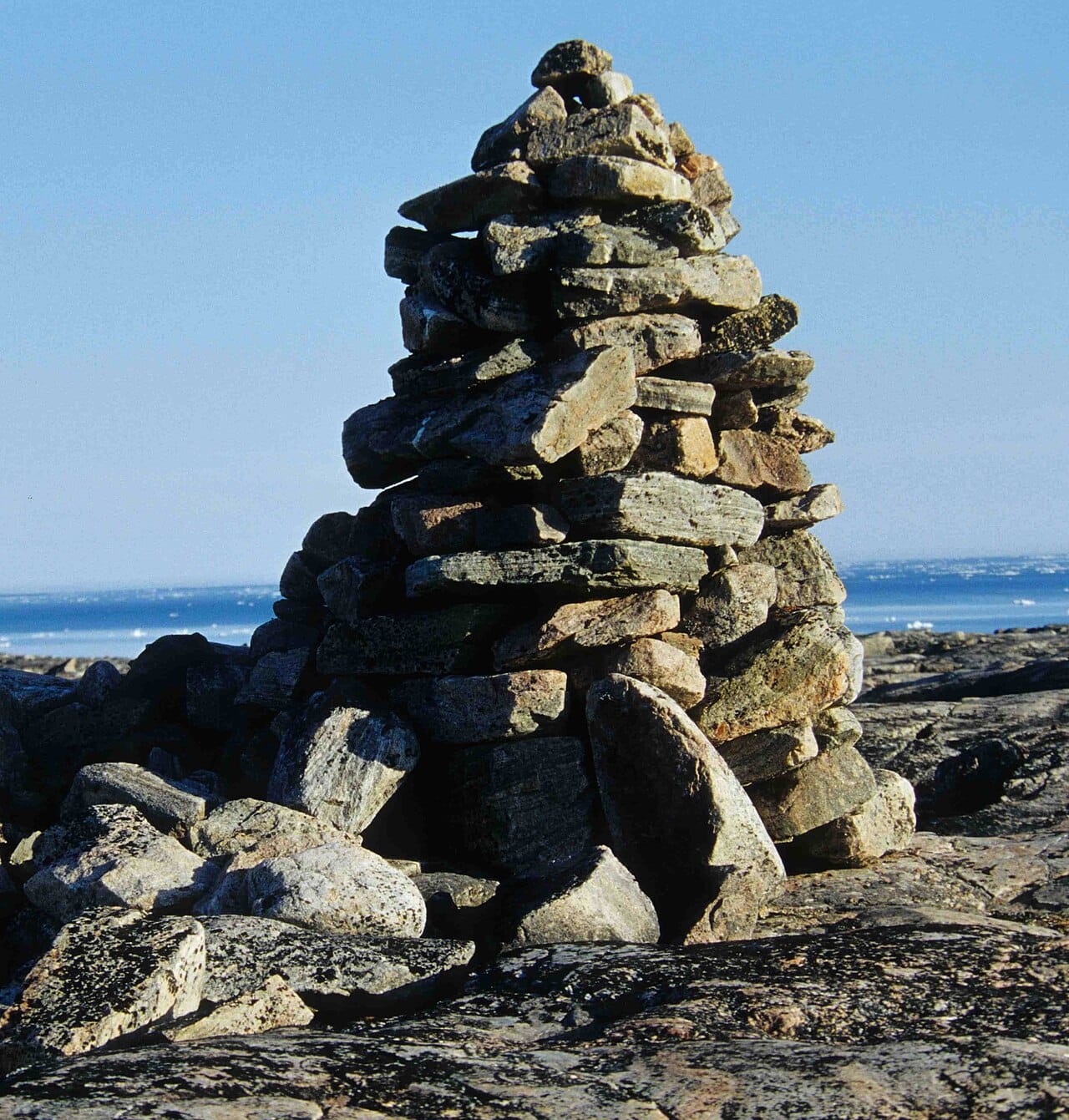
Nunavut is the heartland of Inuit culture in Canada, and Inuktitut is spoken by most of its people alongside English and French, one of the few Indigenous languages in the Americas with a strong and official footing. Inuit traditions remain vibrant, from throat singing and drum dancing to carving and the making of the stone figures known as inuksuit, and the knowledge of hunting and the land is passed down the generations. This living culture, set against the challenges of the modern world, is the soul of the territory.
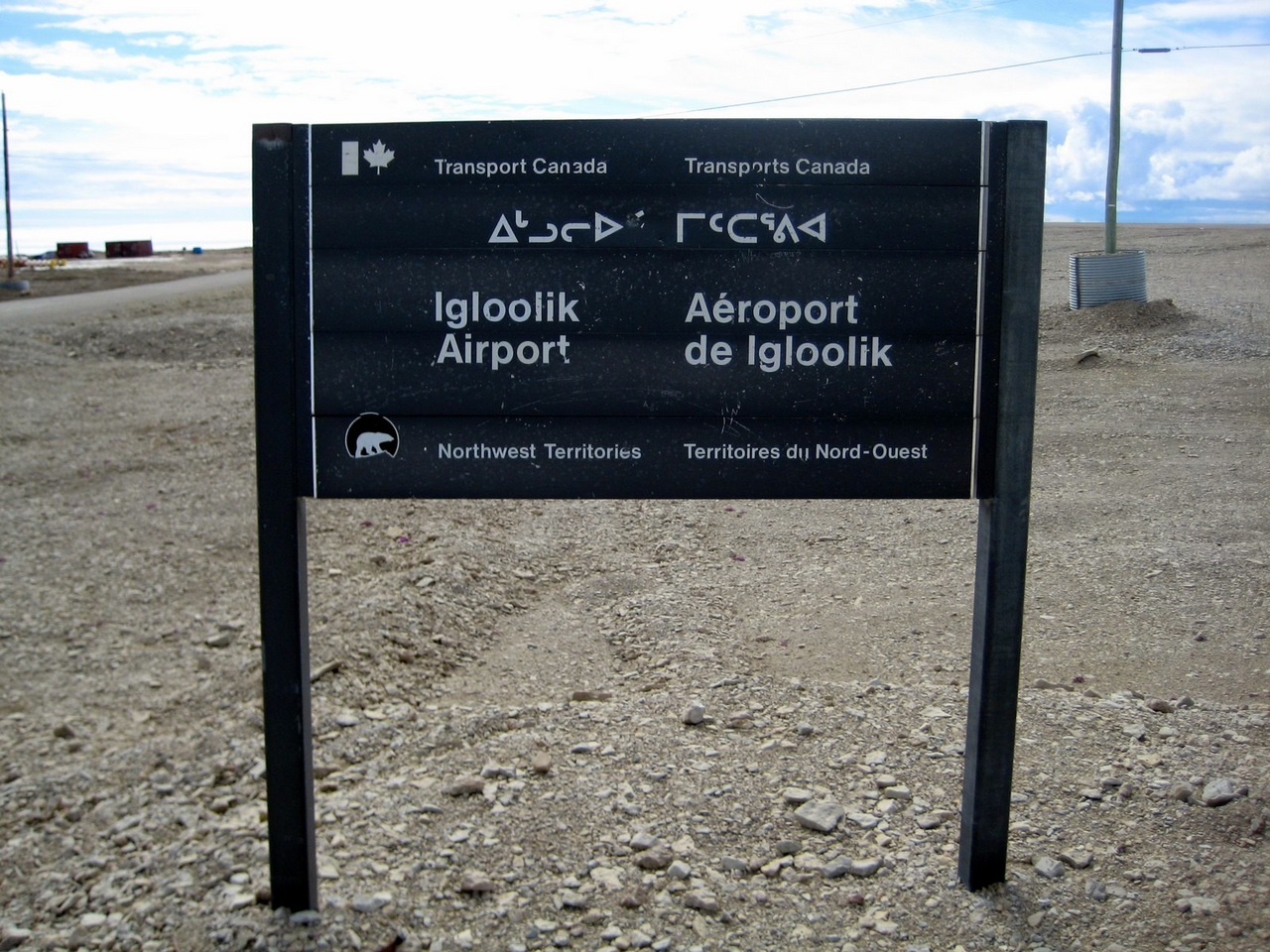
An airport sign in Igloolik written in Inuktitut syllabics and the Latin alphabet. Inuktitut is spoken by most people in Nunavut and holds official status, one of the strongest positions of any Indigenous language in the Americas.
An airport sign in Igloolik written in Inuktitut syllabics and the Latin alphabet. Inuktitut is spoken by most people in Nunavut and holds official status, one of the strongest positions of any Indigenous language in the Americas.Credit: BaShildy (CC BY 3.0).
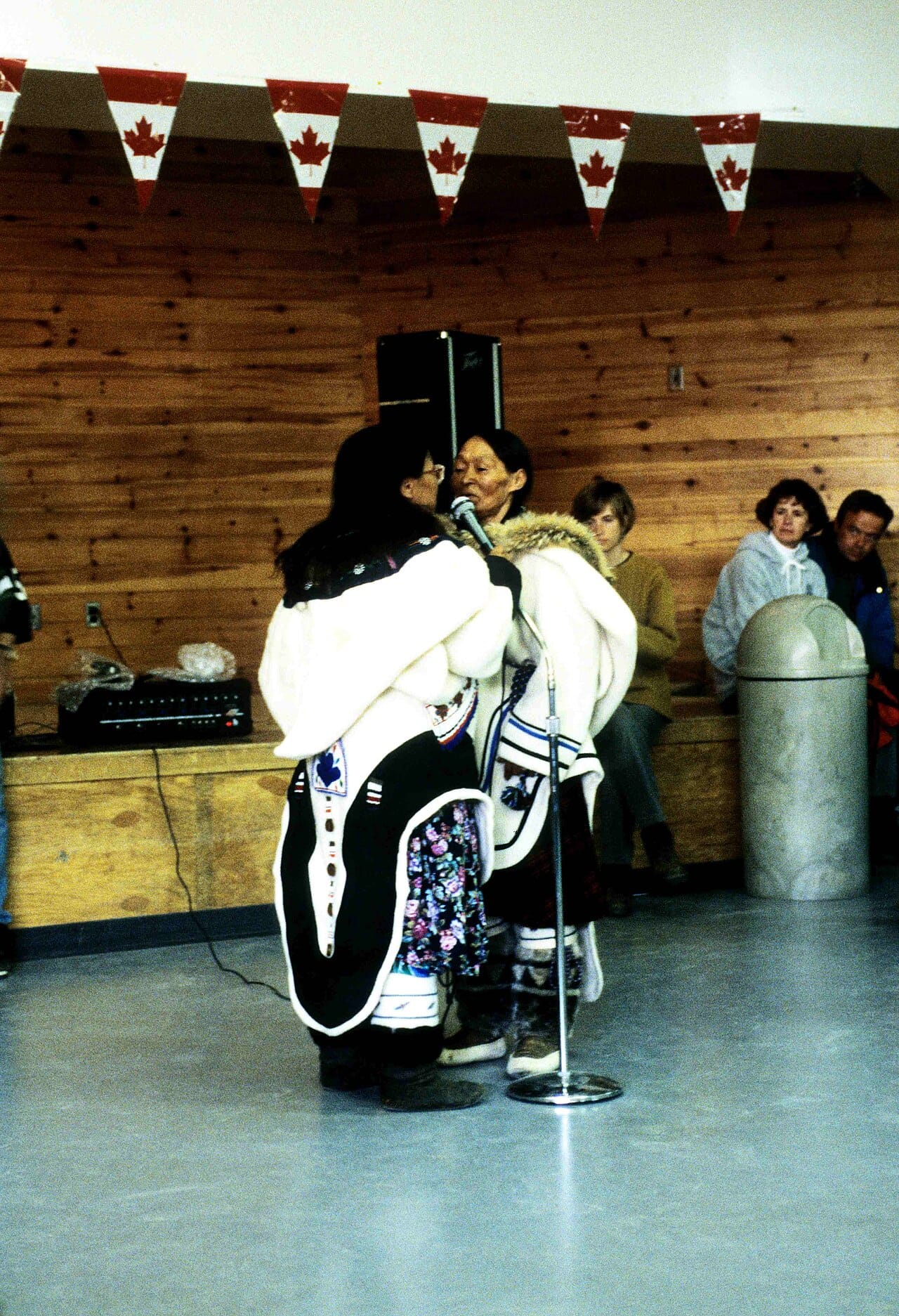
Inuit throat singing, a traditional vocal art performed between two women. Nunavut is the heartland of a living Inuit culture that also includes drum dancing, carving, and storytelling.
Inuit throat singing, a traditional vocal art performed between two women. Nunavut is the heartland of a living Inuit culture that also includes drum dancing, carving, and storytelling.Credit: Ansgar Walk (CC BY-SA 2.5).
An inuksuk, a figure of stacked stones built by the Inuit to serve as a marker or landmark on the vast, featureless tundra. It has become one of the best-known symbols of the Canadian Arctic.
An inuksuk, a figure of stacked stones built by the Inuit to serve as a marker or landmark on the vast, featureless tundra. It has become one of the best-known symbols of the Canadian Arctic.Credit: Ansgar Walk (CC BY-SA 2.5).

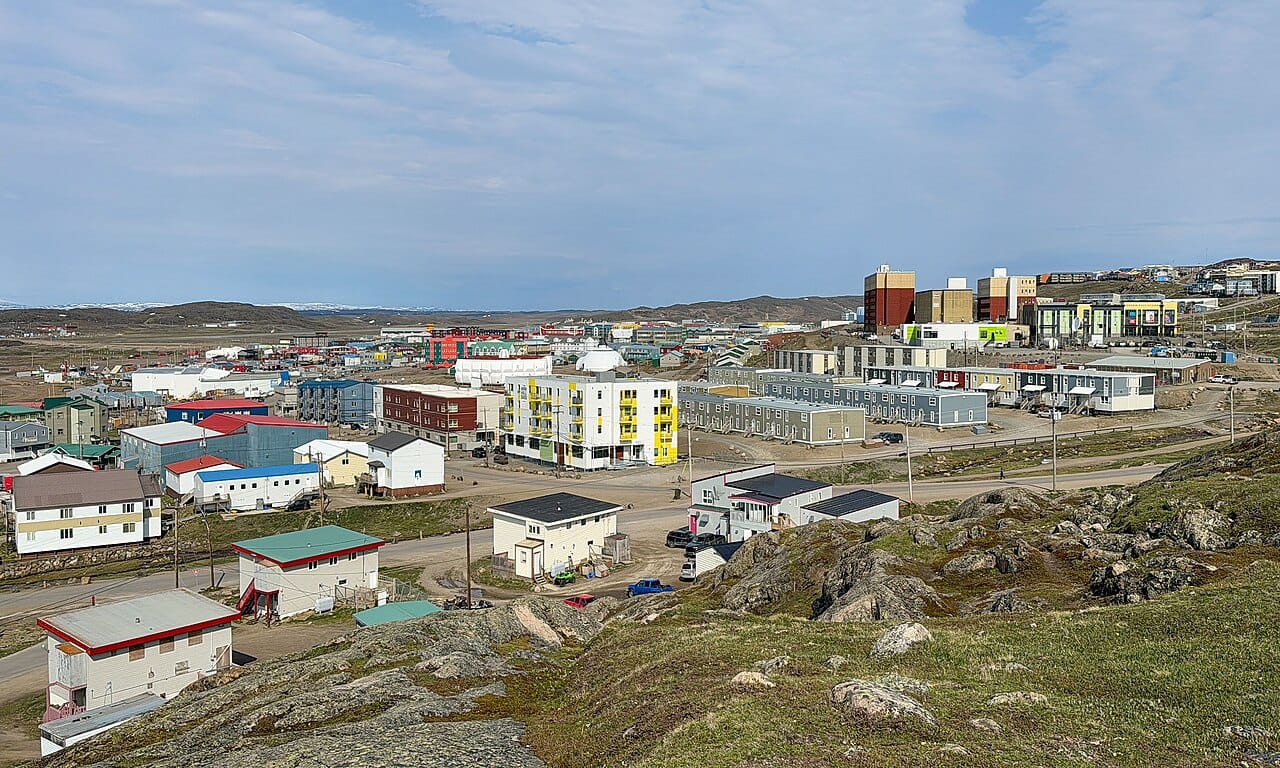
Nunavut has a population of around 40,000 people, about 85 percent of them Inuit, the highest proportion of Indigenous people anywhere in Canada. They live in some twenty-five small communities scattered across an enormous territory, none connected to each other or to the south by road, so that almost all travel is by air. The largest community by far is the capital, Iqaluit, on Baffin Island. Young, fast-growing, and deeply rooted in Inuit identity, Nunavut's people sustain their culture across one of the most remote regions on Earth.
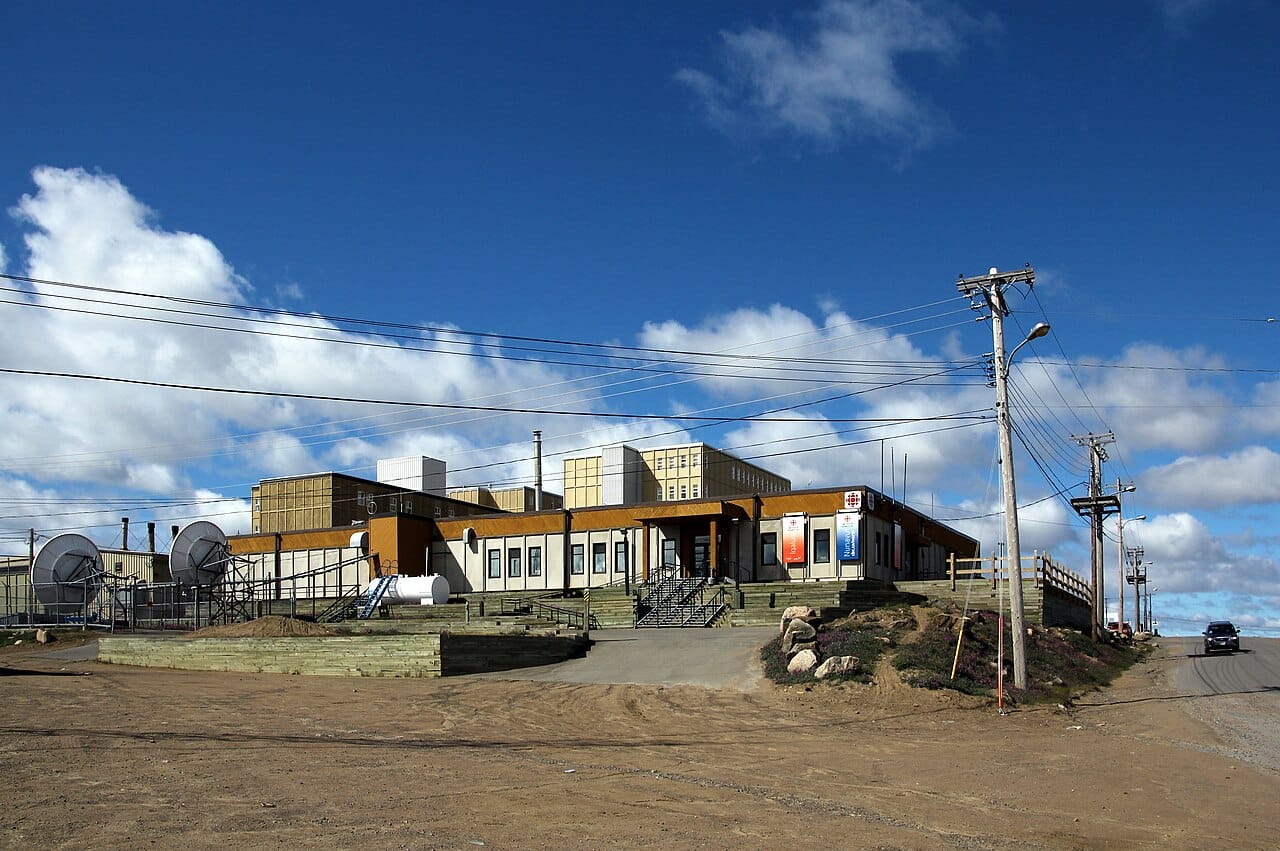

The CBC studio in Iqaluit, the capital of Nunavut. Broadcasting in Inuktitut and English, it is part of the modern life of a territory that binds scattered Arctic communities together.
The CBC studio in Iqaluit, the capital of Nunavut. Broadcasting in Inuktitut and English, it is part of the modern life of a territory that binds scattered Arctic communities together.Credit: Sebastian Kasten / Sebastian Kasten (CC BY-SA 3.0).