The idea that each person learns best through a particular sensory channel, and that teaching matched to that channel improves learning. It is believed by most teachers in every country where the question has been asked, and it has failed every properly designed test of it.
The version that matters is not that people have preferences. They plainly do, and nobody disputes it.
The testable claim, called the meshing hypothesis, is that matching instruction to a person's identified style produces better learning than mismatching it. That claim is specific: it predicts an interaction, so visual learners should do better with visual instruction than auditory learners do with the same visual instruction, and the reverse.
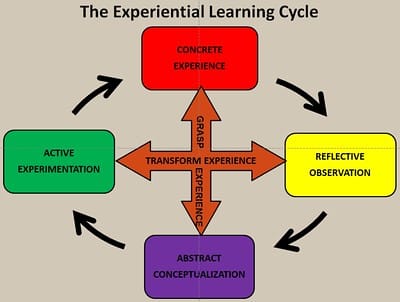
Dozens of frameworks exist, the best known being VARK, which sorts people into visual, auditory, reading and kinaesthetic. Estimates put the number of published models at more than seventy. They classify people differently, which is itself a problem: a framework measuring something real should agree with the others more than these do.
Harold Pashler and colleagues reviewed the field in 2008 for Psychological Science in the Public Interest, and set out what an adequate test requires: assign learners to styles, randomly allocate them to matched or mismatched instruction, and test everyone on the same material.
Almost no studies had done this. Of those that had, the results either found no interaction or ran opposite to the prediction. The reviewers concluded that the evidence base did not justify the practice.
Later work has not changed it. A 2015 study by Polly Husmann and Valerie Dean O'Loughlin followed anatomy students, and found that students who studied in ways matching their VARK results did no better, and that most did not use strategies matching their own results anyway. A 2018 study by Rogowsky and colleagues assigned adults to matched and mismatched instruction and found no interaction on comprehension.
The pattern is consistent: preference is measurable, and matching to it does not improve outcomes.
The material itself has a form, and the form should follow it. Geography is taught with maps, music with sound, surgery with practice. That is a fact about the subject, not the student, and it is often mistaken for support for styles.
Several strategies do have strong evidence across learners: spacing practice over time rather than massing it, testing as a study method rather than only as assessment, interleaving related topics rather than blocking them, and asking learners to explain material to themselves. All of these help nearly everyone, and all are less popular than they should be because they feel harder while working.
Dual coding, presenting material in words and images together, also has good support. It is sometimes confused with learning styles, and it is close to the opposite: it says everyone benefits from both channels, not that people should be sorted into one.

Surveys of teachers put belief above eighty percent in most countries surveyed, and belief among the general public is comparable. It appears in teacher training materials, in school policy, and in commercial products.
Several reasons are proposed. It is intuitive, since people really do have preferences and really do find some presentations easier. It is flattering, since it frames difficulty as mismatch rather than as effort. It appears egalitarian, since it says every child can learn given the right approach. And it has been repeated for decades in professional training, which is a strong source of belief.
The practical harm is debated. Some argue it is a benign misconception that at least encourages varied teaching. Others point out that it consumes training time, that it can lead to labelling children in ways that limit them, and that it displaces strategies which do work. The second position has the better of the argument, since the alternatives are not neutral.