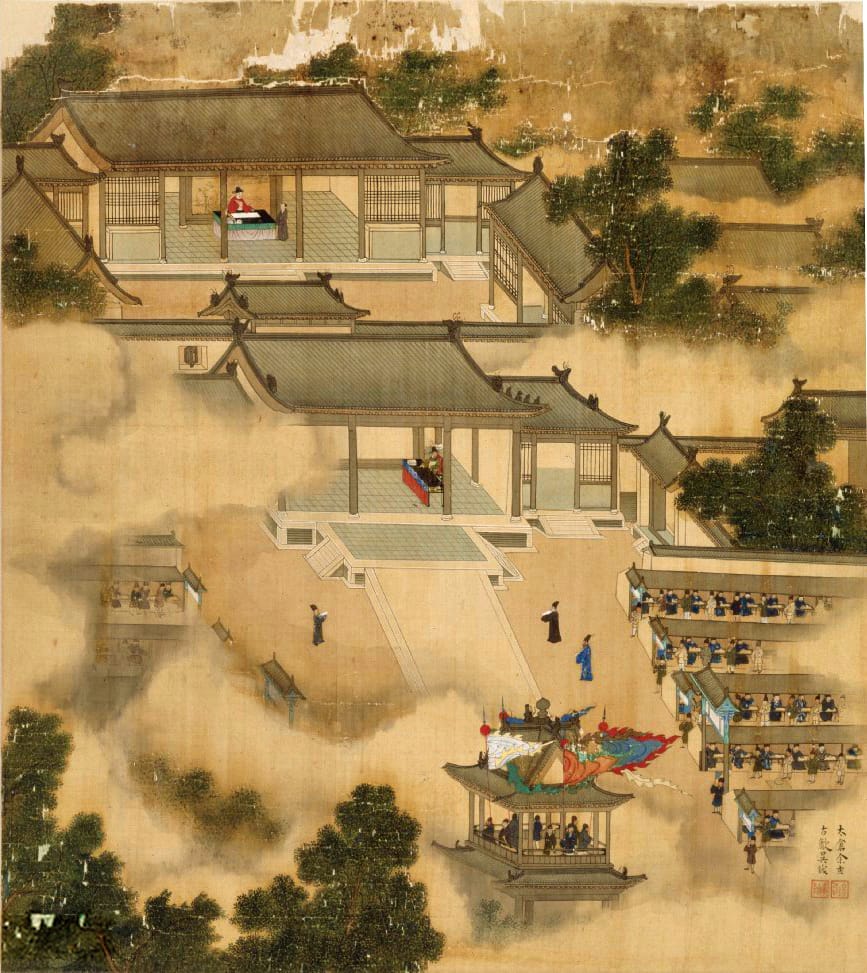
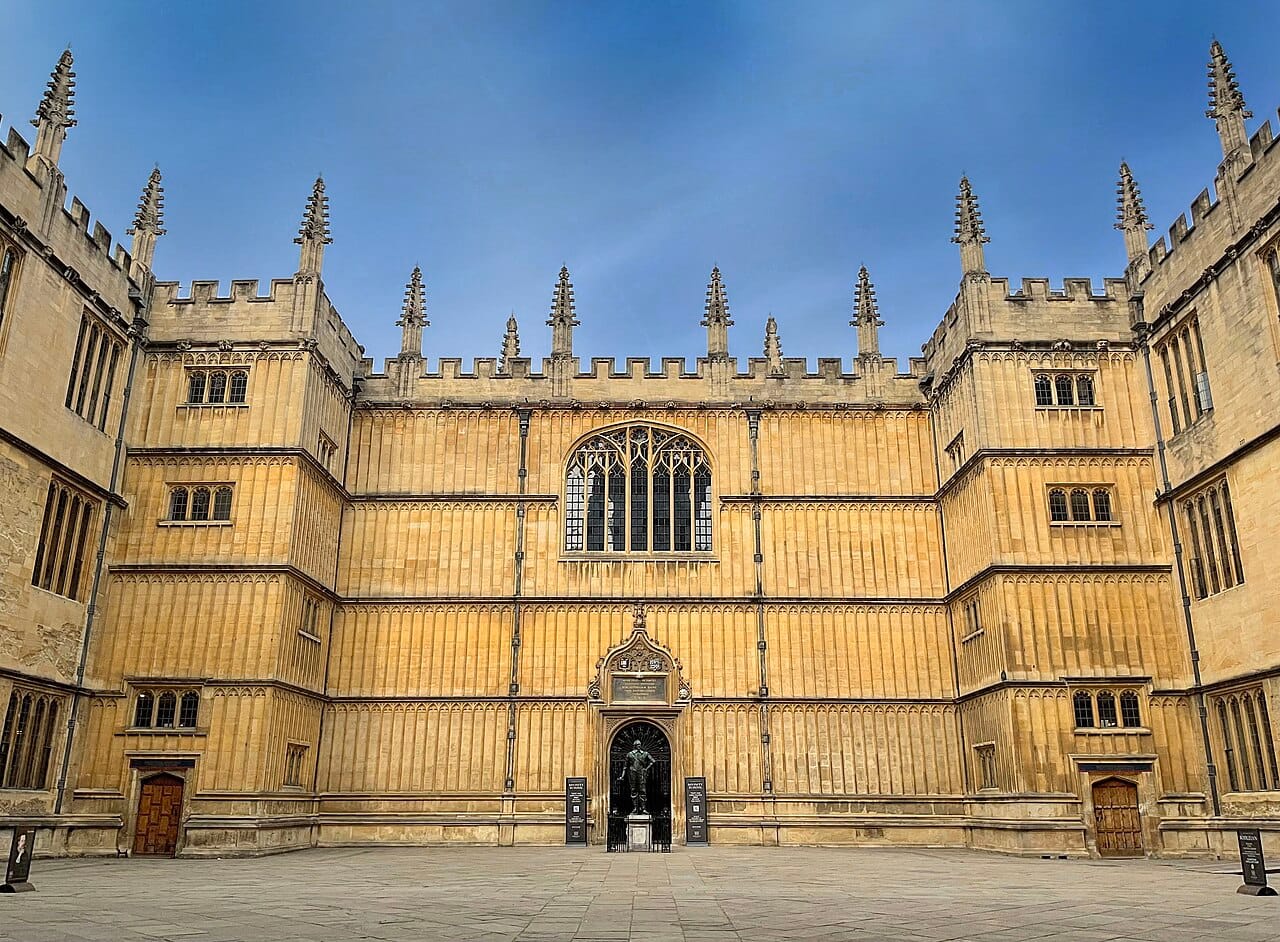
An institution of higher education and research, granting degrees. The form originated in medieval Europe, has proved unusually durable, and combines two functions, teaching and research, that were joined comparatively recently.
Institutions of advanced learning existed in many civilisations, including the Academy in Athens, Nalanda in India, the House of Wisdom in Baghdad, and al-Qarawiyyin in Fez, founded in 859 and recognised by some as the oldest degree-granting institution still operating.
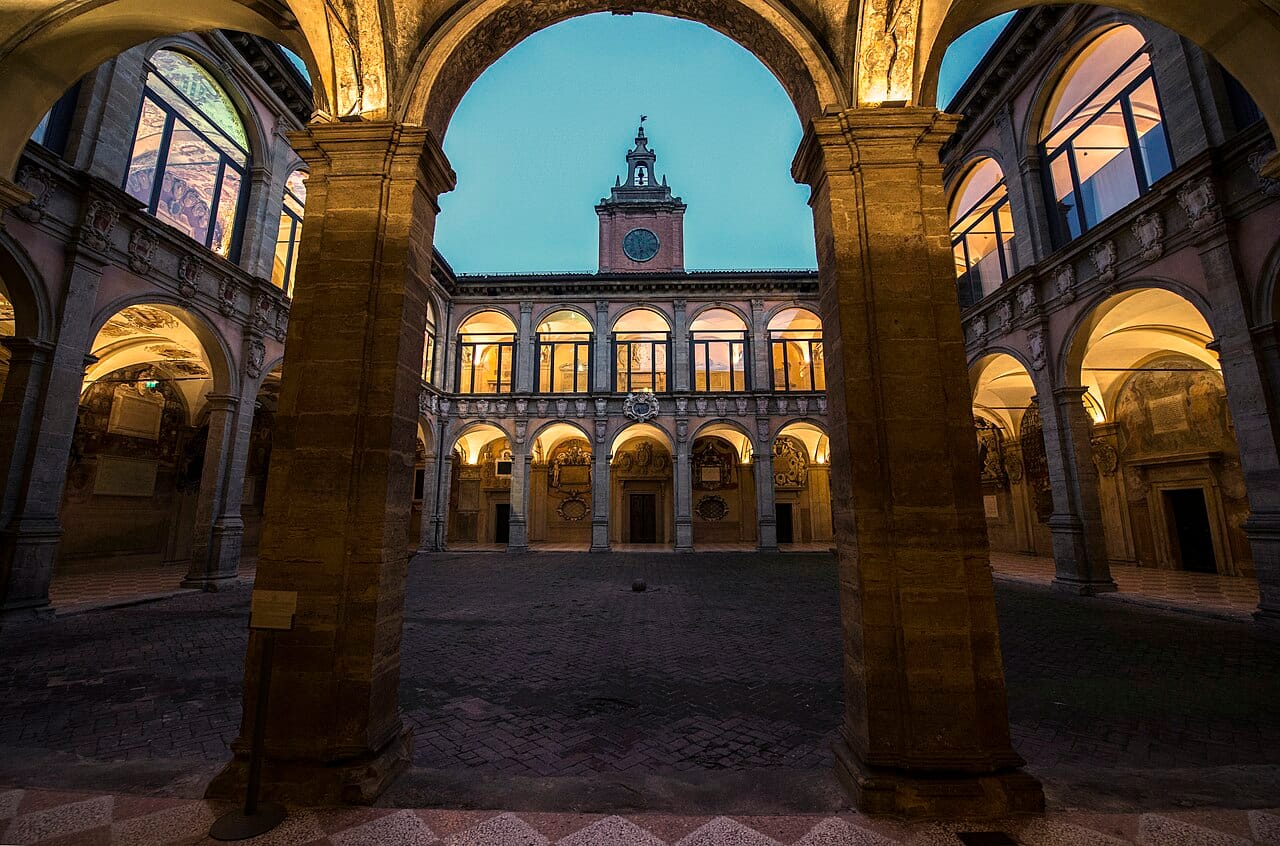
The specific European form emerged in the eleventh and twelfth centuries. Bologna from 1088, Paris and Oxford shortly after.
Its distinguishing features were institutional. It was a self-governing corporation of masters or students, it granted a licence to teach that was recognised beyond the city that issued it, and it had a defined curriculum and formal examination.
Two organisational models diverged early. Bologna was governed by the students, who hired and could dismiss the masters. Paris was governed by the masters. Most later universities followed Paris.
The medieval curriculum comprised the seven liberal arts followed by the higher faculties of theology, law and medicine.
The Humboldtian reform, associated with the University of Berlin founded in 1810, joined research to teaching. Wilhelm von Humboldt argued that professors should produce knowledge as well as transmit it, and that students should participate in enquiry rather than receive instruction alone.
That combination is now assumed to be what a university is, and it is roughly two hundred years old rather than a thousand.
The nineteenth century also produced the seminar, the laboratory as a teaching space, the doctoral dissertation as the standard research qualification, and academic freedom as an explicit principle.
The twentieth century brought mass participation. Attendance rose from a small elite fraction to a substantial proportion of the age cohort in developed countries, driven by public funding, post-war expansion and the growing role of credentials in employment.
Teaching and credentialling, which is what most students attend for and what most public funding is justified by.
Research, which in many countries is concentrated in universities rather than in separate institutes, and which produces the large majority of published basic research.
Certification, in that a degree signals attainment to employers. Economists distinguish between the human capital account, in which education makes people more productive, and the signalling account, in which it identifies people who were already capable. Both effects are real and their relative size is disputed.
Preservation and transmission of specialised knowledge, including fields with no immediate application, which no other institution reliably supports.

Funding models differ substantially between countries, and the differences drive most of the variation in how universities behave.
Public systems fund institutions largely through the state, with low or no tuition fees, as in much of continental Europe.
Mixed systems combine state funding with substantial tuition, as in the United Kingdom and Australia.
Private and market-oriented systems rely heavily on tuition, endowment and research grants, as in the United States, which produces both the highest-resourced institutions in the world and the highest student debt.
Rankings have become influential and are widely criticised, since they weight research output and reputation heavily and measure teaching quality poorly, and institutions respond to what is measured.
Cost and access. Tuition rises above inflation in several countries have made affordability a political issue, and the returns to a degree vary enormously by field and institution, which complicates the claim that it is uniformly worthwhile.
The purpose of the degree. Whether universities should prepare students for employment or provide education independent of it is a genuine disagreement, and funders and students frequently answer differently from academics.
Academic labour. A large and growing share of teaching is performed by staff on short-term contracts, which affects both conditions and continuity.
Research incentives. Assessment by publication volume and citation has documented effects on what research gets done, favouring publishable and incremental work, which connects to the problems described in the peer review and replication crisis capsules.
Online provision expanded rapidly and has not displaced residential study, which suggests that what universities supply includes the cohort, the supervision and the credential rather than the transmission of information alone.
The university is among the most durable institutional forms in existence. A substantial number of organisations operating continuously for more than five centuries are universities, and their basic structure of faculties, degrees and self-governance has survived the collapse of every political order around them.
It is also the institution through which most specialised knowledge is now produced and transmitted, which makes how it is funded and what it is asked to measure a question with consequences well beyond education.