The ability to understand and work with numbers in practical situations. It is distinct from mathematical education, it is measured internationally, and substantial proportions of adults in wealthy countries lack it at the level daily life requires.
Numeracy is applied rather than abstract. It includes reading a timetable, comparing prices by unit, understanding a percentage change, interpreting a chart, judging whether an answer is plausible, and reasoning about risk and probability.
It is not the same as mathematical attainment. A person may have passed formal mathematics examinations and still misread a graph or misjudge a probability, and a person with little formal education may calculate accurately in a familiar context.
That context dependence is well documented. Studies of street vendors and market traders have found people performing complex arithmetic accurately in their working setting while failing formally equivalent problems presented as school exercises, which indicates that the skill is often tied to the situation in which it was learned.
International surveys assess adult numeracy across levels of difficulty rather than as a single threshold.
Results consistently find that a substantial minority of adults in high-income countries perform at or below the most basic level, able to handle simple whole-number arithmetic in familiar contexts and not multi-step problems, percentages or proportional reasoning.
The proportion varies between countries by a wide margin, which indicates that the outcome is not a fixed property of populations.
Numeracy correlates with employment, earnings and health outcomes, and in several analyses it predicts them at least as strongly as literacy does.
Humans and many other animals possess an approximate number sense from birth: the ability to judge which of two collections is larger without counting, with accuracy depending on the ratio between them.
A separate system tracks very small quantities exactly, up to about three or four, without counting.
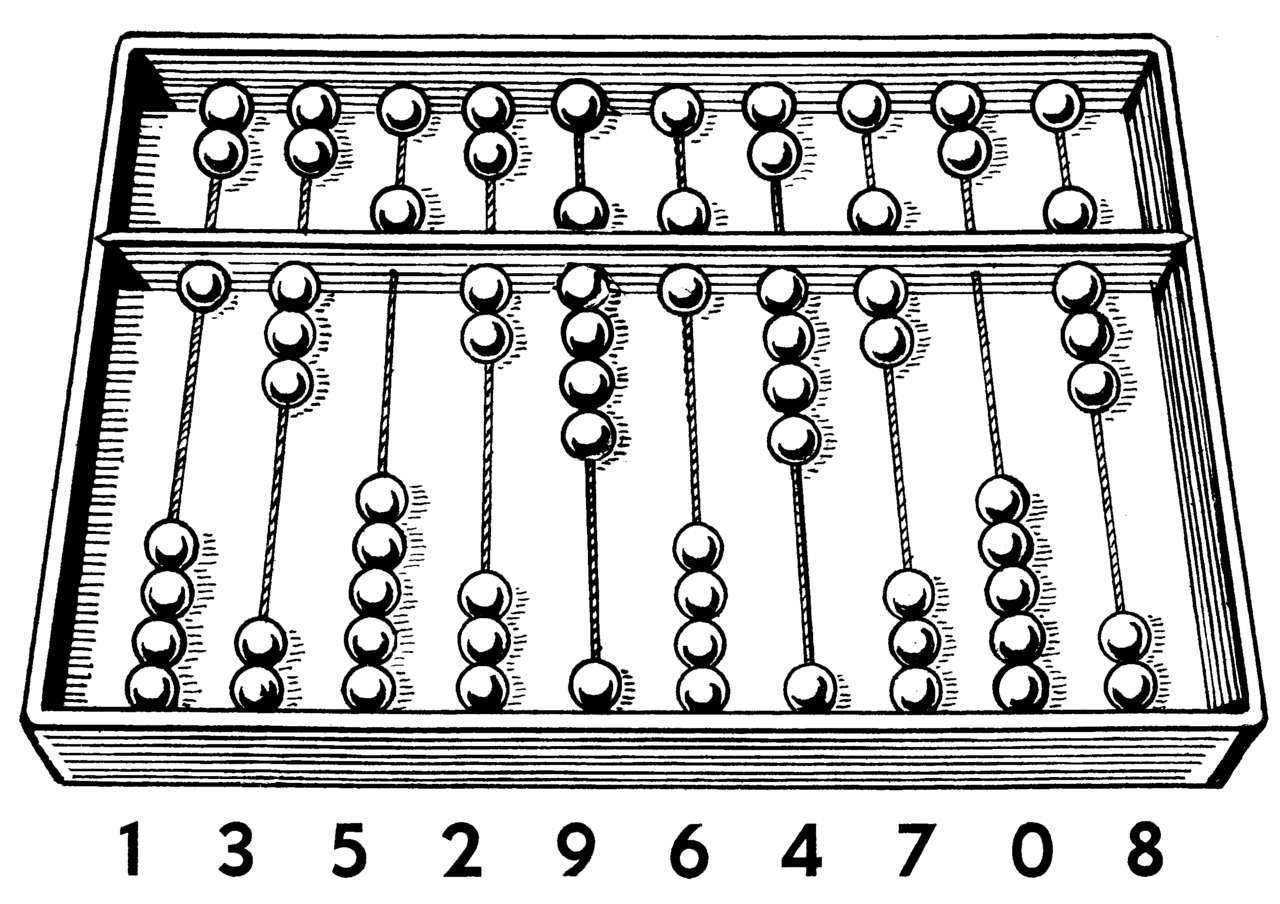
Exact numbers beyond that require language and symbols and are cultural rather than innate. Counting sequences must be learned, and the insight that the last word said gives the size of the set is a developmental step that takes children time to acquire.
Studies of languages with limited number vocabulary have found that speakers perform well on approximate tasks and struggle with exact matching of larger quantities, which supports the view that exact number is a cultural technology built on an innate approximate foundation.
Dyscalculia, a specific difficulty with number that is not explained by general ability or instruction, affects a few per cent of people and is far less recognised than dyslexia.
Several explanations are supported and none is sufficient alone.
Mathematics anxiety is well documented and measurable. It consumes working memory, which is required for calculation, so anxiety degrades performance directly rather than only through avoidance.
Social acceptability differs. Admitting inability with numbers carries little stigma in many settings, and often none at all, in a way that admitting inability to read does not, which reduces the pressure to address it.
Teaching that emphasises procedure over understanding produces students who can execute methods and cannot judge when to apply them or whether a result is reasonable.
Adults lose skills they do not use, and calculation is now widely delegated to devices, which removes the practice that maintains estimation ability.
Risk and probability are where the consequences are clearest. Understanding a medical test result requires reasoning about base rates, and studies have found that doctors as well as patients frequently misinterpret the same statistics when presented as probabilities and interpret them correctly when presented as natural frequencies, meaning counts out of a hundred people rather than percentages.
That finding has practical force: the difficulty is partly in the presentation rather than entirely in the reader, and changing the format improves comprehension measurably.
Financial decisions depend on compound interest, loan terms and comparison of offers, all of which reward numeracy and penalise its absence.
Public argument frequently turns on quantities, and the ability to notice that a figure is implausible, or that a percentage has no stated base, is a form of defence against misleading claims that does not require expertise.
Numeracy determines whether a person can use the quantitative information that ordinary life now presents constantly, in medicine, finance, work and news.
Its distribution is also a policy question rather than a fixed fact, since the wide variation between comparable countries indicates that adult numeracy responds to how it is taught and how much it is used, not merely to who is being taught.