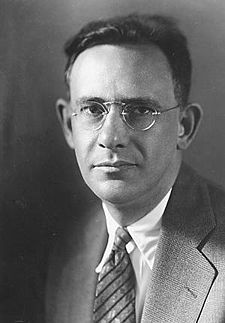
Julian Jaynes proposed in 1976 that people three thousand years ago were not conscious in the way we are, that they experienced their own thoughts as voices of gods, and that consciousness is a learned cultural invention rather than a biological given. It is almost certainly wrong and it is not a stupid idea.
Jaynes, a Princeton psychologist, argued in The Origin of Consciousness in the Breakdown of the Bicameral Mind that introspective self-awareness is recent, dating to roughly the second millennium BC.
Before that, he proposed, the mind was bicameral, in two chambers. One hemisphere generated instructions during novel or stressful situations, and the other experienced them as an external voice, commonly identified as a god, a king, or an ancestor. There was no inner narrator, no felt sense of a self deciding, no capacity to introspect on one's own reasoning.
Such a mind would function well in a stable society with established customs. Jaynes argued it broke down under the pressures of the late second millennium BC: mass migration, the collapse of Bronze Age states, writing, and encounters with peoples whose gods said different things. Consciousness, on his account, is what replaced it, learned through language and metaphor rather than evolved.
His argument rested substantially on texts, and the central case is Homer.
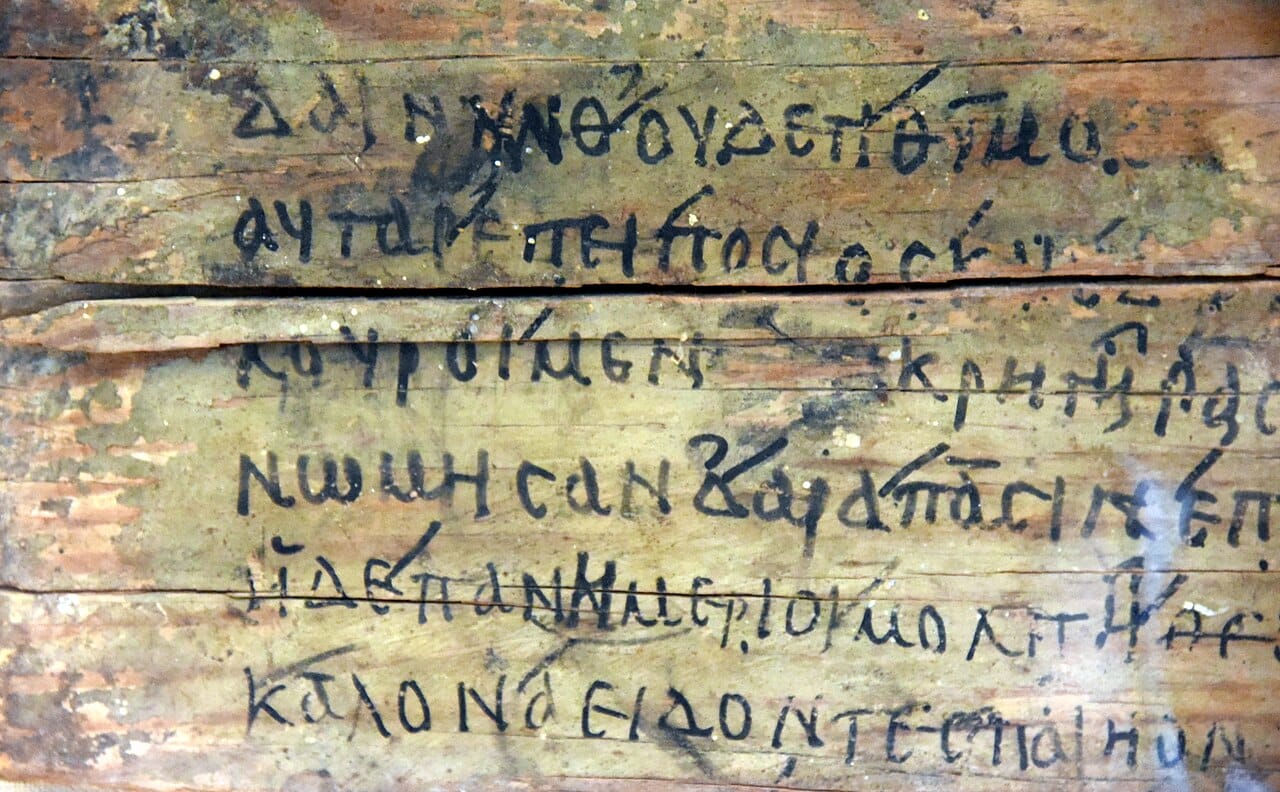
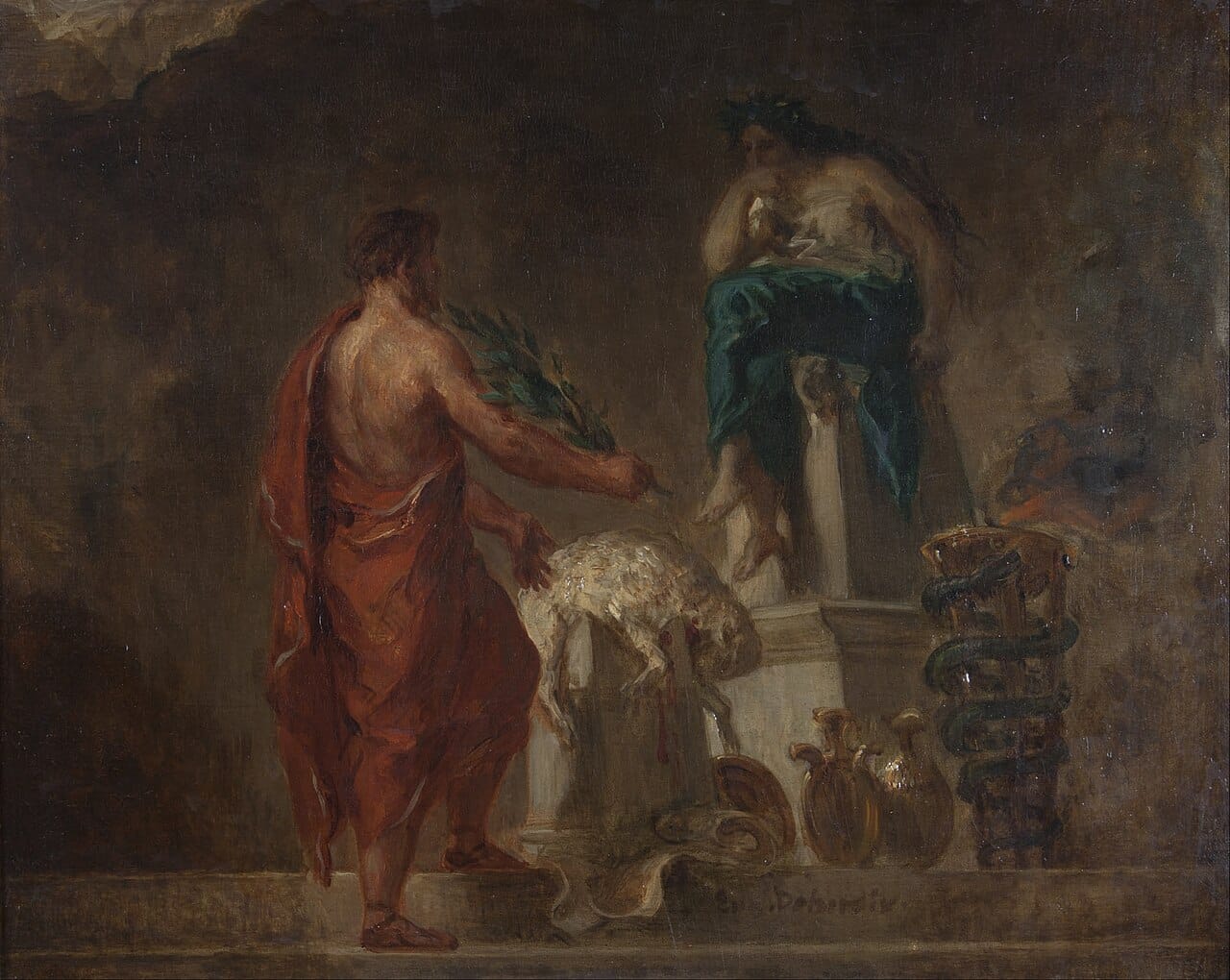
Jaynes argued that characters in the Iliad never deliberate. They do not weigh options, form intentions, or reflect on their motives. At exactly the points where a modern narrative would place a decision, a god appears and tells them what to do. Achilles reaching for his sword is stopped by Athena, who is described as visible and audible to him alone.
The vocabulary supports part of this. The Homeric words later translated as mind, soul or spirit have concrete bodily meanings in the earliest usage: breath, the diaphragm, motion in the chest. Words for interior mental life appear later.
The Odyssey, composed later, is different: Odysseus deliberates, deceives, and reflects. Jaynes read the two poems as bracketing the transition.
He assembled further evidence from the ubiquity of oracles and prophecy in the ancient world, from the treatment of statues as speaking, from Old Testament passages where God speaks directly and later ones where he is silent and sought, and from the modern phenomena of auditory hallucination, hypnosis and possession, which he took as vestiges of the older organisation.
The objections are substantial and most of them are decisive.
The dating is impossible on any evolutionary account. A change in neural organisation across the whole species within a few centuries, three thousand years ago, cannot happen genetically. Jaynes anticipated this and made consciousness cultural rather than biological, which weakens the claim considerably: if it is a learned skill, the bicameral brain organisation is not required, and the striking part of the proposal evaporates.
The textual argument is selective. Classicists have identified passages in the Iliad that do describe internal deliberation, and have argued that the absence of introspective narration reflects the conventions of oral epic poetry rather than the psychology of its characters. Absence of a literary device is weak evidence about minds.
The neuroscience has not supported the specific model. The proposed division of function between hemispheres does not match what is now known, and split-brain research, which Jaynes drew on, showed something considerably more complicated than two independent chambers.
Anthropology is against it. No contemporary or historically documented society has been found lacking introspective self-awareness, including societies with no writing and no contact with literate cultures until recently.
And the archaeological record shows planning, deception, symbolic behaviour and future orientation tens of thousands of years before Jaynes's transition, all of which are hard to produce without something like the mental capacities he places at 1000 BC.
The book was taken seriously on publication and has never quite gone away, which is unusual for a rejected theory.
Part of the reason is that it poses a real question badly rather than posing a fake question well. Whether introspection as we practise it is culturally shaped, whether the vocabulary available for inner life affects the experience of it, and whether the sense of a unified self is constructed rather than given, are all live questions in philosophy of mind and in cognitive science.
Its treatment of auditory hallucination has also had a genuine afterlife. Research on voice-hearing has moved toward viewing it as an experience on a continuum rather than a purely pathological symptom, and toward the model in which internally generated speech is misattributed to an external source, which is close to Jaynes's mechanism without his history.
As a hypothesis that has been tested against several independent bodies of evidence and has failed most of them, retained here because it is a well-formed proposal about a real question rather than because it is likely to be true.
The distinction from DEBUNKED is fine and worth stating. A debunked claim has been shown false. Jaynes's central claim is not straightforwardly falsifiable, since the inner experience of people three thousand years dead is not accessible, and what has actually happened is that every line of evidence that can be checked has come out against it. That is close to refutation and it is not identical to it.