The proposal that the brain flushes waste through a network of fluid-filled channels, and that the flushing happens mainly during sleep. It was reported in 2013, adopted rapidly as the explanation for what sleep is for, and a 2024 study reported the opposite result.
The body clears metabolic waste through the lymphatic system, and the brain has no conventional lymphatic vessels. Given that the brain is the most metabolically active organ, how it disposes of waste is a real question that had no good answer.
Amyloid beta and tau, the proteins that accumulate in Alzheimer's disease, are produced during normal neural activity and must be removed continuously.
Maiken Nedergaard's group at Rochester described the system in 2013 and named it glymphatic, combining glial and lymphatic.
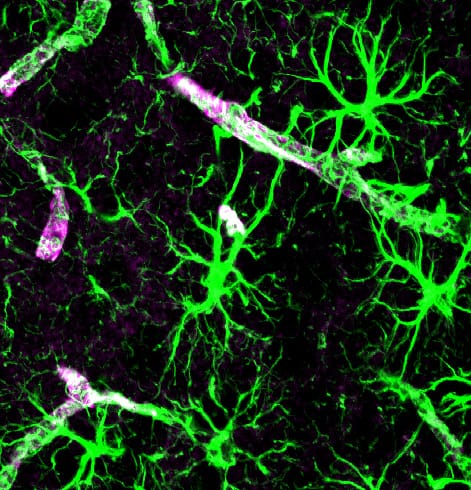
The proposal is that cerebrospinal fluid enters the brain along the outside of arteries, driven by arterial pulsation, passes through the tissue via aquaporin-4 water channels concentrated on astrocyte end-feet, and exits along veins carrying waste with it.
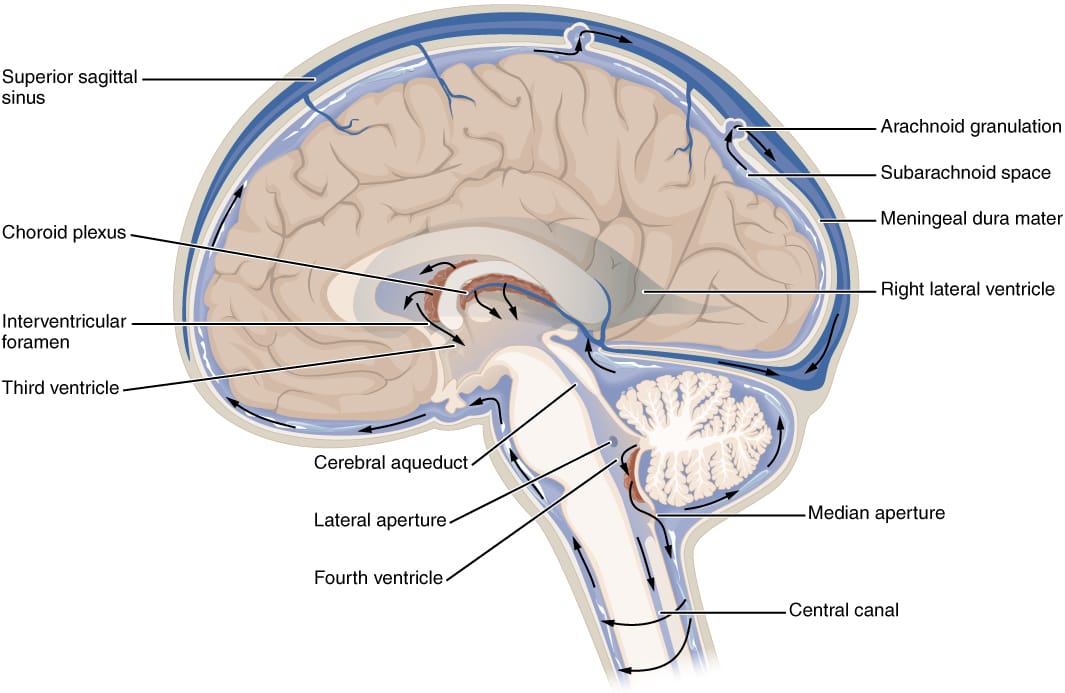
The finding that made it famous came in 2013: clearance was reported to be roughly twice as fast during sleep, with the space between cells expanding by around sixty percent to permit greater flow. Mice given amyloid beta cleared it faster while asleep.
This offered an answer to a long-standing question. Sleep is universal among animals with nervous systems, costly, and dangerous, and no fully satisfying account of its function existed. Brain cleaning was concrete, measurable and intuitive, and it entered public understanding almost immediately.

A study published in Nature Neuroscience in 2024 measured clearance of fluorescent tracers in mice and reported that it was markedly reduced during sleep and under anaesthesia, not increased.
That is not a refinement. It is the opposite of the founding result on the point that made the hypothesis famous.
The exchange since has been unusually direct in public. Nedergaard described the new study as misleading and poorly done, disputing its tracer methods and its measurement approach. The authors defended their technique as more direct than the imaging methods used previously.
The methodological dispute is genuine and technical. Measuring fluid movement in living brain tissue is hard, tracers can be affected by anaesthesia in ways unrelated to clearance, and different injection sites and imaging windows can give different answers. Neither side has an obviously decisive argument.
Several elements are not seriously disputed.
Cerebrospinal fluid does move along the outside of blood vessels in the brain, and this perivascular transport is observed directly.
Aquaporin-4 matters. Mice lacking it show impaired clearance, which is a specific and reproducible finding.
Meningeal lymphatic vessels exist. Their rediscovery in 2015 was a genuine surprise, since anatomy had held for a century that the brain had none, and they provide a route from the brain's coverings to cervical lymph nodes.
Impaired clearance is associated with Alzheimer's pathology in humans, and work published in 2026 reported clearance of amyloid beta and tau from brain to plasma with sleep-related enhancement.
What is contested is the direction and magnitude of the sleep effect, and whether the flow through tissue is bulk convective movement, as the hypothesis requires, or predominantly diffusion, which would carry material far more slowly and change the picture substantially.
Two claims run well ahead of the evidence and are widespread.
That poor sleep causes Alzheimer's disease through impaired clearance. The association between sleep disruption and dementia risk is real and the direction of causation is not established, since Alzheimer's pathology disrupts sleep years before diagnosis. Both directions are plausible and probably both operate.
That the function of sleep is waste clearance. Even on the most favourable reading this would be one function among several, and sleep has well-supported roles in memory consolidation, synaptic regulation and metabolic restoration that do not depend on the glymphatic account at all.
A mechanism with substantial supporting anatomy, a headline claim currently contradicted by a direct test, and an unresolved methodological dispute between competent groups.
Work published in 2025 identified synchronised oscillations in noradrenaline, blood volume and cerebrospinal fluid during sleep as a possible driver, which is the kind of mechanistic specificity that could eventually settle the argument.
Until it does, the honest description is that the brain clears waste somehow, that fluid movement along vessels is part of it, and that whether sleep is when this happens is currently disputed by the people best placed to measure it.