Chemical messengers released into the bloodstream by one tissue to act on another. They coordinate processes across the whole body over minutes to years, on timescales the nervous system does not handle.
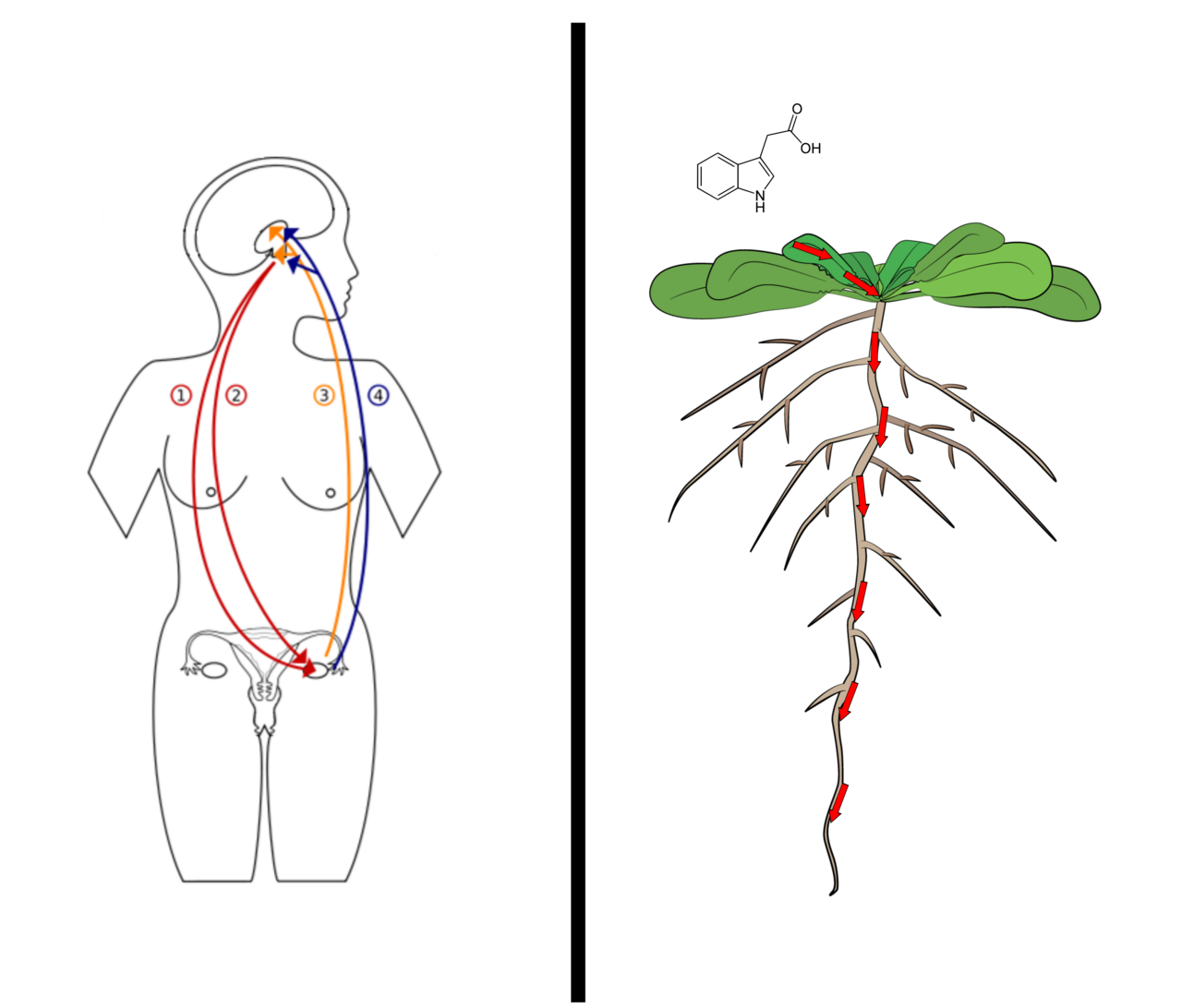
The nervous system sends fast, precisely targeted signals along fixed wiring. Hormonal signalling is slower, is broadcast through the circulation, and reaches every tissue.
Specificity comes from receptors rather than from delivery. A hormone circulates everywhere and affects only cells carrying the corresponding receptor, which is why one molecule can produce entirely different effects in different tissues.
Concentrations are extremely low, often measured in parts per billion, which is why the system requires sensitive detection and why small absolute changes have large effects.
Regulation is generally by negative feedback. A hormone's effect suppresses its own release, which holds output within a range. Many axes involve three levels, with the hypothalamus signalling the pituitary, which signals a target gland, whose product feeds back on both.
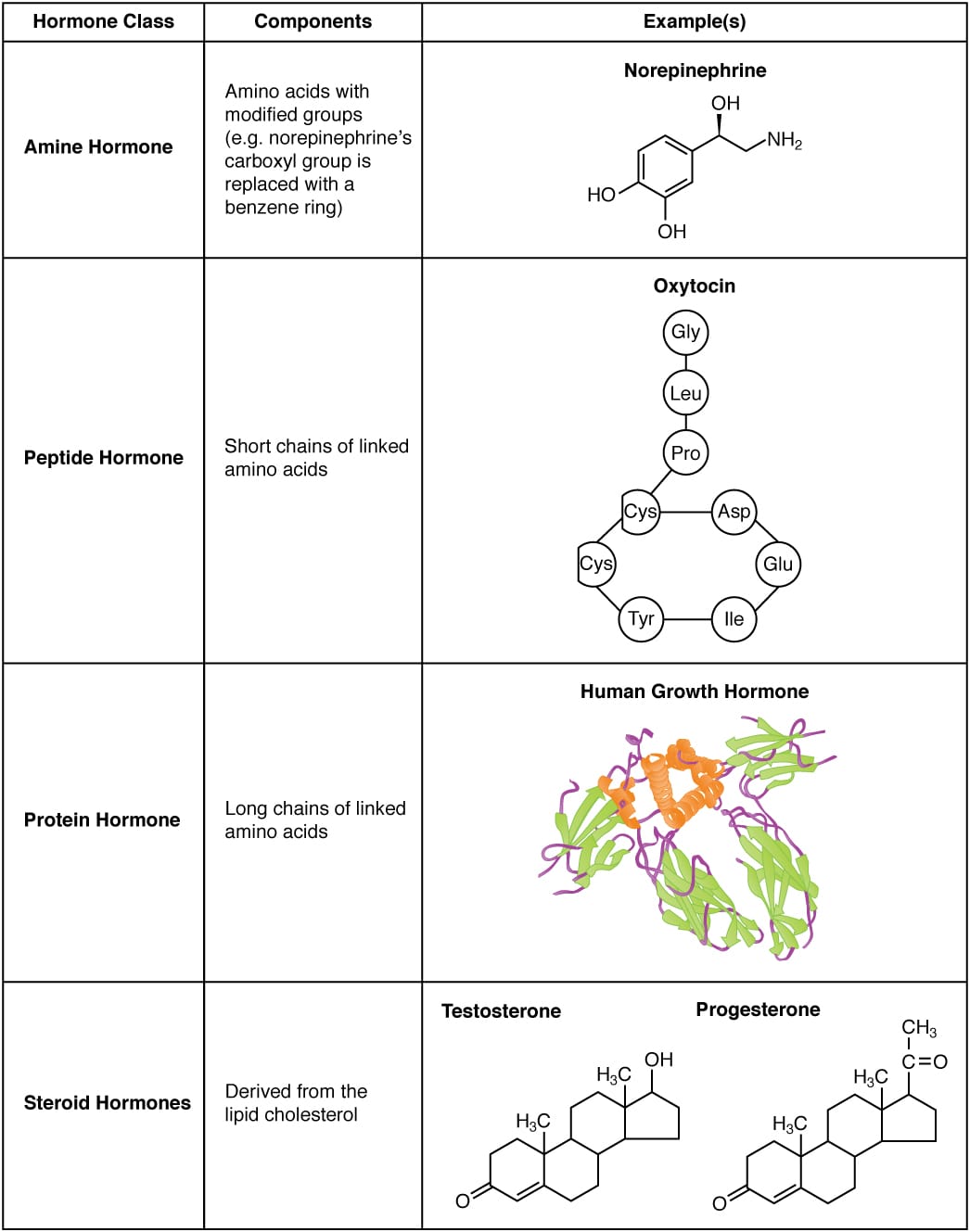
Peptide and protein hormones, including insulin and growth hormone, are water-soluble. They cannot cross cell membranes, so their receptors sit on the cell surface and they act through internal signalling cascades. Their effects begin quickly and they are digested if swallowed, which is why insulin must be injected.
Steroid hormones, derived from cholesterol, include cortisol, testosterone, oestrogen and aldosterone. They are fat-soluble, cross membranes freely, and bind receptors inside the cell that act directly on gene transcription. Their effects are slower and longer lasting.
Amine hormones, derived from single amino acids, include adrenaline and thyroid hormone, and behave in some respects like one class and in some like the other.
The chemical class predicts nearly everything about how a hormone behaves, which is why it is the primary division.
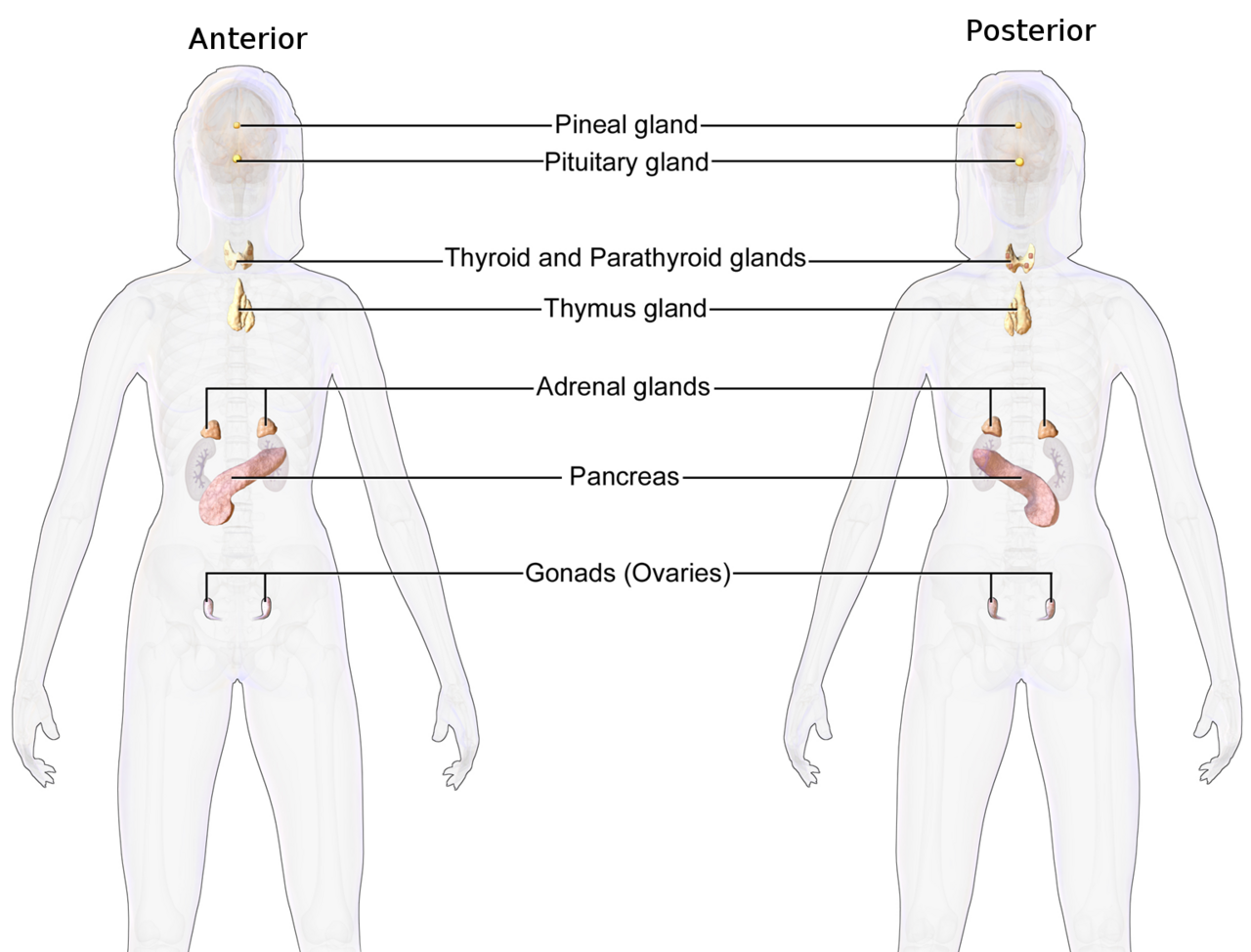
The hypothalamus links the nervous and endocrine systems, converting neural signals into hormonal ones.
The pituitary, directed by the hypothalamus, releases hormones controlling several other glands, and was historically called the master gland, which overstates its independence.
The thyroid produces hormones setting metabolic rate throughout the body. Deficiency causes fatigue, cold intolerance and weight gain; excess causes the reverse. Iodine is required for their synthesis, which is why iodised salt is among the most effective public health measures ever implemented.
The adrenal glands produce cortisol, which mobilises glucose and suppresses inflammation, and adrenaline, which produces the acute stress response.
The pancreas produces insulin and glucagon, treated in the insulin capsule.
The gonads produce sex hormones directing reproductive development and function.
Many tissues not classically regarded as endocrine also release hormones, including fat, which produces leptin signalling energy stores, the gut, which produces hormones regulating appetite and digestion, and bone and heart.
Deficiency and excess both cause disease, and endocrine disorders are frequently reversible by replacement or suppression, which makes them among the more satisfying areas of medicine.
Diabetes is the commonest, treated separately.
Thyroid disorders are common, straightforward to detect by blood test, and treatable.
Cushing's syndrome results from excess cortisol and Addison's disease from deficiency.
Growth hormone disorders produce gigantism or short stature depending on timing and direction.
Endocrine-disrupting chemicals in the environment, including some plasticisers and pesticides, can bind hormone receptors. Evidence of effects in wildlife is strong; the extent of effects in humans at environmental exposures is debated and actively researched.
The word hormone was coined in 1905 by Ernest Starling, from a Greek term meaning to set in motion.
The founding experiment was performed by William Bayliss and Starling in 1902. It was known that acid entering the small intestine triggers pancreatic secretion, and this was assumed to be a nerve reflex. They cut every nerve to a section of intestine and the response still occurred, which established that a chemical messenger carried in the blood was responsible. They named it secretin.
That result created endocrinology as a field, by demonstrating that the body coordinates itself chemically as well as neurally.
Hormones coordinate growth, metabolism, reproduction, stress response and the internal environment, operating on timescales from seconds to decades, and no other system spans that range.
They are also the clearest demonstration that specificity in biology comes from receptors rather than from delivery. A molecule present throughout the body produces entirely different effects in different tissues, which is a general principle that recurs wherever chemical signalling occurs.