The proposal that everything happening inside a region of space can be fully described by information stored on its boundary, so that a volume of reality is encoded on a surface with one fewer dimension. It came out of black hole thermodynamics, it has a precise mathematical realisation, and nobody knows whether it applies to the universe we live in.
Black holes are the origin, and specifically their entropy.
Jacob Bekenstein argued in the early 1970s that a black hole must carry entropy, otherwise throwing something into one would decrease the entropy of the universe and violate the second law of thermodynamics. Stephen Hawking initially resisted and then, deriving the radiation that carries his name, confirmed it and fixed the constant.
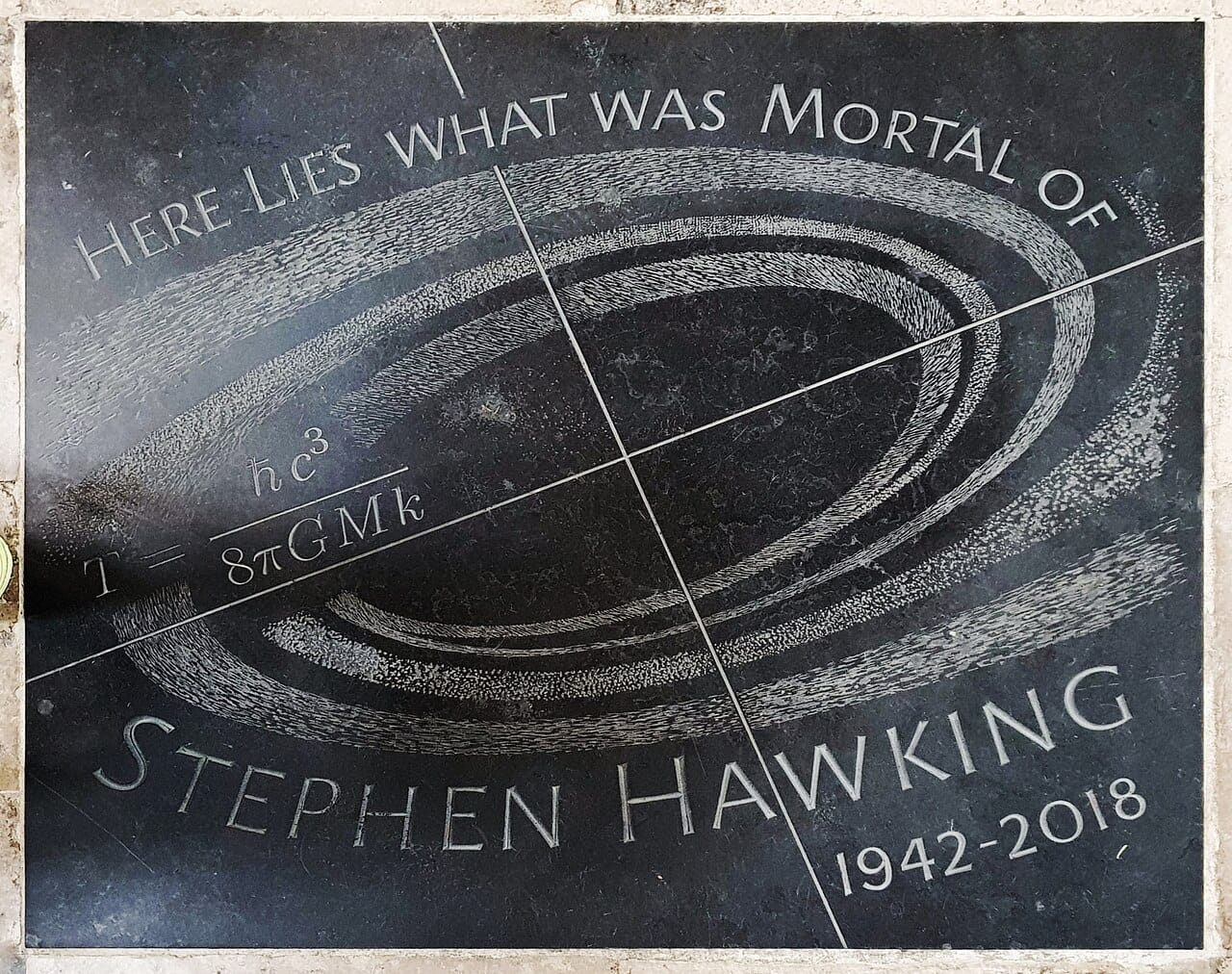
The result is peculiar. A black hole's entropy is proportional to the area of its event horizon, not to its volume. Every other system's entropy scales with volume, because entropy counts microscopic states and states live throughout a region.
If a black hole is the maximum entropy that can be packed into a given region, and that maximum scales with area, then the information content of any region is bounded by its surface rather than its interior.
Gerard 't Hooft proposed in 1993, and Leonard Susskind developed in 1995, that this is general rather than a peculiarity of black holes.
The claim is that a complete description of the physics inside any region can be written on its boundary, with one bit per roughly four Planck areas. The bulk and the boundary are not two systems, one of which models the other; they are the same physics in two descriptions.
This is deeply counterintuitive. It implies the number of degrees of freedom in a volume of space is vastly smaller than a field theory would suggest, and that three-dimensional space may not be fundamental.
Juan Maldacena's 1997 proposal gave the principle a concrete realisation, and it is the most cited paper in theoretical physics.
The AdS/CFT correspondence states that a theory of gravity in a five-dimensional anti-de Sitter space is exactly equivalent to a conformal field theory without gravity living on its four-dimensional boundary. Every quantity on one side has a counterpart on the other.
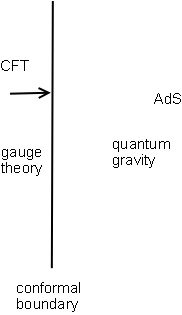
The evidence for the correspondence is extensive: thousands of calculations performed on both sides agree, including cases where one side is intractable and the other is straightforward. It is not proved in the mathematical sense and it is about as well supported as an unproved conjecture in physics gets.
It is also a duality with practical use. Hard problems in strongly coupled quantum field theory become tractable gravity calculations, and the method has been applied to the quark-gluon plasma and to condensed matter systems, with mixed but real success.
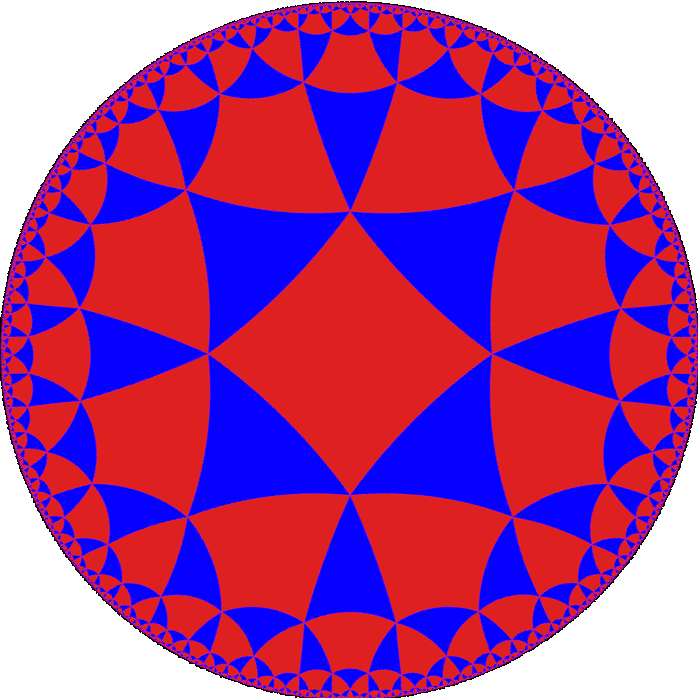
The problem is the space. Anti-de Sitter space has constant negative curvature and a boundary at infinity where the dual theory lives.
Our universe is not anti-de Sitter. It has positive vacuum energy and is expanding at an accelerating rate, which corresponds to de Sitter space, and de Sitter space has no boundary of the required kind. Constructing a holographic description of a universe like ours is an open problem, and attempts have not converged.
This is the crux. The holographic principle is established in a spacetime we do not inhabit, and whether it generalises is unknown.
Approaches to quantum gravity also disagree about it. An analysis of loop quantum gravity found that its polymer quantisation violates the holographic entropy bound, which if correct means the two programmes are not merely different routes to the same place.
Even if the principle turns out not to describe our universe, it has produced results.
The black hole information paradox, whether information falling into a black hole is destroyed, has been substantially clarified by holographic reasoning, and calculations of the entropy of Hawking radiation using these methods now reproduce the behaviour required for information to be preserved.
It reframed the relationship between geometry and information, and the proposal that spacetime itself emerges from quantum entanglement between boundary degrees of freedom is now a serious research programme rather than a slogan.
Proposals for testing it have begun to appear, including a scheme published in 2025 for probing holographic behaviour in an accessible system, though nothing yet constitutes a decisive test.
It is classified as a hypothesis because that is exactly its status: mathematically precise, extensively verified in one setting, unverified in ours, and with no experiment currently able to decide it.