Guyana is a country on the northern coast of South America, bordered by Venezuela, Brazil, and Suriname. Though geographically part of the continent, it is culturally a Caribbean nation, the only South American country whose official language is English, a legacy of British rule, and a member of the Caribbean community. A land of dense rainforest, mighty rivers, and thundering waterfalls, long among the poorer countries of the region, Guyana has been utterly transformed in recent years by the discovery of vast offshore oil, making it one of the fastest-growing economies on Earth.
Guyana's history is that of a plantation colony built by the Dutch and the British on enslaved and indentured labour, whose divided society has, in our own time, been upended by a flood of oil.
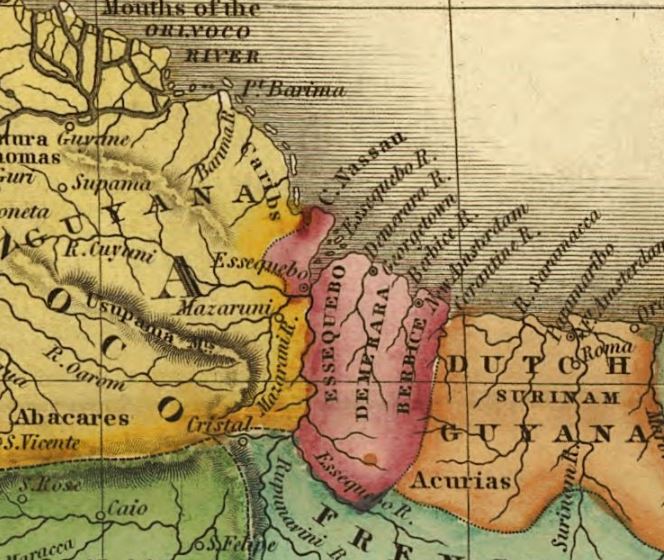
The land was home to indigenous Amerindian peoples when Dutch settlers arrived in the seventeenth century and built plantations along the coast, reclaiming land from the sea with a system of dykes and canals that still shapes the country. Organised into the colonies of Essequibo, Demerara, and Berbice, the territory passed to Britain in the early nineteenth century to become British Guiana, its plantations worked by enslaved Africans.
After the abolition of slavery in the 1830s, the British brought vast numbers of indentured labourers from India to work the sugar plantations, and it is their descendants, the Indo-Guyanese, who became the largest group, alongside the Afro-Guyanese descended from the enslaved. This division between two communities of similar size, brought together by empire, has shaped the country's politics ever since. Guyana became independent in 1966, and its early decades were marked by ethnic rivalry, authoritarian socialist rule, economic decline, and, in 1978, the horror of Jonestown, where more than 900 members of an American cult died in a mass murder-suicide at a remote settlement in the interior.
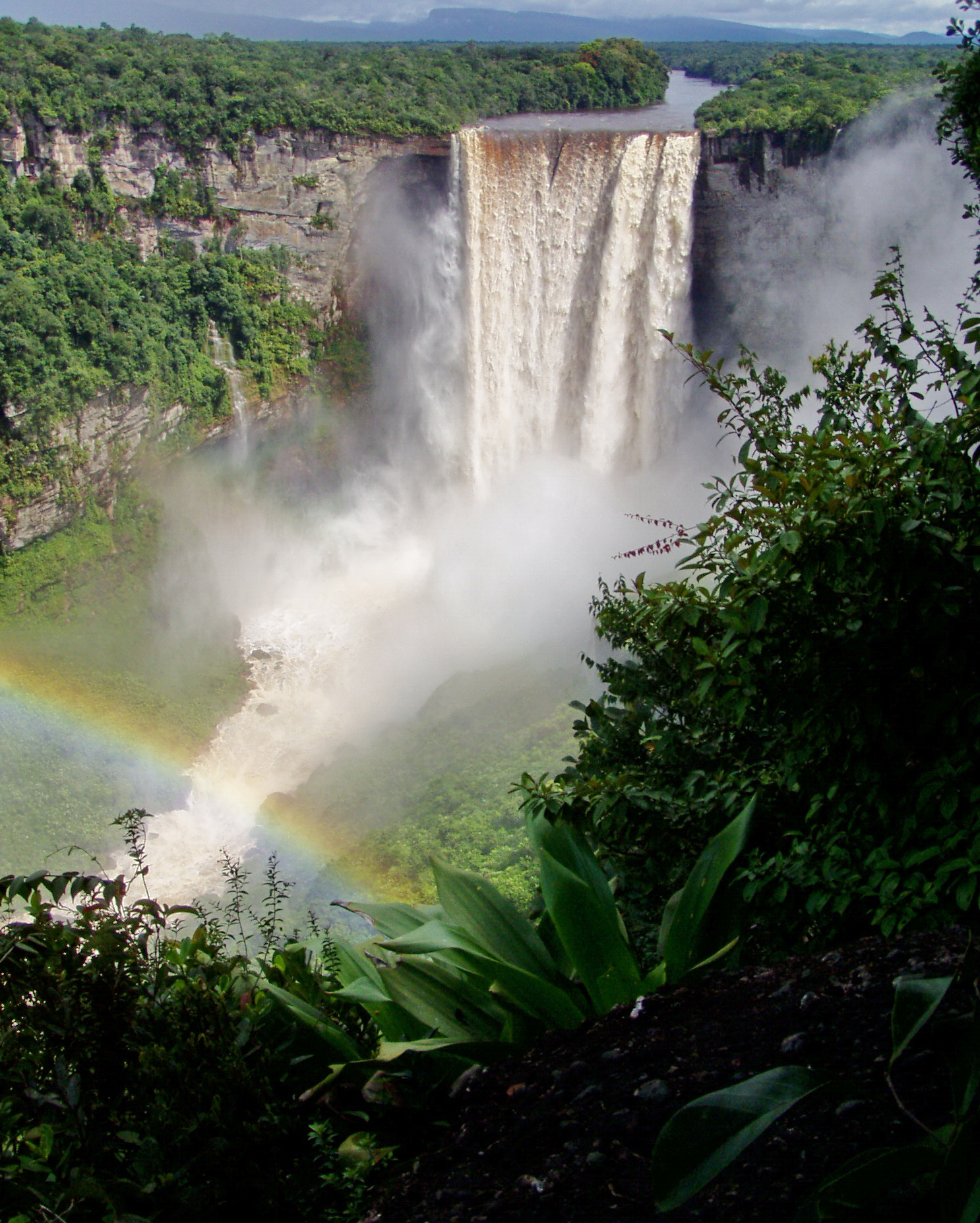
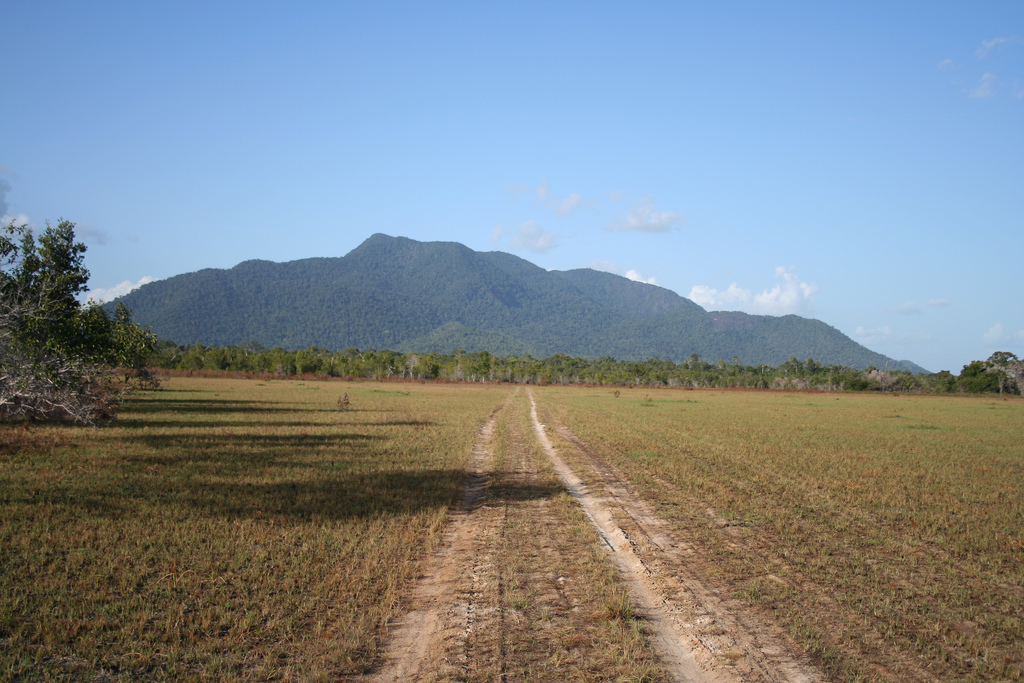
Guyana, whose name comes from an indigenous word meaning land of many waters, is a country of rivers, rainforest, and waterfalls. A narrow, low-lying, and densely populated coastal plain, much of it reclaimed from the sea by Dutch-built dykes, gives way inland to vast tracts of pristine tropical rainforest, rolling savanna in the Rupununi region, and forested highlands. The interior is home to spectacular natural features, above all the Kaieteur Falls, one of the most powerful single-drop waterfalls in the world, set deep in the wilderness and far higher than Niagara.
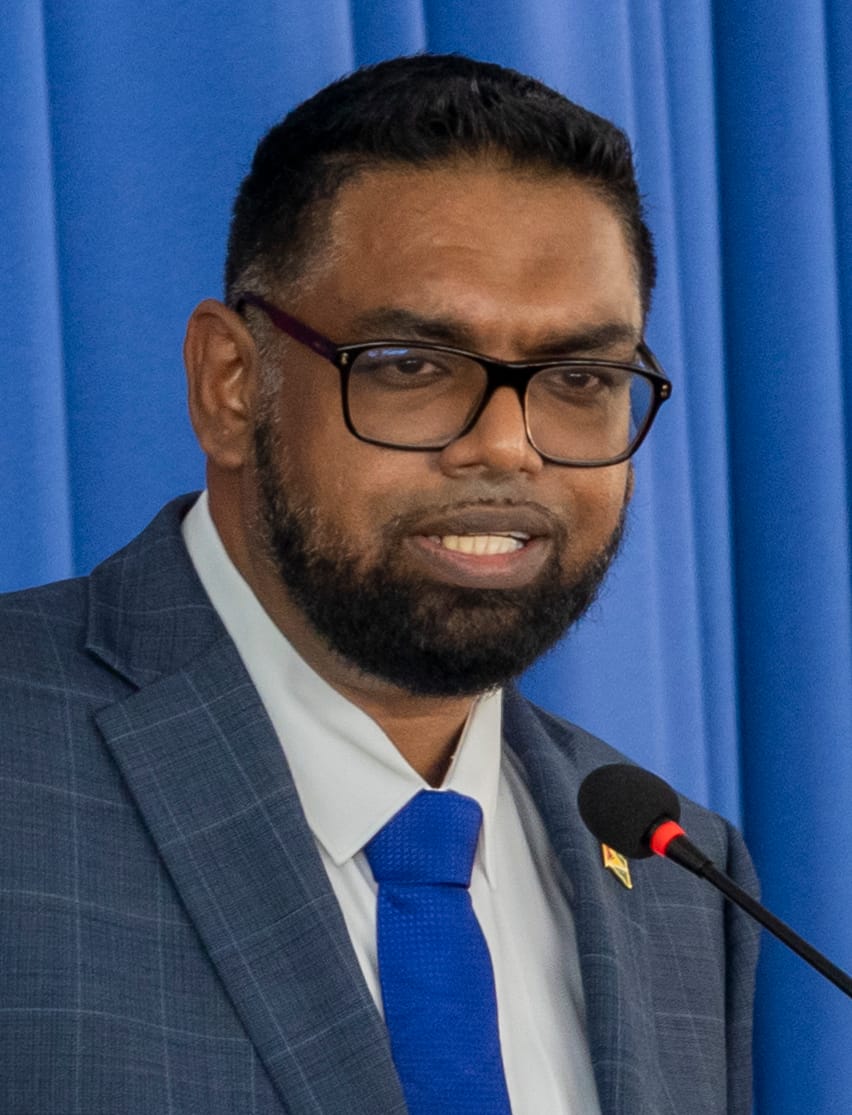
Guyana is a parliamentary republic whose politics has long been dominated by the divide between its two main ethnic communities, expressed through two rival parties: the largely Indo-Guyanese PPP and the largely Afro-Guyanese PNC. Elections are tensely contested and their results have sometimes been disputed, most sharply in 2020, when a months-long standoff over vote-rigging attempts ended with the PPP's Irfaan Ali taking office; he was re-elected in 2025. Managing the ethnic rivalry, and above all managing the vast and sudden oil wealth honestly and for the benefit of all, are the central challenges of Guyanese government.
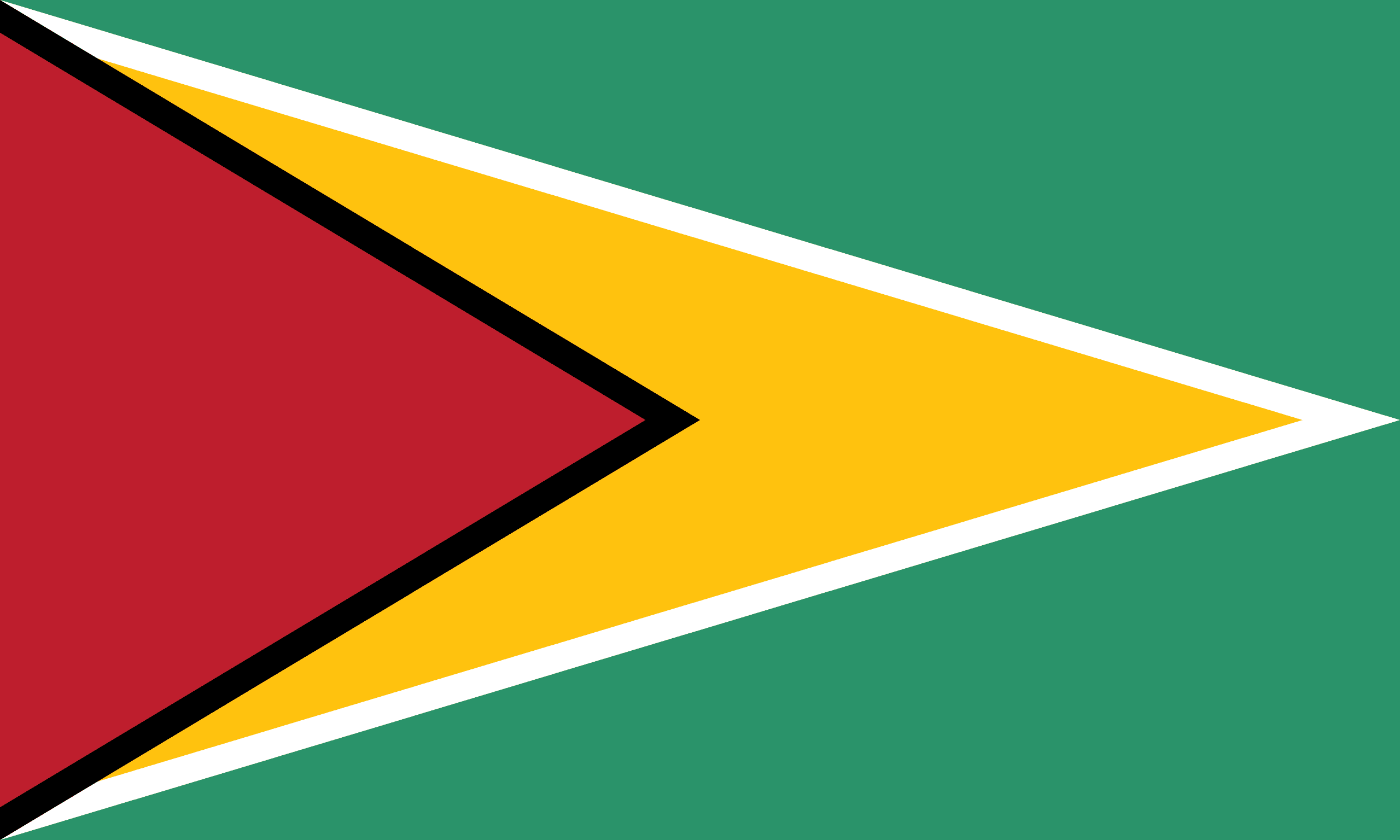
The flag of Guyana, known as the Golden Arrowhead, has a green field crossed by a golden arrow-shaped triangle edged in white, with a red triangle edged in black at the hoist. The green represents the country's forests and agriculture, the gold its mineral wealth, the red the zeal and dynamism of nation-building, the white its rivers and water, and the black its endurance. The striking, dynamic design has been a proud emblem of the nation since independence in 1966.
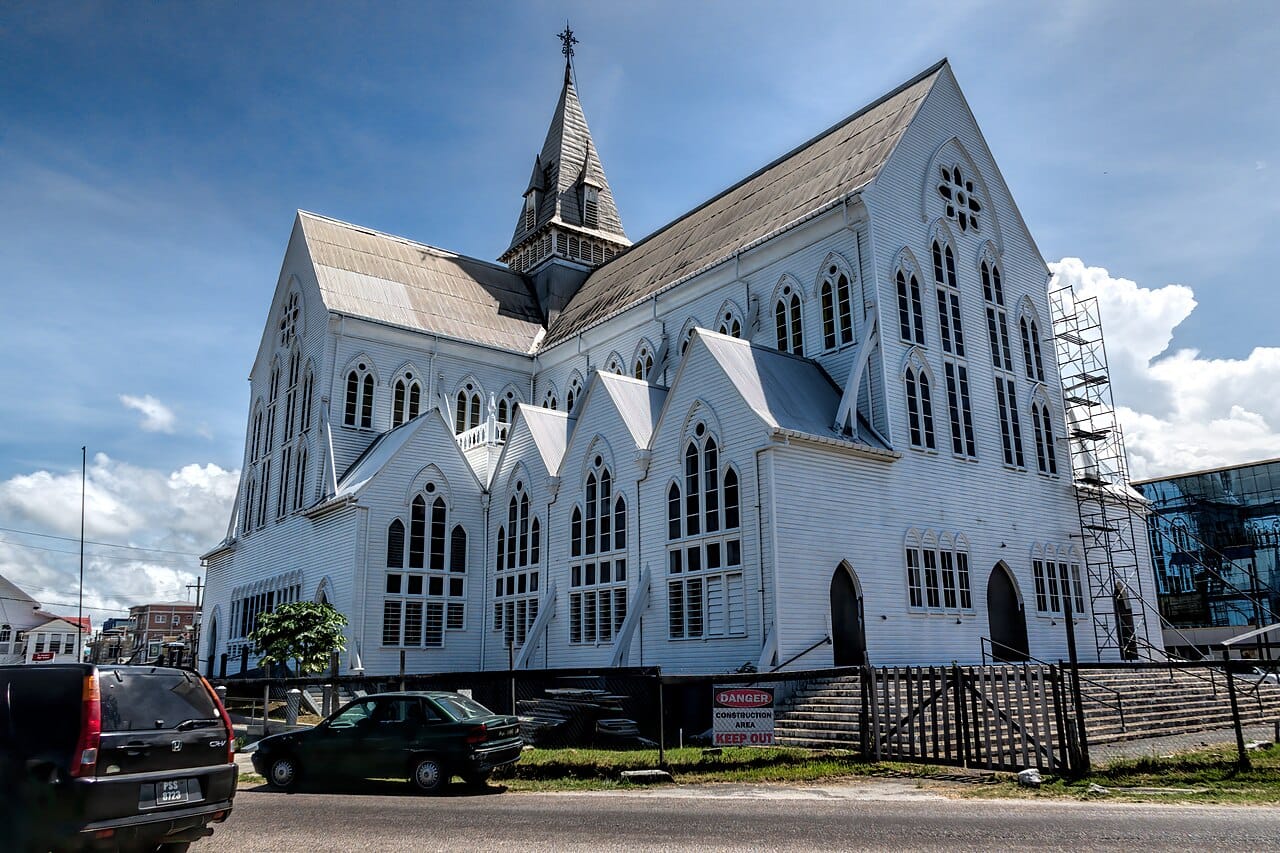
Guyana's religious life reflects its diverse population. Christianity, in a range of Protestant and Roman Catholic forms brought by European colonisation and missionary work, is the largest tradition overall. Hinduism, brought by the indentured labourers from India, is followed by a large share of the population, the highest proportion of any country in the Western Hemisphere, and there is a significant Muslim community as well. This variety means that churches, Hindu temples, and mosques all feature in Guyanese life, and the festivals of each faith are widely celebrated.
Guyanese cuisine is a flavourful blend reflecting the country's African, Indian, indigenous, and European heritage, more Caribbean than South American in character. The Indian influence is strong, with curries, roti, and dhal widely eaten, while a beloved national dish is pepperpot, a rich, dark meat stew flavoured with cassareep, a sauce made from cassava, of indigenous origin and traditionally eaten at Christmas. Rice, the main staple, cook-up rice, and an abundance of tropical fruit and seafood round out a diverse and distinctive food culture.
Agriculture has long been central to Guyana, with the fertile coastal plain producing two leading crops: sugar, grown on plantations that shaped the country's history, and rice, of which Guyana is a significant exporter. The country also produces tropical fruit and vegetables, and fishing and shrimp are important. Beyond farming, the land and rivers yield gold, bauxite, and timber. Above all, however, the recent discovery of huge offshore oil reserves has begun to transform the economy, vaulting Guyana into the ranks of the world's fastest-growing nations.
The defining event of contemporary Guyana is oil. In 2015 a consortium led by the American company ExxonMobil discovered enormous reserves in the deep water off the coast, and production, begun in 2019, has ramped up with astonishing speed. Almost overnight, one of the poorest countries in South America has become one of the richest per person and, for several years running, the fastest-growing economy in the world. The transformation is visible everywhere in a building boom and a rush of foreign investment, and it holds the promise of lifting the whole nation. It also brings enormous risks familiar from other petro-states, the danger that the wealth will fuel corruption and inequality, distort the economy, and enrich a few, and the challenge of managing it wisely in a small, divided society is the great question hanging over the country's future.
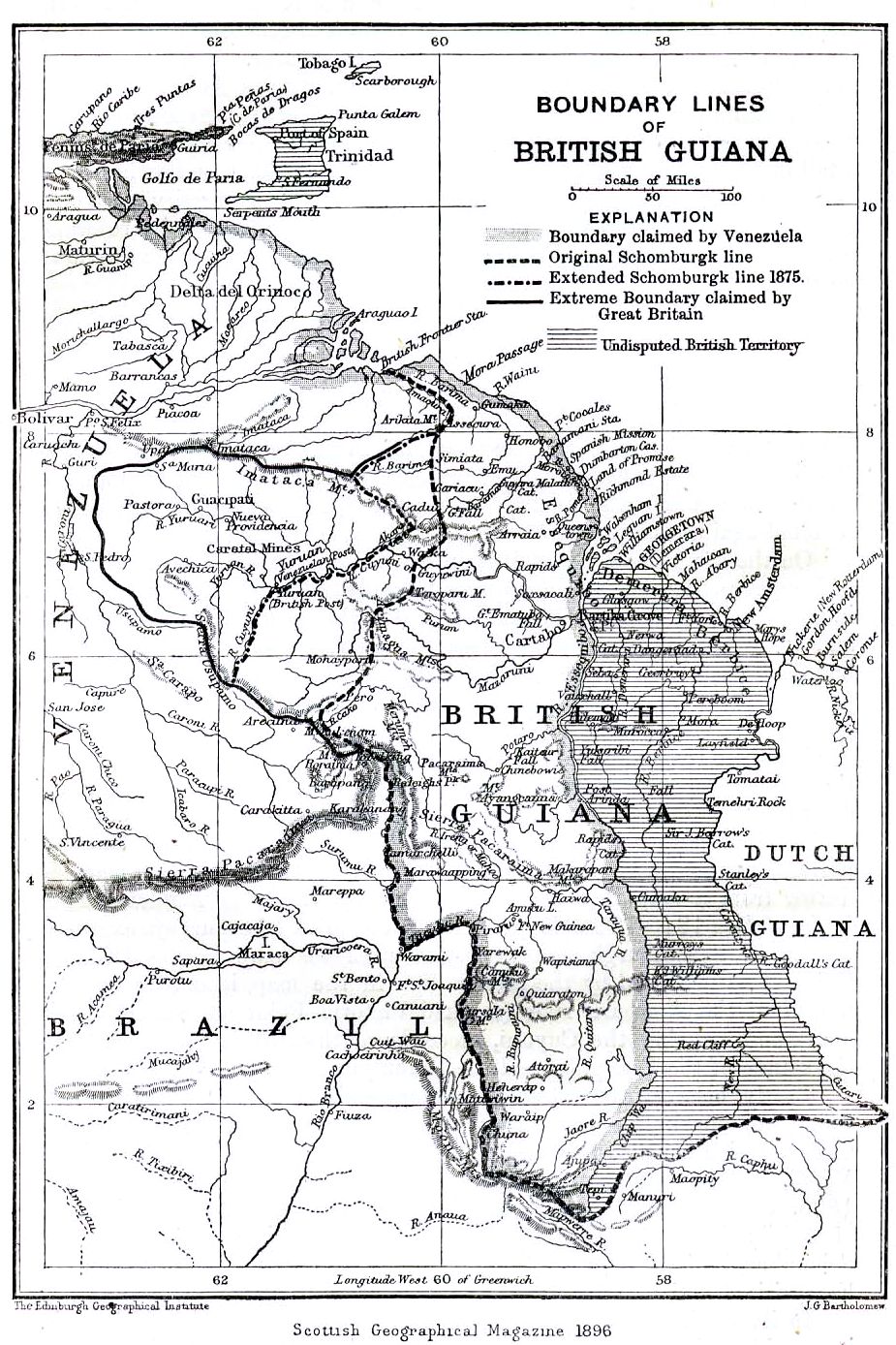
Guyana's oil has also revived an old and dangerous quarrel. Venezuela has long claimed the Essequibo region, the vast, forested western two-thirds of Guyana's territory, on the basis of colonial-era boundaries it says were wrongly awarded to Britain by an international tribunal in 1899. Guyana holds that the border was settled definitively by that ruling and is not open to question, and it has asked the International Court of Justice to affirm it. For most of the twentieth century the dispute lay largely dormant, but the discovery of oil, much of it in waters off the Essequibo coast, has given Venezuela a powerful new motive to press its claim.
In 2023 Venezuela held a referendum asserting sovereignty over Essequibo and moved to declare it a Venezuelan state, alarming Guyana and the wider region and raising fears of an actual seizure of territory. Guyana, tiny and lightly armed but backed diplomatically by the United States, Brazil, and its Caribbean neighbours, has stood firm on the court process. Venezuela regards the region as stolen national soil; Guyana regards the claim as a naked bid to grab its newfound wealth. This account sets out the dispute as it stands; its resolution remains unknown.
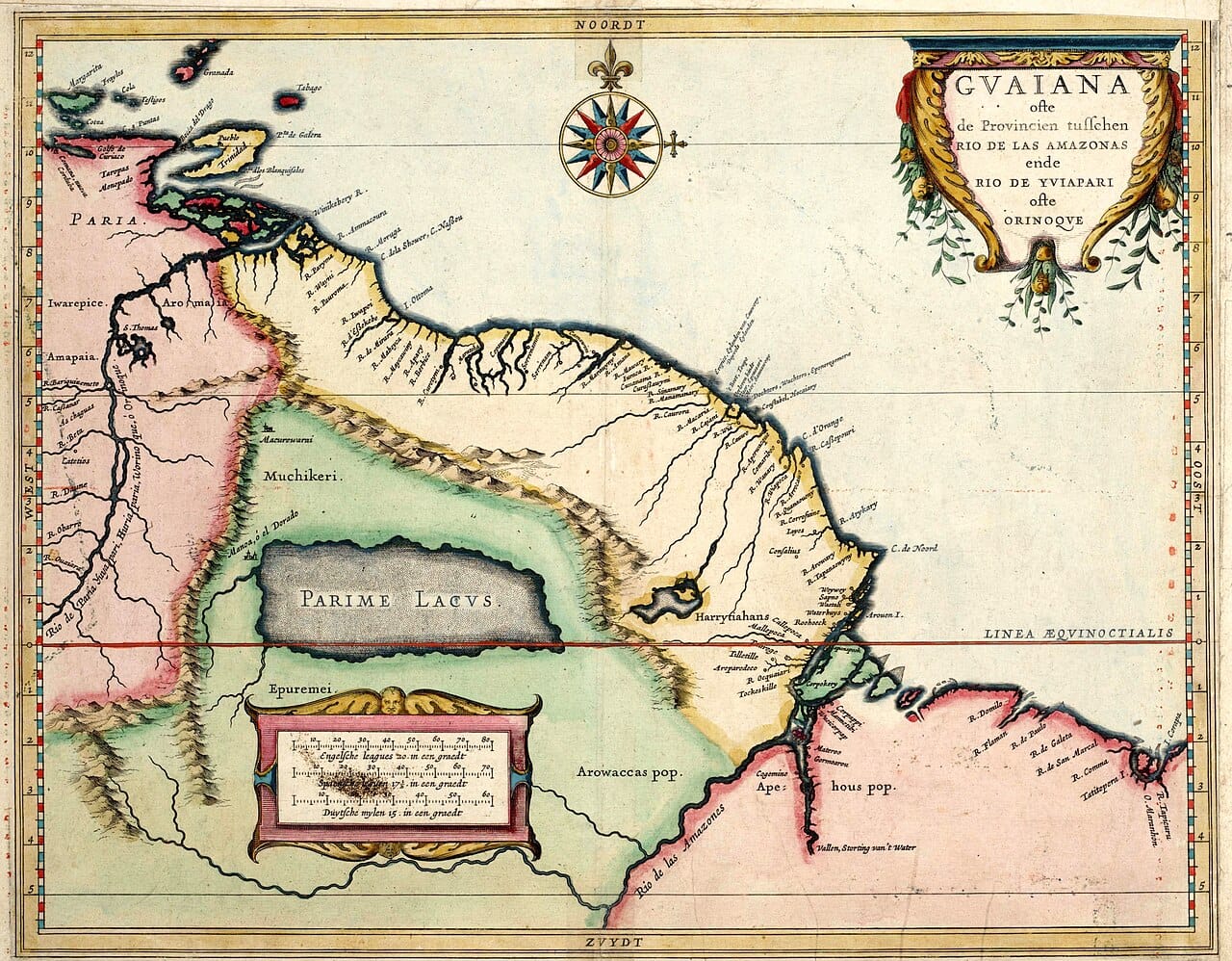
Guyana has a population of around 800,000 people, concentrated overwhelmingly on the narrow coastal strip, while the vast forested interior is sparsely inhabited, much of it by indigenous peoples. The two largest groups are Indo-Guyanese, descendants of the indentured labourers from India, and Afro-Guyanese, descendants of enslaved Africans, alongside indigenous Amerindians, people of mixed descent, and others. English is the official language. The relationship between the two main communities has shaped national politics, and a large Guyanese diaspora lives abroad, especially in North America.