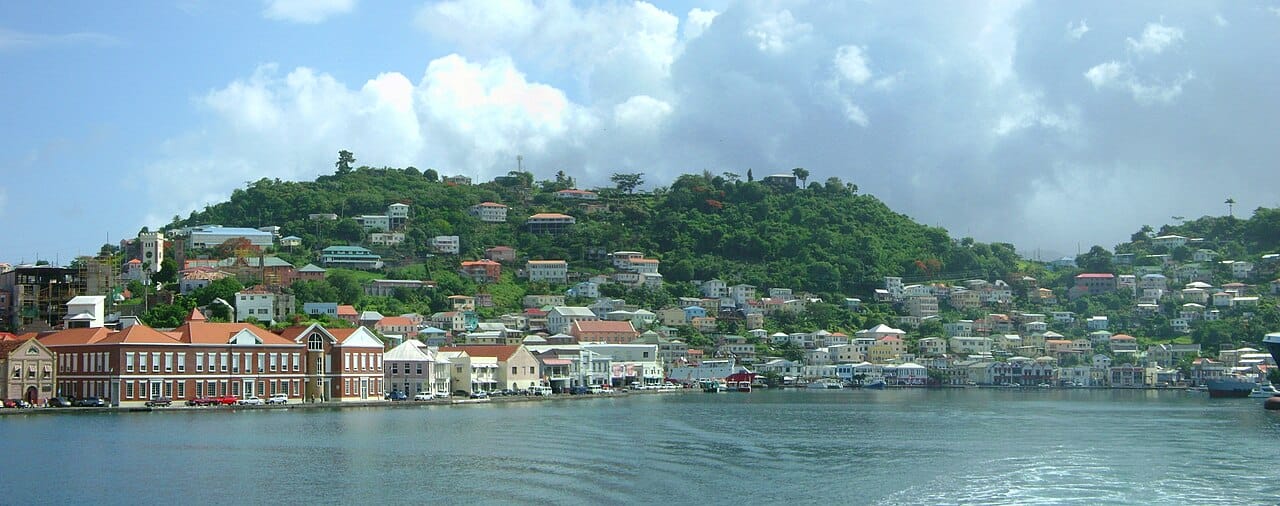
Grenada is an island nation in the southeastern Caribbean, among the Windward Islands near the coast of South America, made up of the main island of Grenada and several smaller islands. Known as the Spice Isle, it is one of the world's leading producers of nutmeg and other spices, whose fragrance is part of the island's identity. A former British colony with a French colonial past, it became independent in 1974, and a few years later was the scene of a dramatic Marxist revolution and a subsequent United States-led invasion that drew the world's attention to the small island.
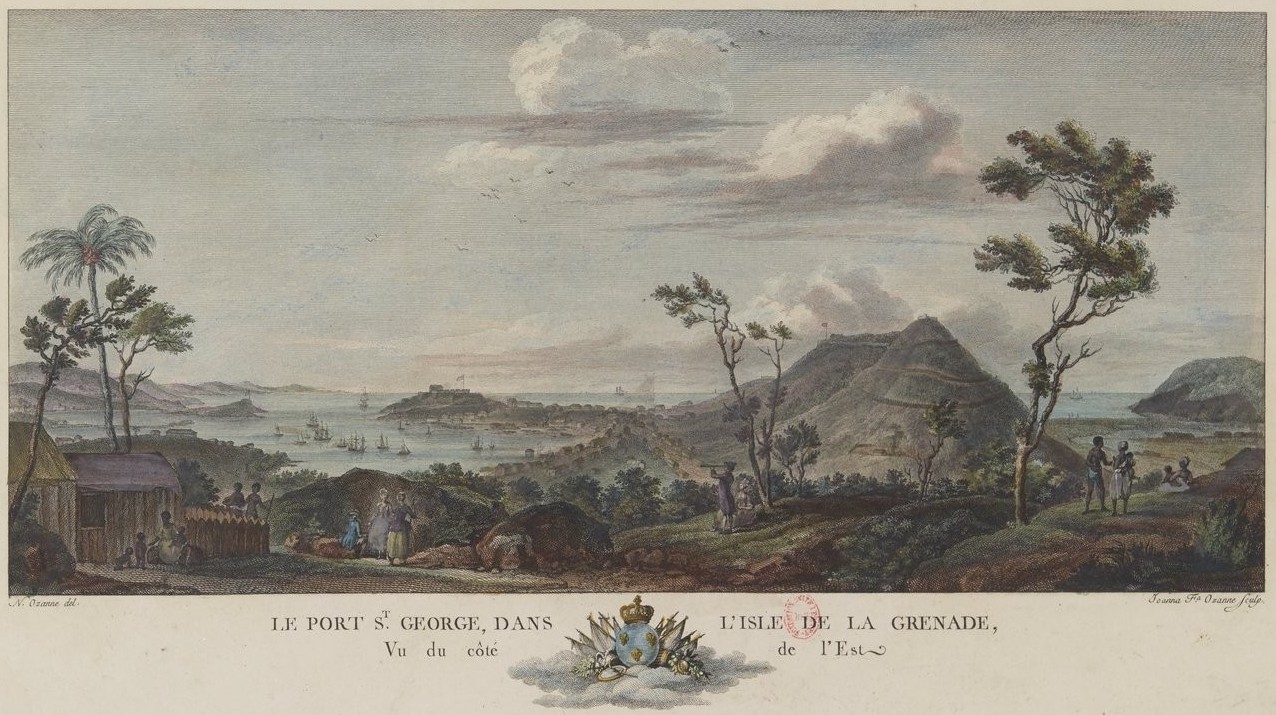
The Kalinago held Grenada against European settlement for over a century after Columbus sighted it in 1498. When the French finally established a foothold in 1649, the resistance ended in an episode preserved in the island's place names: at Sauteurs, the leapers, on the northern cliffs, the last defenders are said to have thrown themselves into the sea rather than surrender. France developed the island with sugar and indigo worked by enslaved Africans, ceded it to Britain in 1763, briefly retook it, and lost it finally in 1783. A major rising in 1795 led by Julien Fedon, a free man of colour inspired by the French and Haitian revolutions, held most of the island for over a year before it was crushed; Fedon was never captured, and what became of him is unknown.
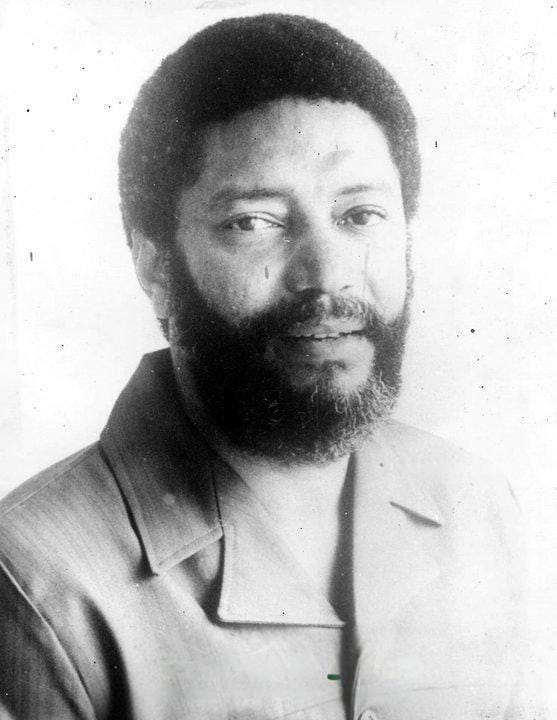
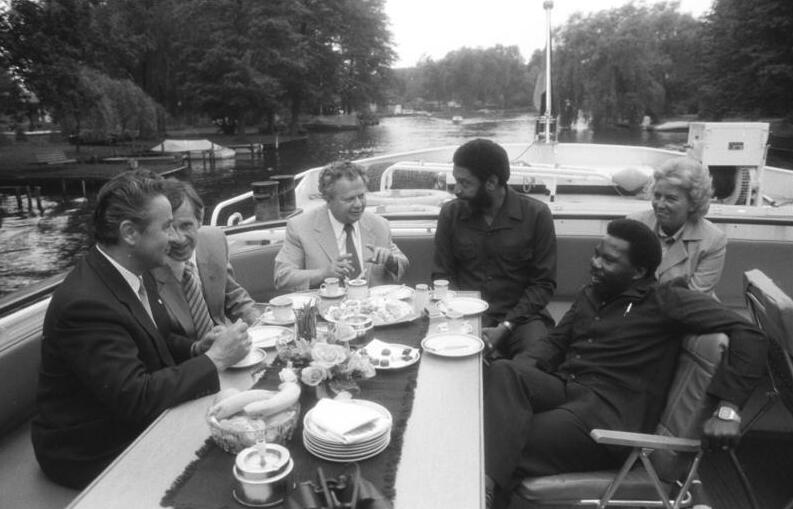
Grenada became independent on 7 February 1974 under Eric Gairy, a former union leader whose government grew increasingly erratic and repressive, policed by an irregular force known as the Mongoose Gang. In March 1979 the New Jewel Movement, led by the lawyer Maurice Bishop, seized power in an almost bloodless coup while Gairy was abroad, suspended the constitution, and established the People's Revolutionary Government. It was genuinely popular for a period, expanding literacy, healthcare, and women's rights, and it aligned closely with Cuba, which sent doctors, teachers, and construction workers to build a new international airport at Point Salines, a project the United States regarded as a potential military airfield and Grenada as essential to tourism.
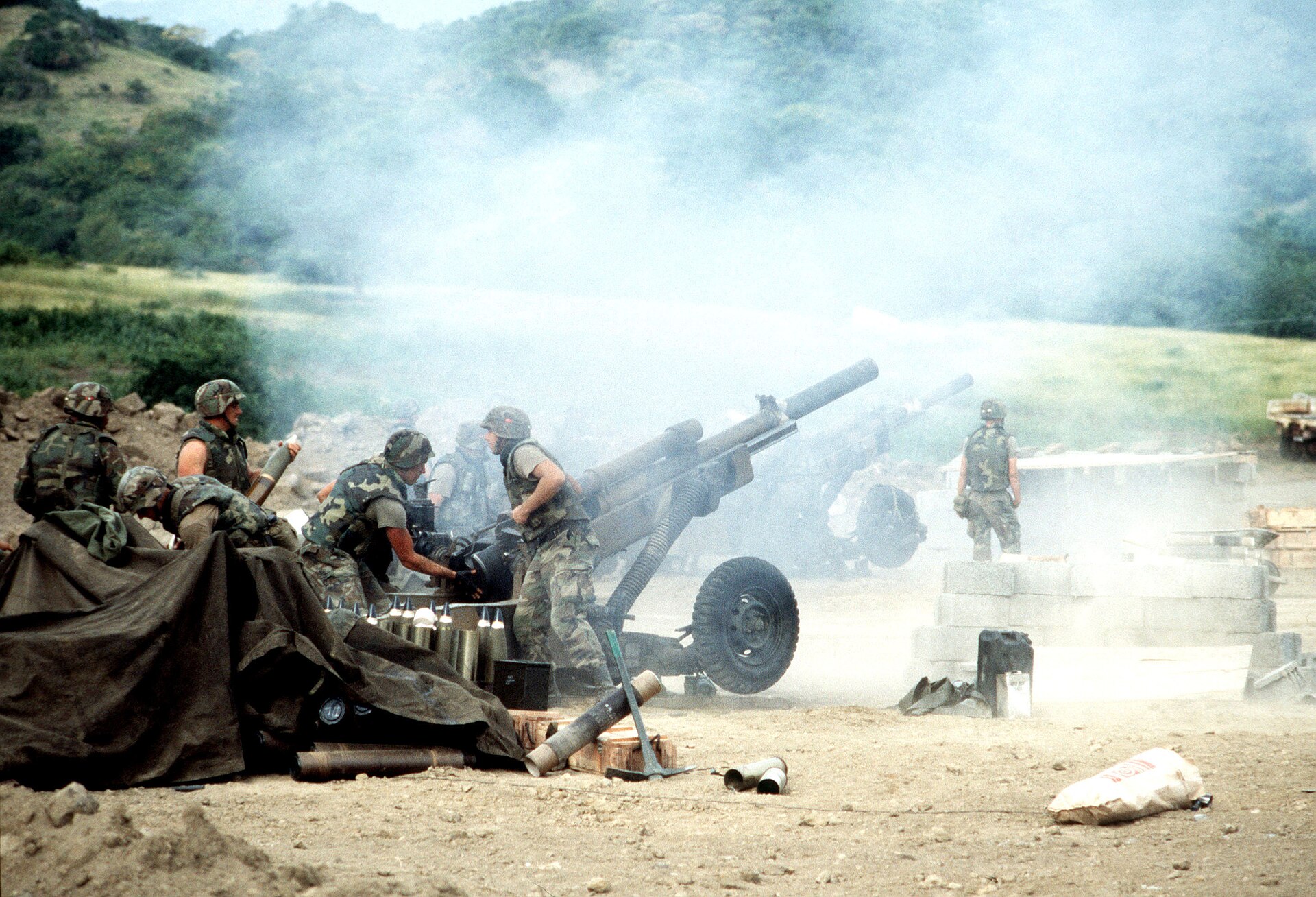
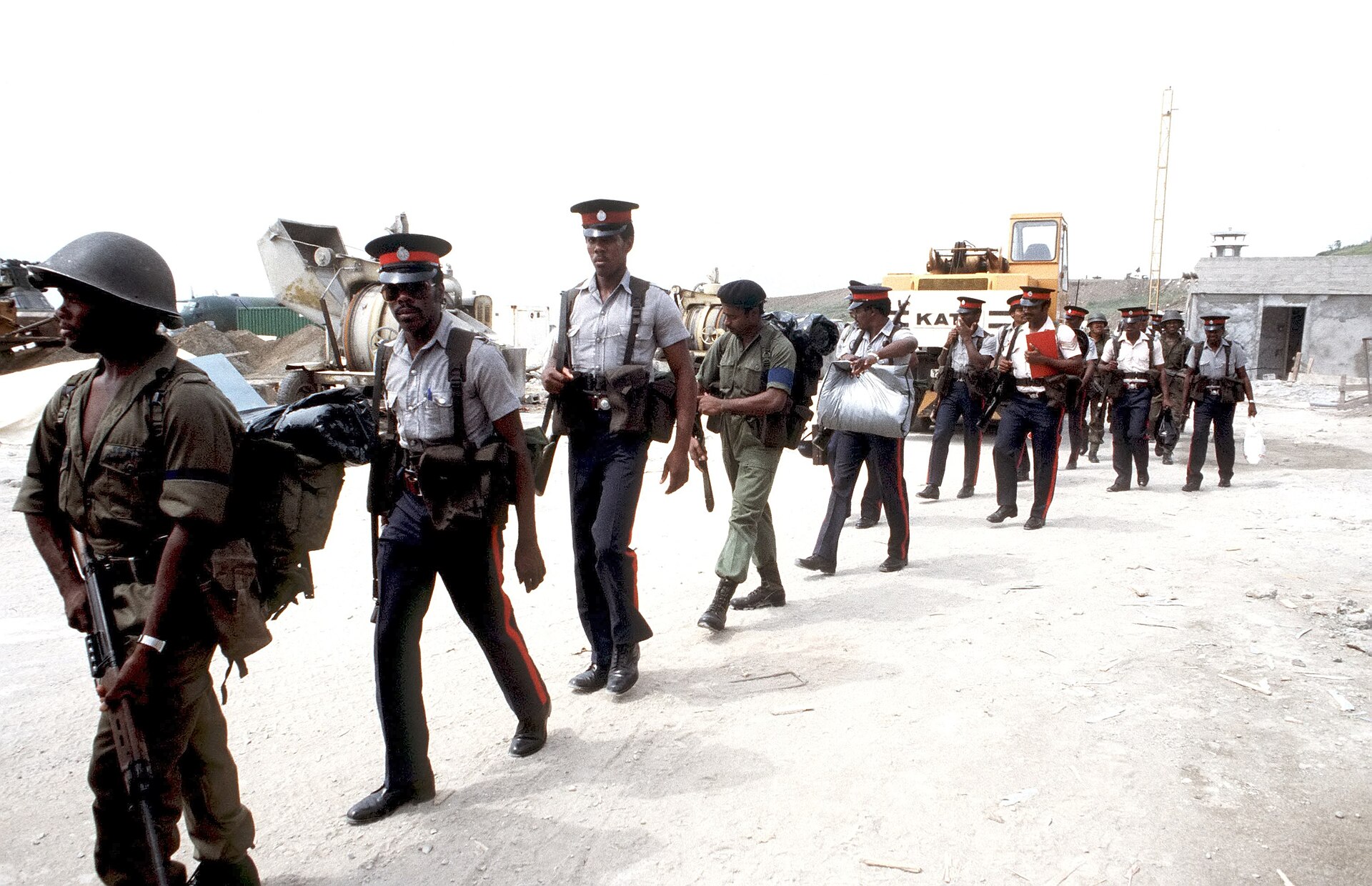
The revolution destroyed itself. A split within the party over power-sharing led to Bishop's house arrest in October 1983; a crowd freed him, and he and several ministers and supporters were then taken and executed at Fort Rupert by soldiers of his own army. Days later, on 25 October, United States forces, with contingents from six Caribbean states responding to a request from the Organisation of Eastern Caribbean States and the governor-general, invaded. Fighting lasted several days and killed American, Cuban, and Grenadian personnel, including patients when a mental hospital was struck in error. The United Nations General Assembly voted to deplore the intervention as a violation of international law; many Grenadians welcomed it, and the date is marked as Thanksgiving Day. Both facts are true and are held together on the island without much difficulty.
Constitutional government returned in 1984. Bishop's body was never found, which remains a live grievance, and those convicted of his killing, the Grenada 17, were released in 2009 after their sentences were reduced. The airport was completed with Western funding and named after Bishop in 2009.
Grenada is a parliamentary democracy and a Commonwealth realm, with King Charles the Third as head of state represented by a governor-general, and a bicameral parliament. Since the restoration of constitutional rule in 1984, power has alternated peacefully between the New National Party and the National Democratic Congress, and the country's politics have been notably undramatic given how they began.
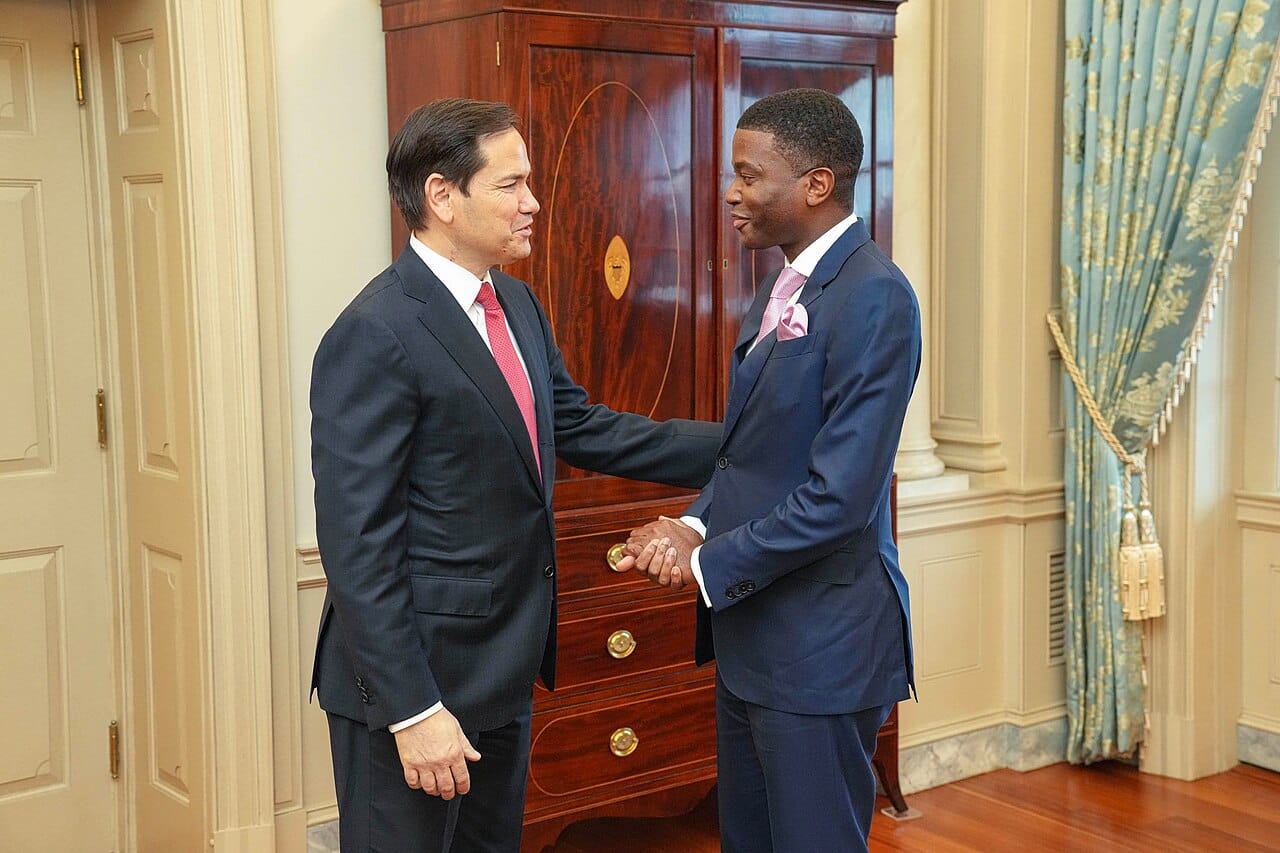
Keith Mitchell of the NNP dominated the period from 1995, serving as prime minister across four terms and, in 2013 and 2018, winning every single seat in the House on both occasions, which left the country temporarily without a parliamentary opposition. That run ended in June 2022 when Dickon Mitchell, a lawyer who had entered politics only months earlier and is no relation, led the NDC to victory and became prime minister. Referendums on constitutional reform in 2016 and 2018, including proposals to adopt the Caribbean Court of Justice as the final court of appeal, were rejected by voters.
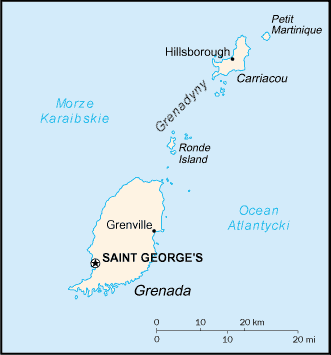
Grenada is volcanic, small, and steep: a central spine of forested ridges rising to Mount St Catherine at 840 metres, with crater lakes at Grand Etang and Lake Antoine, hot springs, and rivers running down to a coast of bays and beaches, of which Grand Anse in the southwest is the best known. The state also includes Carriacou and Petite Martinique in the Grenadines to the north, which have their own distinct character and a long boatbuilding tradition. Just offshore lies Kick 'em Jenny, an active submarine volcano whose eruptions periodically close the surrounding waters to shipping.
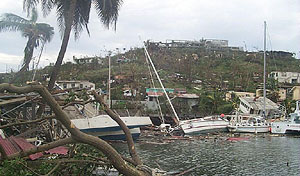
Grenada sits near the southern edge of the hurricane belt and had long been considered relatively safe, which made 2004 all the more devastating: Hurricane Ivan passed directly over the island as a category three storm, damaging or destroying around ninety per cent of its buildings and killing dozens, and flattening the nutmeg trees that take a decade or more to come back into full bearing. Hurricane Emily followed the next year. Carriacou and Petite Martinique were then struck hard by Hurricane Beryl in July 2024, an unusually early and unusually powerful storm.
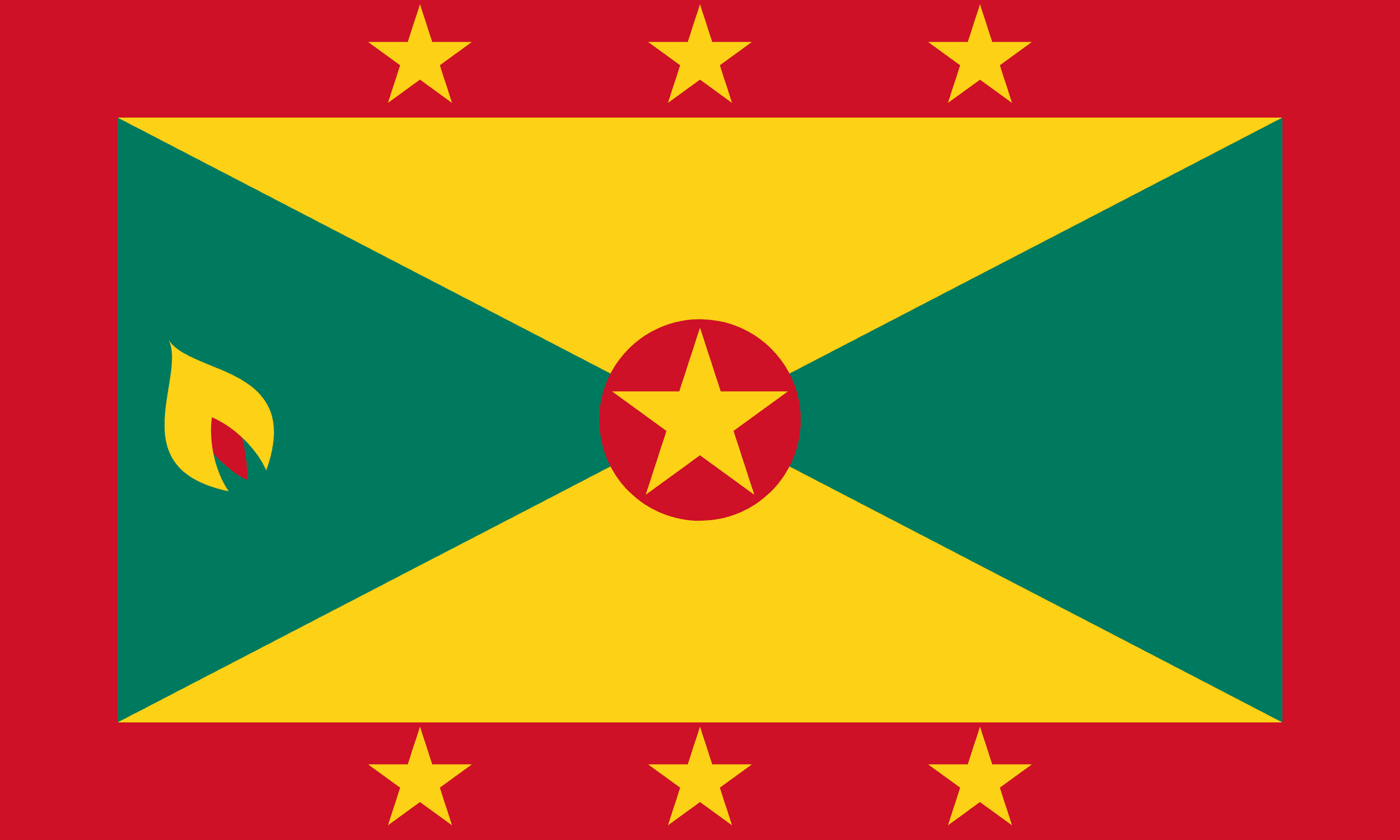
The flag of Grenada has a red border bearing seven yellow stars, with a central rectangle divided diagonally into yellow and green triangles and a red disc with a star in the middle, plus a small emblem of a nutmeg on the hoist side. The red stands for courage and vitality, the yellow for wisdom and the sun, and the green for the lush vegetation and agriculture. The seven stars represent the country's seven parishes, and the nutmeg recalls the spice that made Grenada famous, making it one of the few national flags to depict a crop.
Grenada is a strongly Christian country, reflecting both its French and British colonial heritage. Roman Catholicism, a legacy of French rule, is the largest single denomination, while a range of Protestant churches, including Anglican, Pentecostal, Seventh-day Adventist, and others brought under British influence, are also widely followed. Churches are central to community life across the island, and religious festivals and observances are an important part of the culture. As elsewhere in the Caribbean, the faith of the majority reflects the African heritage of the people interwoven with European Christianity.
Grenadian cuisine is Caribbean cooking infused, fittingly for the Spice Isle, with the nutmeg, cinnamon, and other spices grown on the island. The national dish is oil down, a hearty one-pot stew of breadfruit, salted meat, vegetables, and dumplings cooked in coconut milk until the liquid is absorbed. Fresh seafood, including the local catch, callaloo, ground provisions, and tropical fruit feature strongly, and nutmeg flavours everything from savoury dishes to drinks and desserts, as well as the local nutmeg jam and ice cream, in a food culture defined by the island's fragrant spices.
Agriculture is central to Grenada's identity and economy, and above all it means spices: the island is one of the world's leading producers of nutmeg and its associated spice mace, along with cinnamon, cloves, ginger, and others, which have earned it the name the Spice Isle and long formed the backbone of its exports. Cocoa, of fine quality and increasingly made into local chocolate, and tropical fruits are also important, alongside fishing. Spice production, however, has at times been devastated by hurricanes, which can destroy the slow-growing nutmeg trees for years.
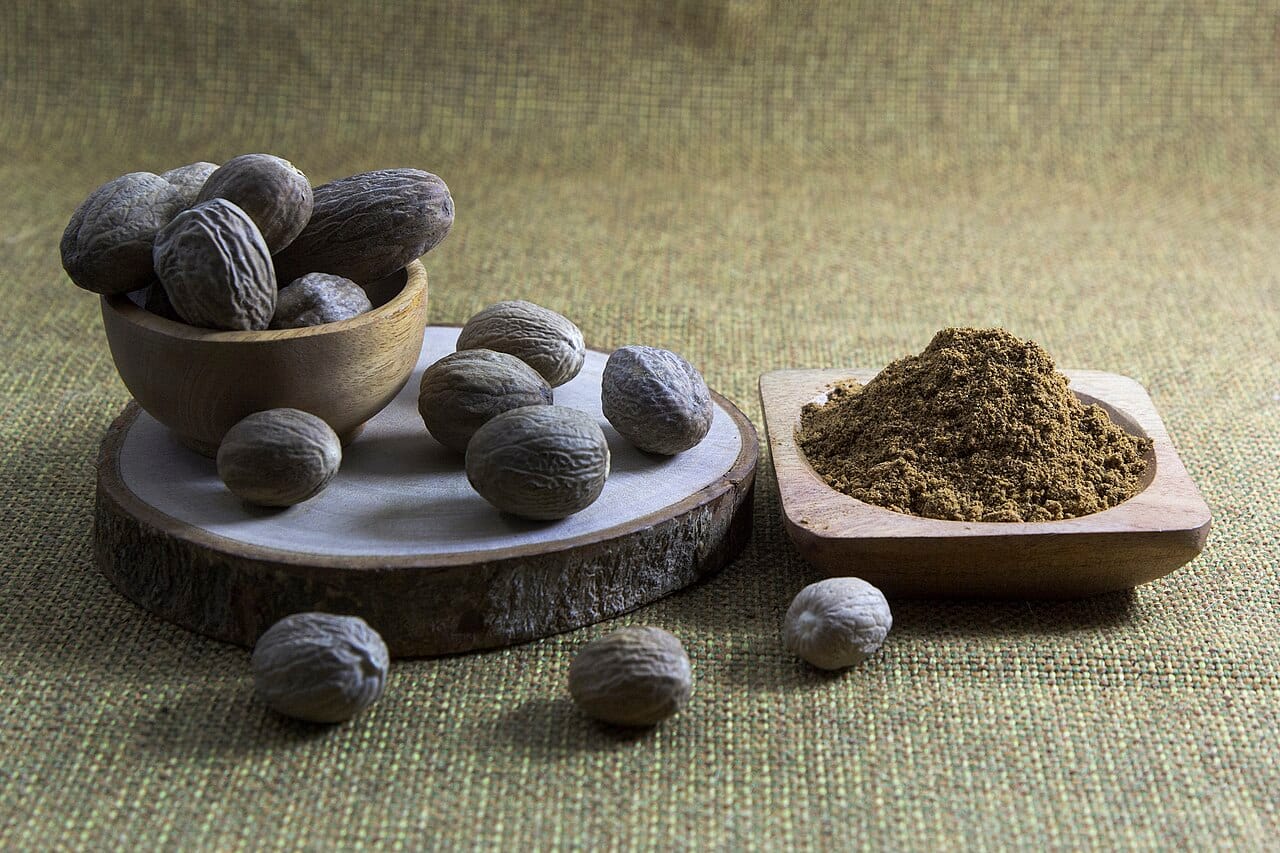
Grenada is called the Spice Isle for a reason: it has long been among the world's largest producers of nutmeg and mace relative to its size, and nutmeg appears on the national flag, the only country to put a food crop there. Cocoa, from which a small but internationally admired tree-to-bar chocolate industry has grown, along with cloves, cinnamon, and ginger, rounds out the agricultural base. Hurricane Ivan destroyed most of the nutmeg trees in 2004 and the sector took many years to recover, a lesson in how quickly a single storm can remove a national industry.
Tourism is now the larger earner, concentrated on Grand Anse and the yachting trade in the southern bays, and the country runs a citizenship-by-investment programme like its neighbours. An unexpected third pillar is education: St George's University, a medical and veterinary school founded in 1976 whose students were the ostensible reason for the 1983 intervention, enrols thousands of largely North American students and is among the country's biggest employers and foreign-currency earners.
Grenadian culture carries both French and British inheritances over an African foundation. Spicemas, the August carnival, is the great annual event, and its most distinctive element is Jab Jab, in which masqueraders cover themselves in burnt engine oil, wear horns and chains, and take over the streets of St George's before dawn in the J'ouvert opening, a deliberately confrontational reworking of the imagery of enslavement. Carriacou preserves the Big Drum ceremony, in which nation dances are performed for named African peoples of origin, one of the most direct survivals of that heritage anywhere in the Caribbean, and maintains a distinct boatbuilding and regatta tradition.
Cricket is the national game, played at the Queen's Park stadium rebuilt with Chinese assistance after Ivan, and Grenada has produced West Indies internationals including Devon Smith and Andre Fletcher. In athletics the island has an entirely disproportionate record: Kirani James won the 400 metres at the 2012 Olympics, giving Grenada its first medal of any colour and making it, for a time, the smallest country ever to win an Olympic gold.
Grenada has a population of around 110,000, the great majority of African descent, with minorities of mixed, Indian, and European heritage; the Indian community descends from indentured labourers brought after emancipation. English is official, and a French-based creole survives alongside an English-based one, both legacies of the island's divided colonial past, together with French place names throughout.
About nine in ten Grenadians live on the main island, concentrated around St George's and the southwest, with roughly six thousand more on Carriacou and a few hundred on Petite Martinique. Emigration has been heavy for generations, and the Grenadian diaspora in the United States, Britain, Canada, and Trinidad is comparable in size to the resident population, sending remittances that matter considerably to household incomes.