The management of forests for timber, other products and ecological function. It is among the oldest forms of resource management, and its central problem is that decisions are made on a timescale longer than the working life of the person making them.
A tree planted for timber may be harvested after thirty years for fast-growing softwood, or well over a century for oak.
That interval is the discipline's defining feature. The person who plants generally does not harvest, which means forestry requires institutions that outlast individuals: family holdings, state forests, church estates or long-lived companies.
It also means mistakes are expensive and slow to correct. A species chosen badly, or a stand planted at the wrong spacing, is discovered to be wrong decades later.
The response has been to formalise. Sustained yield, the principle that harvest should not exceed growth, was articulated in German forestry in the eighteenth century, and the term nachhaltigkeit, from which sustainability derives, originates in a 1713 forestry treatise by Hans Carl von Carlowitz.
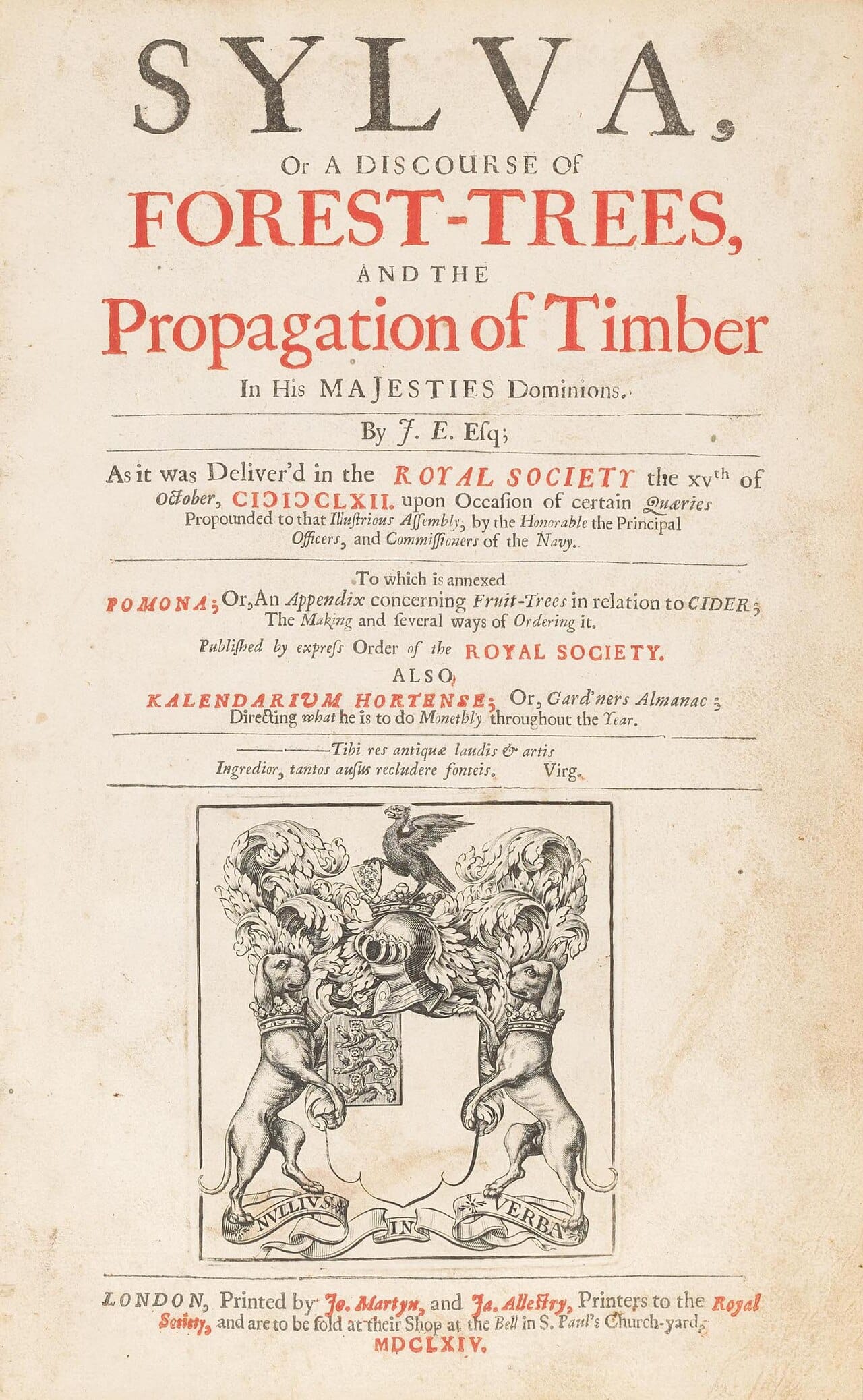
John Evelyn's Sylva, published in 1662, was written in response to concern about timber supply for the English navy and argued for systematic planting, which makes strategic timber shortage one of the earliest drivers of managed forestry.
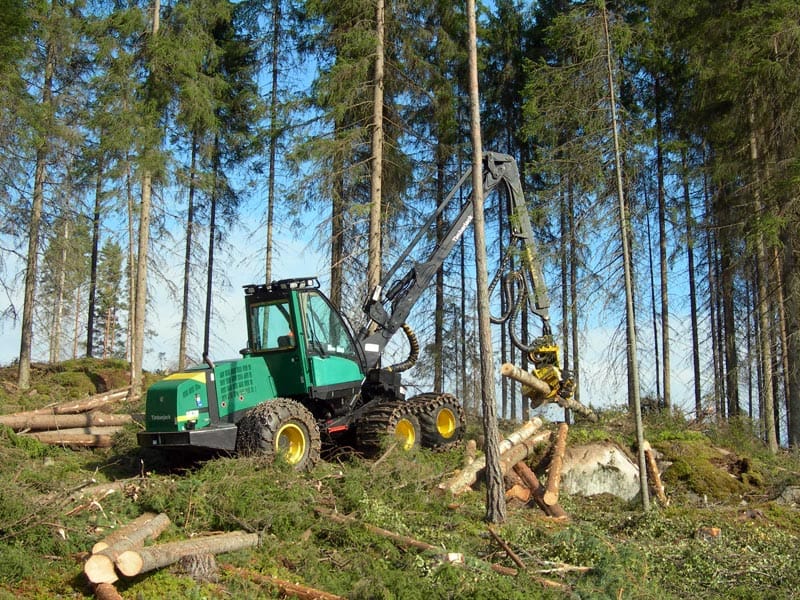
Clear-cutting removes all trees in an area and replants. It is efficient and mechanised, suits species requiring full light, and produces even-aged stands, and it is visually and ecologically disruptive.
Selective cutting removes individual trees, retaining continuous cover. It is more expensive per unit harvested and maintains structure closer to an unmanaged forest.
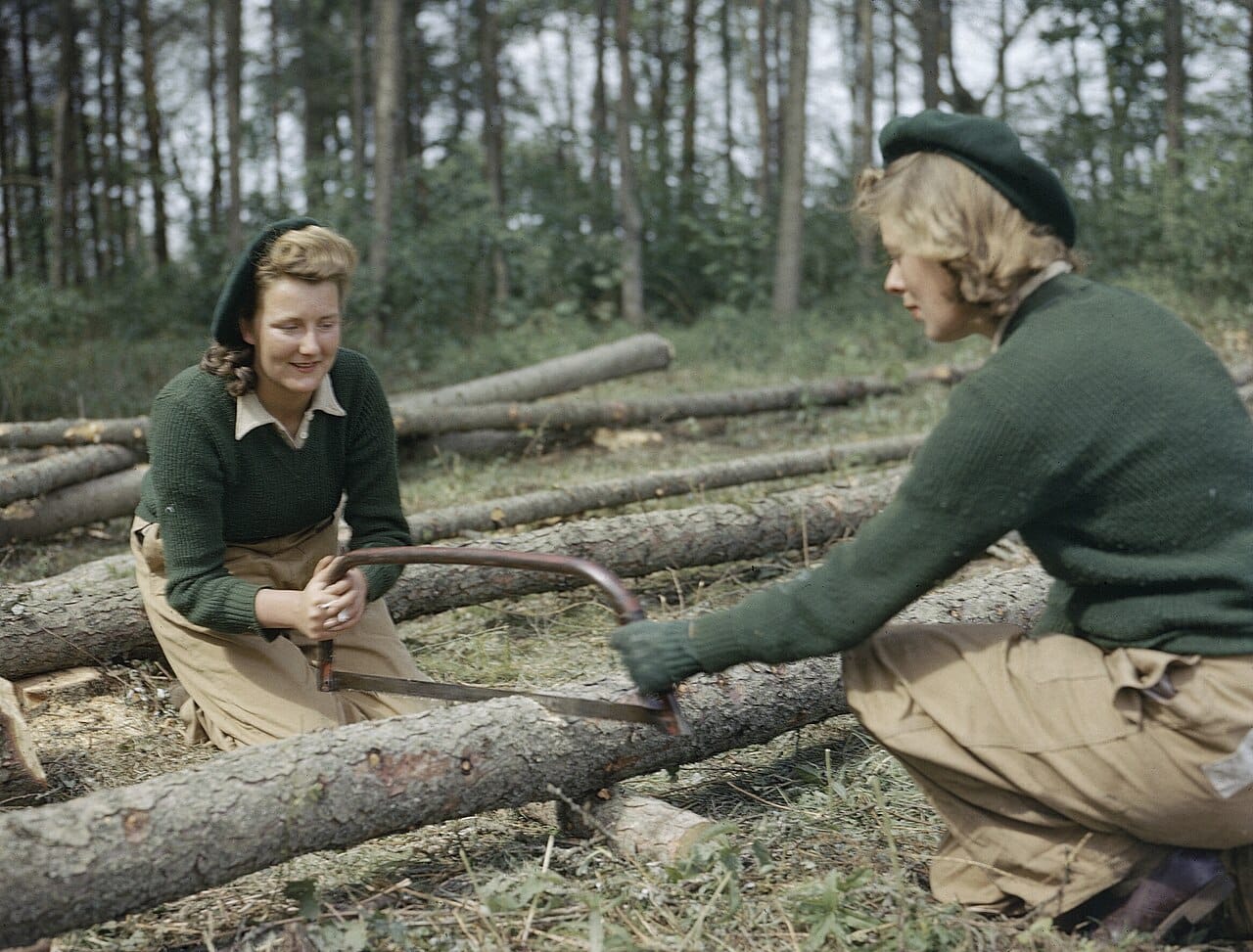
Coppicing cuts broadleaf trees near the base and harvests the regrowth on a cycle of years rather than decades. It is very old, produces small material for fuel and craft rather than timber, and the same stools can be worked for centuries.
Pollarding cuts above browsing height, allowing livestock to graze beneath.
Agroforestry combines trees with crops or livestock on the same land.
Plantation forestry grows single fast-growing species in rows for pulp and construction timber, and it is where most industrial wood now comes from, at high yield and low biological diversity.
Timber for construction, which is a structural material with the useful property of storing carbon for as long as the structure stands.
Pulp for paper and packaging, which is the largest use by volume in many countries.
Fuel, which remains the primary use worldwide. A large share of the world's harvested wood is burned for cooking and heating, mostly outside the industrial economy.
Non-timber products including resin, cork, rubber, nuts, fruit, medicinal plants and fungi, which in several regions are worth more than the timber.
Ecosystem functions including watershed protection, soil stabilisation, habitat and carbon storage, which are not sold and are the subject of most current argument about how forests should be managed.
Whether managed forests store more or less carbon than unmanaged ones is genuinely contested. Young growing forests absorb carbon faster; old forests hold more. Harvesting and using timber in long-lived products stores carbon and replaces more emissions-intensive materials; leaving forests standing avoids the disturbance emissions. The answer depends on timescale and on what the timber replaces, and confident claims in either direction generally elide that.
Biomass energy is the sharpest version of the argument. Burning wood for electricity is treated as renewable in several regulatory frameworks on the reasoning that regrowth reabsorbs the carbon, and critics point out that the emissions occur now and the reabsorption takes decades, which matters if the objective is near-term reduction.
Plantation against natural forest is a persistent disagreement. Plantations produce far more wood per hectare, which in principle reduces pressure on natural forest, and they support far less biodiversity, and whether they substitute for or displace natural forest depends on where they are planted.
Certification schemes audit management against standards and have been criticised for weak enforcement and for certifying operations that critics regard as unsustainable.
Global forest area continues to decline, driven principally by conversion to agriculture rather than by logging, with cattle pasture and commodity crops the largest direct causes.
The pattern is regional. Forest area has increased in Europe, North America and parts of East Asia over recent decades, and declined in the tropics, where most of the world's forest biodiversity is.
Forest transition describes the observed pattern of countries losing forest during development and gaining it afterwards, and the reasons include agricultural intensification, urbanisation reducing rural land pressure, and in several cases the displacement of demand to imports, which moves the deforestation rather than removing it.
Forestry supplies construction material, packaging and fuel for a large share of humanity, and it does so from a resource that regenerates if managed and does not if it is not.
It is also the original context in which sustainability was formulated as a principle. The idea that a resource should not be harvested faster than it renews was stated in forestry three centuries ago, and the reason it arose there is the same reason forestry remains difficult: the consequences of getting it wrong appear a lifetime after the decision.