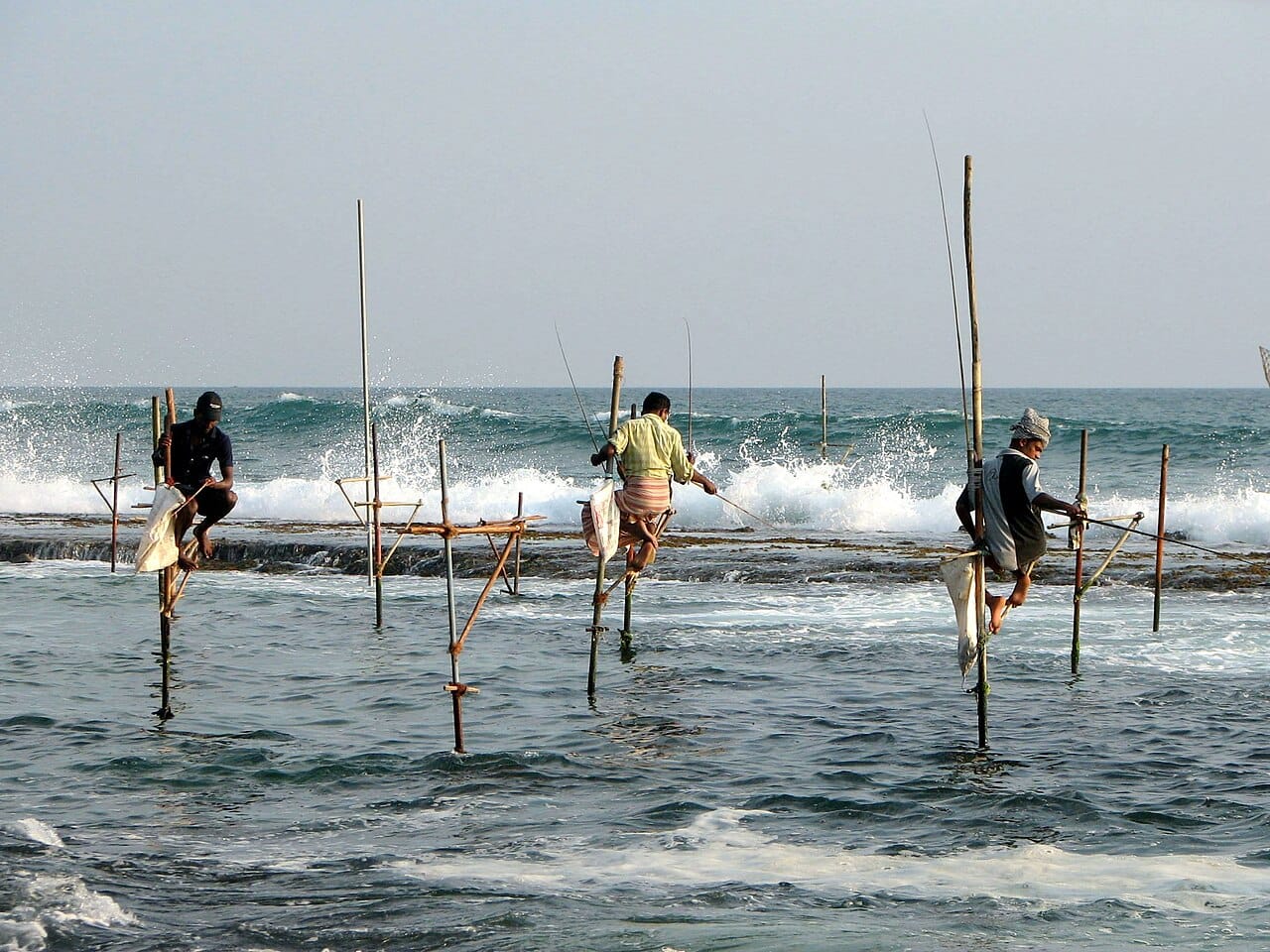
Catching aquatic animals for food. It is the last major food source still taken from the wild at scale, which is precisely why it is the one where the resource has been repeatedly exhausted.
Almost all human food comes from cultivated plants and managed animals. Capture fishing is the exception: it takes a wild population that nobody owns, feeds and reproduces on its own.
This is the source of the difficulty. A fishery without effective rules is a shared resource with no incentive for restraint, because a fish left in the water may simply be caught by someone else, and the individual gain from taking more is immediate while the cost of depletion is shared.
That is not an inevitable outcome. Elinor Ostrom's work, noted in the irrigation capsule, documented many fisheries and other common resources managed sustainably by their users under rules they created and enforced themselves, and the failures tend to occur where such institutions are absent, overridden, or outmatched by the scale of industrial fishing.
Fish also move, frequently across national boundaries, so a country restricting its own fleet may simply leave the fish for another, which makes fisheries an international negotiation problem rather than a domestic regulatory one.
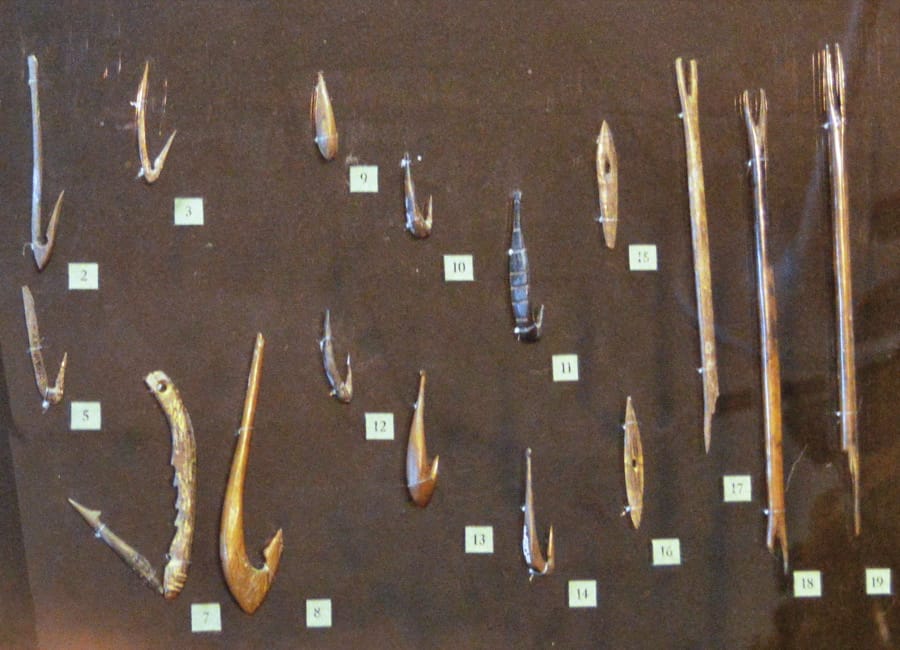
Hooks and lines, from a single hand line to longlines carrying thousands of baited hooks over many kilometres.
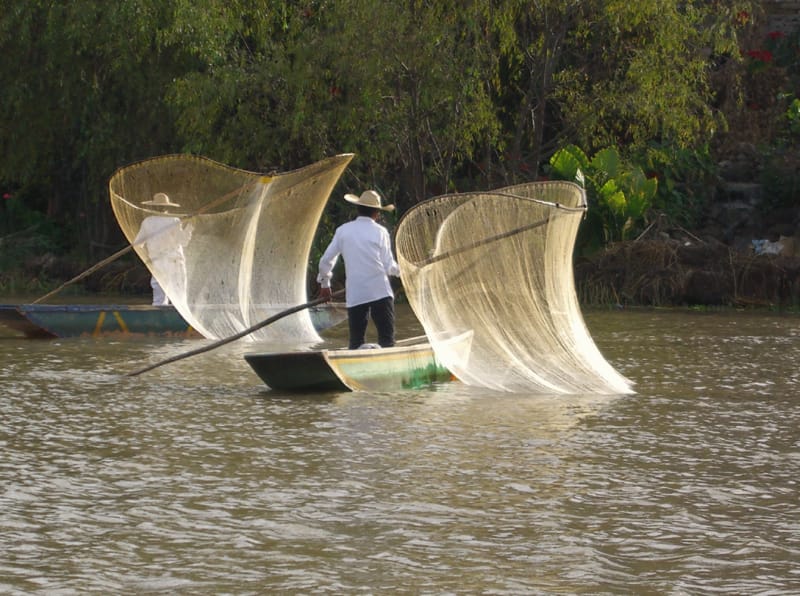
Nets in several forms. Gillnets catch fish by the gills as they swim into a mesh. Seine nets encircle a school and are drawn closed beneath it. Trawls are dragged through the water or along the bottom.
Traps and pots, which fish enter and cannot leave, used widely for crustaceans.
Spears, weirs and hand gathering, which are ancient and remain in use.
Bottom trawling is the most contested method. It is efficient and it drags gear across the seabed, damaging structure and long-lived organisms, and its effects on some habitats take decades to recover.
Bycatch is the general problem across methods: species caught that were not targeted, including juveniles, seabirds, turtles and marine mammals. Gear modifications have reduced it substantially in several fisheries, including turtle excluder devices and bird-scaring lines, which demonstrates that it is a solvable engineering problem where there is will to solve it.
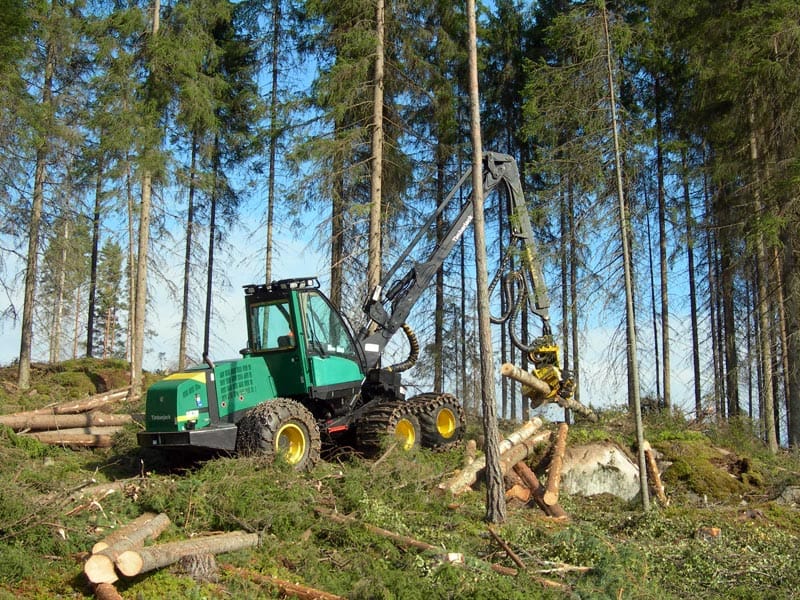
Industrialisation transformed capacity. Steam and then diesel power, synthetic nets, refrigeration aboard, and sonar for finding fish each multiplied what a vessel could take.
Global capture production rose steeply through the twentieth century and has been roughly flat since around 1990, not because demand stopped rising but because the catch could not.
The Northwest Atlantic cod fishery is the standard case. Cod off Newfoundland had been fished for roughly five centuries. Industrial trawling from the 1950s increased catches sharply, scientific advice to reduce quotas was repeatedly softened for economic and political reasons, and the stock collapsed. Canada declared a moratorium in 1992, ending tens of thousands of jobs at once. The stock has not recovered to anything near its former abundance more than three decades later, which is the finding that matters: collapse is not reliably reversible.
The proportion of assessed stocks fished within biologically sustainable limits has fallen over recent decades, and around a third are now assessed as overfished.
Subsidies are a substantial driver. Global fishing subsidies are estimated in the tens of billions of dollars annually, and a large share supports capacity, meaning fleets that would not otherwise be economic continue fishing depleted stocks. A World Trade Organization agreement to curb the most harmful categories was concluded in 2022.
Illegal, unreported and unregulated fishing is a large and difficult-to-measure share of the total, and satellite tracking of vessels has made it considerably more visible.
Farmed aquatic production now exceeds capture fisheries for human consumption, which is the largest structural change in the sector's history.
It converts feed to flesh efficiently. Fish are cold-blooded and supported by water, so they spend far less energy on heat and on holding themselves up than land livestock, and feed conversion ratios are correspondingly better.
Its problems are specific. Carnivorous species including salmon require feed containing fish meal and oil taken from wild stocks, though the proportion has fallen substantially. Concentrated stock in cages transmits disease and parasites, sea lice being the persistent example, and escapes interbreed with wild populations. Coastal habitat has been cleared for ponds, with mangrove loss for shrimp farming the clearest case.
Most aquaculture by volume is not salmon or shrimp but freshwater species including carp and tilapia, farmed in Asia, frequently in systems that use little or no fish-based feed.
Fish supply a substantial share of animal protein worldwide, and a much larger share in coastal and island countries with few alternatives, so fishery collapse is a food security event rather than an economic one.
It is also the clearest working demonstration of what happens to a valuable resource that nobody owns. The cod collapse was predicted by scientists, the advice was diluted, the stock went, and it did not come back, which is a sequence documented well enough to be treated as a warning rather than an argument.