The claim that personalisation algorithms enclose people in information environments matching their existing views, isolating them from disagreement and driving polarisation. It is among the most widely accepted accounts of what the internet did to public life, and the evidence for it is considerably weaker than its currency suggests.
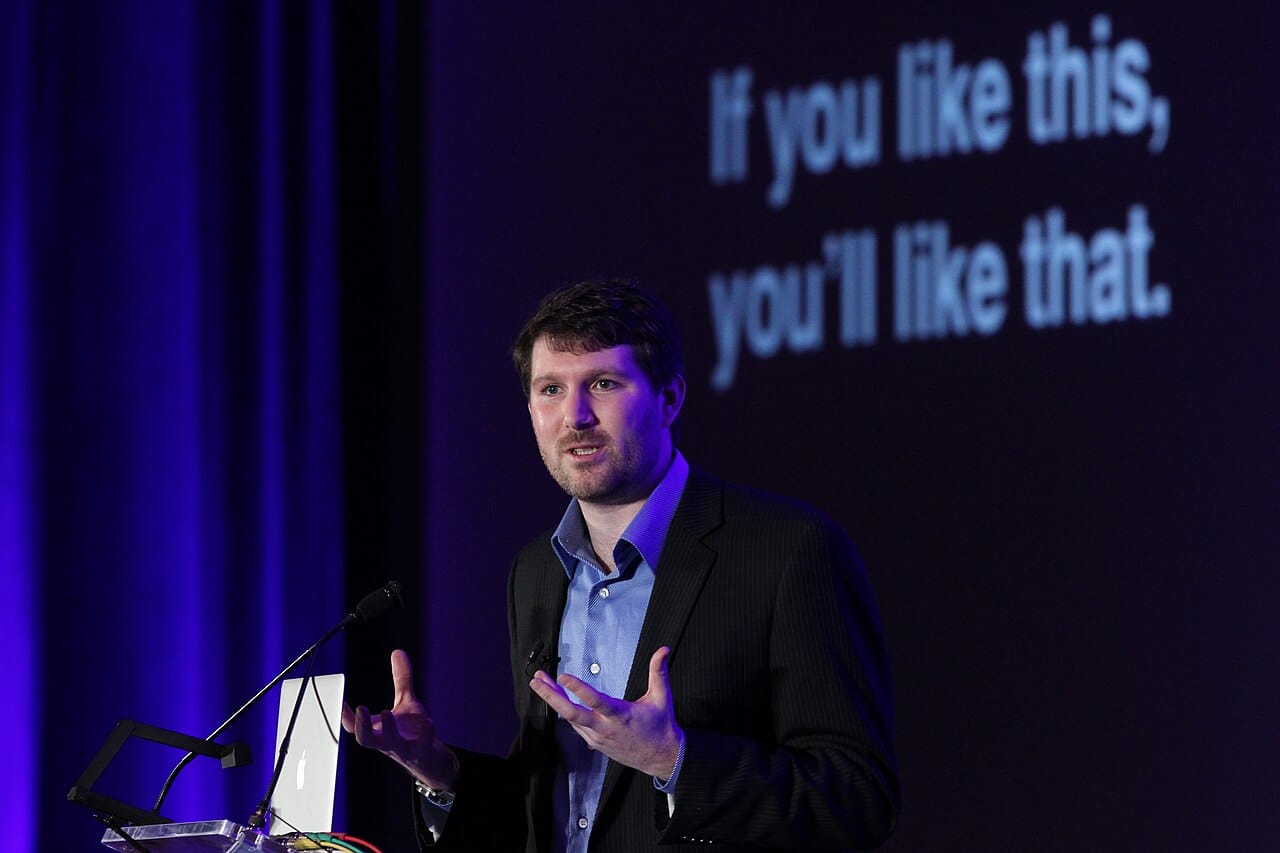
Eli Pariser introduced the term in 2011. His argument was that search engines and social feeds rank content by predicted engagement, that predicted engagement correlates with agreement, and that the result is a personalised environment the user neither chose nor can see.
The invisibility was the core of it. A newspaper's editorial line is known; an algorithmic ranking is not disclosed, and the user has no way to tell what was filtered out.
Studies of actual behaviour have largely not found the predicted isolation, and several found the opposite.
Seth Flaxman, Sharad Goel and Justin Rao examined the browsing of 50,000 users in 2016. Social media and search were associated with more exposure to opposing views than direct visits to news sites, and also with more ideologically distant reading overall. Both effects were real and pointed in different directions.
Facebook's own study of 10 million users, published in Science in 2015, found that individual choices about what to click reduced exposure to cross-cutting content more than the ranking algorithm did. The study was criticised for its sample, which covered only users who declared a political affiliation, and for being conducted by the platform.
A large collaboration published in 2023, based on experiments during the 2020 United States election with Meta's cooperation, changed feeds for consenting users. Replacing algorithmic ranking with reverse chronological ordering, and reducing exposure to like-minded content, produced no detectable change in polarisation, issue attitudes or political knowledge over three months.
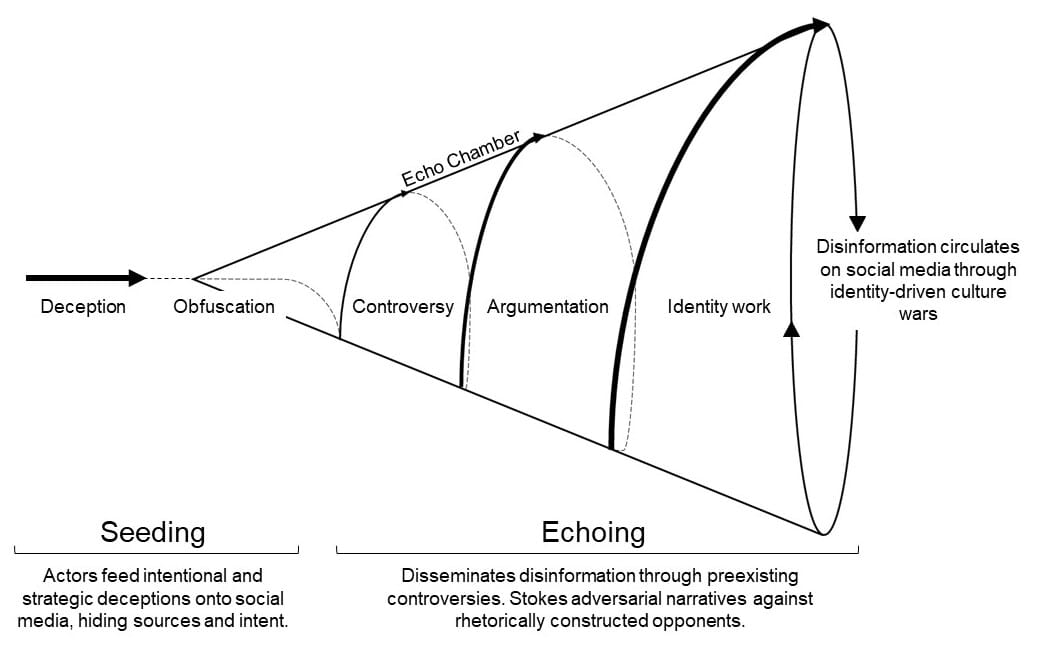
An echo chamber is chosen. People select congenial sources, follow people they agree with, and avoid arguments. This is well documented, long predates the internet, and is a matter of preference.
A filter bubble is imposed. An algorithm produces the same isolation without the user selecting it and without disclosure.
The two are usually discussed as one, which matters because they call for different responses. Chosen homogeneity is a question about behaviour and civic culture; imposed homogeneity is a question about platform design and regulation. The evidence for the first is strong and for the second is not.
Several researchers argue the problem is close to the reverse. Chris Bail's experimental work found that exposing partisans to opposing views on Twitter increased polarisation rather than reducing it, particularly among conservatives. Encountering the other side in a hostile setting appears to entrench positions.
Others point out that the most polarised demographic in the United States is the oldest, which is the least online, and that polarisation rose in some countries and not others despite similar platform use. Both observations sit badly with an explanation resting on algorithms.
A third line holds that the effect is concentrated rather than general: most people encounter varied information, while a small minority consume heavily one-sided material, and that minority is politically consequential out of proportion to its size. This is compatible with both the null results at population level and the visible phenomenon.
The filter bubble is intuitive, it names something people recognise, and it assigns responsibility to an identifiable party. It has shaped regulation, including transparency requirements in the European Union's Digital Services Act.
The underlying concerns are real. Ranking systems are opaque, they optimise for engagement rather than for anything a user would endorse on reflection, and they are unaccountable. Those are sound criticisms. The specific mechanism the filter bubble names, algorithmic isolation producing polarisation, is the part the evidence does not currently support.