Systems connecting computers so that they can exchange data. The design decisions taken in the 1960s and 1970s determined the shape of the internet, and several were deliberately contrary to how communication networks had been built before.
The telephone network established a dedicated circuit for the duration of a call. The path was reserved whether or not anyone was speaking.
Packet switching, developed independently by Paul Baran and Donald Davies in the early 1960s, breaks data into small units, each carrying its destination, and sends them separately across shared links. They may take different routes and are reassembled at the destination.
The advantages are substantial. Links are shared efficiently, since capacity unused by one conversation carries another. There is no setup delay. And the network can route around a failed link, since each packet is directed independently.
Baran's motivation was survivability of military communications; Davies's was efficiency for interactive computing. The technique served both.
The organising principle of network design is layering: each layer provides a service to the one above and uses the one below, without either needing to know how the other works.
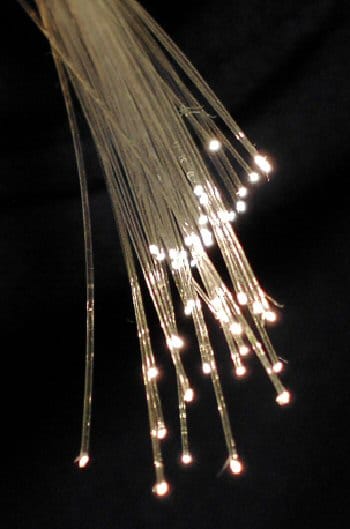
The physical layer transmits bits over a medium, whether copper, fibre or radio.
The link layer moves frames between directly connected devices.
The network layer, in practice the Internet Protocol, routes packets across networks toward a destination.
The transport layer manages end-to-end delivery. TCP provides reliable ordered delivery by acknowledging receipt and retransmitting what is lost; UDP does not, which suits applications where late data is useless, including live video and voice.
The application layer contains the protocols users encounter, including those for web pages, email and file transfer.
Layering is why the internet absorbed technologies its designers never anticipated. Optical fibre, mobile radio and wireless local networks were all added at the bottom without changing anything above, and the web was added at the top without changing anything below.
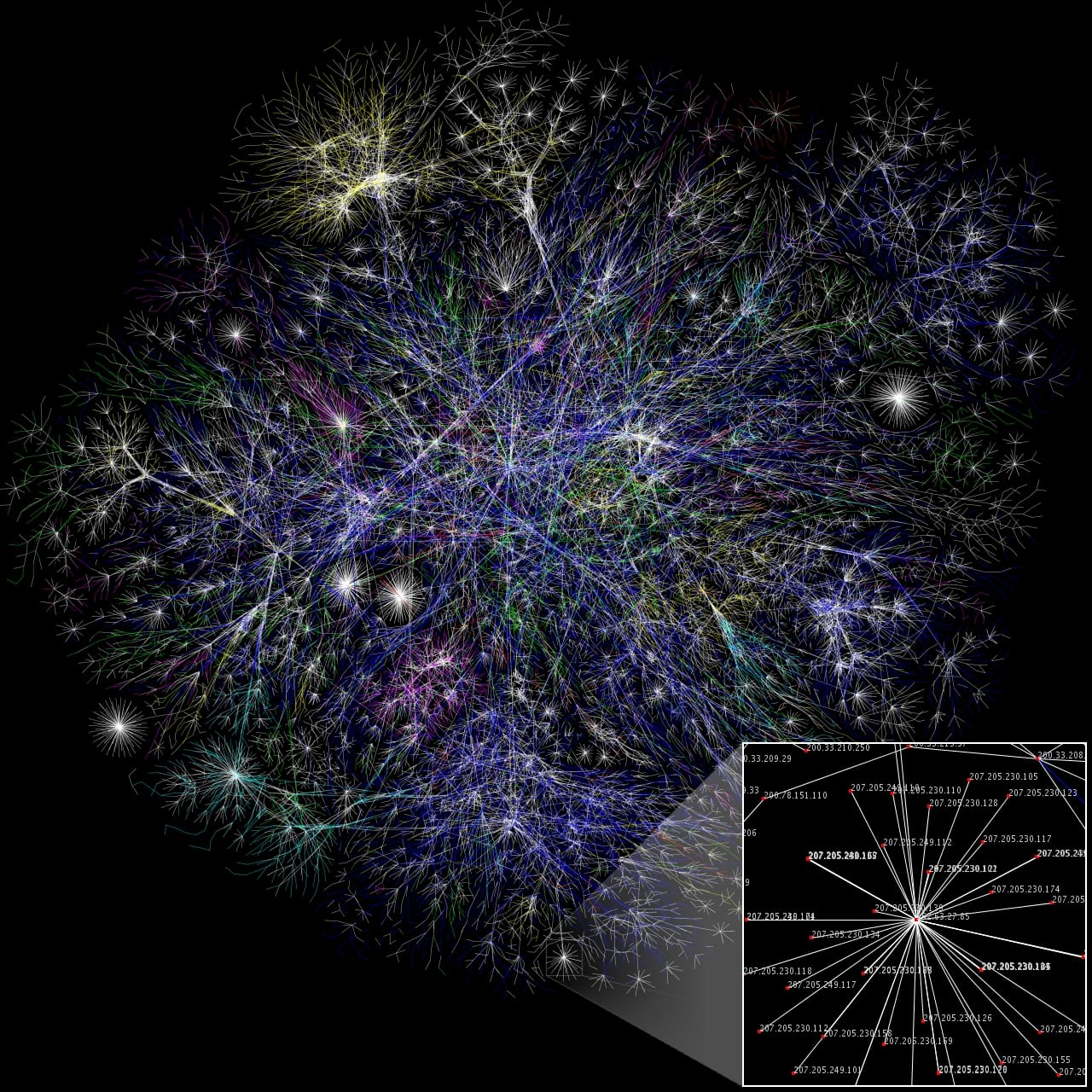
The internet is a network of networks, and its central protocol was designed to connect networks that were already different from one another.
The design principle usually cited is the end-to-end argument: keep the network simple and place intelligence at the endpoints. The network's job is to deliver packets on a best-effort basis, and reliability, ordering and encryption are handled by the machines at either end.
This is why innovation did not require permission. A new application needed no change to the network, which is the structural reason the web, streaming and messaging could each appear without any operator's cooperation.
Addressing uses IP addresses, and the domain name system translates readable names into them, functioning as a distributed directory.
Routing is decentralised. No authority knows the whole network; routers exchange reachability information with neighbours and build their own view, which is what allows the system to scale and to survive partial failure.
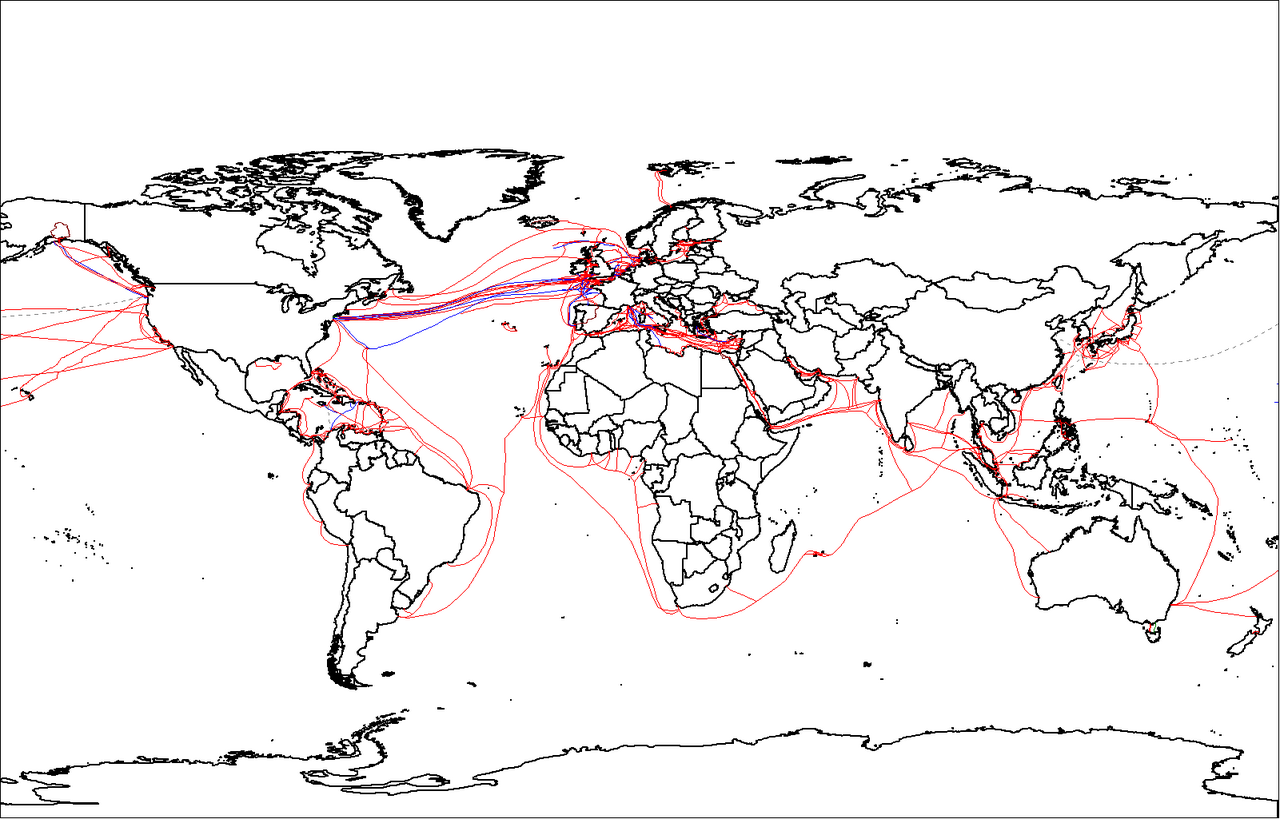
The physical substrate is less distributed than the logical design suggests. The great majority of intercontinental traffic passes through submarine cables following a limited number of routes, and damage to them has disrupted regional connectivity repeatedly.
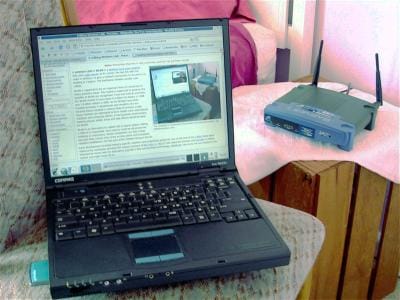
Wireless local networking removed the cable within a building, and cellular data extended connectivity to devices in motion.
Radio introduces problems that wired links do not have: a shared medium in which transmissions interfere, variable quality, and mobility requiring handover between base stations.
Mobile access is now the primary or only means of connection for a large share of the world's internet users, which has shaped how services are designed.
Network neutrality concerns whether operators may treat traffic differently by source or type. The argument for is that neutrality preserves the permissionless innovation the end-to-end design enabled; the argument against is that differentiated handling is technically reasonable and that investment requires returns. Regulation differs by jurisdiction and has changed repeatedly.
Centralisation is a substantial change from the original design. A large share of traffic now passes through a small number of cloud providers and content delivery networks, which improves performance and concentrates dependency, and outages at single providers have taken down large portions of the visible web.
Security was not a design goal. The original protocols assumed cooperative participants, and encryption, authentication and filtering were added afterwards, which is the origin of a substantial proportion of current vulnerabilities.
Address exhaustion drove the development of a successor addressing scheme, whose adoption has taken decades and remains incomplete.
Computer networks are the infrastructure on which essentially all modern communication, commerce and information access depends, and the internet capsule treats what was built on top of them.
The design decisions are also unusually visible in the result. A network built to be simple in the middle and intelligent at the edges produced an environment where anyone could add an application, and the consequences of that choice, both the innovation and the difficulty of securing it, are still being worked through.