The spreading and bending of waves when they meet an obstacle or pass through an opening. It happens to all waves, it is the reason light does not cast perfectly sharp shadows, and it sets a hard limit on what any optical instrument can resolve.
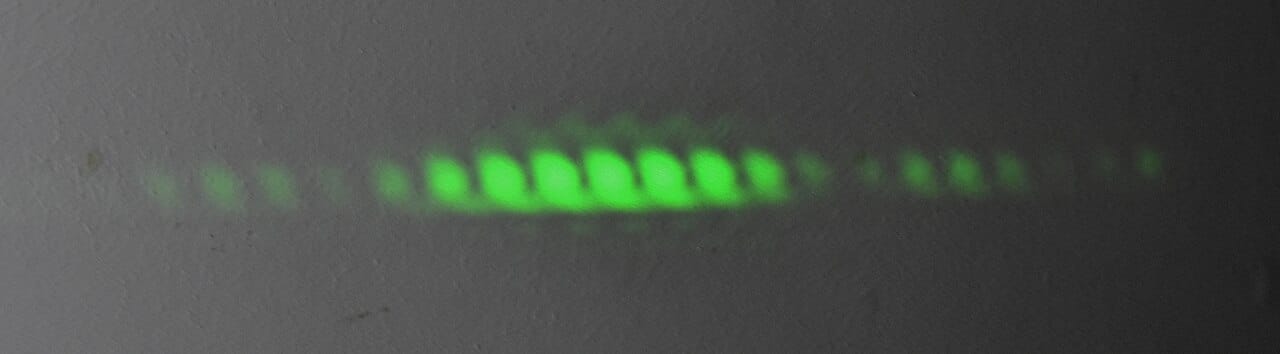
Send a wave through a gap comparable in size to its wavelength and it does not continue as a narrow beam. It spreads, and beyond the gap the intensity is not uniform but breaks into a pattern of bright and dark regions.
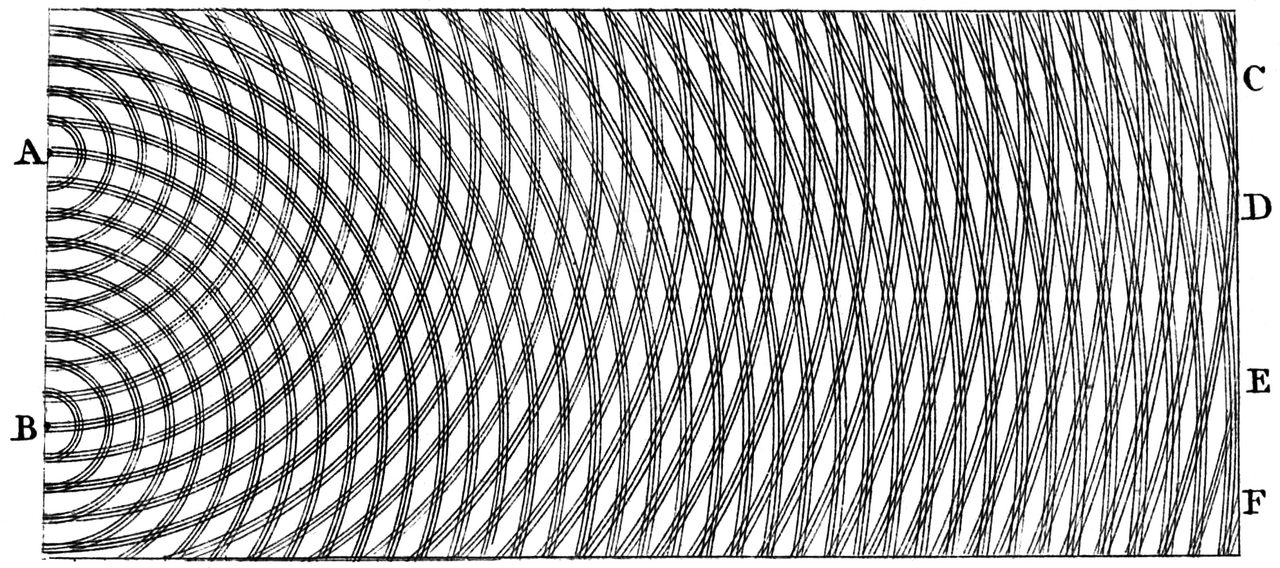
The effect is obvious for sound and water waves because their wavelengths are large. Light diffracts by the same rule, but its wavelength is under a thousandth of a millimetre, so the spreading is small and was long overlooked.
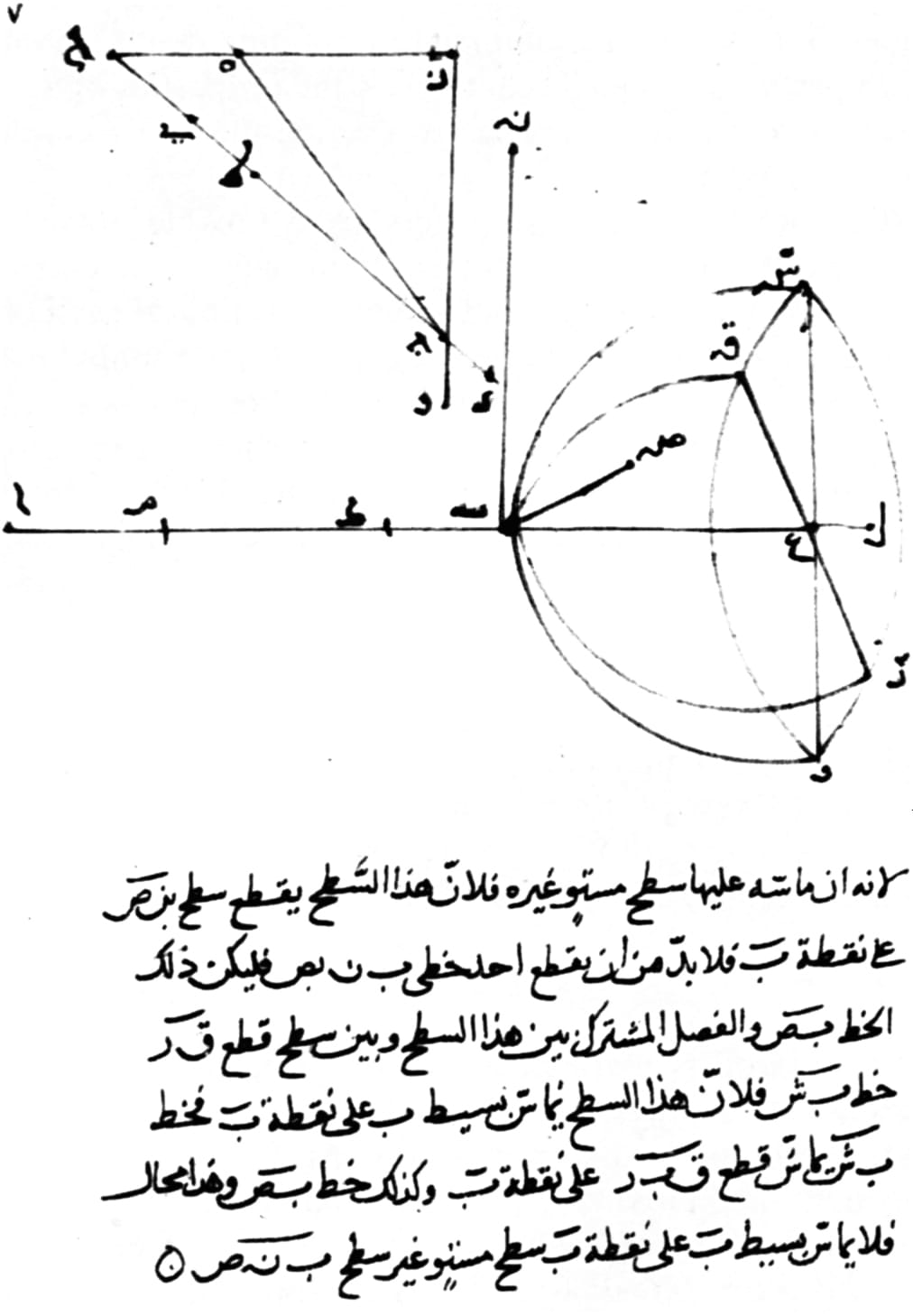
Francesco Grimaldi described and named the effect in work published in 1665, noting that light passing through a small aperture spread slightly more than straight-line propagation allowed.
The explanation is the Huygens Fresnel principle: every point on a wavefront acts as a source of secondary wavelets, and the wave at any later point is the sum of all of them, added with their relative phases.
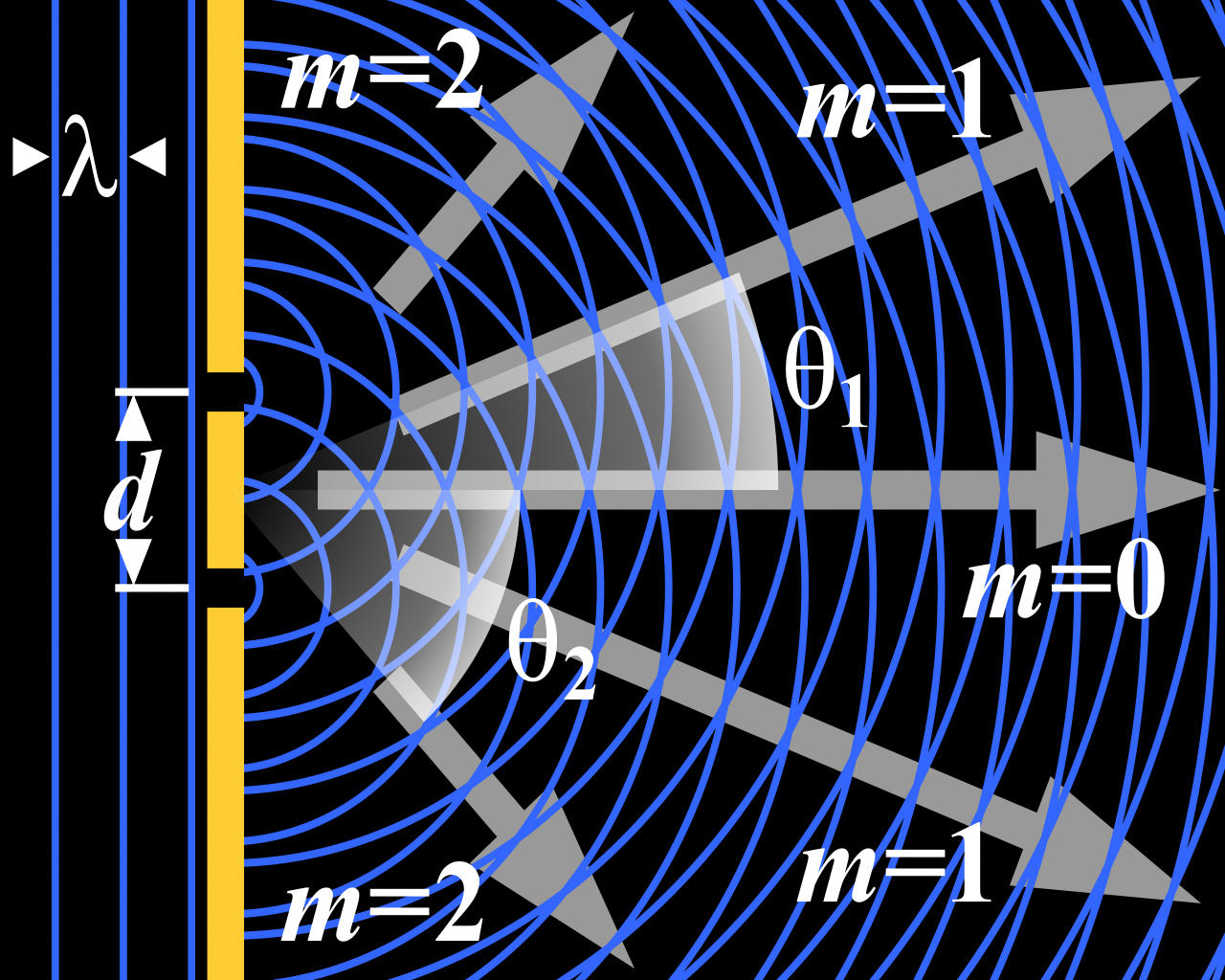
Where contributions arrive in phase they reinforce, and where they arrive half a cycle apart they cancel. The pattern is entirely a matter of path differences, which is why fringe spacing depends on wavelength and on the geometry of the aperture and nothing else.
For a single slit, the first dark fringe appears where the path difference across the slit is one wavelength. Narrower slits therefore spread light more, which is the opposite of the intuition that a smaller hole makes a tighter beam.
Thomas Young's two-slit experiment, presented from 1801, produced fringes that a stream of particles travelling in straight lines could not explain, and it was the decisive evidence for treating light as a wave.
Diffraction is not an imperfection that better manufacturing could remove. It is a property of waves, and it fixes the sharpest image any instrument can form.
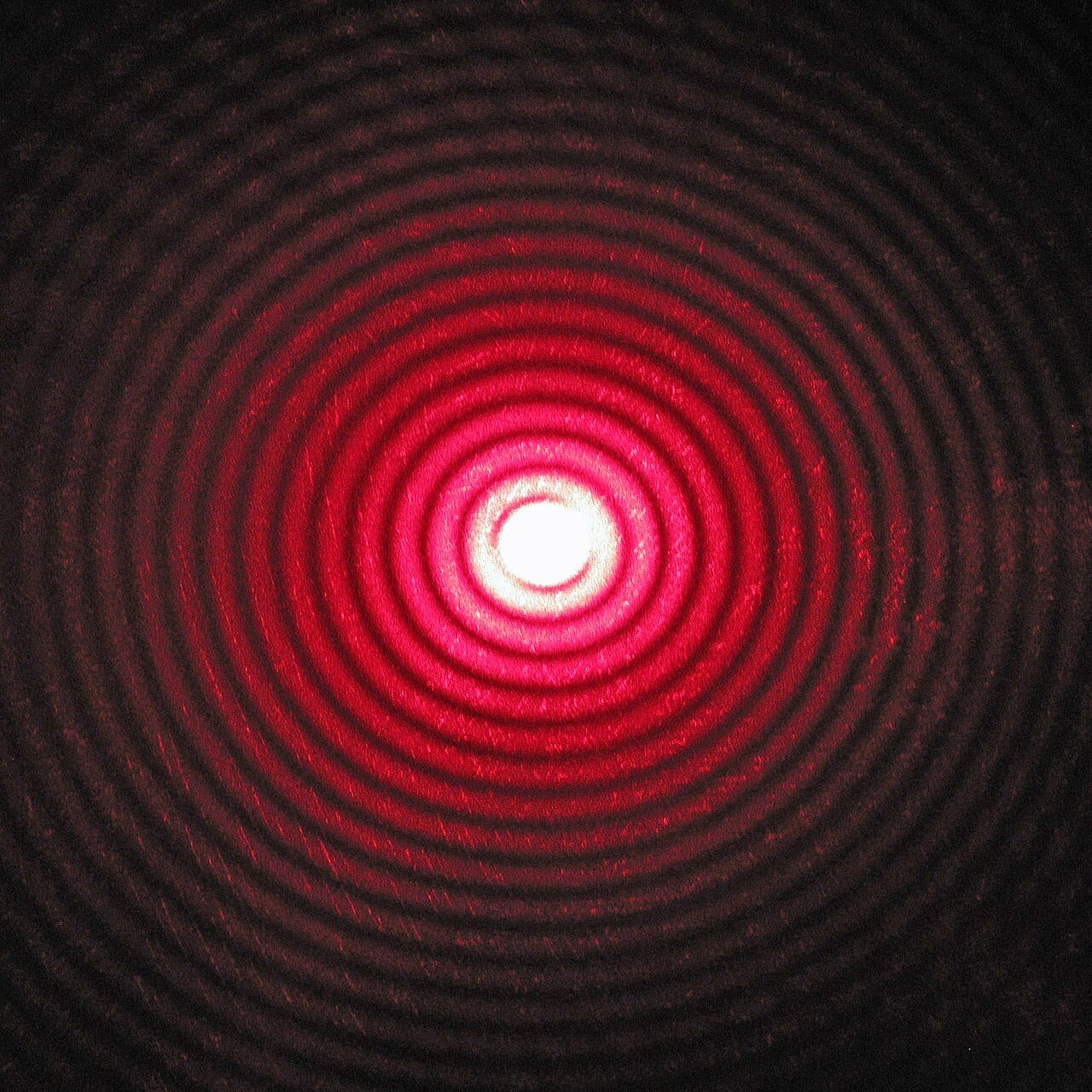
A circular aperture produces an Airy pattern, and two point sources are conventionally called resolved when the centre of one disc falls on the first dark ring of the other. The resulting angular limit is proportional to the wavelength divided by the aperture diameter.
Three consequences follow directly. Larger telescopes resolve finer detail, radio telescopes need enormous apertures or interferometry because their wavelengths are metres, and optical microscopes cannot resolve much below about 200 nanometres. Electron microscopes get around the last of these by using a much shorter wavelength, not by better lenses.
Diffraction gratings, with many closely spaced slits, spread light into its component wavelengths far more sharply than a prism, and are the basis of most spectroscopy.
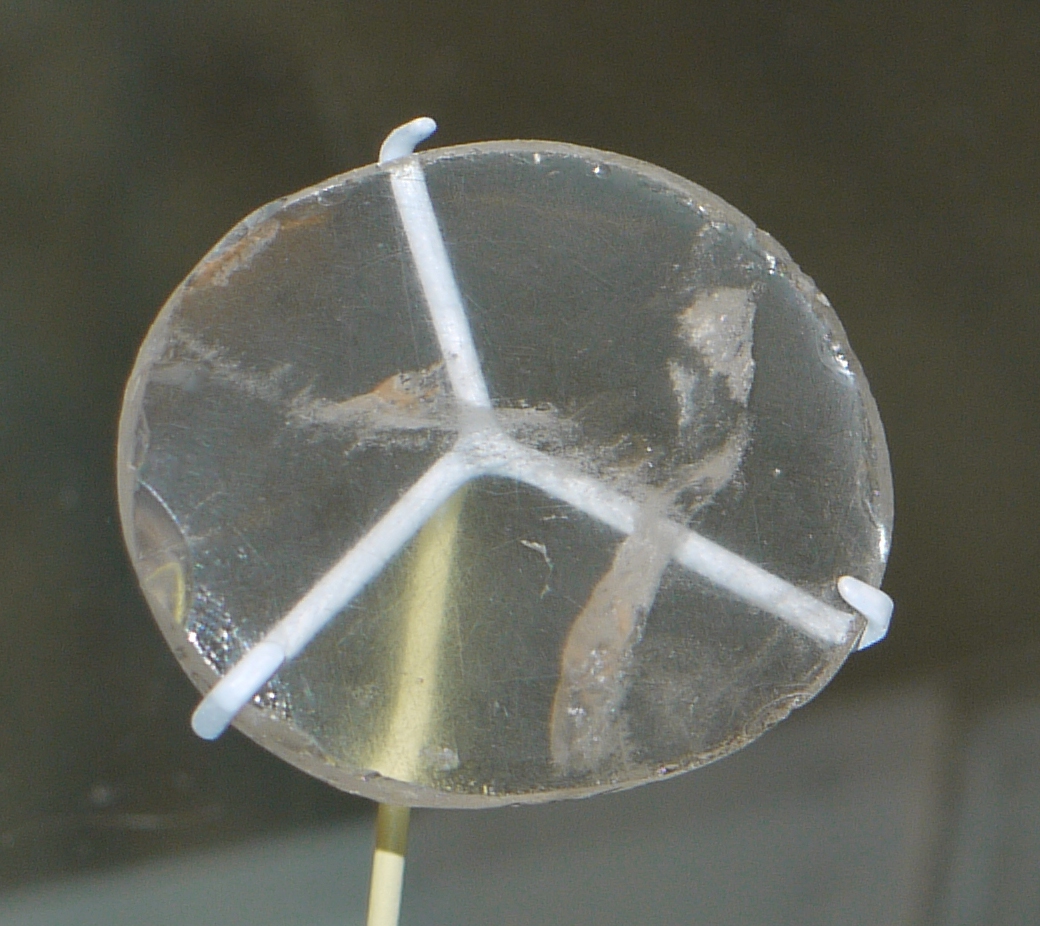
X-ray diffraction is the most consequential application. Because X-ray wavelengths are comparable to atomic spacings, a crystal acts as a three-dimensional grating, and the diffraction pattern encodes the arrangement of its atoms. Max von Laue demonstrated it in 1912 and William and Lawrence Bragg turned it into a method for determining structures. It is how the structures of DNA, haemoglobin, penicillin and most proteins were determined.
Electron diffraction carries an additional weight. When Clinton Davisson and Lester Germer scattered electrons off a nickel crystal in 1927 and obtained a diffraction pattern, they demonstrated that particles have a wave nature, confirming the prediction Louis de Broglie had made three years earlier.
Diffraction is the property that distinguishes waves from particles travelling in straight lines, so it was the evidence that settled the nature of light and then, unexpectedly, the evidence that matter is not simply particulate either. It also imposes the limit that governs the design of every telescope, microscope and lithography system in use.