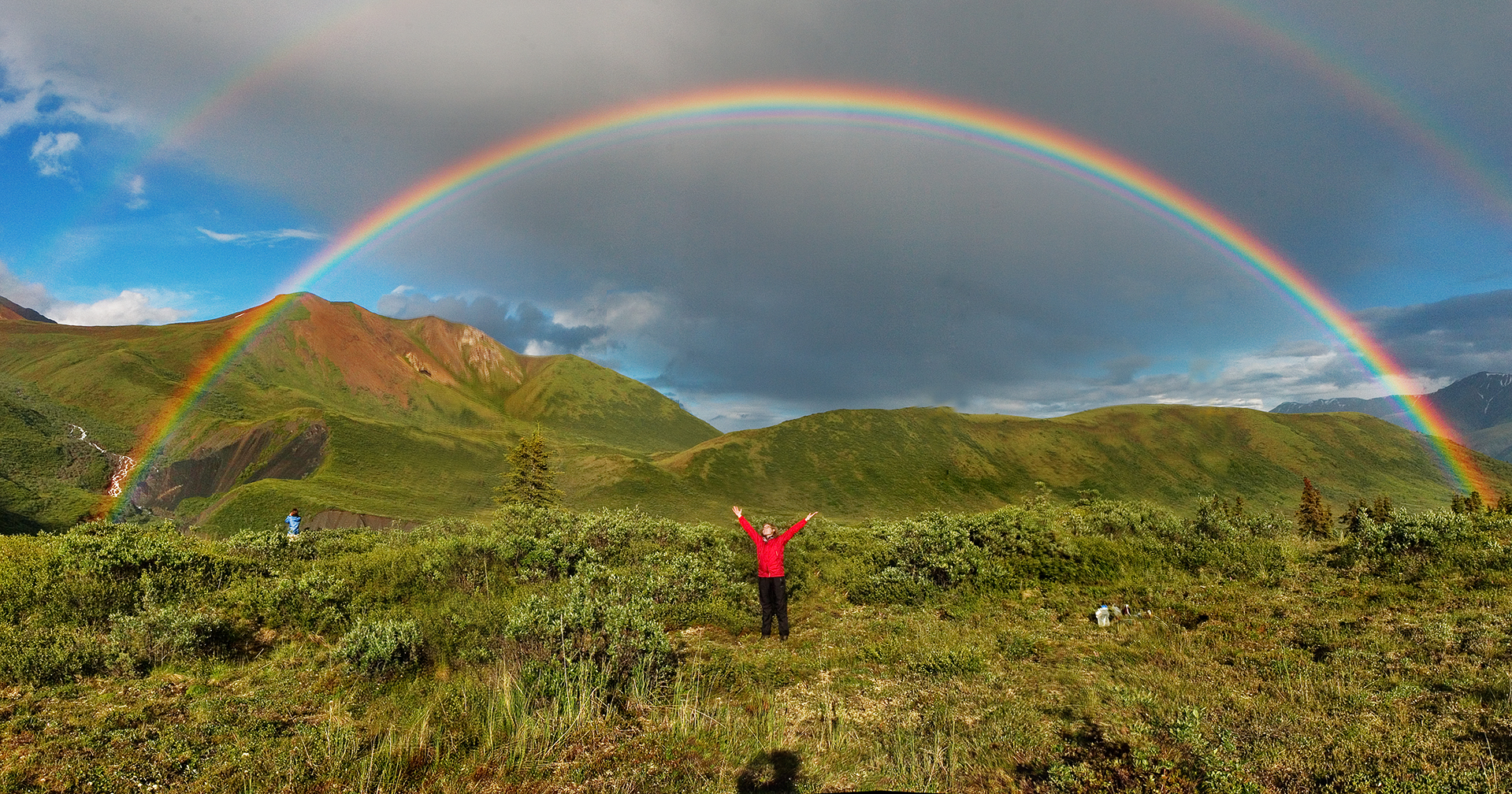
A rainbow is a band of colour that appears in the sky when sunlight is bent and split by water droplets in the air. Familiar and beloved across every culture, it is also a beautiful, everyday demonstration of the physics of light, and a reminder that ordinary white sunlight is a mixture of every colour.
A rainbow appears whenever sunlight falls on a curtain of raindrops while the Sun is behind the viewer. It is one of nature's most reliable spectacles, and yet no two people ever see exactly the same one, because each rainbow is made by different drops for each pair of eyes.
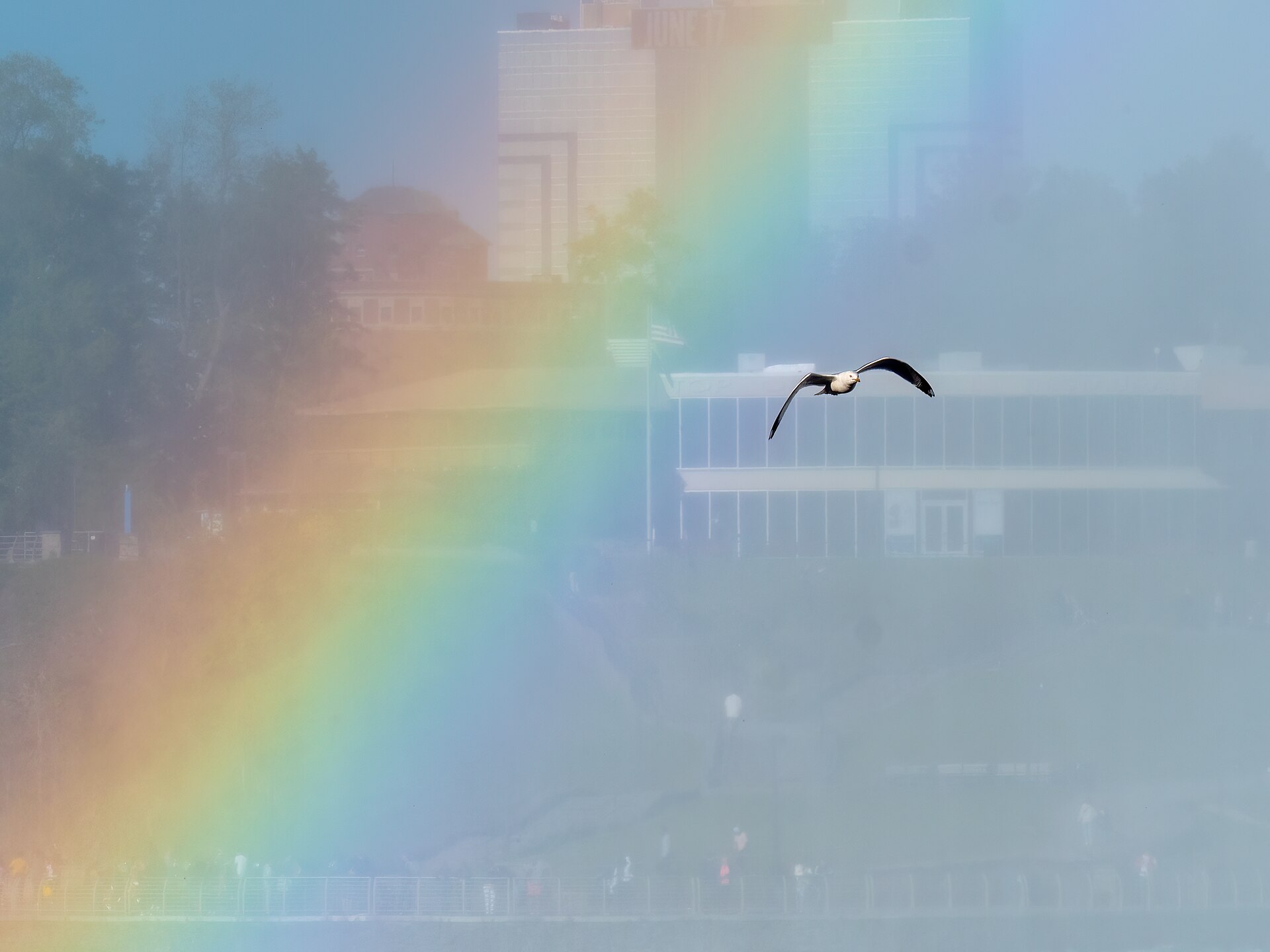
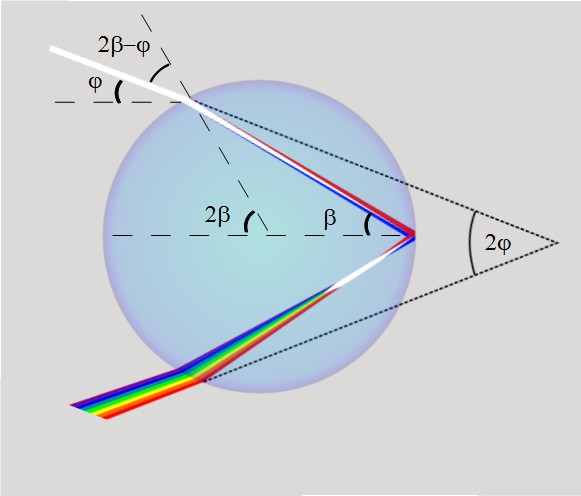
As light enters each tiny, round droplet it slows and bends, a process called refraction, then reflects off the back of the drop and bends again as it leaves. Because different colours of light bend by slightly different amounts, they fan out, separating white sunlight into the familiar spectrum, from red on the outer edge to violet on the inner. Every raindrop does this, and together countless drops paint the great arc we see.
A rainbow is actually a full circle of light, centred on the point directly opposite the Sun from the viewer. We usually see only an arc because the ground cuts off the lower half, but from a high vantage point, such as an aeroplane, a complete circular rainbow can sometimes be seen. The Sun must be behind you and the rain in front, which is why a low Sun produces the highest arcs.
Sometimes a second, fainter rainbow appears outside the first, with its colours running in the opposite order. This secondary bow is caused by light that reflects twice inside each droplet before leaving. Between the two bows lies a noticeably darker strip of sky known as Alexander's band.
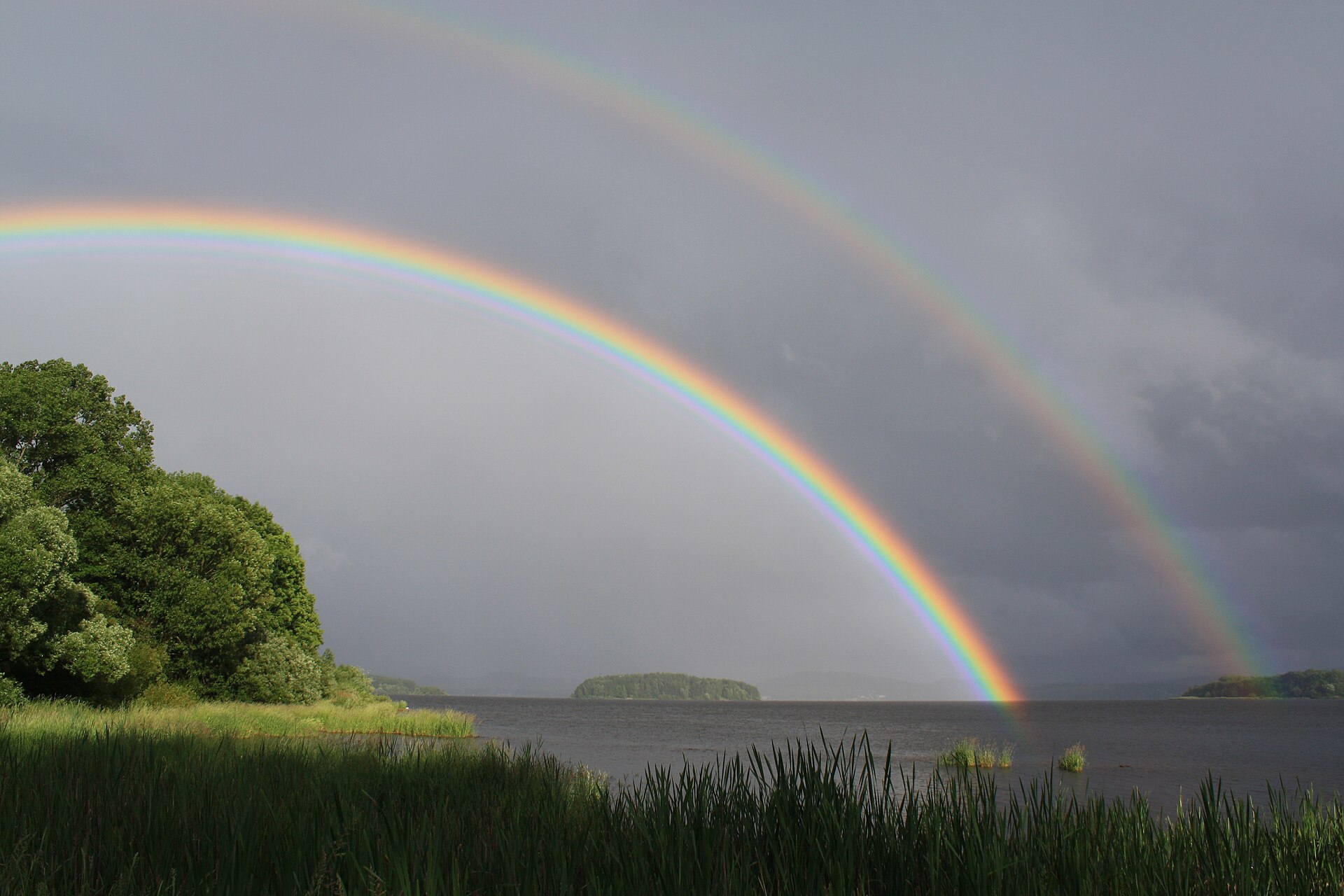
Although we traditionally name seven colours in the rainbow, the band is really a smooth, continuous gradient with no sharp boundaries, blending seamlessly from one hue to the next. The number of colours we pick out is partly a matter of culture and language rather than physics, and the spectrum extends beyond the visible at both ends, into infrared and ultraviolet light our eyes cannot see.
One of the rainbow's quirks is that it has no fixed location: it depends entirely on the position of the viewer relative to the Sun and the rain. As you move, the rainbow moves with you, which is why you can never reach the end of one or find the proverbial pot of gold. It is less an object in the sky than a personal meeting of sunlight, water, and your own point of view.