A device that produces light in which every wave is in step, travelling in one direction at one wavelength. It was built in 1960 with no application in mind, was described as a solution looking for a problem, and is now in surgery, manufacturing, telecommunications, and every supermarket checkout.
Ordinary light is emitted independently by many atoms, so it contains many wavelengths, radiates in all directions, and its waves have no fixed relationship to one another.
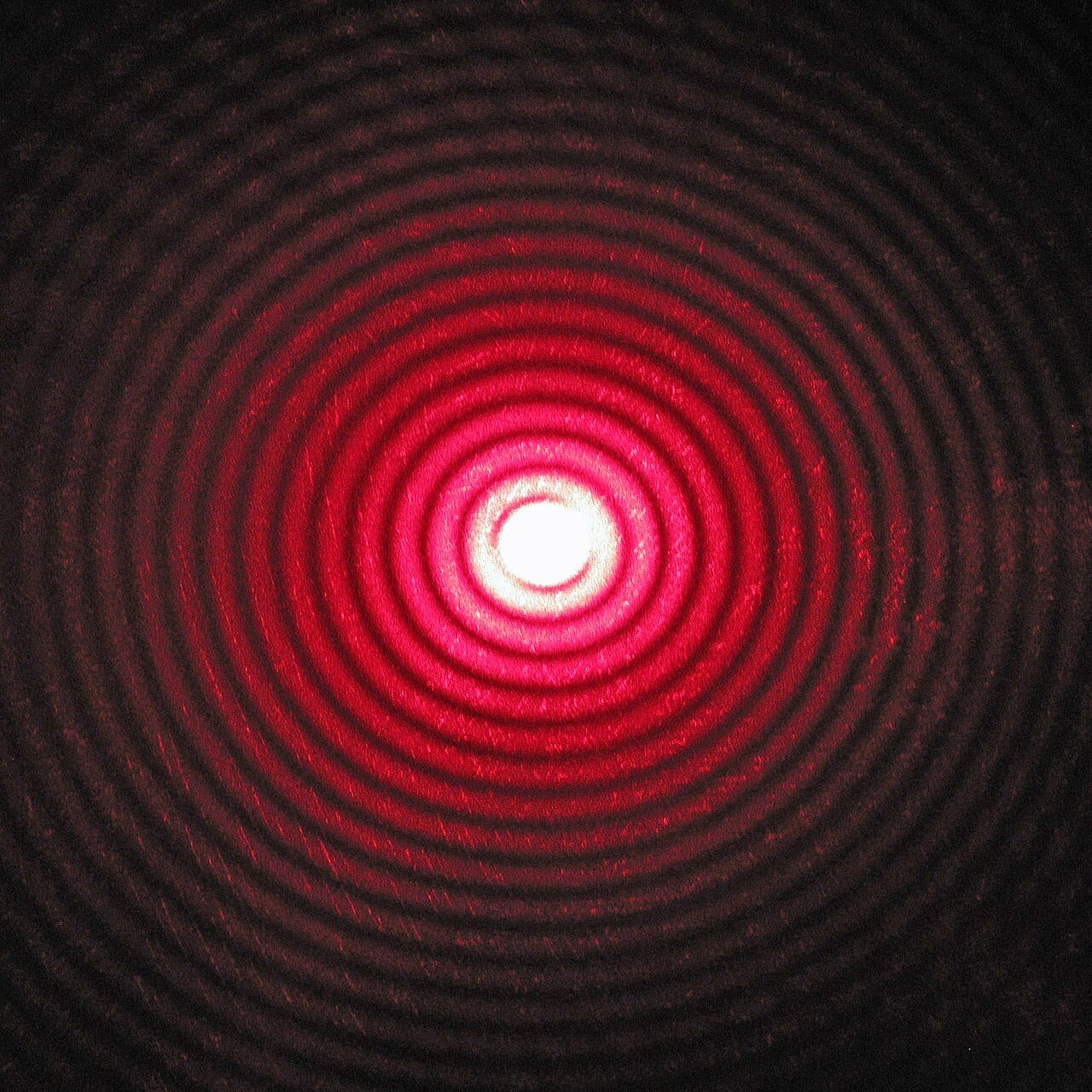
Laser light is coherent. Every wave is in phase with every other, at a single wavelength, travelling in the same direction. That coherence is what all the applications rest on: a beam that stays narrow over distance, can be focused to a spot roughly the size of its own wavelength, and can be modulated at enormous rates.
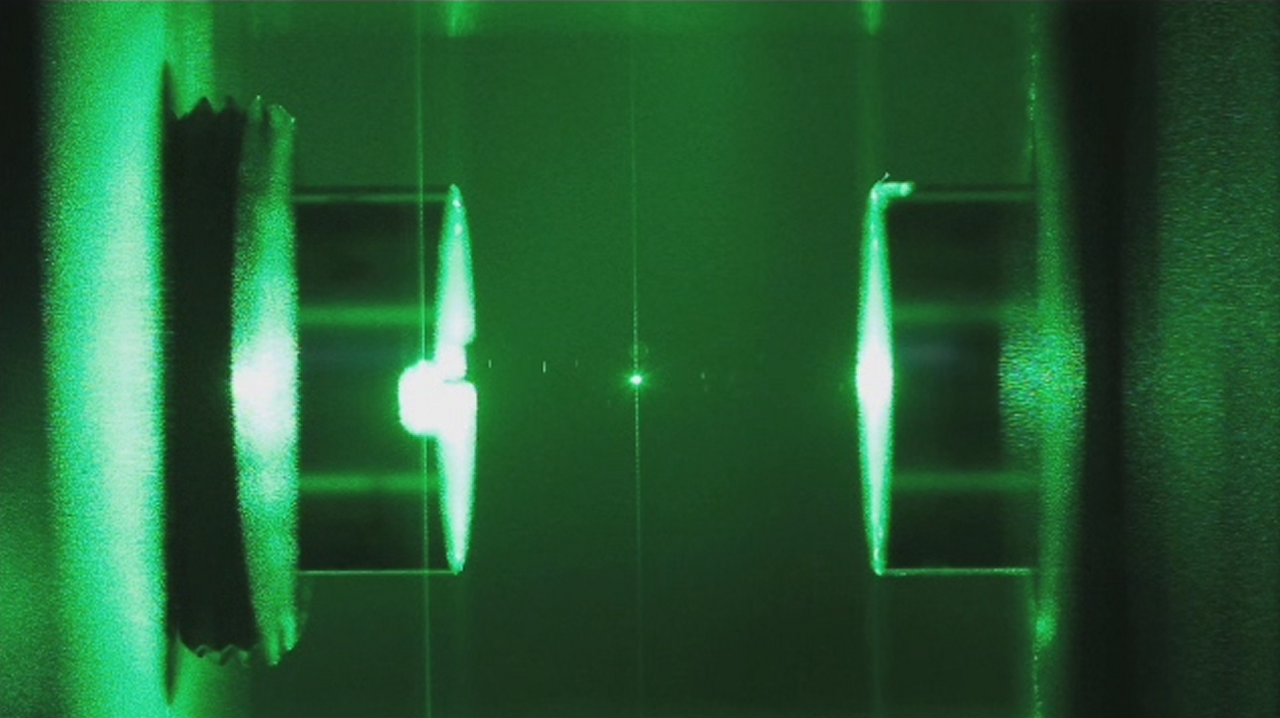
The physics is stimulated emission, which Einstein derived in 1917 while working out the statistics of radiation in equilibrium with matter.
An excited atom will eventually drop to a lower state and emit a photon at random. Einstein showed that a passing photon of the right energy can trigger that drop, and that the emitted photon is identical to the trigger: same wavelength, same direction, same phase. One photon becomes two, indistinguishable.
Amplification requires more atoms excited than not, a population inversion, which does not occur naturally because energy states fill from the bottom. Producing it means pumping energy in faster than it leaks out. The pumped material sits between two mirrors, so photons pass through it repeatedly and the cascade builds. One mirror is slightly transparent, and what escapes is the beam.
Charles Townes built the maser in 1954, doing this with microwaves. Extending it to visible light was the obvious next step and the race was close.
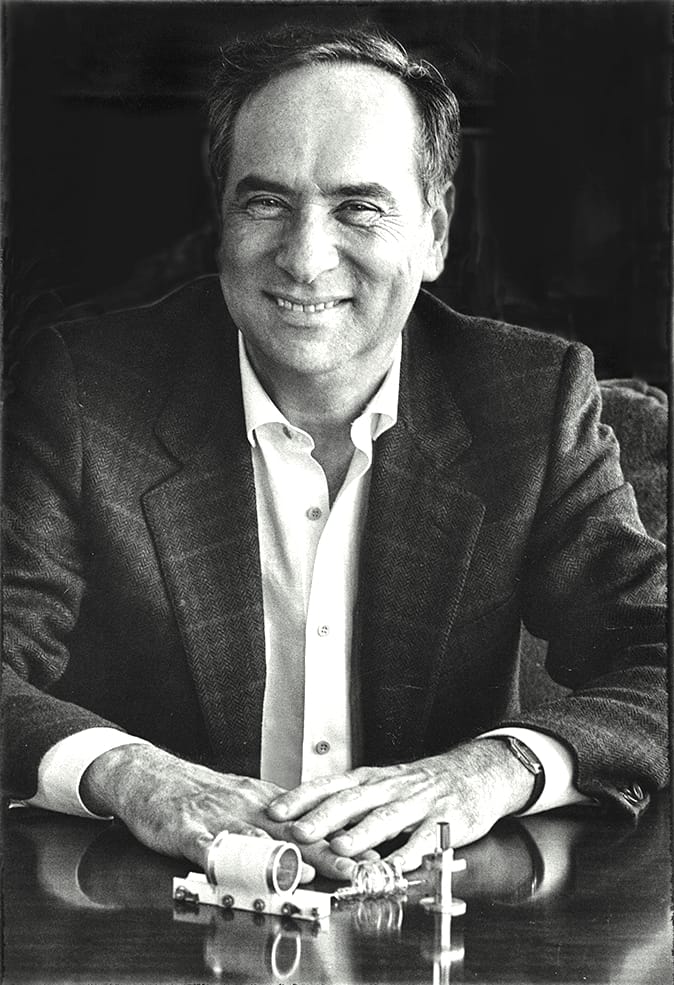
Theodore Maiman won it in May 1960, using a synthetic ruby rod and a helical photographic flash lamp. His paper was rejected by Physical Review Letters as insufficiently novel, an editorial judgement that is now the standard illustration of peer review's fallibility. He published a short note in Nature instead.
Priority was litigated for decades. Gordon Gould, a graduate student, had written down the principle in a notarised notebook in 1957 and coined the acronym, and after nearly thirty years of patent disputes won royalties on several key claims.
The list is worth stating because the invention's reputation as a curiosity lasted so long.
Optical fibre carries essentially all long-distance data traffic, using lasers modulated billions of times per second. Barcode scanners, optical discs and laser printers are consumer versions of the same precision.
Surgery uses lasers where the wavelength can be matched to what should absorb it: reshaping the cornea in refractive surgery, sealing retinal tears, breaking up kidney stones, and cutting tissue while cauterising it.
Manufacturing uses them for cutting and welding metal, for lithography in chip fabrication, and increasingly for additive manufacturing.
Measurement is where the coherence matters most. Lidar maps terrain and drives autonomous vehicles. Retroreflectors left on the Moon by Apollo missions have let the Earth-Moon distance be measured to millimetres for fifty years. And LIGO detects gravitational waves by measuring a change in the length of a four-kilometre arm smaller than a thousandth the width of a proton, which is possible only because the light is coherent.
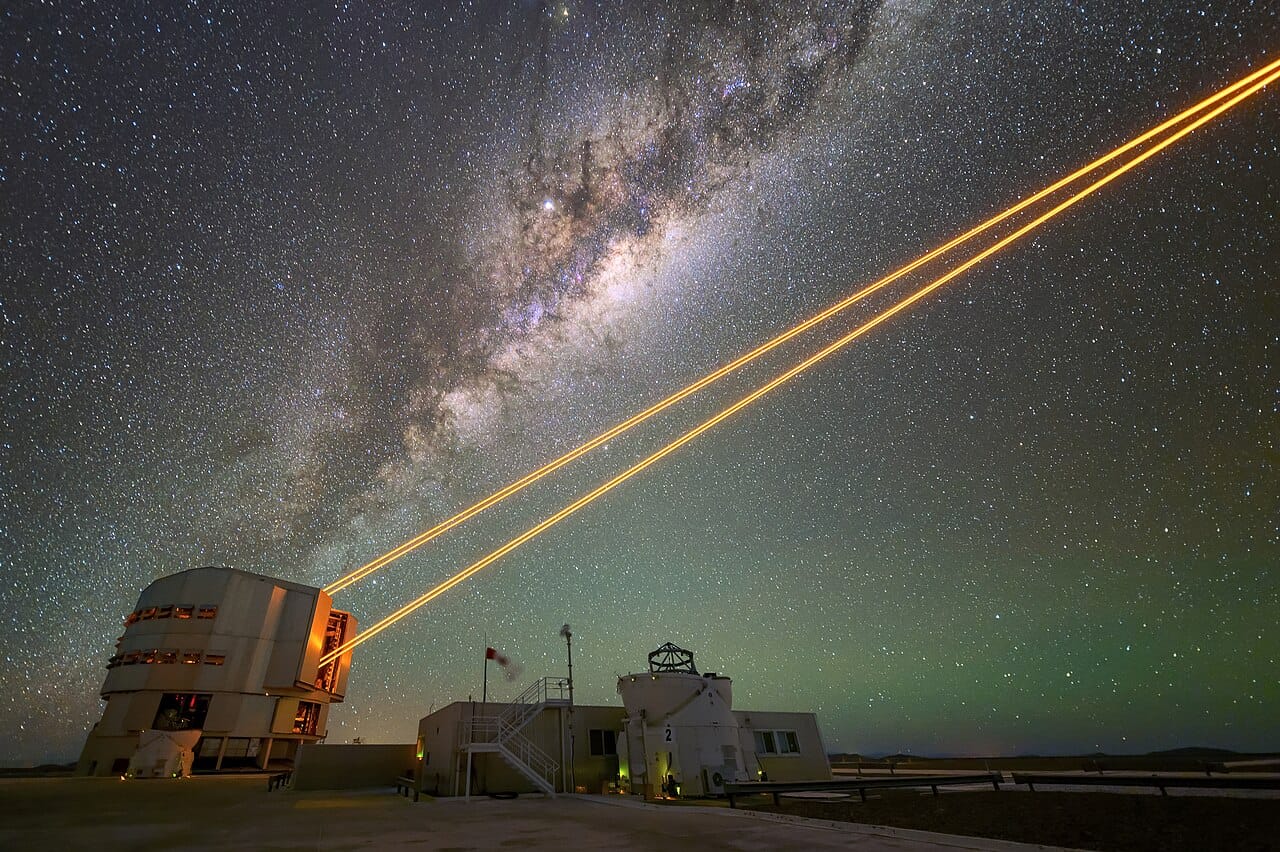
Astronomy uses laser guide stars, exciting sodium atoms ninety kilometres up to create an artificial reference point, so adaptive optics can cancel atmospheric distortion in real time.
Townes recounted that colleagues told him the maser had no conceivable use, and lawyers at Bell Laboratories initially declined to patent the laser on the grounds that optical wavelengths had no relevance to telecommunications.
The device was not developed to solve a problem. It came out of working through the quantum mechanics of radiation, and the applications were found afterwards by people who had a device and went looking. This is the standard example in arguments about funding basic research, and it is a fair one.