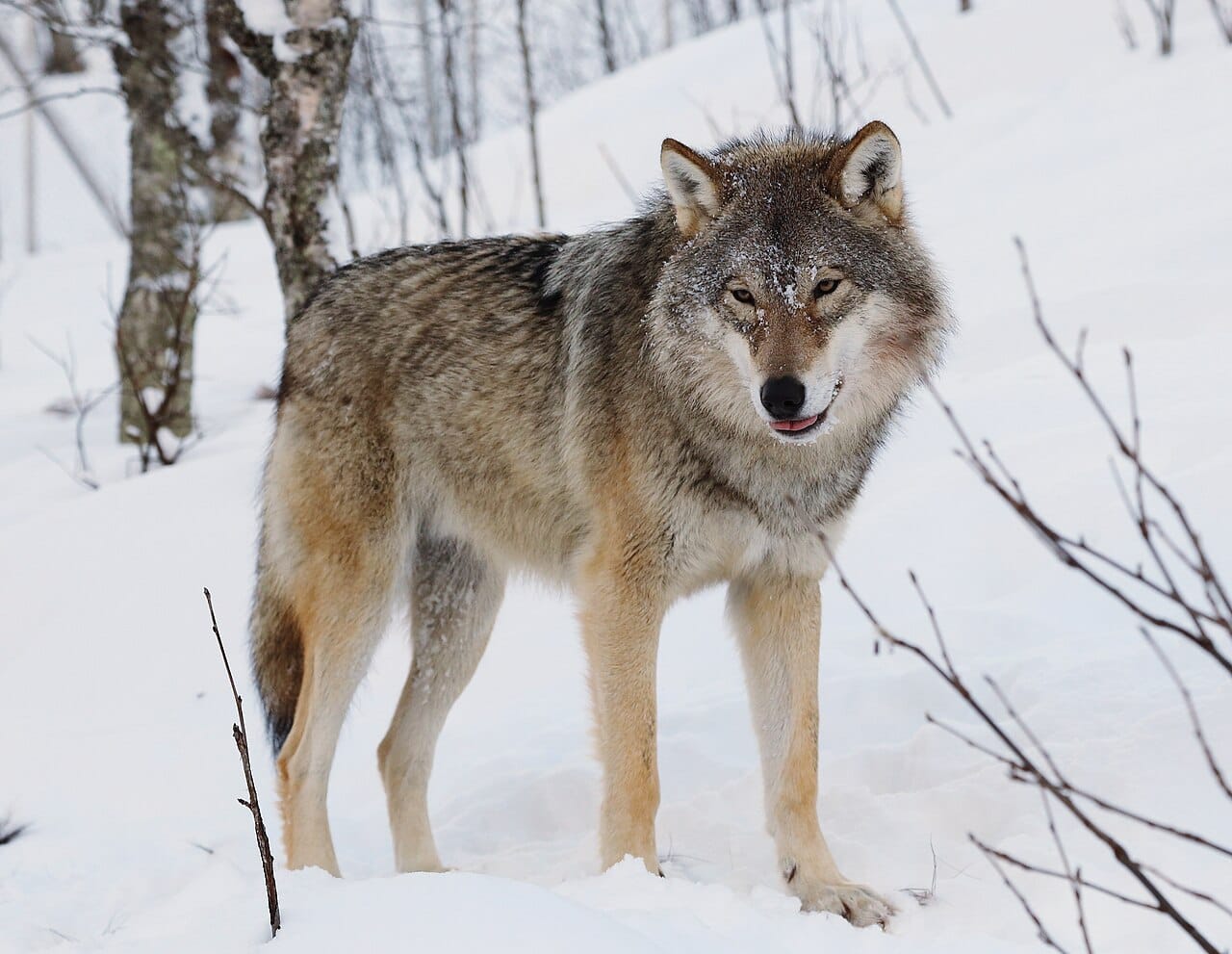
The grey wolf, Canis lupus, is the largest wild member of the dog family and once the most widely distributed land mammal on Earth after humans. It is also the ancestor of the domestic dog, which makes it the only large predator humans have both exterminated across most of a continent and taken into the house.
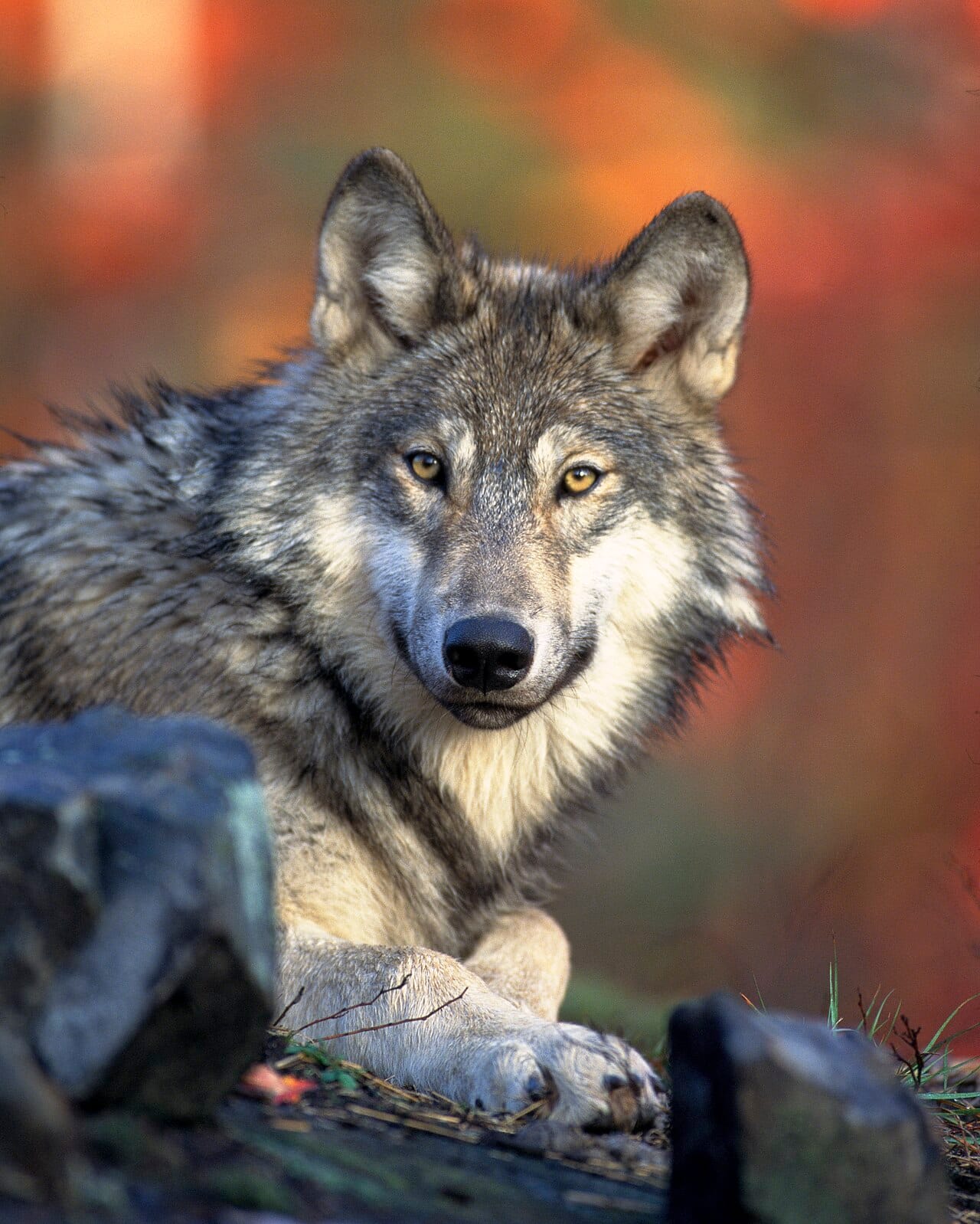
A wolf is a cursorial predator built for distance rather than speed. It has a deep chest, long legs, and feet that place the weight forward, and it travels at a trot it can hold for hours. A hunting pack may cover more than twenty kilometres in a night.
Size varies enormously with latitude, which is a general rule among wide-ranging mammals and is usually explained by heat retention. Arabian wolves may weigh twenty kilograms; wolves in Alaska and northwestern Canada can exceed fifty.
The senses are ordered differently from ours. Smell is the primary sense, with an olfactory epithelium many times the area of a human's, and wolves locate prey and read the movements of other wolves largely by scent. Hearing is acute. Colour vision is limited, which matters less than it sounds for an animal that hunts at dawn and dusk.
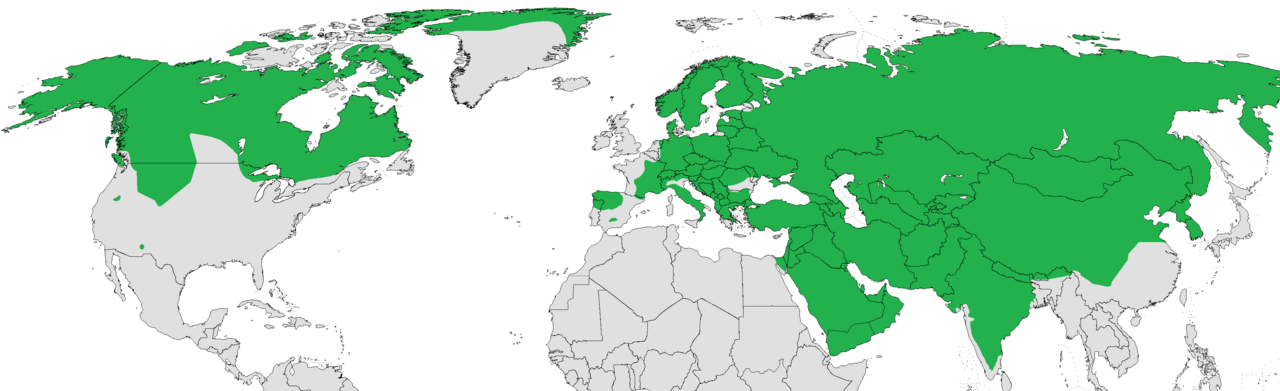
Wolves occupied nearly the whole northern hemisphere above about twenty degrees latitude: forest, tundra, steppe, desert and mountain. Almost nothing about the map is set by habitat, because they tolerate an extraordinary range of it. What set the map was persecution.
Britain lost its wolves by about the early eighteenth century, Ireland by the late eighteenth. They were eliminated from most of the contiguous United States by the 1930s, and from Japan by 1905. Recovery since the 1970s has been substantial in parts of Europe and North America, driven by legal protection, forest regrowth and the return of deer.
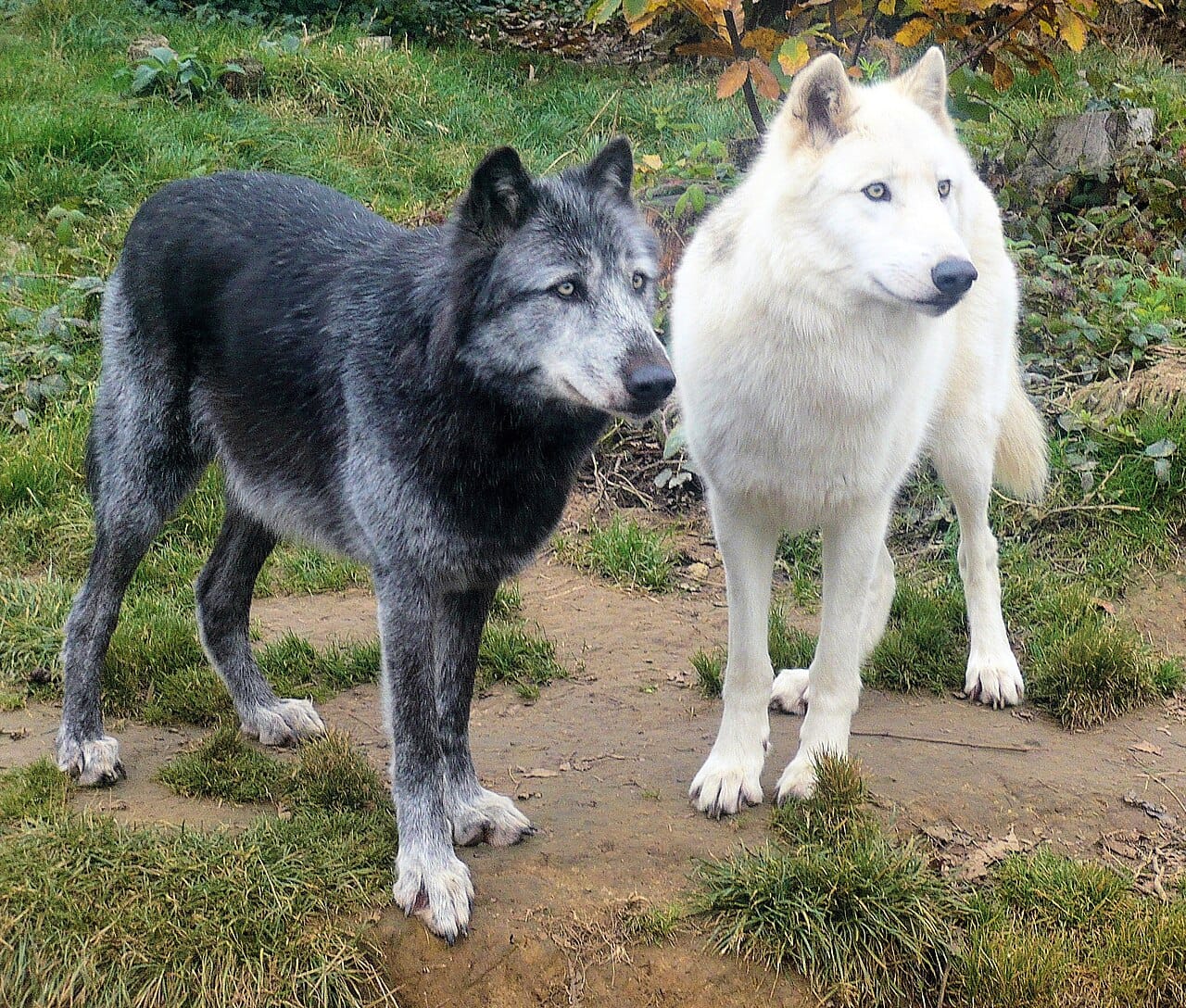
A pack is usually a family: a breeding pair and their offspring of the previous one to three years. It is not a collection of unrelated adults competing for rank, which is the central error behind the idea of the alpha wolf.
That idea came from studies of unrelated captive wolves confined together in the mid twentieth century, most influentially by Rudolf Schenkel in 1947. Animals in that situation do form aggressive dominance hierarchies, in the way that unrelated humans confined together might. David Mech, who popularised the term alpha in a 1970 book, spent decades afterwards trying to retract it after watching wild packs on Ellesmere Island and finding ordinary parents and their young.
Pack size ranges from a pair to more than twenty, and tracks prey size: packs hunting bison or moose are larger than packs hunting deer. Young wolves usually disperse at one to three years old and may travel hundreds of kilometres to find a mate and unoccupied ground.
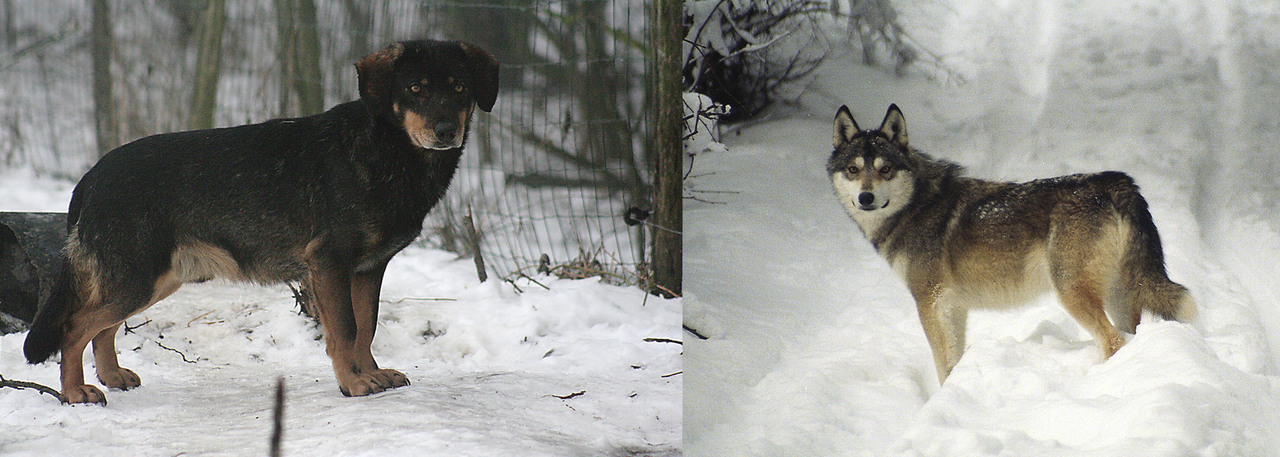
Every domestic dog descends from grey wolves. The genetics are not in doubt; the timing and the setting are. Estimates for the divergence of the dog lineage from the wolves that led to it range from roughly 15,000 to 40,000 years ago, and the archaeological and genomic evidence has repeatedly failed to converge.
What is reasonably clear is that the ancestral population was not any wolf alive today. Modern grey wolves and modern dogs are sister lineages descending from a ghost population that no longer exists, which is why comparing a dog to a living wolf does not date the split.
The most plausible mechanism is self-domestication rather than deliberate capture: wolves that tolerated proximity to human camps got access to waste, and tolerance was selected for over generations before anyone intended anything.
Wolves take mostly large ungulates: deer, elk, moose, caribou, bison, wild boar. Hunting success is low, often well under a fifth of attempts on large prey, and packs test many animals before committing to one.
The reintroduction of wolves to Yellowstone in 1995 and 1996 is the most studied predator restoration anywhere, and is frequently described in terms of a trophic cascade in which wolves reduced elk browsing, willows and aspen recovered, and beaver and river channels followed. The direction of the effect is real and the wolves are certainly part of it.
The magnitude is disputed. Later work has argued that elk numbers were also falling because of drought, bears, hunting and cougars, that willow recovery was patchy and in places limited by water tables rather than browsing, and that the popular retelling in which wolves changed the course of rivers considerably overstates a genuine but more modest result.
Globally the grey wolf is Least Concern, because the world population is large and the range is still vast. That figure conceals the situation of particular populations, several of which are critically small.
The persistent conflict is livestock. Wolves kill a small fraction of a percent of livestock in regions where both occur, but the losses fall on individual farmers rather than being spread, and compensation schemes have a mixed record. Legal protection has been repeatedly tightened and loosened in both the European Union and the United States, and the wolf is unusual among wild animals in that its legal status is a live political question rather than a technical one.
The wolf occupies a strange double position: the animal Europeans spent a thousand years trying to eliminate, and the animal that became the dog. Both facts are about proximity. Wolves were hated because they lived near people and ate what people kept, and they became dogs for the same reason.