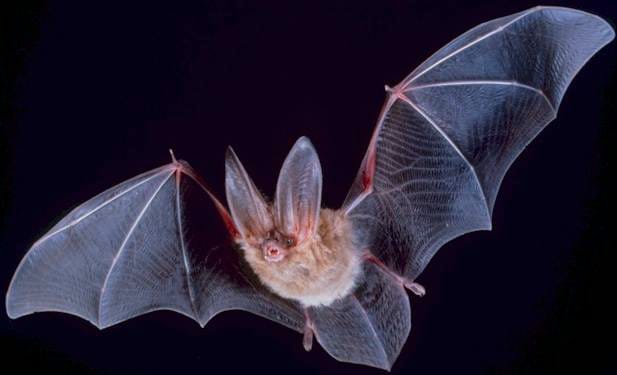
Bats, the order Chiroptera, are the only mammals capable of powered flight. There are more than 1,400 species, roughly a fifth of all mammal species, and they occupy every continent except Antarctica. They are also, per gram, among the longest-lived mammals alive, which is a puzzle rather than a footnote.
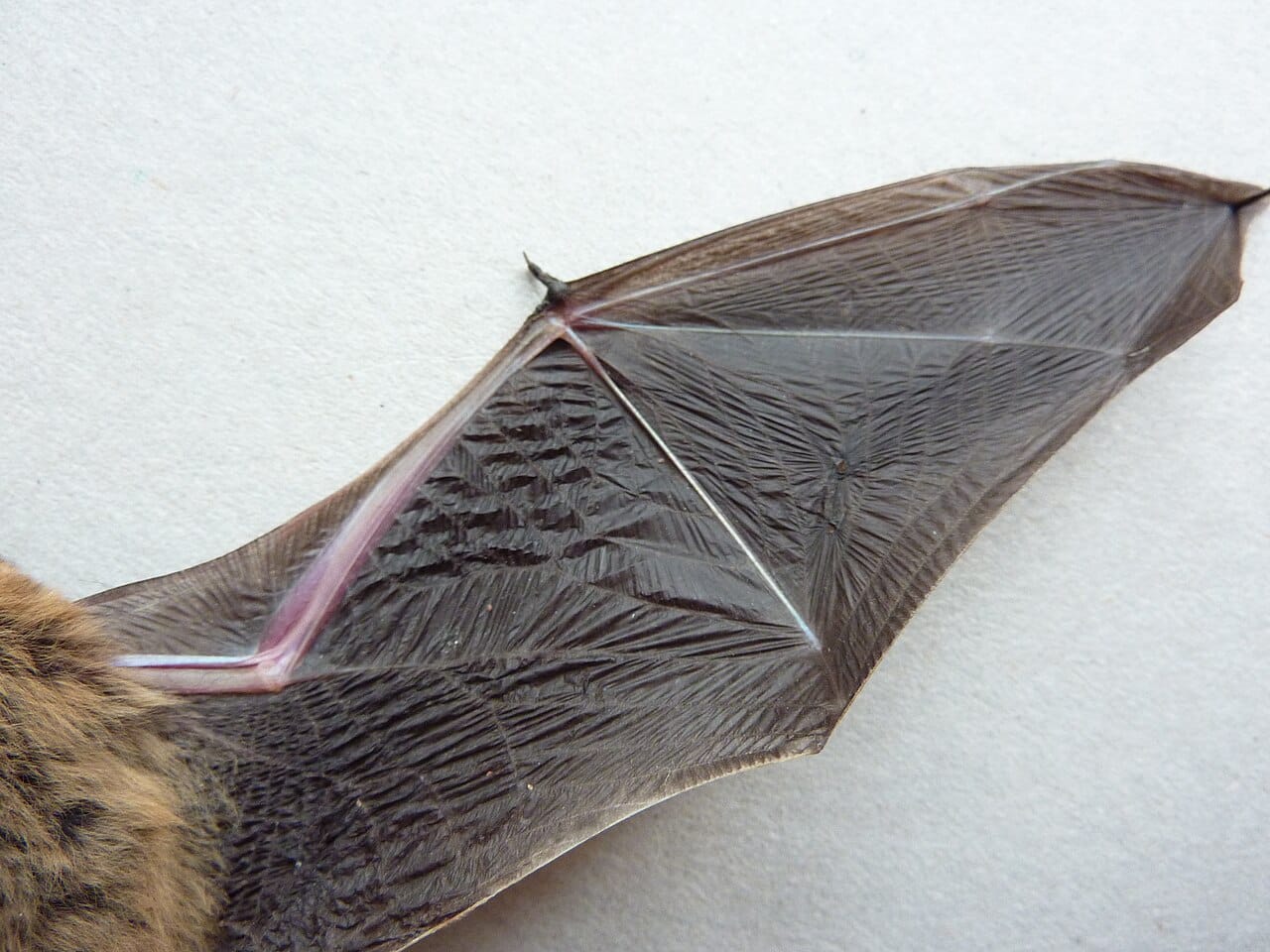
A bat wing is a hand. The name Chiroptera means hand-wing, and the structure is a skin membrane, the patagium, stretched between four hugely elongated fingers, the body, and usually the legs and tail. The thumb remains free and clawed.
This is a fundamentally different solution from the bird wing, which is a feathered forelimb with the digits reduced, and from the pterosaur wing, which hung from a single elongated fourth finger. All three are convergent and none is a modification of the others.
The membrane is thin, richly supplied with blood vessels and nerves, and studded with tiny sensory hairs that detect airflow and allow the bat to sense a stall before it happens. It can be reshaped continuously in flight in a way a feathered wing cannot, which is why bats are more manoeuvrable than birds at low speed and less efficient at high speed.

Most bats, and all the insect-eating families, navigate and hunt by emitting high-frequency calls and reading the returning echoes. The delay gives distance, the frequency shift gives relative velocity, and the difference between the ears gives direction.
The resolution is extraordinary. Bats detect and capture insects in complete darkness, discriminate targets a fraction of a millimetre across, and distinguish a moth from a falling leaf. As a bat closes on prey, the pulse rate rises into a terminal buzz of up to two hundred calls a second.
The calls are loud, frequently above 110 decibels at close range, which creates a problem: the bat would deafen itself. Muscles in the middle ear contract in time with each emitted pulse to damp the bat's own hearing and relax in time to receive the echo, all within milliseconds.
There is an arms race attached. Many moths hear bat calls and take evasive action; some tiger moths emit ultrasonic clicks that jam the bat's returning echo, which is genuine sonar jamming and was demonstrated experimentally in 2009.
Echolocation evolved at least twice within bats and possibly more, and whether it was present in the common ancestor and lost in the fruit bats, or gained independently, is unresolved.
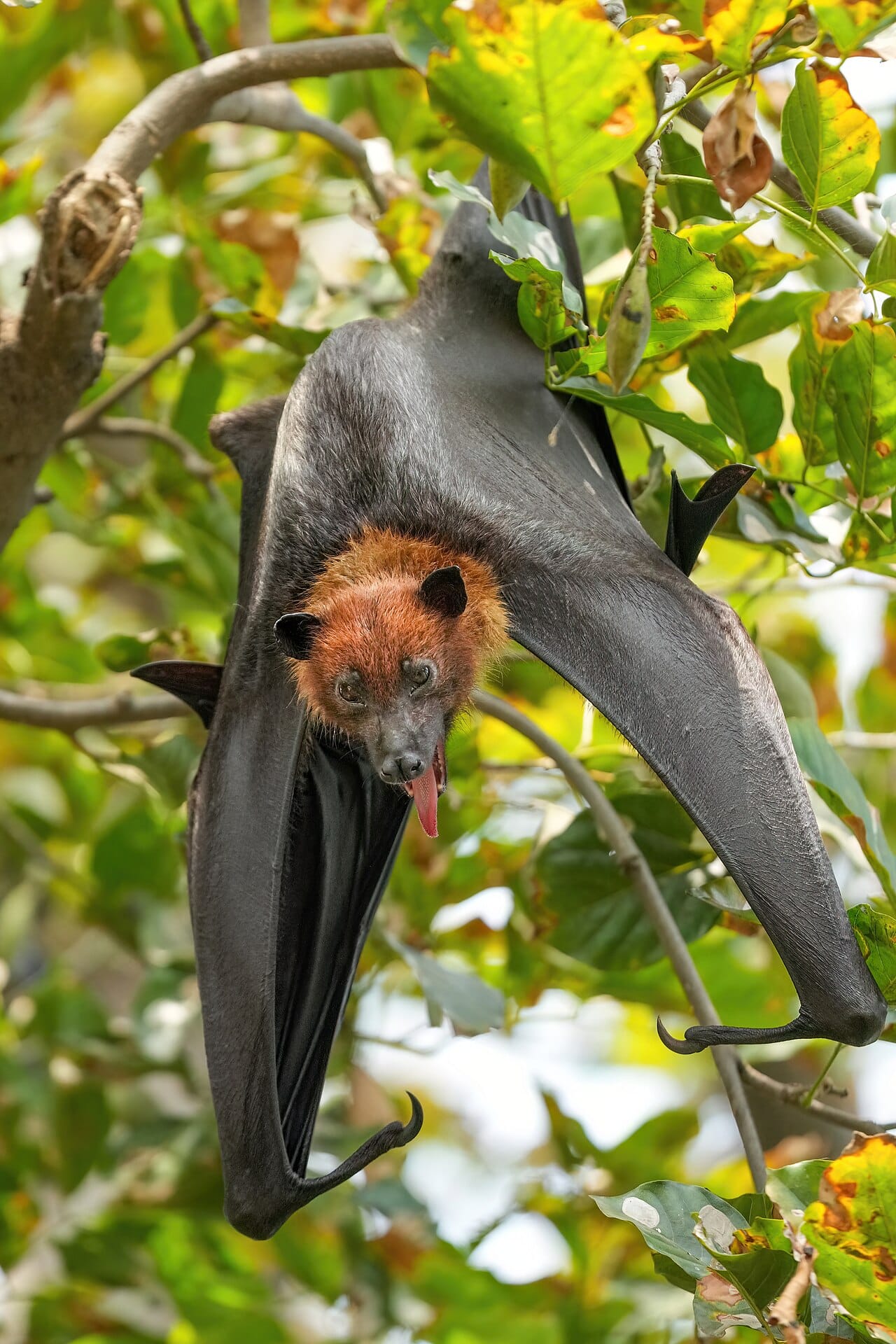
Around seventy per cent of bat species eat insects, and the quantities are large enough to matter economically. Estimates of the value of insect suppression by bats to North American agriculture run into billions of dollars a year, and the figures are uncertain but the direction is not.
Fruit and nectar bats pollinate and disperse seed across the tropics. Agave, durian, baobab, banana and many others depend on bats wholly or partly, and the tequila industry is a straightforward case of an economy resting on a bat.
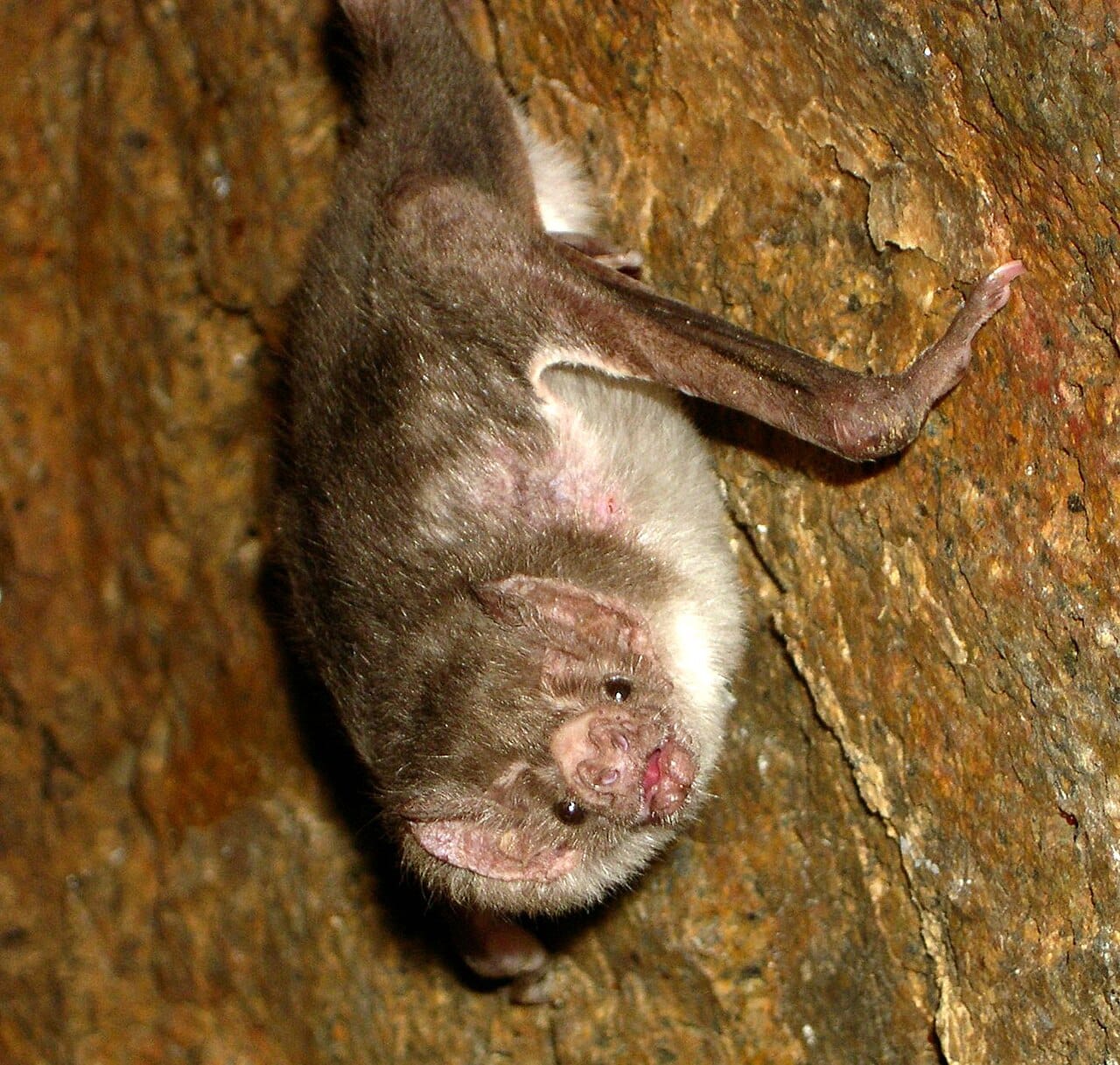
Three species feed on blood, all in the Americas, and they are the source of most of the folklore attached to the whole order. Vampire bats are unusual in another way: they regurgitate blood to feed roostmates that failed to feed, including unrelated ones, and will preferentially help individuals that have helped them before. It is among the best documented cases of reciprocal altruism in a non-human mammal.
Bats live far longer than their body size predicts. A shrew of similar mass lives two years; some bats live more than thirty, and a Brandt's bat was recaptured at forty-one years old. The usual explanations involve flight, which selects hard against damage accumulation, and hibernation.
Bats also carry a wide range of viruses without obvious illness, including coronaviruses, lyssaviruses, and the henipaviruses. This is frequently reported as bats being uniquely virus-laden, which is only partly right: bats are a very large, very diverse and heavily sampled order, and some of the effect is a counting artefact.
What does appear real is a difference in how bats respond to infection. Several bat lineages have a dampened inflammatory response, with changes to the STING pathway and the inflammasome, and the hypothesis is that tolerance evolved alongside the metabolic stress of flight. A bat that does not mount a damaging inflammatory response survives infections that kill other mammals, and also carries them longer.
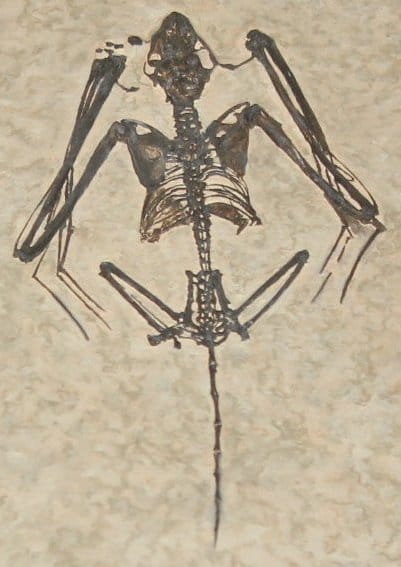
The oldest known bats, Onychonycteris and Icaronycteris from the Eocene of Wyoming, are around 52 million years old and already fully volant. There is no transitional fossil showing the acquisition of flight, which is unsurprising for small animals with thin bones in forest environments, and which leaves the origin of the wing a matter of inference.
Onychonycteris is informative in one respect: it has claws on all five digits and a cochlea too small for sophisticated echolocation, which suggests flight came first and echolocation second.
The most serious current threat in North America is white-nose syndrome, a fungal disease caused by Pseudogymnoascus destructans, first identified in New York in 2006. It disturbs hibernating bats, forcing them to burn fat reserves in winter, and has killed millions. The little brown bat, once among the most common mammals in eastern North America, declined by well over ninety per cent in affected areas.
Wind turbines kill large numbers of migratory tree-roosting bats, by collision and by barotrauma. Habitat loss and the deliberate destruction of roosts remain significant, and bats are unusually vulnerable to any of this because most species have a single pup a year.
Bats are a fifth of mammalian diversity and are consistently treated as a curiosity or a menace. The reputational damage of the COVID-19 pandemic led to bat culls in several countries, which is both cruel and counterproductive, since disturbing colonies increases rather than decreases viral shedding and contact.