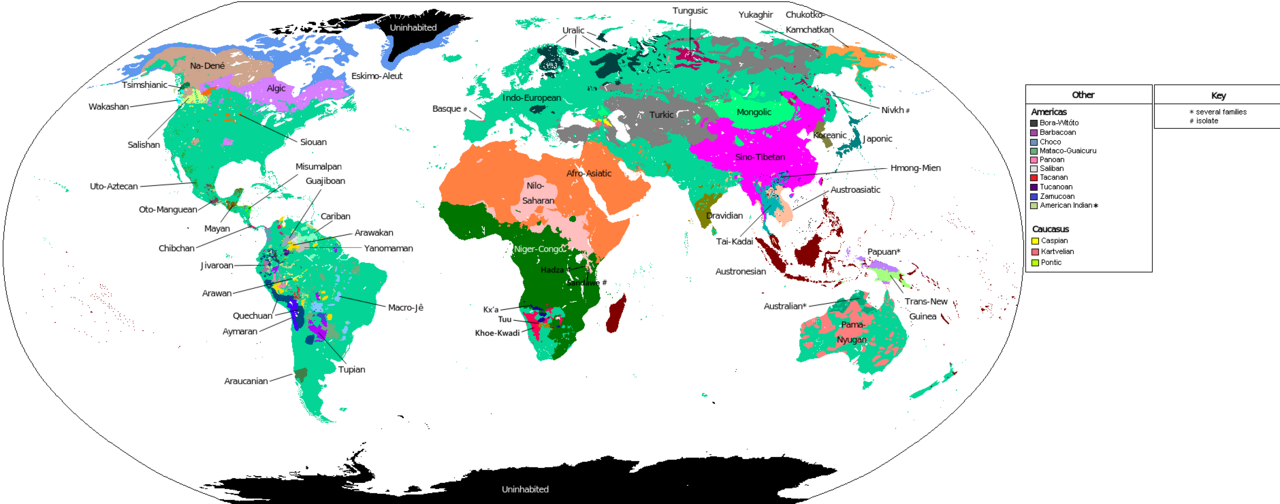
Rendering meaning from one language into another. It is never a mechanical substitution of words, because languages divide the world differently, and every translation involves decisions that cannot be avoided.
Languages do not map onto one another term for term.
Vocabulary carves reality differently. A word may have no single equivalent, and colour terms, kinship terms and words for emotions frequently divide their domains along different boundaries in different languages.
Grammar forces different information. Some languages require the speaker to mark whether a statement is known first-hand or by report; others require a choice of formality when addressing someone; others mark gender where a source language does not. A translator must supply that information whether or not the original contains it.
Register, connotation and rhythm carry meaning that literal accuracy loses. A phrase may be formal in one language and neutral in another, and a joke may depend on a sound that has no counterpart.
The consequence is that a translator constantly chooses what to preserve at the cost of something else, and different choices produce different valid translations of the same text.
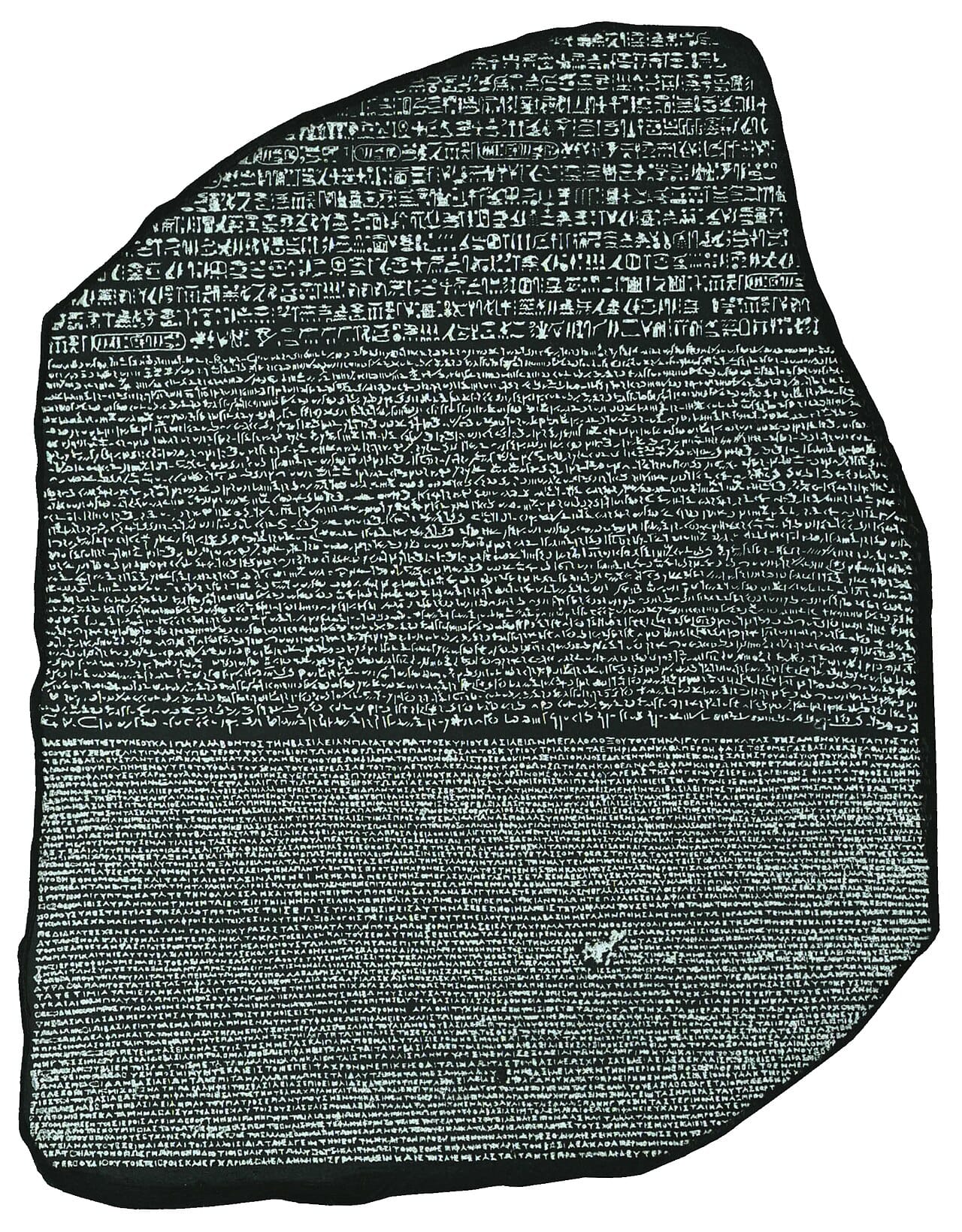
The recurring question is how closely to follow the source.
Literal translation follows the original's wording and structure, preserving what was said at the risk of producing something awkward or obscure.
Free translation follows the sense, producing something natural in the target language at the risk of losing what was distinctive about the original.
Cicero and Horace both discussed the distinction. Jerome, translating the Bible into Latin in the fourth century, wrote that he translated sense for sense rather than word for word, except in scripture where he said the very order of the words was a mystery.
The modern framing is Friedrich Schleiermacher's: either the reader is moved toward the author, producing a translation that feels foreign, or the author is moved toward the reader, producing one that feels native. Lawrence Venuti later called these foreignisation and domestication and argued that the second, dominant in English publishing, makes the translator invisible and conceals what is distinctive about the original.
There is no correct answer, only a choice appropriate to a purpose. A legal contract, a poem and a technical manual demand different balances.

Translation has repeatedly been the mechanism by which knowledge moved between civilisations.
Greek philosophical and scientific works were translated into Syriac and Arabic from the eighth century, in a sustained programme centred on Baghdad. Those texts were then translated from Arabic into Latin in Spain and Sicily from the twelfth century, which is how much of Aristotle reached medieval Europe. Several works survive only through that chain.
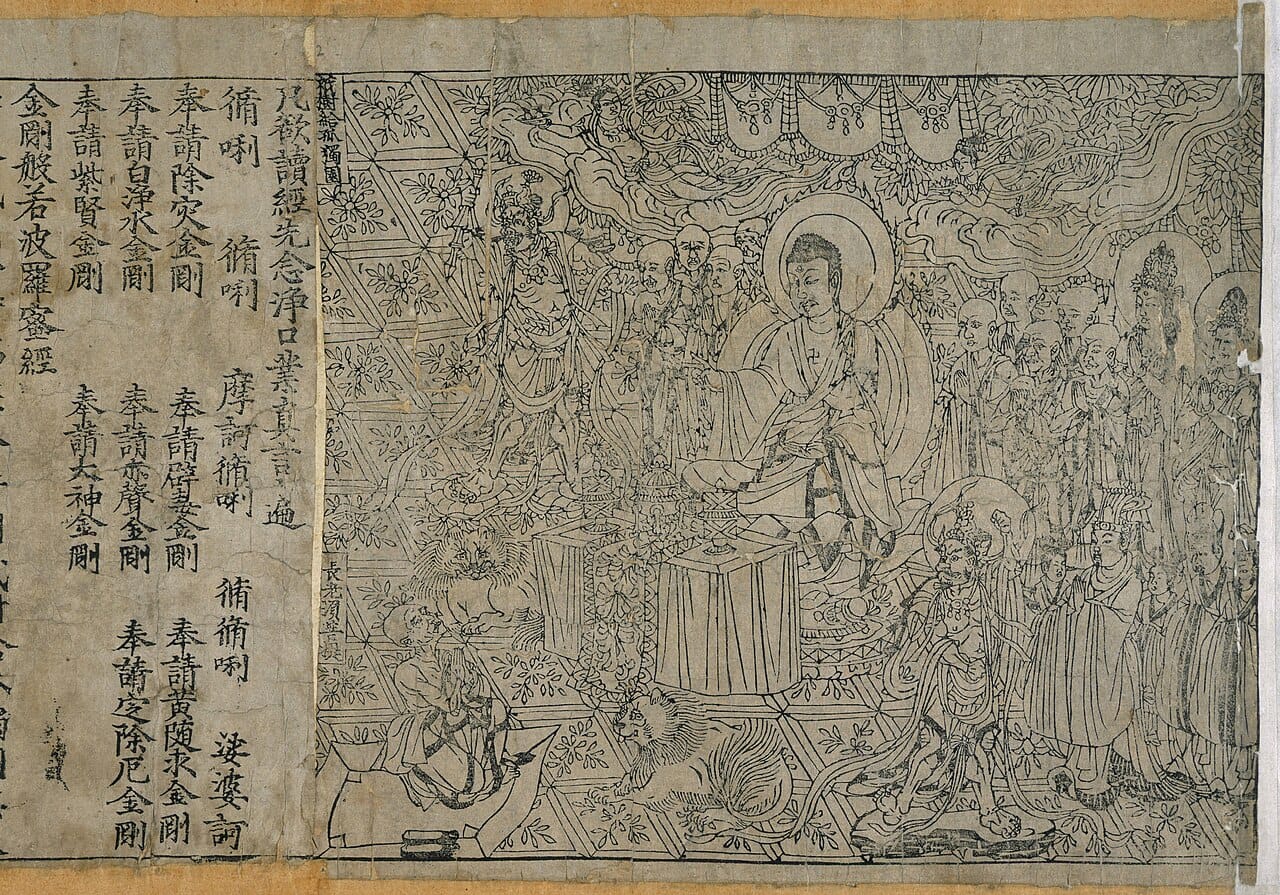
Buddhist texts were translated from Sanskrit and Pali into Chinese over centuries, an enterprise involving state support and large teams, and then from Chinese into Japanese and Korean.
Religious translation has repeatedly been consequential and dangerous. Vernacular Bible translation was resisted and in places punished, and William Tyndale was executed in 1536 partly for it. Luther's German Bible influenced the development of standard German, and translations have frequently shaped the languages they were made into.
Interpreting is translation of speech and is a distinct skill.
Consecutive interpreting waits for the speaker to pause, and the interpreter works from memory and notes.
Simultaneous interpreting proceeds while the speaker continues, with a delay of a few seconds. It requires listening, holding, converting and speaking at once, and is cognitively demanding enough that interpreters work in pairs and swap every twenty to thirty minutes.
The Nuremberg trials in 1945 and 1946 drove the development of simultaneous interpreting, since proceedings in four languages could not run consecutively at acceptable speed.
Early systems used hand-written rules and bilingual dictionaries and performed poorly, since the difficulties above are not reducible to rules.
Statistical machine translation from the late 1980s learned correspondences from large collections of already-translated text, and improved substantially without any linguistic rules being specified.
Neural machine translation from around 2014, and transformer models from 2017, improved quality again by a large margin, particularly in fluency.
The remaining weaknesses are informative about what translation involves. Machine output is weakest where context beyond the sentence matters, where cultural reference must be conveyed, where a term has no equivalent, and in low-resource languages with little parallel text to learn from. Fluent output can also be confidently wrong in ways that are harder to notice than clumsy output would be.
Professional practice has shifted rather than disappeared, with much commercial work now involving editing machine output, and literary and legal translation remaining human.
Translation determines which ideas are available in which languages, and the historical record shows that scientific and philosophical traditions have repeatedly been transmitted or lost depending on whether translation happened.
It also makes visible something usually hidden: that languages are not interchangeable codes for the same thoughts. The decisions a translator is forced to make are evidence of where languages genuinely differ.