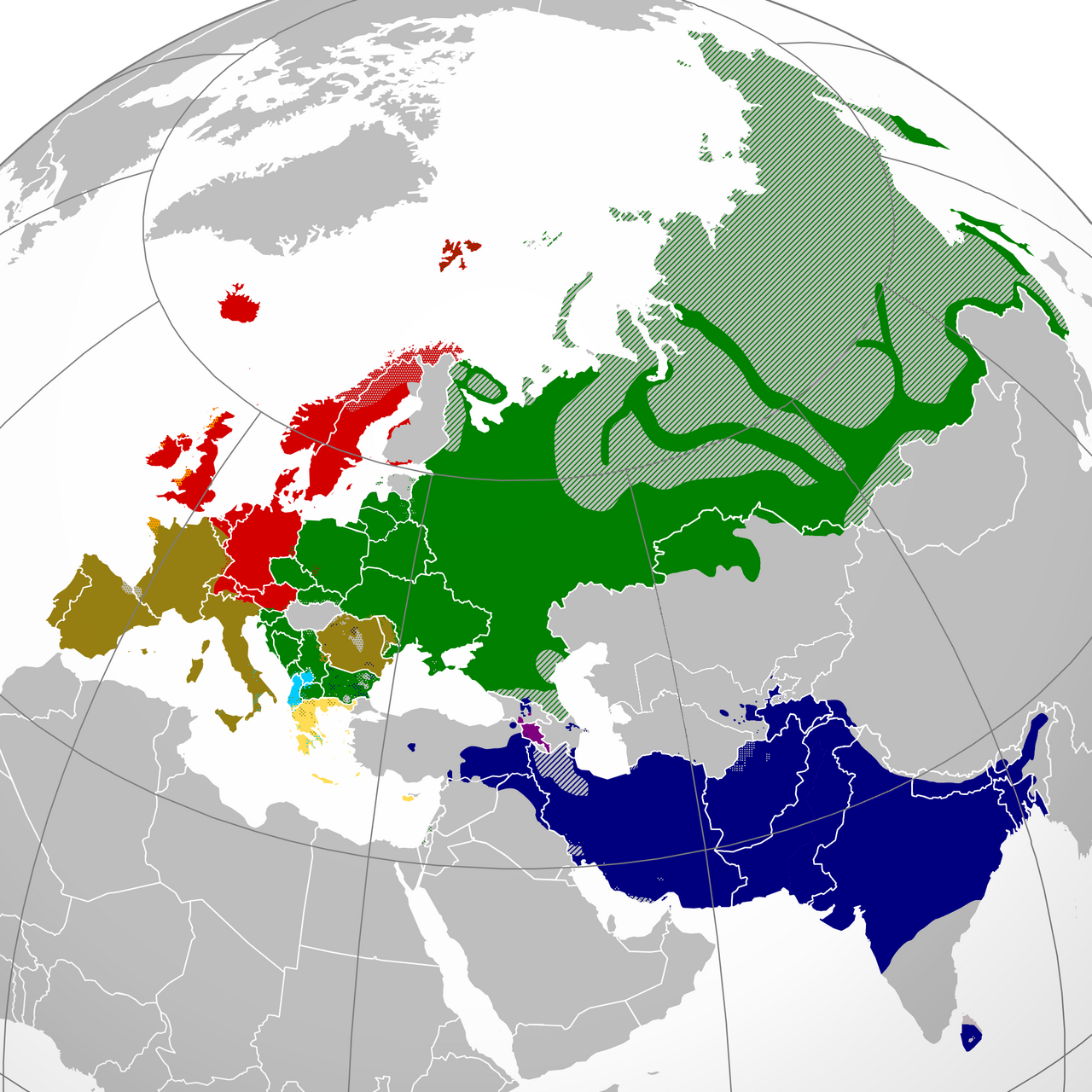
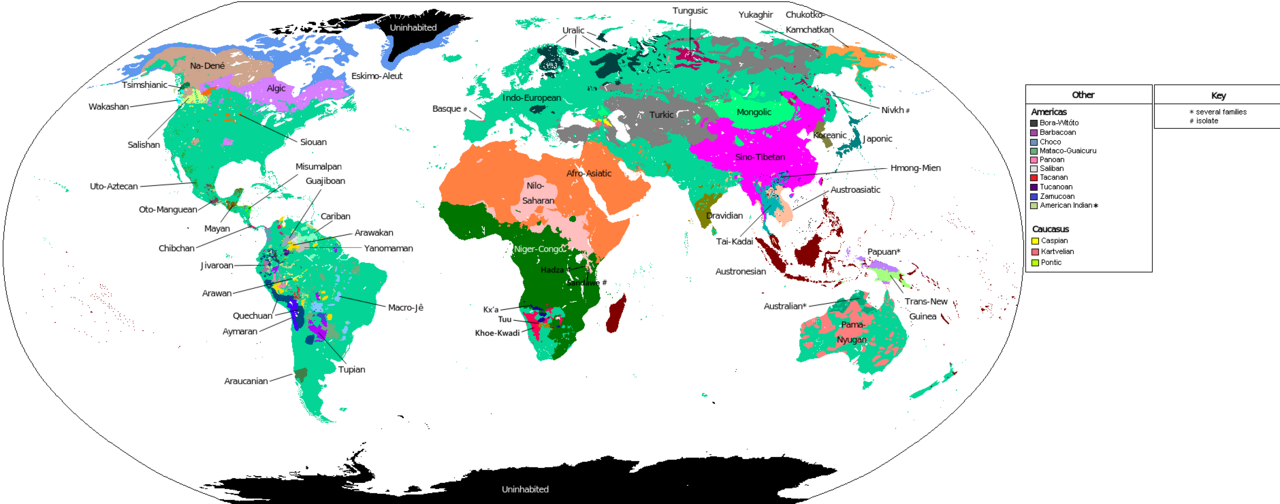
Groups of languages descended from a common ancestor. The relationships are established by systematic correspondence rather than by resemblance, and the resulting tree is the principal evidence for population movements before written records.
Similar-sounding words prove nothing. Chance resemblance is common, and borrowing spreads vocabulary between unrelated languages.
The evidence is regular sound correspondence. If one language consistently has p where another has f in the same position across many words, that regularity requires explanation, and inheritance from a common ancestor supplies one that chance and borrowing do not.
Grimm's Law is the classic case, describing how a set of consonants in Proto-Indo-European shifted systematically in the Germanic branch, which is why English father corresponds to Latin pater and English foot to Latin pedis.
Shared irregularity is even stronger evidence. Languages rarely borrow irregular verbs or unusual grammatical patterns, so when two languages share the same irregularity, common descent is the likely explanation.
The comparative method uses these correspondences to reconstruct features of the ancestral language, which is how Proto-Indo-European is described despite no record of it existing.
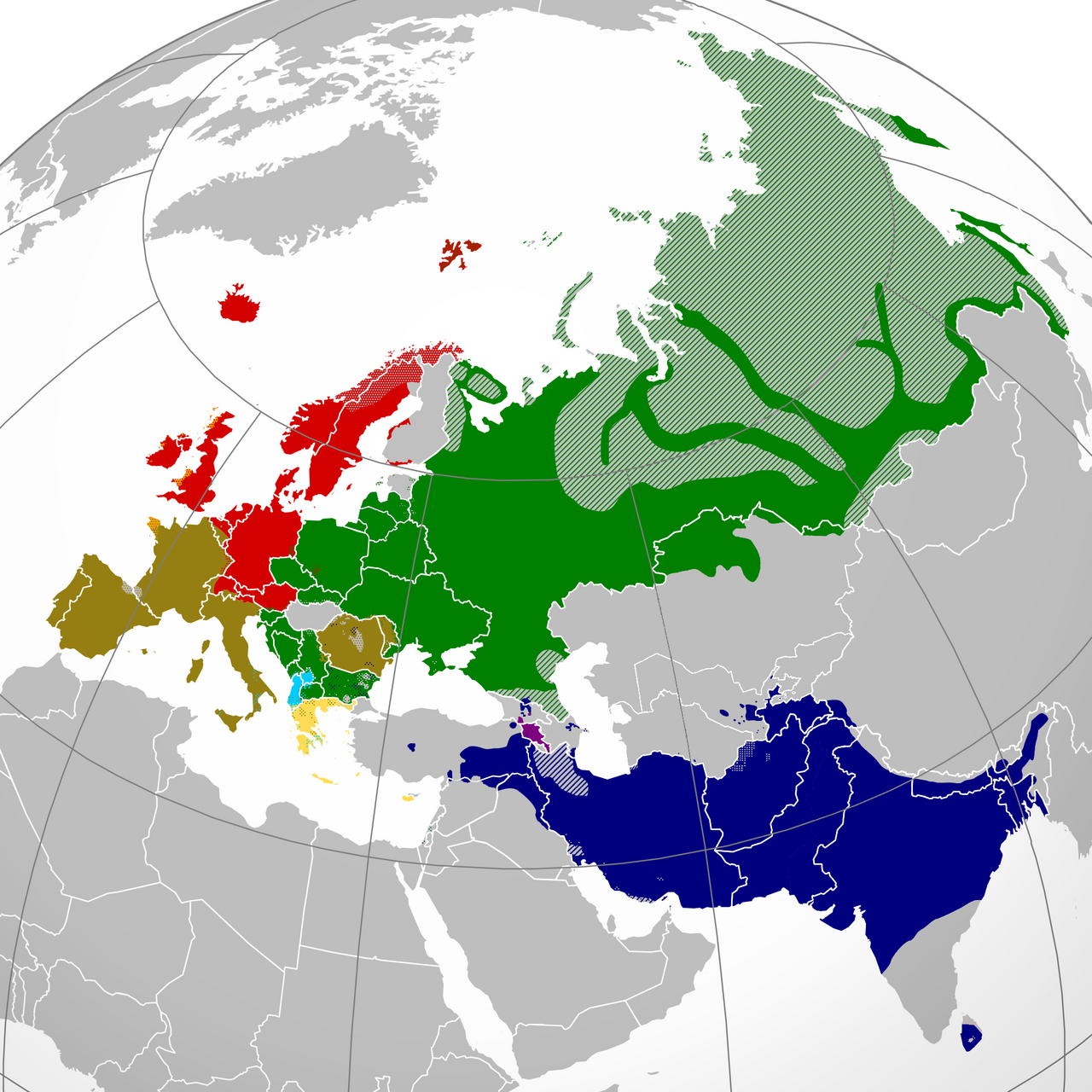
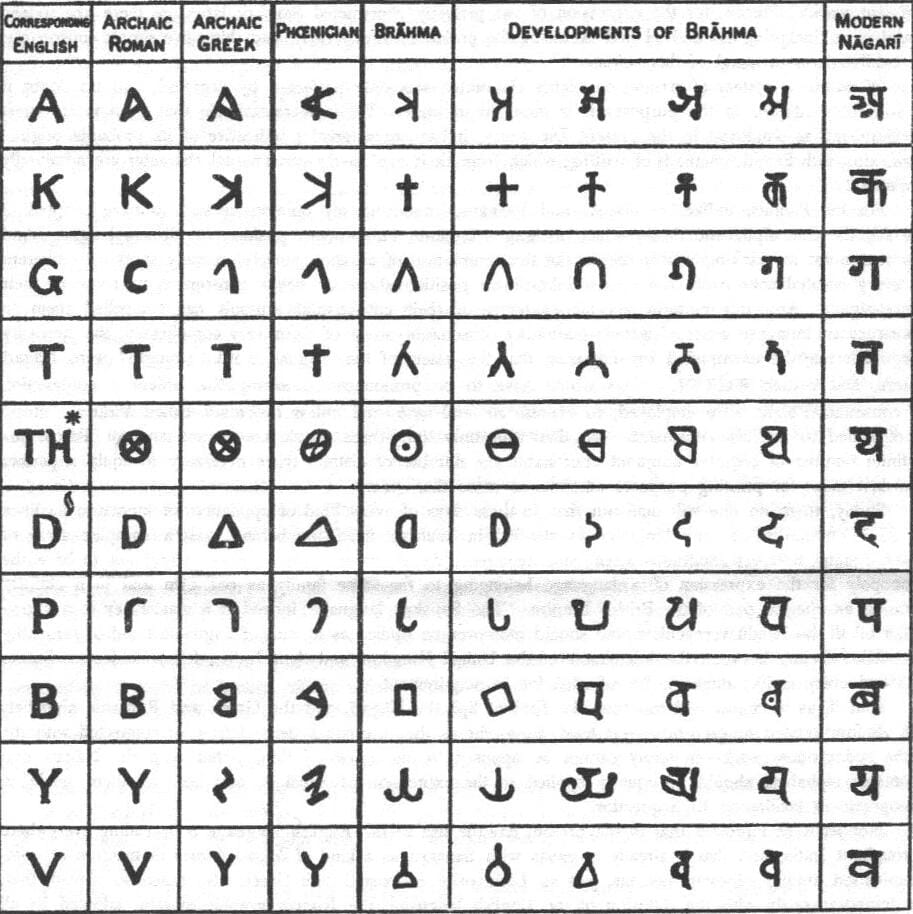
Indo-European is the largest by speakers, covering most European languages, Persian, Hindi, Bengali and many others. Its recognition, when William Jones noted in 1786 that Sanskrit shared systematic features with Greek and Latin, founded historical linguistics.
Sino-Tibetan includes Chinese, Burmese and Tibetan, and is second by speakers.
Niger-Congo covers most of sub-Saharan Africa and includes the Bantu languages, and is the largest family by number of languages.
Afroasiatic includes Arabic, Hebrew, Amharic and the ancient Egyptian language.
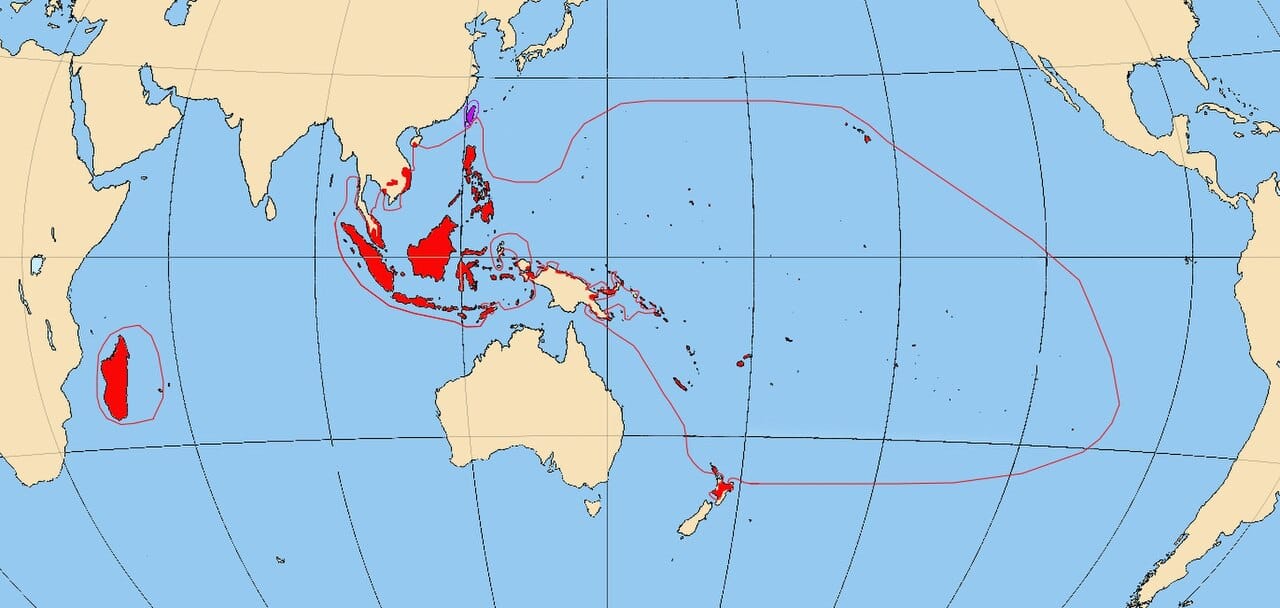
Austronesian extends from Madagascar to Easter Island, covering Malay, Tagalog, Malagasy and the Polynesian languages. Its distribution records a maritime expansion from Taiwan across two oceans.
Others include Dravidian in southern India, Turkic across Central Asia, Uralic including Finnish and Hungarian, and the many families of the Americas, New Guinea and Australia.
Language isolates have no demonstrated relatives. Basque is the best-known example in Europe, and Korean is usually treated as one.
Language distribution is evidence about population movement that survives where nothing else does.
The Austronesian case is the clearest. Malagasy, spoken in Madagascar off the African coast, is most closely related to a language of Borneo, which establishes a transoceanic migration that no other evidence would have suggested. Genetic and archaeological work has since confirmed it.
Bantu languages spread across a third of Africa within a few thousand years, and the linguistic pattern maps onto agricultural and metallurgical expansion.
The Indo-European homeland question, concerning where the ancestral language was spoken and how it spread, is treated in its own capsule and has been substantially informed by ancient DNA.
Loanwords date contact. English vocabulary records Norse settlement, Norman conquest and colonial trade in identifiable layers, and the same technique works where no documents survive.
The comparative method has a time depth limit. Sound correspondences accumulate change until the signal is indistinguishable from chance, generally estimated at somewhere between six and ten thousand years.
This is why proposals for very large groupings are contested. Nostratic, joining Indo-European with several other families, and Amerind, joining most languages of the Americas, are rejected by most historical linguists on the grounds that the evidence offered falls below what the method requires. Their proponents argue that stricter standards discard real signal.
Mass lexical comparison, which compares vocabulary lists across many languages without establishing regular correspondences, is the method behind several of these proposals and is not accepted as reliable, since chance resemblance across enough languages will always produce apparent patterns.
Statistical and computational methods have been applied and remain disputed, with results sensitive to assumptions about rates of change.
Around seven thousand languages are spoken, and a large proportion have few speakers and no children learning them.
Estimates of how many will cease to be spoken this century vary from a third to a half, and the distribution is uneven, with families in Australia, the Americas and New Guinea most affected.
The loss is not only cultural. A language encodes a classification of the world, and a substantial part of what is known about the possible range of human grammars comes from languages with small speaker populations, so each loss narrows the evidence base for what language can be.
Language families are the deepest reconstructible record of human relationship, reaching back several thousand years before writing, and they have repeatedly established connections between populations that no other evidence indicated.
They also demonstrate a general principle about inference from similarity: resemblance means little on its own, and it is systematic correspondence, particularly in shared irregularity, that distinguishes inheritance from coincidence.