The methods by which spoken language is recorded in visible marks. Writing has been invented independently only a small number of times, and every system in use descends from one of those inventions or was designed by someone who had seen one.
Logographic systems use symbols for whole words or meaningful units. Chinese characters are the major surviving example, and a literate reader knows several thousand.
Syllabic systems use one symbol per syllable. Japanese kana and Cherokee are examples, and they suit languages with a limited number of possible syllables.
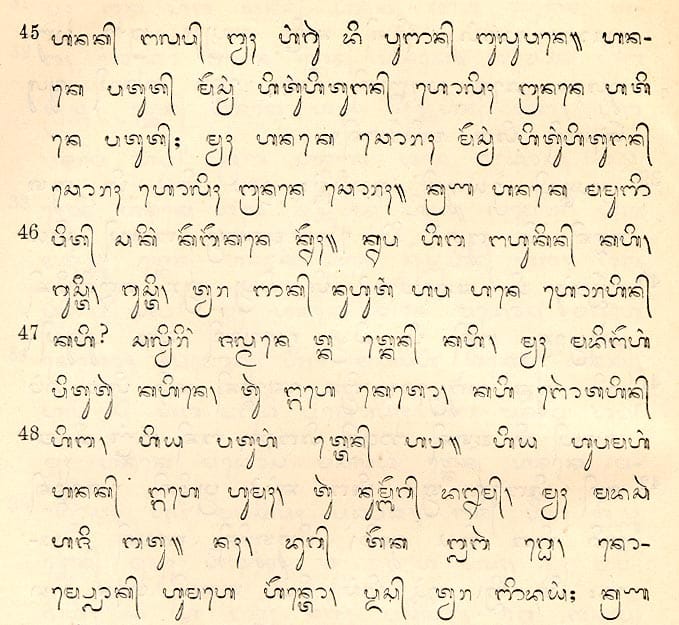
Alphabetic systems use symbols for individual consonants and vowels. Abjads, such as Arabic and Hebrew, write consonants and leave most vowels to be inferred. Abugidas, such as the Indic scripts, treat a consonant with an inherent vowel as the base unit and modify it to change the vowel.
No system is purely one type. English is alphabetic and uses logograms such as the numerals and the ampersand, and Japanese combines logographic characters with two syllabaries.
Writing appears to have been invented from nothing on a small number of occasions, and the count is disputed at the margins.
Mesopotamian cuneiform, from around 3200 BCE, developed from clay tokens used for accounting. The earliest texts are records of grain and livestock rather than literature or religion, which is a consistent pattern: writing generally begins as bookkeeping.
Egyptian hieroglyphs appear at roughly the same period, and whether they were independent or stimulated by contact with Mesopotamia is argued.
Chinese writing is attested from around 1200 BCE on oracle bones and is generally accepted as independent.
Mesoamerican writing, including the Maya script, is independent beyond question, since there was no contact.
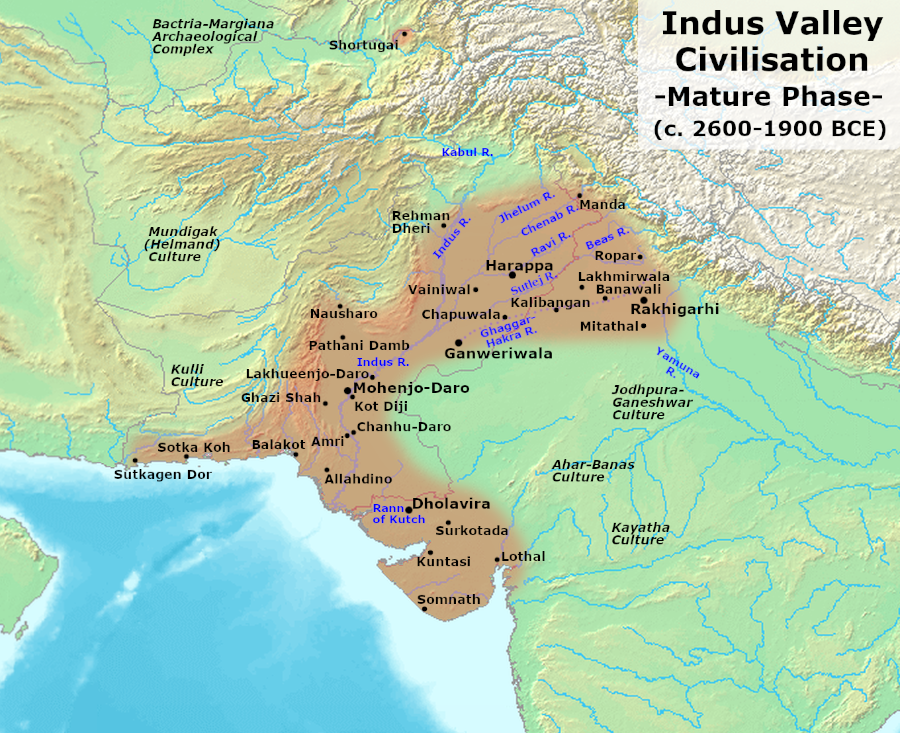
The Indus script remains undeciphered and is treated in its own capsule.
Everything else descends from one of these or was created by someone aware that writing existed. That second category, stimulus diffusion, matters more than it sounds.
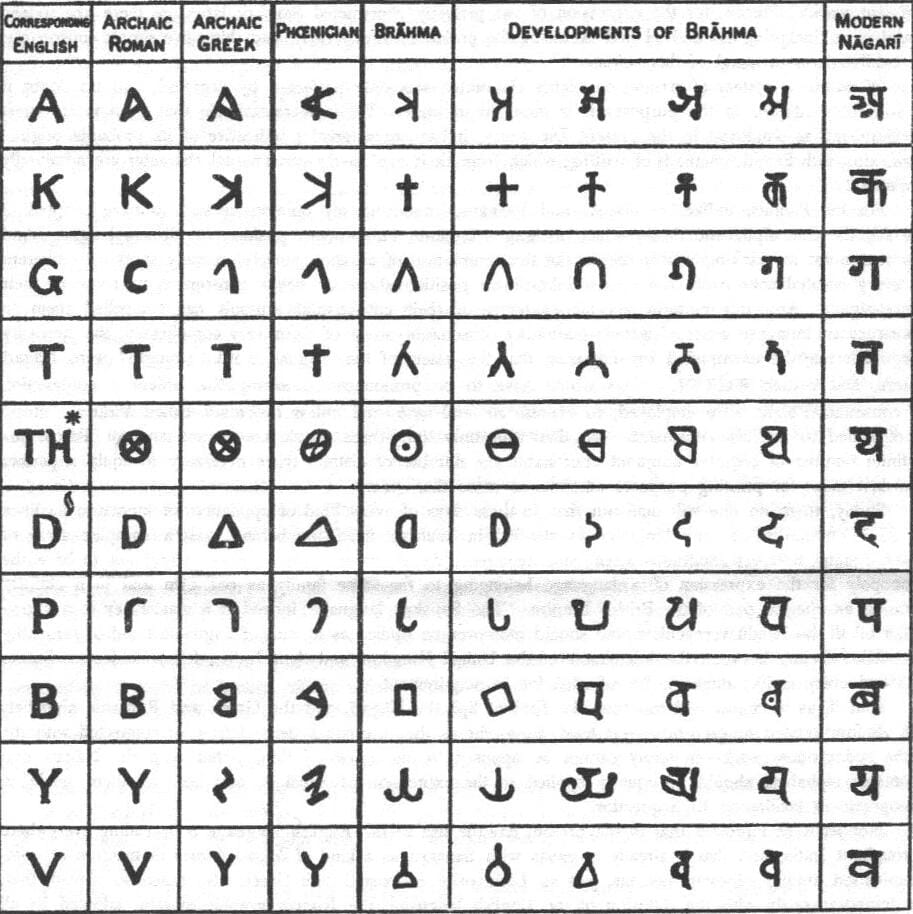
Nearly every alphabet in use descends from a single ancestor. Proto-Sinaitic writing, developed around 1800 BCE by speakers of a Semitic language who adapted Egyptian signs, gave rise to Phoenician, which spread through trade.
Greek adapted Phoenician and made a decisive change: it used signs for consonants that Greek did not need to write vowels explicitly. Latin came from Greek by way of Etruscan, Cyrillic from Greek, and the Indic scripts descend from Aramaic, which also came from Phoenician.
This is why alphabets share an order beginning with a sound like A and B, and why the word alphabet is the first two Greek letter names.
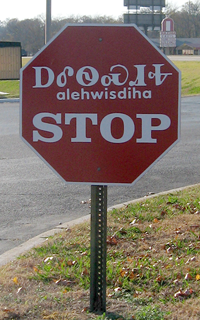
Some scripts were created deliberately by identifiable people.
Sequoyah, a Cherokee silversmith who could not read English, devised a syllabary of eighty five characters in the 1820s after concluding that the marks he had seen European settlers using must represent speech. Cherokee literacy spread rapidly, and within years the nation had a printing press and a newspaper. Inventing a functional writing system without being able to read one is close to unique.
Hangul, created for Korean under King Sejong in 1443, is designed on explicit phonetic principles, with consonant shapes reflecting the position of the tongue and lips. It is often cited as the most systematically designed script in use.
Reading a lost script generally requires either a bilingual text or a known related language.
The Rosetta Stone carried the same decree in hieroglyphs, demotic Egyptian and Greek, and Jean-François Champollion used it to establish in 1822 that hieroglyphs recorded sounds as well as meanings.
Linear B was deciphered by Michael Ventris in 1952 without a bilingual text, by inferring statistical patterns and then testing the hypothesis that the language was an early form of Greek, which it proved to be.
Maya writing resisted decipherment for much longer because an influential scholar insisted the symbols were not phonetic. Yuri Knorozov's demonstration in the 1950s that they recorded sounds was resisted for political and academic reasons before being accepted.
Writing is the technology that allows knowledge to outlast the person who holds it and to travel beyond the range of a voice. Every discipline that accumulates rather than merely repeats depends on it.
It also divides history from prehistory as those terms are conventionally used, which is a statement about surviving evidence rather than about the sophistication of the societies concerned.