In August 1971 Philip Zimbardo assigned twenty-four male students at random to be guards or prisoners in a simulated prison in a Stanford University basement. The study was stopped after six days, and its conclusion, that ordinary people become cruel when placed in a role that permits it, became one of the most cited findings in social science. Archival research published since 2018 has substantially undermined it.
The standard telling holds that the situation transformed the participants. Guards, given uniforms and dark glasses, became progressively more abusive without instruction; prisoners, stripped of names and given numbers, became passive and distressed; several broke down and were released early. Zimbardo, acting as prison superintendent as well as principal investigator, later described losing his own perspective until a graduate student objected. The conclusion drawn was that situations rather than dispositions drive behaviour, and the study was invoked to explain atrocities from My Lai to Abu Ghraib.

Thibault Le Texier's work in the Stanford archives, published in 2018 and 2019, together with recovered recordings and participant interviews, documented several problems.
The guards were coached. Recordings show staff instructing guards to be tough and to create an atmosphere of powerlessness, which contradicts the claim that brutality emerged spontaneously from the role.
A famous breakdown was described by the participant as performance. Douglas Korpi, whose distress was the study's most cited moment, later said he was faking in order to leave, having found he could not study for an examination.
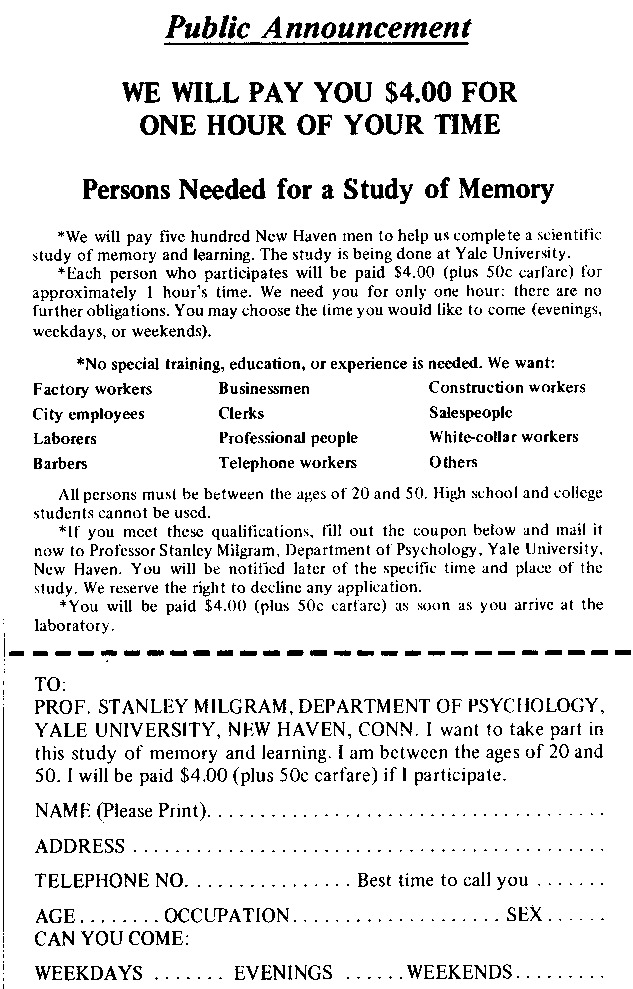
The design was not neutral. The recruitment advertisement specified a study of prison life, and later work found that volunteers responding to such wording score differently on aggression and authoritarianism than those responding to a neutral advertisement, so the sample was not typical to begin with.
It was never independently replicated. A 2002 BBC study with a similar design produced a very different result, with guards reluctant to assert authority and prisoners forming a cohesive group.
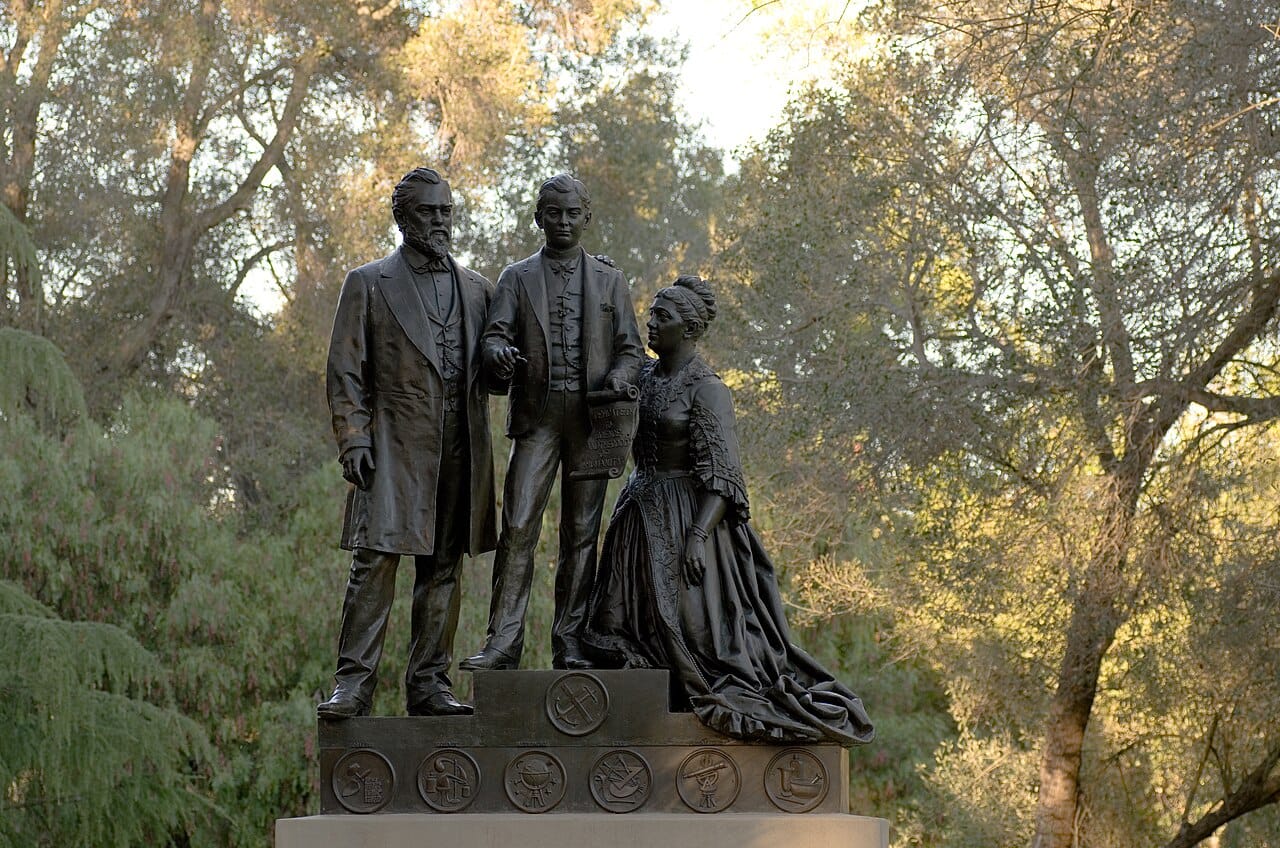
Defenders, including Zimbardo before his death, maintained that the demonstration retains value: guards who received the same instructions behaved very differently from one another, which suggests the situation permitted rather than compelled cruelty, and the distress recorded was not wholly performed. Critics reply that a demonstration is not an experiment, that it had no control condition, and that its conclusions were stated far beyond what the design could support.
The broader significance is now often treated as a case study in how findings become entrenched. The study was vivid, told a compelling story, and was widely taught for decades before its foundations were examined, which is a pattern the replication crisis has since found in other celebrated results. Many textbooks have been revised, and some have removed it.
Whatever the status of its conclusions, the study contributed materially to the development of institutional review boards and modern rules on informed consent, the right to withdraw, and the separation of investigator from participant. That legacy is not disputed.