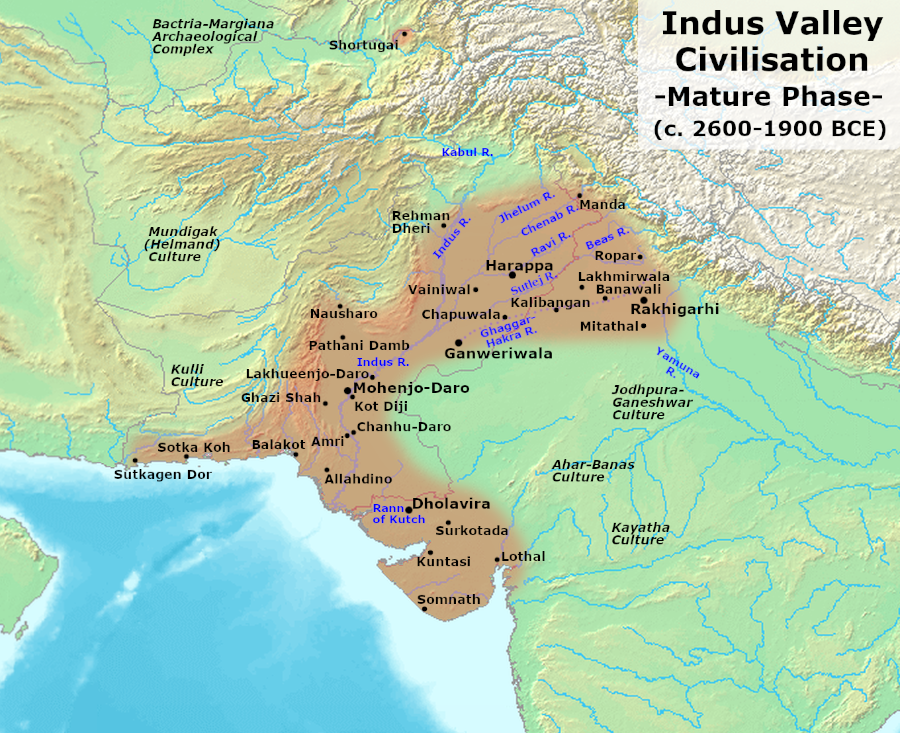
Images made on rock surfaces, by painting, engraving or carving. It is the largest surviving body of prehistoric art, it is found on every inhabited continent, and it is among the most difficult archaeological material to date or interpret.
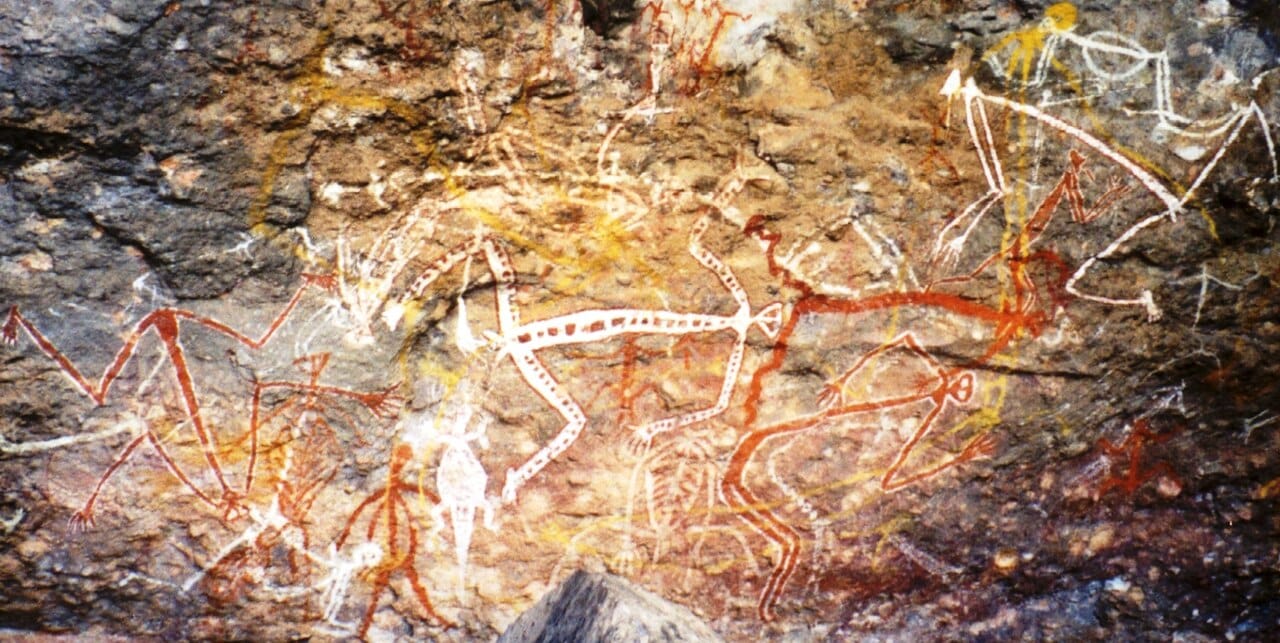
Pictographs are painted or drawn, using pigments including ochre for red and yellow, charcoal and manganese for black, and clay or gypsum for white, generally bound with water, fat or plant material.
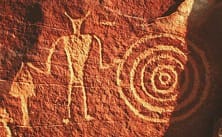
Petroglyphs are engraved, pecked or abraded into the surface. On desert rocks coated with a dark natural varnish, removing the coating exposes lighter stone, and the resulting contrast fades over centuries as the exposed surface darkens again, which gives a rough indication of relative age.
Preservation differs sharply between the two. Painted images survive only where sheltered, which is why the famous European examples are deep in caves, and this creates a systematic bias: open-air painting almost certainly existed everywhere and has almost entirely gone.
Rock art is found on every continent except Antarctica and spans an enormous time range.
The oldest securely dated figurative images are in Indonesia, on Sulawesi and Borneo, with hunting scenes and animal depictions dated to at least 45,000 years ago and, on some determinations, older.
European cave paintings at Chauvet, Lascaux and Altamira date from roughly 36,000 to 14,000 years ago and are the best studied.
Australian rock art traditions span tens of thousands of years and are notable for being continuous: some sites were painted and repainted into the recent past, and the traditions associated with them remain living rather than archaeological.
African rock art includes extensive traditions in the Sahara, recording animals and environments from a period when the region was far wetter, and in southern Africa, where San paintings are associated with a documented interpretive tradition.
The Americas, India and Siberia all have substantial bodies of material.
Dating rock art is among the harder problems in archaeology.
Radiocarbon dating requires organic material. Charcoal-based pigment can be dated directly, and mineral pigments including ochre cannot, since they contain no carbon of the right kind.
Uranium-series dating of mineral crusts that formed over or under an image gives a bracket rather than a date: a crust over an image gives a minimum age, one beneath gives a maximum.
Style-based dating, assigning an age by comparing the manner of depiction with dated examples, is circular unless anchored independently, and has produced serious errors.
Superimposition establishes relative sequence where images overlap, and gives no absolute age.
The consequence is that many well-known sites have wide or contested date ranges, and revisions have repeatedly moved the earliest figurative art earlier and away from Europe.
Interpretation is far more contested than dating, and the honest position is that most of it is unrecoverable.
Proposed explanations include hunting magic, in which depicting an animal secures success in taking it; records of what was seen or hunted; shamanic imagery associated with altered states, an interpretation developed particularly for southern African material; totemic or clan identification; instruction, marking territory, or recording events.
Several of these are supported for particular traditions and none generalises. Where a living tradition survives, as in parts of Australia and southern Africa, interpretation rests on testimony from the people whose art it is, and that is the only case where meaning is known rather than inferred.
Elsewhere the reasoning is unavoidably speculative. The images are frequently of animals and rarely of plants or landscape, human figures are often schematic where animals are naturalistic, and hand stencils appear independently across the world, and each of these regularities has attracted several incompatible explanations.
Recent work on Neanderthal authorship of some Spanish cave markings, based on uranium-series dates predating the arrival of modern humans, has been published and disputed, and remains unresolved.
Rock art is fragile and its threats are well documented.
Physical damage from visitors is severe enough that Lascaux was closed to the public in 1963, after carbon dioxide and humidity from visitors caused deterioration, and a replica was built instead. Several other major sites have followed the same course.
Microbial growth, encouraged by changed humidity and by lighting installed for visitors, has damaged painted surfaces.
Industrial development, quarrying, mining and vandalism have destroyed sites, and the destruction of rock shelters at Juukan Gorge in Australia in 2020, which held evidence of continuous occupation over 46,000 years, prompted substantial legal and political consequences.
Rock art is the largest surviving record of what people who left no writing chose to depict, and it is the only direct evidence of prehistoric visual culture at scale.
Its geography also corrects a persistent assumption. The European caves are famous because they were found early and studied intensively, and the oldest known figurative images are in Southeast Asia, which indicates that the practice was widespread rather than a European development.