Vehicles running on fixed guided tracks. The essential idea is older than the steam engine, and what railways did to distance, time and settlement was more consequential than the technology itself.
A steel wheel on a steel rail has very low rolling resistance, far lower than a wheel on any road surface. A given amount of power therefore moves far more load.
The rail also guides. A vehicle on a track needs no steering, which allows vehicles to be coupled into long trains under one power source.
The cost is inflexibility. Track must be built, it can only go where gradients and curves permit, and a railway serves only what it reaches.
The low friction that makes rail efficient also limits gradient and braking. Steel on steel provides little grip, which is why railway routes follow contours, use cuttings and tunnels, and require long stopping distances.

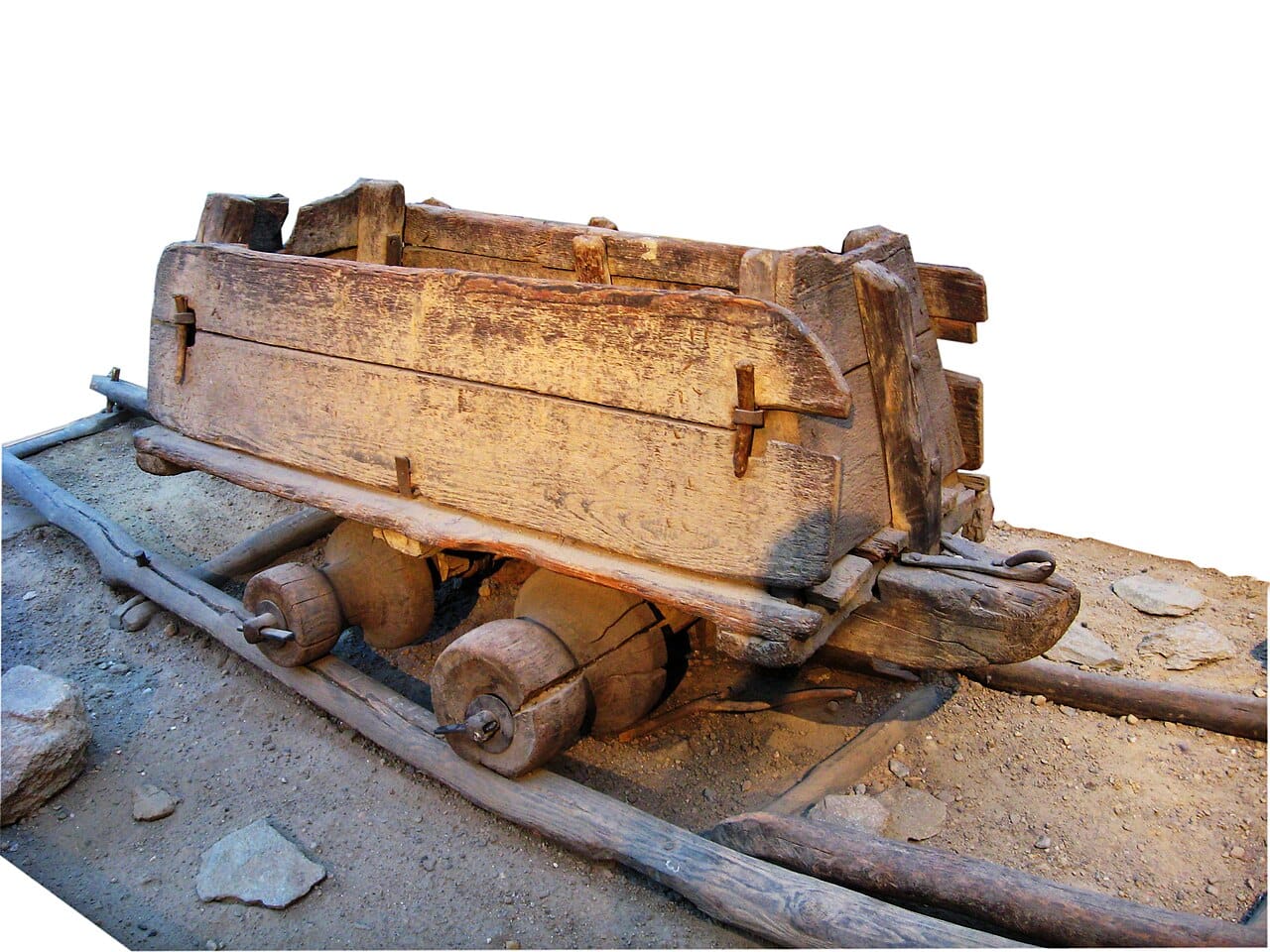
Waggonways using wooden rails were used in European mines from the sixteenth century, and the principle was understood long before any means of mechanical propulsion existed. Cast iron rails followed, and were replaced by wrought iron and then steel because cast iron is brittle and fractured under load.
Richard Trevithick demonstrated a steam locomotive hauling a load on rails in 1804, at Penydarren in Wales. It worked and broke the cast-iron rails.
The Stockton and Darlington Railway opened in 1825, and the Liverpool and Manchester in 1830, which is generally taken as the beginning of the railway age proper: it was the first to carry passengers and freight on a scheduled basis, entirely under mechanical power, between two major cities.
Expansion was extraordinarily rapid. Britain built a national network within about two decades, and comparable expansion followed across Europe, North America and beyond within a generation, funded by speculative investment that produced spectacular booms and collapses.
Standard time is a railway invention. Before railways, towns kept local solar time, and a timetable spanning a country is impossible if every station keeps a different clock. Railway companies imposed a single time across their networks, and national and then international standard time followed, with time zones adopted at an international conference in 1884.
Freight cost collapsed. Moving bulk goods overland had been prohibitively expensive, restricting heavy industry to waterways and coasts, and railways removed that constraint.
Cities grew and spread. Suburbs became possible for people who worked in a centre and lived beyond walking distance, and the shape of many cities still records the lines built in the nineteenth century.
Agriculture reorganised. Perishable goods could reach distant markets, and grain from continental interiors reached ports, which restructured world food trade and undercut European farming.
Warfare changed, since armies and supplies could be moved at a speed that transformed strategic planning, and railway timetables became a factor in military mobilisation.
Railways lost ground through the twentieth century to road and air transport, which offer door-to-door flexibility that a fixed network cannot. Many networks contracted substantially, with widespread closures of lightly used lines.
High-speed rail reversed part of that. Japan's Shinkansen opened in 1964, followed by services across Europe and, at very large scale, China, which has built the majority of the world's high-speed network within two decades.
The economics favour rail over air on routes of roughly two to five hours by train, where city-centre to city-centre time is competitive once airport access and security are counted.
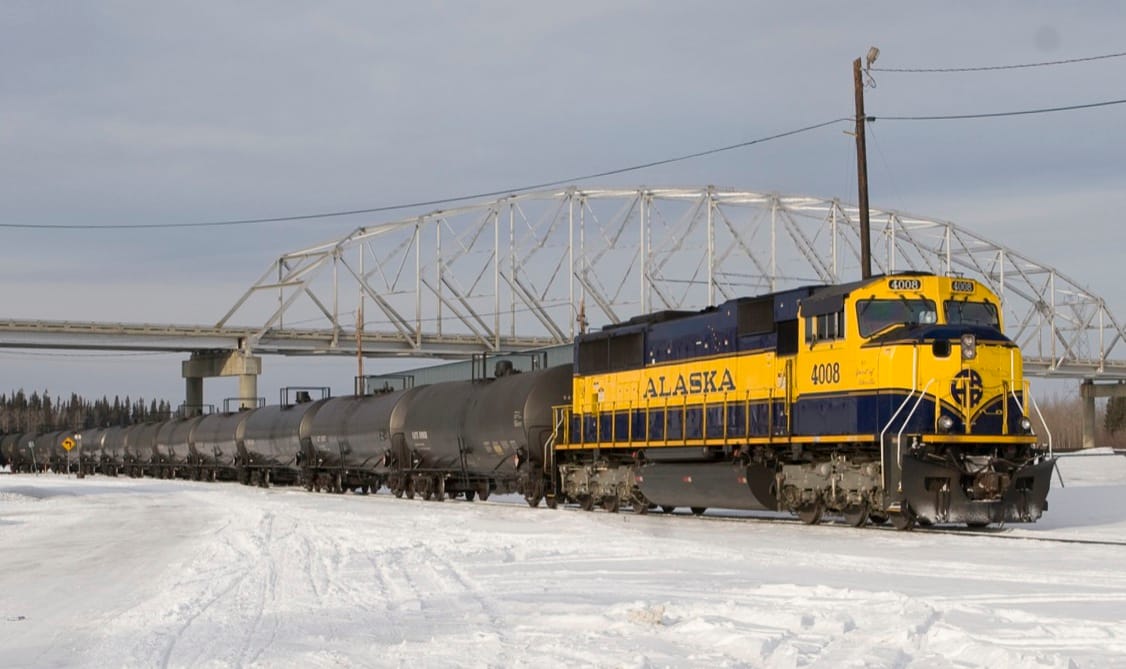
Freight rail remains dominant for bulk commodities over land, particularly in large continental economies.
Energy and emissions arguments have strengthened the case. Rail moves a tonne of freight or a passenger for substantially less energy than road or air, and electrified rail can run on whatever the grid supplies, which is treated in the electricity grid capsule.
Railways were the first technology to move people and goods overland faster than a horse, and everything that followed from that, including standard time, suburbs, and the integration of national markets, happened within about fifty years.
They also illustrate a general pattern in infrastructure: the technology was available in outline for centuries, and what unlocked it was a power source, after which the social consequences ran far ahead of anything its builders anticipated.