Splitting a heavy nucleus releases about a hundred million times more energy per atom than a chemical reaction. It was discovered by accident in 1938, explained by a woman excluded from the laboratory that found it, and understood as a weapon within months.
Nuclei are bound by the strong force, and the binding energy per particle is not uniform across the periodic table. It peaks around iron.
That means both directions release energy. Fusing light nuclei toward iron releases energy, and splitting heavy nuclei toward iron does too. Uranium sits far above iron in mass, so dividing it into two mid-sized fragments leaves the products more tightly bound, and the difference appears as kinetic energy of the fragments.
The mass difference is measurable, and the relationship converting it to energy is Einstein's. About a fifth of a percent of the mass becomes energy, which is small as a fraction and enormous in absolute terms.
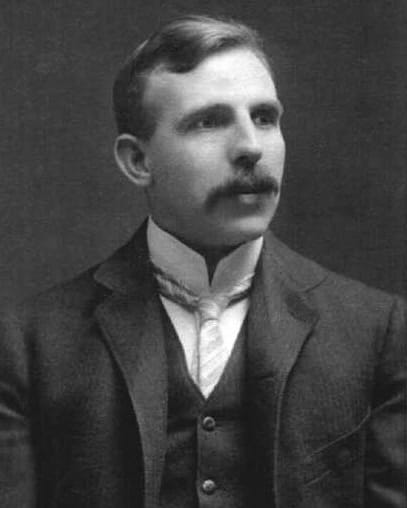
Otto Hahn and Fritz Strassmann in Berlin bombarded uranium with neutrons in 1938, expecting to make heavier elements. Their chemical analysis kept finding barium, which has roughly half uranium's mass and had no business being there.
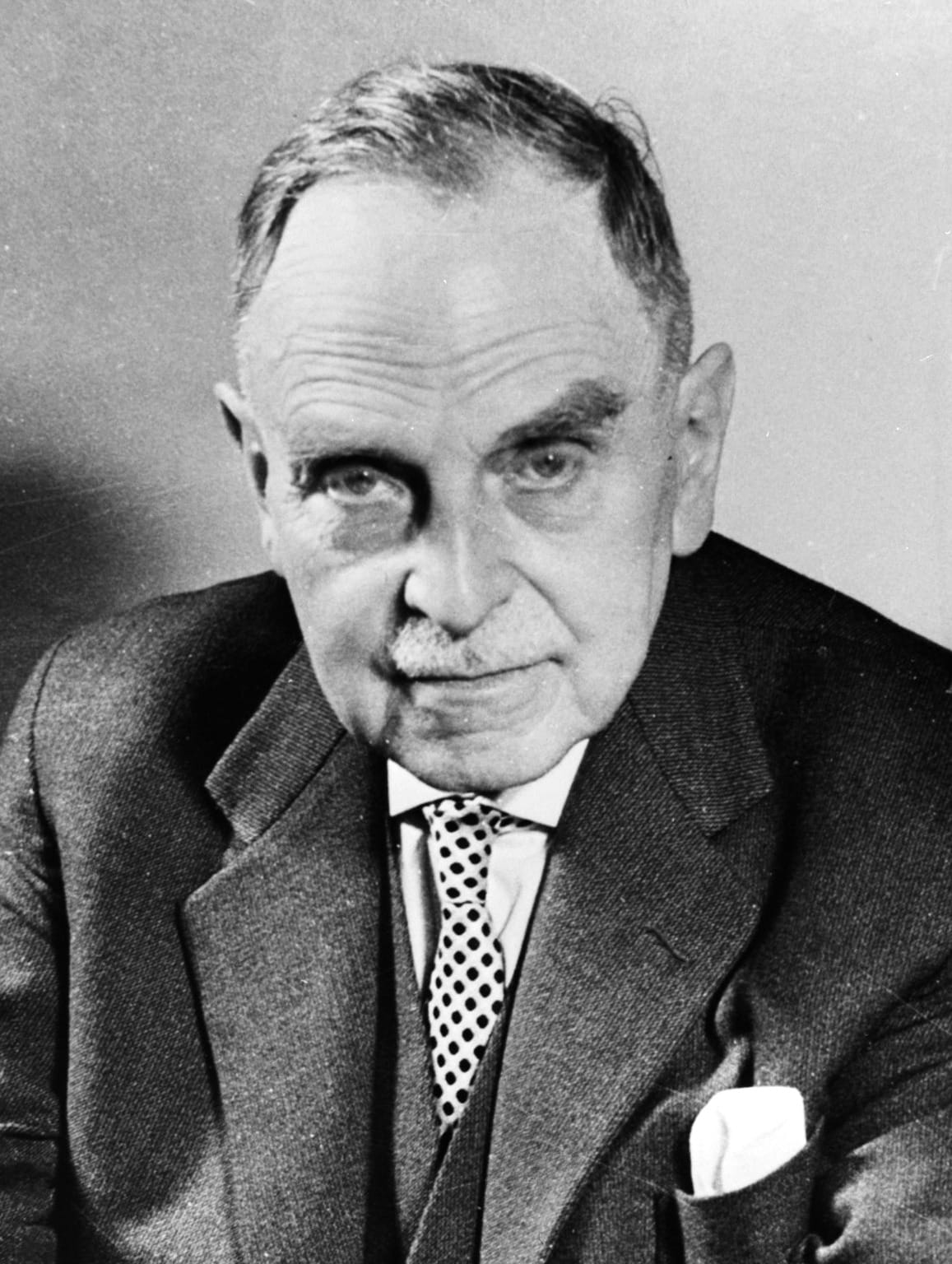
Hahn was an excellent chemist and could not explain it. He wrote to Lise Meitner, his collaborator of thirty years, who had fled to Sweden that summer because she was Jewish and Austria's annexation had removed her protection.
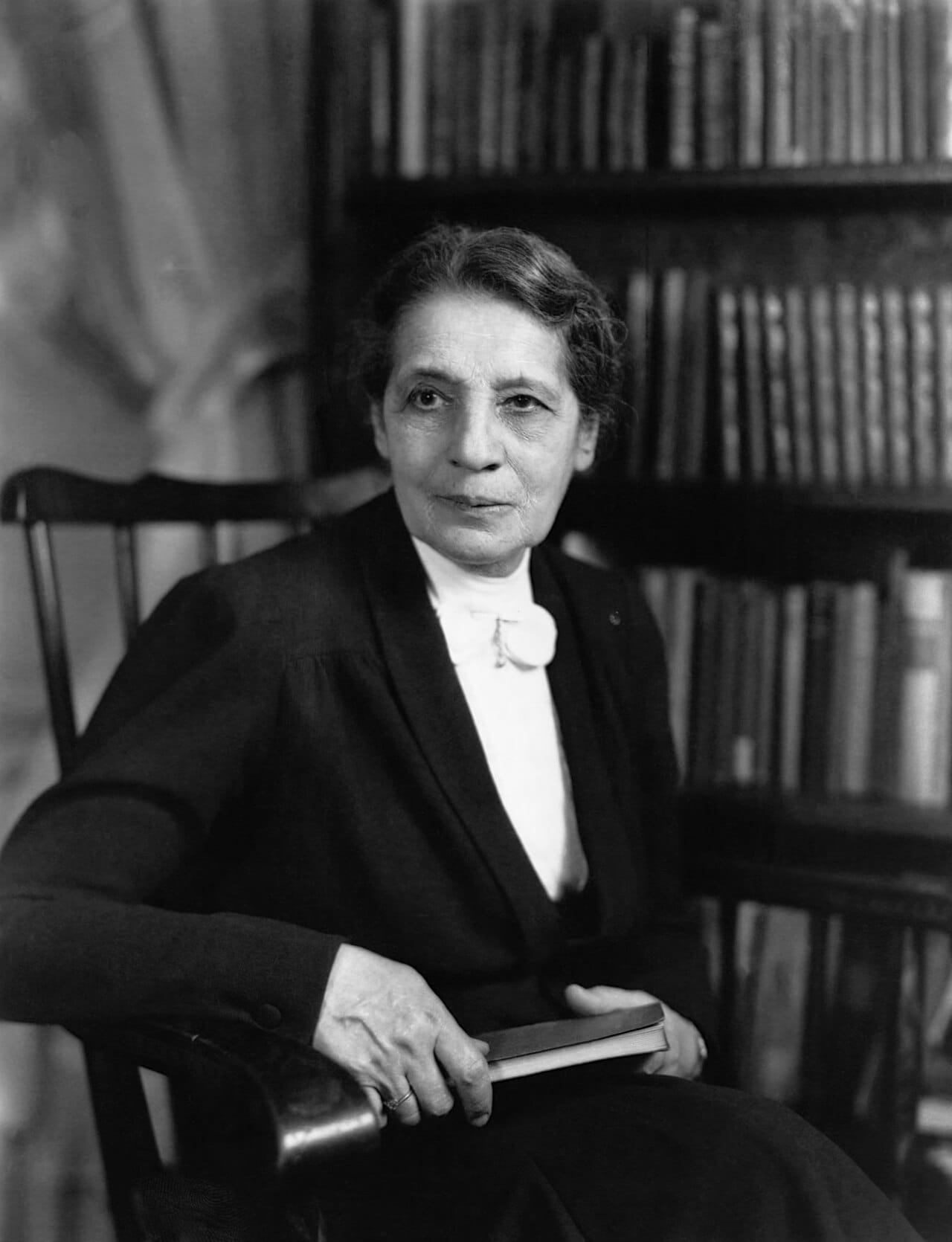
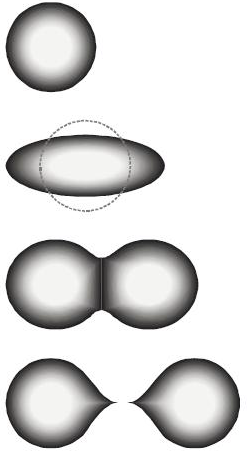
Meitner and her nephew Otto Frisch worked it out over Christmas 1938, reportedly while walking in the snow. Treating the nucleus as a liquid drop, they showed it could deform and divide, calculated the energy released at around 200 million electronvolts, and identified the source as the mass difference. Frisch named it fission by analogy with cell division.
Hahn received the 1944 Nobel Prize in Chemistry alone. Meitner's exclusion is among the most criticised decisions in the prize's history, and element 109 was named meitnerium in 1997.
Fission releases two or three neutrons along with the fragments. Each can induce another fission, which is a chain reaction, and this was understood immediately.
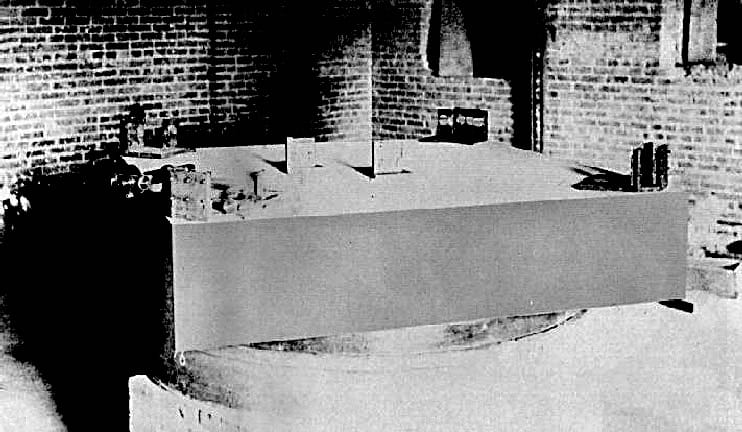
Whether it runs depends on geometry and composition. Below a critical mass too many neutrons escape and the reaction dies; above it the reaction sustains itself. Enrico Fermi's team achieved the first controlled chain reaction in a squash court beneath the University of Chicago's stands in December 1942.
Control depends on a detail that is easy to miss and is what makes reactors possible. A small fraction of the neutrons, under one percent, are emitted seconds later by the decay of fission fragments rather than instantly. That delay is what gives control rods time to act. Without delayed neutrons a reactor could not be regulated by any mechanical system.
The first application was a weapon. The Manhattan Project ran from 1942, and the physics gave two designs: a gun assembly firing one subcritical mass into another, used on Hiroshima, and an implosion design compressing plutonium with shaped explosives, tested at Trinity and used on Nagasaki.
Civil power followed. A reactor moderates neutrons to increase the chance of further fission, uses control rods to absorb the excess, and extracts heat to drive a steam turbine. Roughly a tenth of the world's electricity comes from fission, with the share varying enormously between countries.
Fission power produces almost no carbon dioxide during operation and has one of the lowest death rates per unit of energy of any source, including counting Chernobyl and Fukushima, which is not what public perception suggests.
Against that: long-lived waste has no operating permanent repository in most countries, capital costs and construction times have risen rather than fallen, and the same enrichment and reprocessing capability that fuels reactors moves a state closer to a weapon. That last point is not a side issue; it is why the technology has been governed by treaty since 1968.
The disagreement is genuine, it is about risk tolerance and time horizons rather than about the physics, and both sides use the same numbers.