A form of radiation announced in 1903 by the French physicist Prosper-René Blondlot, investigated in dozens of laboratories, described in around three hundred published papers, and entirely non-existent. It is the standard case study in how competent scientists can measure something that is not there.
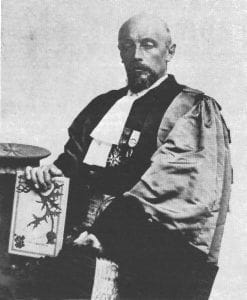
Blondlot named the rays after Nancy, where he worked. He reported that they were emitted by many materials, including the sun, a hot wire, and even the human nervous system, that they passed through aluminium and wood but were blocked by water, and that they could be refracted by an aluminium prism.
The context matters. Wilhelm Röntgen had discovered X-rays in 1895, Henri Becquerel had discovered radioactivity in 1896, and the Curies had isolated radium in 1898. New and invisible radiations were arriving at a rate that made another one entirely plausible, and Blondlot was working within an established and productive line of research rather than at the fringe.
The detection method is the whole story. N-rays were said to slightly increase the brightness of a faintly glowing screen or spark. The observation was therefore a judgement, made by a dark-adapted eye in a darkened room, about whether a dim light had become marginally dimmer or brighter.
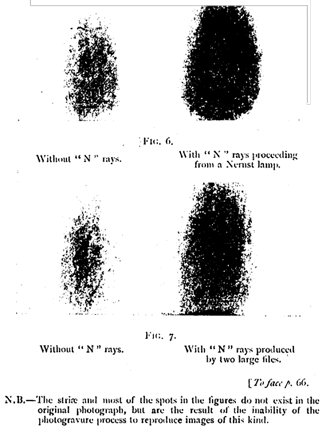
Blondlot was not alone. Augustin Charpentier reported N-rays from nerves and muscles, and by 1904 the Académie des Sciences had received a large body of work from many investigators. Several of them reported effects that Blondlot had not predicted, which at the time looked like independent corroboration.
A conspicuous fact went underweighted at the time: essentially all successful observations came from France, and physicists elsewhere, including Lord Kelvin's circle and laboratories in Germany, Britain and the United States, could not reproduce them.
The American physicist Robert W. Wood visited Blondlot's laboratory in September 1904 to see the effect demonstrated.
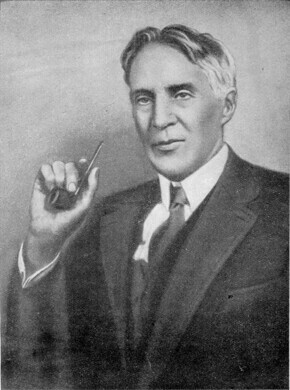
Wood's method was to disturb the experiment without telling his host. In a darkened room, while Blondlot's assistant read off the positions of spectral lines produced by the aluminium prism, Wood quietly removed the prism and put it in his pocket. The assistant continued to report the same spectrum from an instrument that no longer contained its essential component.
In another demonstration Wood was asked to hold a lead screen to block the rays. He substituted his hand, and later moved the screen when no ray effect was claimed, and the reported observations tracked what the experimenters expected rather than what was physically present.
Wood published a short account in Nature that year. Because the test was about the apparatus rather than the interpretation, there was no room to reply that he had misunderstood the theory.
The N-ray literature is not a story of fraud. There is no evidence that Blondlot or the great majority of his colleagues fabricated anything, and Blondlot appears to have believed in the rays for the rest of his life.
What the episode demonstrates is experimenter expectancy. When the measurement is a subjective judgement at the threshold of perception, when the observer knows which condition is being run, and when a positive result is expected, the observer will tend to see it. Nothing about honesty or intelligence protects against this.
Two structural features made it worse. There was no blinding, so every observation was made by someone who knew what should happen. And the effect was reported to be delicate, so failure to see it could always be attributed to poor technique or an insufficiently dark-adapted eye, which converted every negative result into evidence about the observer instead of about the claim.
N-rays are the reason blinding is not a bureaucratic formality. The episode is cited in almost every discussion of experimenter bias, and it sits behind the modern requirement that the person taking a measurement should not know which condition produced it.
It also illustrates a durable asymmetry. Wood settled the question in an afternoon by making the apparatus lie, whereas three hundred papers of positive results had settled nothing, because they all shared the same uncontrolled step. The comparison between a large agreeing literature and a single well-designed test is the practical lesson, and it recurs whenever a field accumulates many small positive findings from unblinded measurements.