Systems for writing down music so that it can be preserved and performed by people who never heard it. Notation determines what a musical culture can transmit, and different traditions have recorded very different aspects of sound.
Music is sound in time, and writing it requires deciding what to record. Pitch, duration, loudness, timbre, articulation and expression are all present in a performance, and no notation captures all of them.
Western staff notation is precise about pitch and rhythm and vague about everything else. Loudness is given by words meaning roughly soft or loud, tempo by words meaning roughly fast or slow, and timbre mostly by which instrument is specified. A performer supplies the rest, which is why two performances of the same score differ audibly.
That imprecision is not a flaw so much as a division of responsibility, and traditions differ in where they place it.
The oldest known notated music is a Hurrian hymn on a cuneiform tablet from around 1400 BCE, whose interpretation remains debated.
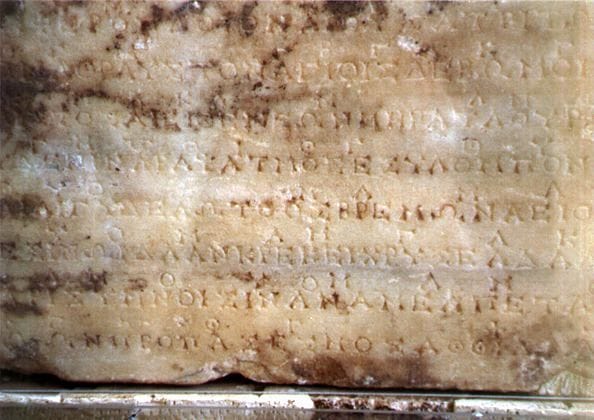
Ancient Greek notation used letters placed above the lyrics to indicate pitch. The Delphic Hymns, carved in stone in the second century BCE, survive with enough notation for modern reconstruction.
Medieval European chant was first written with neumes, marks above the text indicating the shape of a melodic line, rising or falling, without specifying exact intervals. They were memory aids for singers who already knew the melody rather than instructions for someone who did not.
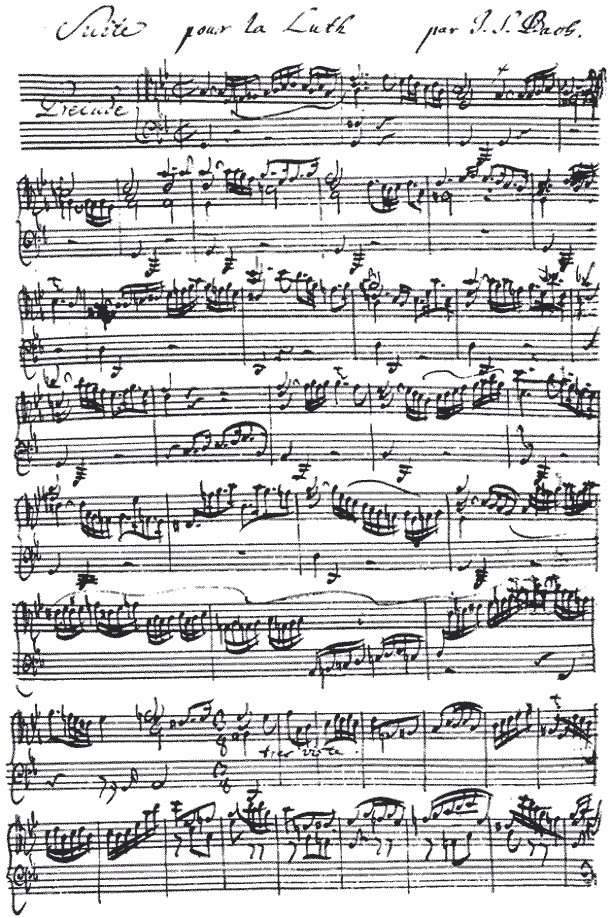
The decisive development is credited to Guido of Arezzo in the eleventh century, who used lines to fix pitch precisely. A note's vertical position now specified which pitch, not merely that it was higher than the last.
The consequence was large. A singer could learn an unfamiliar chant from the page, which cut training time dramatically, and music could travel between institutions without a person carrying it in memory.
Guido is also credited with the syllables that became do, re, mi, taken from the first syllables of successive lines of a hymn, each beginning one step higher.
Rhythmic notation followed over the following centuries, with note shapes indicating relative duration, and the system stabilised into the familiar five-line staff with clefs, key signatures and bar lines by around 1700.
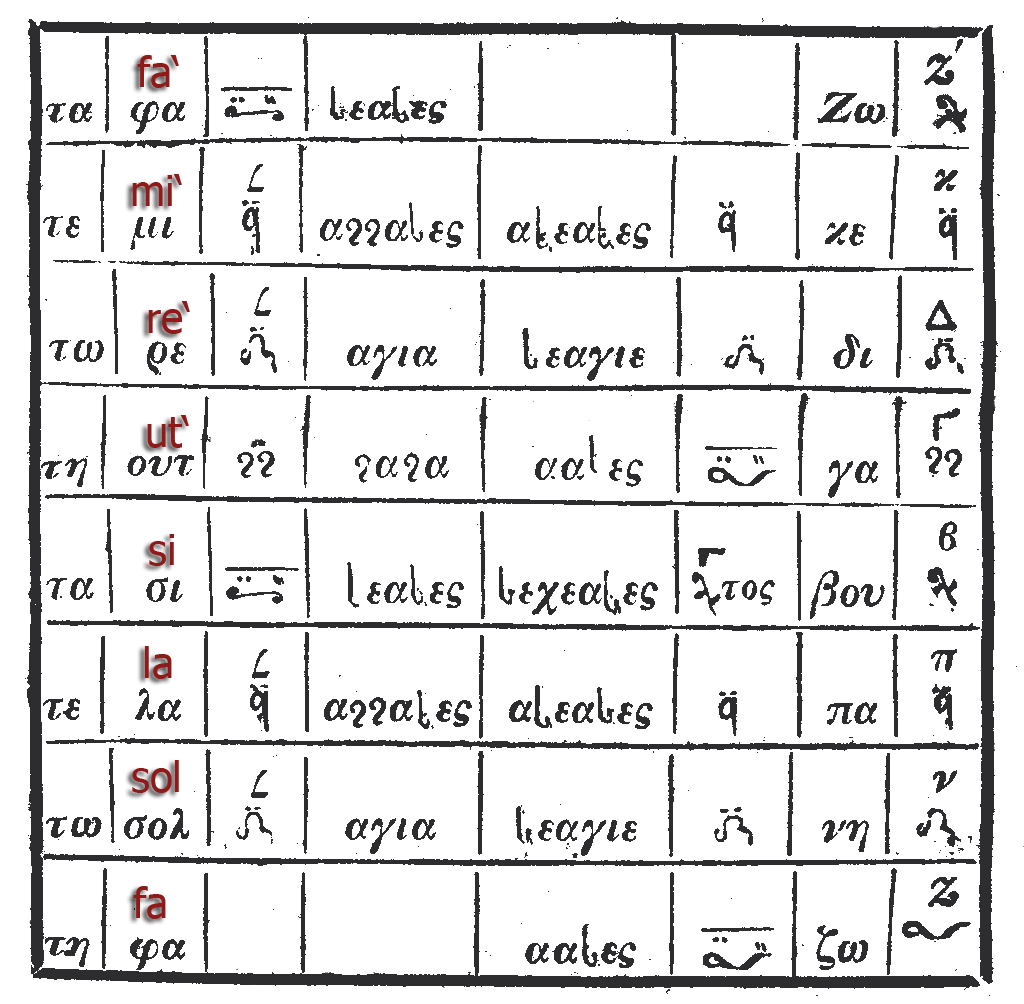
Byzantine chant uses a neumatic system that indicates intervals relative to the current note rather than absolute pitch, and it remains in liturgical use.
Indian classical music is transmitted primarily orally, through the relationship between teacher and student, with notation serving as an aide-memoire. This suits a tradition in which improvisation within a raga is central and a fixed score would misrepresent the practice.
Chinese guqin tablature specifies finger placement and playing technique rather than pitch and duration directly, so it tells the player what to do rather than what should sound.
Western tablature does the same for lute and guitar, indicating which fret and string to use.
The general point is that notation records what a tradition considers essential. A system that fixes pitch exactly and leaves ornamentation free belongs to a different musical culture from one that does the reverse.
Music printing from the late fifteenth century made scores reproducible and cheap, creating a market for published music and standardising notational conventions across Europe.
Recording, from the late nineteenth century, removed notation's monopoly on preservation for the first time in a thousand years. Music could now be transmitted exactly without being written, which is part of why twentieth century popular traditions developed with far less reliance on scores.
Twentieth century composers also pushed past what staff notation could express, producing graphic scores that indicate sound with drawings and instructions in prose, generally where the composer wanted results the conventional system could not specify.
Digital formats now dominate practical use, with software producing both printed scores and audio, and with formats designed for machine interchange rather than for reading.
Notation is what allows a piece of music to outlive everyone who has heard it, and the surviving European repertoire from before recording exists because of it. It also shapes what music gets made, since composers write what their notation can express, and the elaborate rhythmic and harmonic structures of Western art music are difficult to conceive without a system that fixes them precisely on paper.