The number representing nothing, and the symbol that makes positional notation possible. It arrived late, was resisted, and is the single most consequential piece of mathematical notation ever adopted.
Zero does two distinct jobs, and they were invented separately and centuries apart.
As a placeholder, it marks an empty position so that 205 can be distinguished from 25. Without it, positional notation cannot work, because the position of a digit carries meaning only if every position is accounted for.
As a number, it can be added, subtracted and multiplied like any other, and it is the additive identity: adding it changes nothing.
The first is a notational device and the second is a mathematical object. Several civilisations invented the first without ever taking the second step.
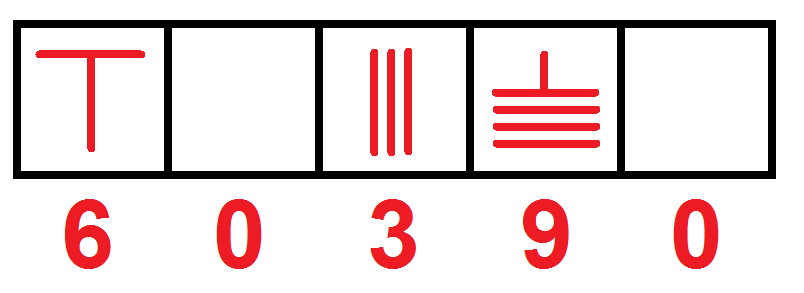
The Babylonians used a positional system in base sixty from around the second millennium BCE and initially left a gap for an empty position, which was ambiguous. By around the third century BCE they used a placeholder symbol, but never at the end of a number and never as a quantity in its own right.
The Maya independently developed a positional system with a shell-shaped zero, used in calendar calculation.
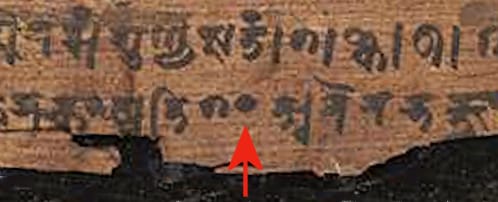
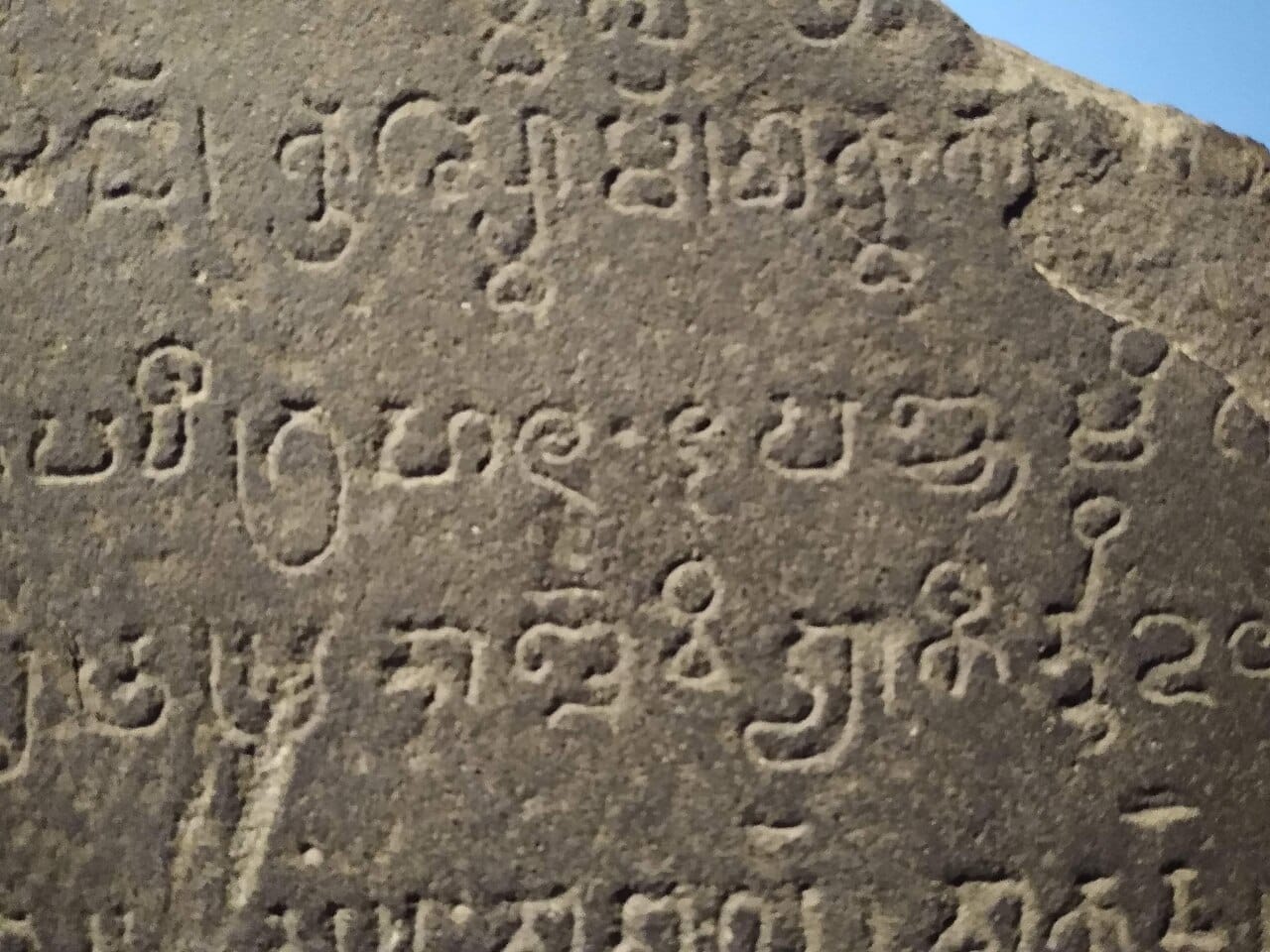
The decisive development was in India. By the seventh century Brahmagupta was treating zero as a number and stating rules for it: a number minus itself is zero, zero added to a number leaves it unchanged, and zero multiplied by anything is zero.
He also attempted division by zero, and got it wrong, proposing that zero divided by zero is zero. That he tried at all is the point: he was treating it as a number subject to the ordinary operations, which nobody had done before.
The system passed to the Islamic world, where al-Khwarizmi described it in the ninth century, and the word algorithm derives from his name. Fibonacci's Liber Abaci of 1202 promoted it in Europe.
Adoption in Europe was slow and actively resisted. Roman numerals remained in official use for centuries, some Italian cities prohibited the new numerals in commercial records on the grounds that they were easy to alter, and the transition was not complete until around the sixteenth century.
Compare multiplying 47 by 26 in Roman numerals with doing it in the positional system.
In a positional system the procedure is mechanical, requires only knowledge of single-digit products, and can be taught to a child. In Roman numerals it requires an abacus or a specialist.
The consequence is that arithmetic became something ordinary people could do on paper. Commerce, accounting, navigation and eventually mechanical calculation all depend on that, and none of it works without a symbol for an empty position.
Zero is the additive identity, the unique number that leaves any number unchanged when added.
It is the boundary between positive and negative numbers, and it is neither.
It is even, since it is divisible by two with no remainder, a fact that is frequently doubted and is not in question.
Any number to the power zero is one, which follows from the rule for dividing powers.
Division by zero is undefined, and this is not an arbitrary prohibition. Division asks what number multiplied by the divisor gives the dividend. For a non-zero dividend there is no such number, since anything times zero is zero. For zero divided by zero every number qualifies, so no single answer can be assigned. Defining it would break the consistency of arithmetic, which is why calculators return an error rather than a value.
Binary representation uses only zero and one, and zero is half of the alphabet in which every digital device operates.
Most programming languages index from zero rather than one, so the first element of a list is at position zero. The convention follows from the arithmetic of memory addresses, where the index is an offset from the start, and it is a persistent source of the off-by-one errors that are among the commonest programming mistakes.
Zero is the clearest illustration that notation is not a neutral recording of mathematics but a determinant of what can be done with it. The same numbers were available to Roman and Indian mathematicians; the difference in what could be calculated followed from how they were written. It is also a reminder that ideas which appear obvious in retrospect can require millennia and can be resisted when they arrive.