Objects made or adapted to produce musical sound. They are among the oldest artefacts of human culture, and the ways they are classified reveal how differently the same problem has been solved.
Every instrument sets something vibrating and couples that vibration to the air efficiently enough to be heard.
The vibrating element may be a string, a column of air, a stretched membrane, or the body of the instrument itself.
Coupling matters as much as vibration. A string alone moves very little air; a soundboard or resonator transfers the vibration to a much larger surface, which is why a violin body and a guitar's soundbox exist and why a string stretched across a frame with no body is barely audible.
Pitch depends on the frequency of vibration, which for a string is set by its length, tension and mass, and for an air column by its length. This is why instruments are played by changing effective length, through fingering, valves, slides or holes.
Timbre, the quality distinguishing one instrument from another at the same pitch, comes from the pattern of overtones present alongside the fundamental frequency, and it is determined by the shape and material of the whole instrument.
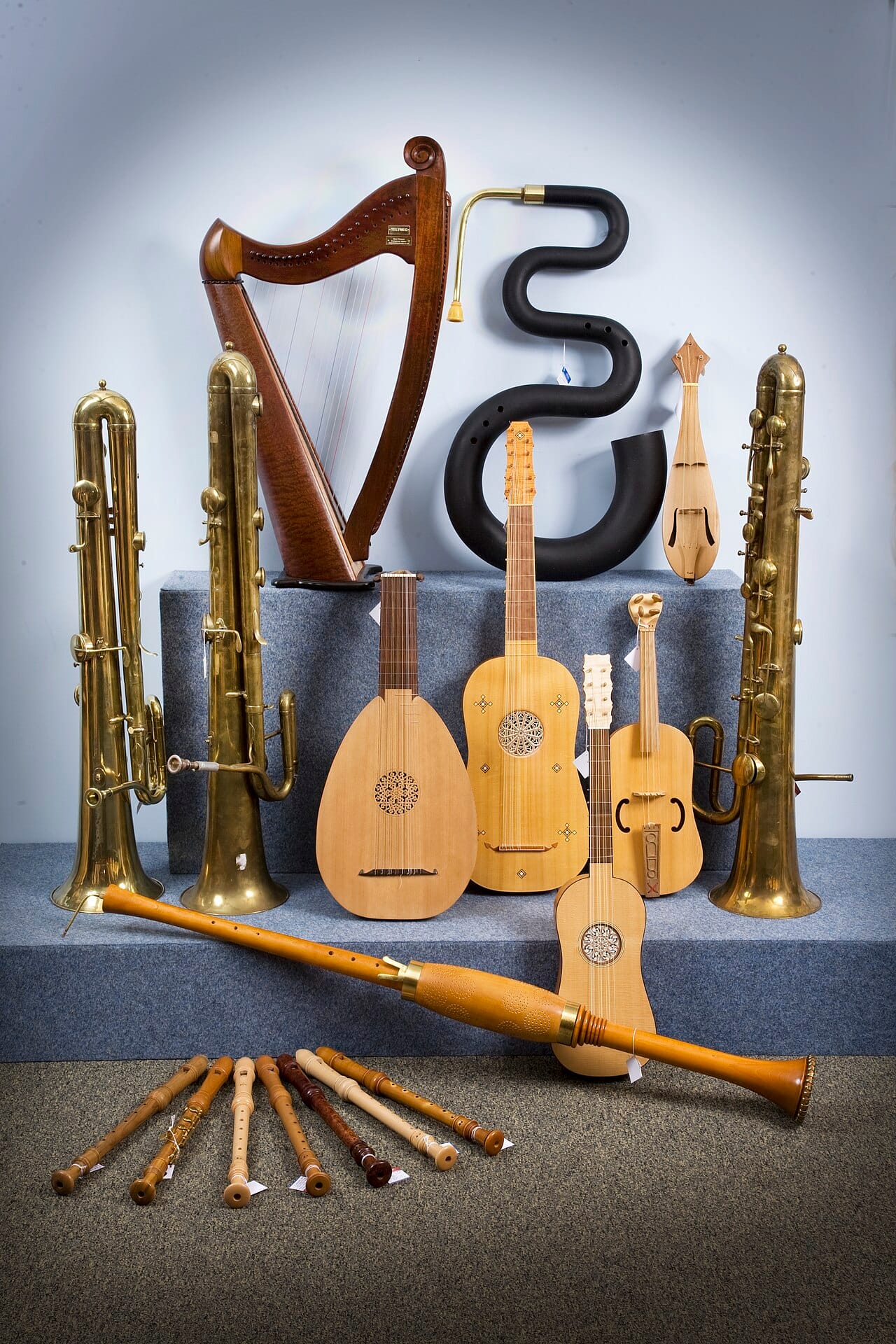
The Western orchestral division into strings, woodwind, brass and percussion is practical and inconsistent, since it mixes material with method: a saxophone is brass and classed as woodwind because of how it produces sound.
The Hornbostel-Sachs system, published in 1914, classifies by what vibrates and is now standard in ethnomusicology because it applies to all traditions rather than to one.
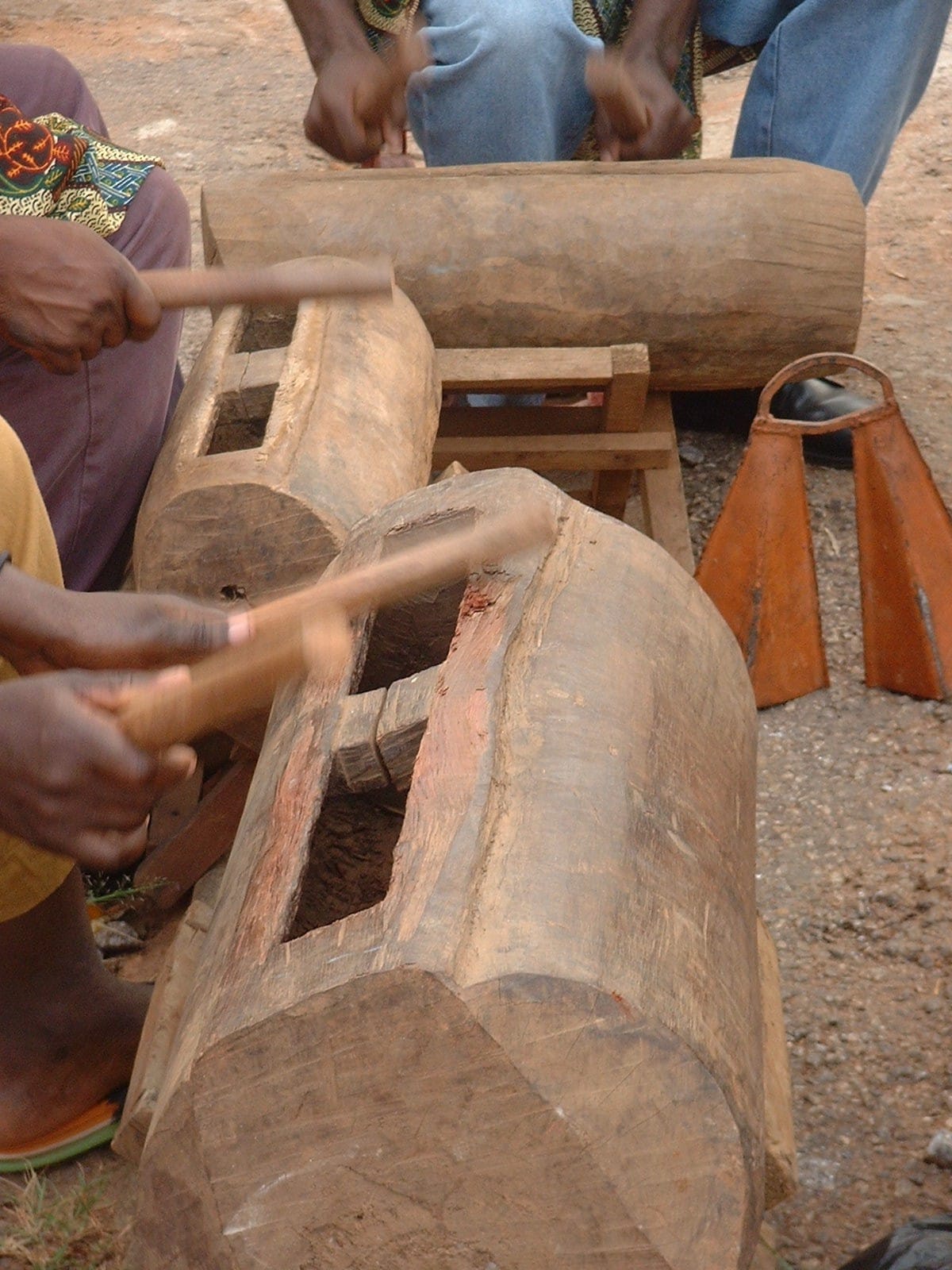
Idiophones vibrate as a whole body, including bells, gongs, xylophones and rattles.
Membranophones use a stretched membrane, covering most drums.
Chordophones use strings, covering violins, guitars, harps, pianos and zithers.
Aerophones use a vibrating air column, covering flutes, reeds, brass and organs.
Electrophones were added later for instruments generating sound electrically.
The system's value is that it groups by mechanism rather than by orchestral convention, which places instruments from unrelated traditions together where they work the same way.
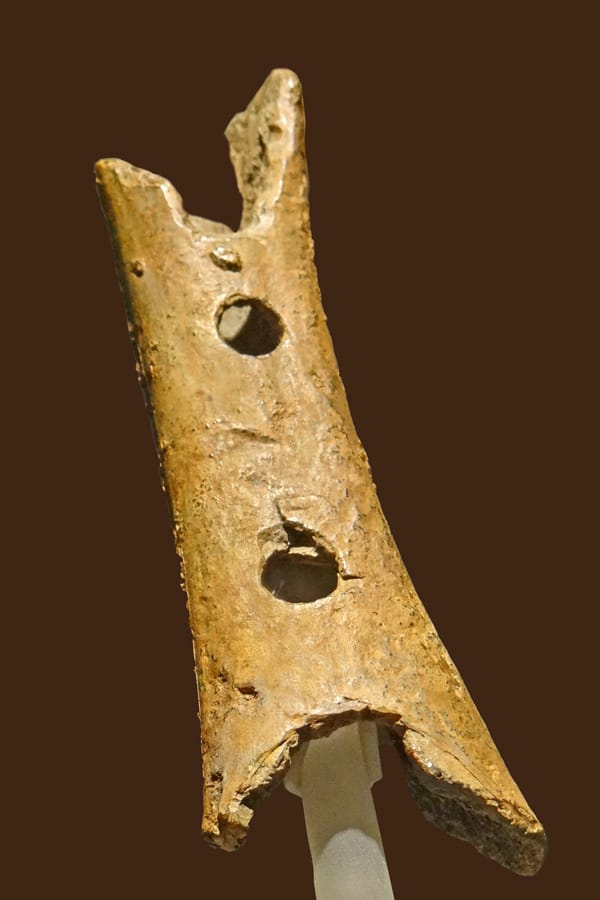
Bone flutes from caves in southern Germany, dated to around 40,000 years ago, are the oldest instruments generally accepted as such. They have finger holes and a shaped mouthpiece, and reconstructions play recognisable scales.
Percussion is certainly older, since striking objects requires no manufacture, and it leaves no evidence distinguishable from ordinary tools.
The independent appearance of similar solutions is striking. Flutes, drums, plucked strings and struck idiophones developed in societies with no contact, because the acoustic possibilities are limited and the same physical arrangements are the ones that work.
Instruments frequently pushed the limits of available manufacturing.
Bronze bells and gongs required control of alloy composition and casting thickness, since pitch depends on both, and bell founding was a specialised metallurgical craft.
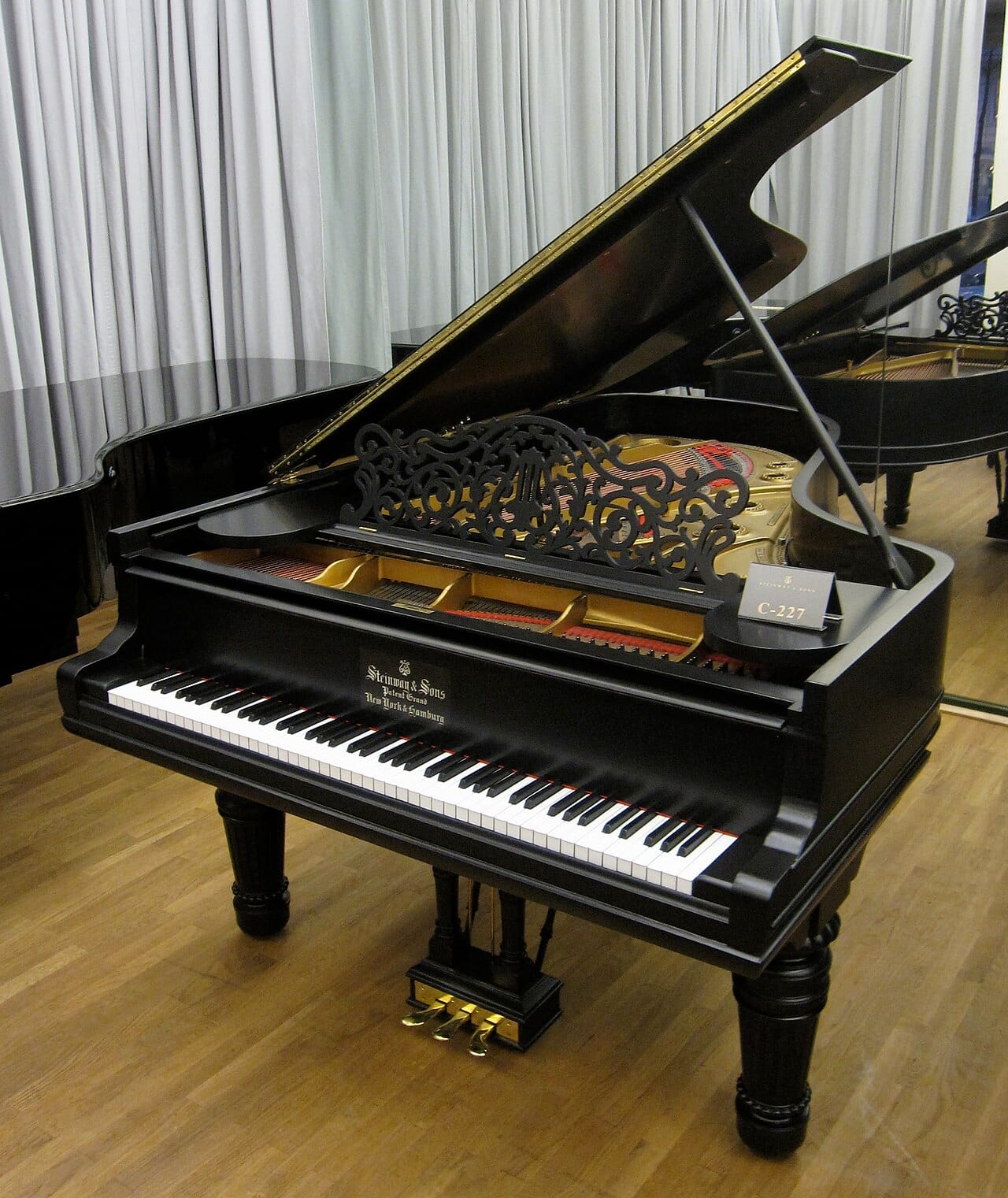
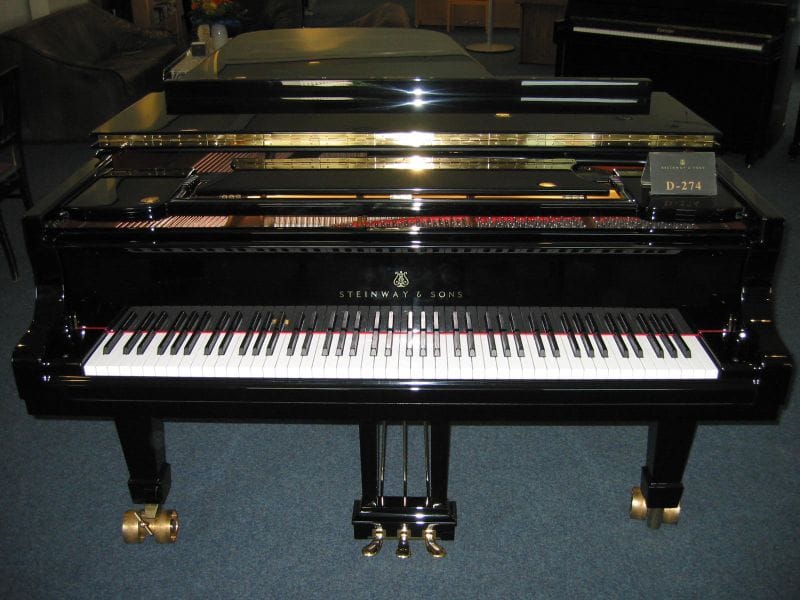
Keyboard instruments are mechanically elaborate. The piano action, which throws a hammer at a string and immediately releases it so the string can vibrate freely, then catches it before it can bounce back, was refined over a century.
The pipe organ was for centuries the most complex machine most people would ever encounter, combining wind supply, valves and hundreds of tuned pipes.
Valves for brass instruments, developed in the early nineteenth century, allowed chromatic playing on instruments previously limited to a single harmonic series, which changed what composers could write for them.
Electrical instruments from the twentieth century removed the requirement that the vibrating element be audible on its own, since amplification handles the coupling, which is why an electric guitar has a solid body.
Instruments were not standardised historically. Pitch varied between cities and institutions, and an instrument built for one place would not play in tune with another.
Concert pitch was gradually standardised, with 440 hertz for the A above middle C adopted as an international reference in the twentieth century, though it is not universal and several orchestras use a slightly higher pitch.
Equal temperament, treated in its own capsule, was the tuning compromise that made keyboard instruments playable in every key, at the cost of no interval other than the octave being exactly in tune.
The Western orchestra stabilised into its current form during the nineteenth century, and its instrumentation reflects the state of manufacturing at that point as much as musical preference.
Musical instruments are among the earliest evidence of activity with no survival function, which is part of why the German flutes are cited in discussions of when behaviour recognisably modern appears.
They also demonstrate a constraint that shapes every tradition: the physics of vibrating strings, membranes and air columns is the same everywhere, so the range of possible instruments is limited, and unrelated cultures repeatedly arrived at the same solutions.