Institutions that collect, preserve, study and display objects. What they display is a small fraction of what they hold, how they came to hold it is increasingly disputed, and the modern public museum is only about three centuries old.
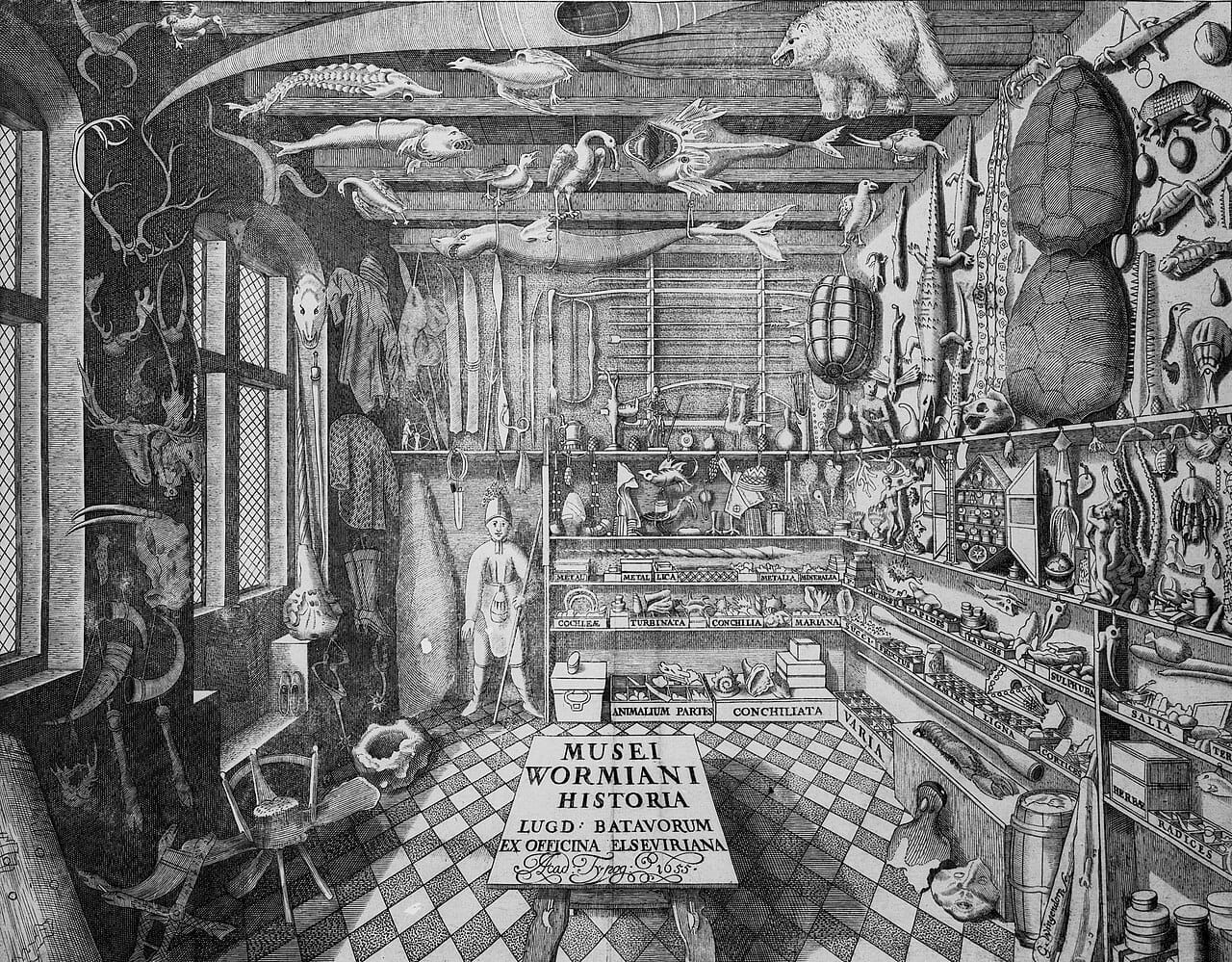
Collections of valued objects are ancient, and temple and palace treasuries held them for reasons of prestige and religion rather than study.
The cabinet of curiosities, or wunderkammer, appeared in Europe from the sixteenth century. These were private collections mixing natural specimens, antiquities, instruments and objects of wonder, arranged to display the range of creation rather than sorted by discipline.
They were not primitive museums. The categories that now separate a fossil from a sculpture from a scientific instrument did not yet organise knowledge, and the cabinet's arrangement reflected a coherent view in which all of it belonged together.
Access was by invitation, and viewing a collection was a social privilege.
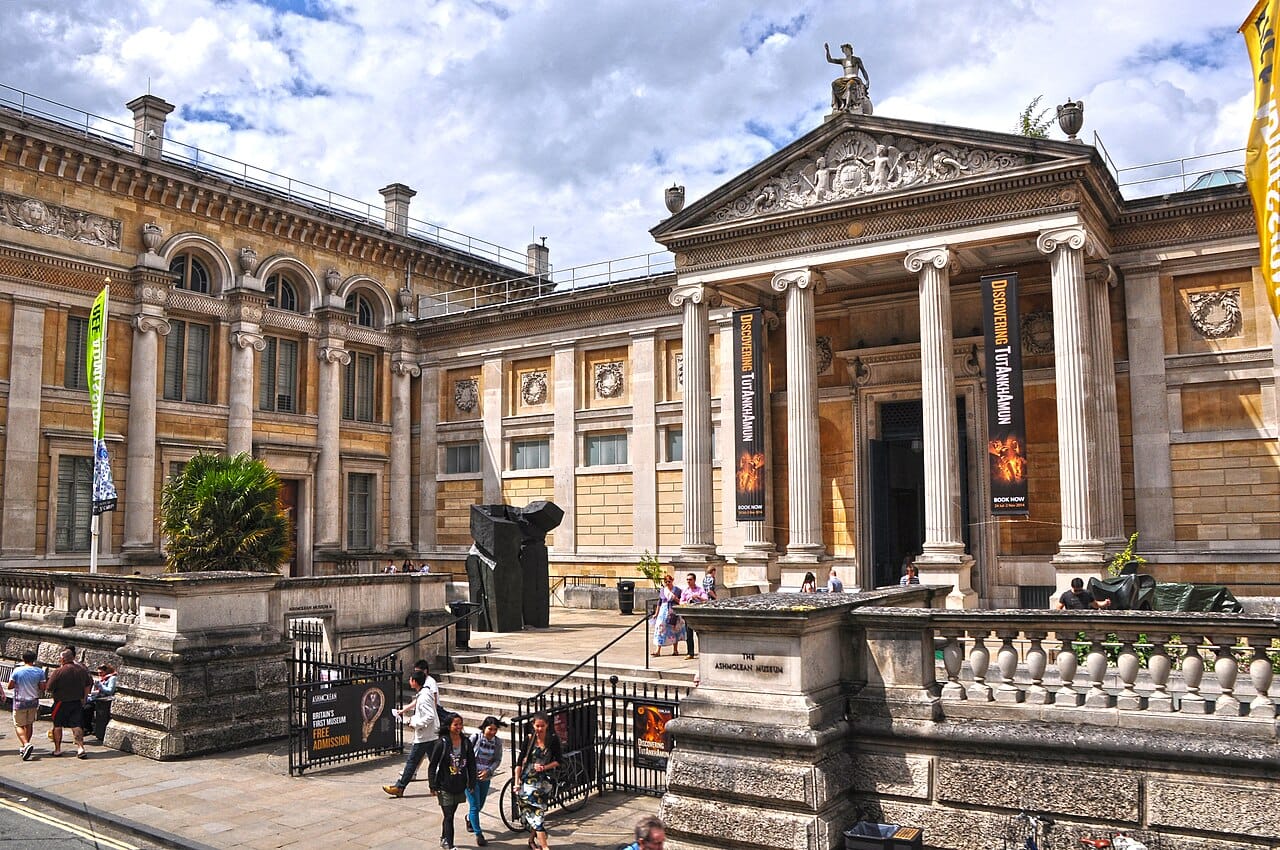
The Ashmolean Museum in Oxford, opened in 1683, is generally identified as the first purpose-built public museum, formed from a donated collection and open to those who paid.
The British Museum was founded in 1753 by Act of Parliament on the collection of Hans Sloane, and admission was free from the outset, though initially by written application and in guided groups.
The Louvre opened to the public in 1793, converting a royal palace and royal collection into a national one, which made explicit a claim the French Revolution was making generally: that such things belonged to the nation rather than to a monarch.
Public museums proliferated through the nineteenth century, driven by civic pride, by the belief that exposure to objects improved the population, and by the great international exhibitions, several of which left permanent institutions behind them.
Collecting is deliberate rather than passive. What a museum acquires defines what future researchers can study, and what it declines to acquire disappears.
Preservation is the largest ongoing cost and the least visible activity. Objects deteriorate, and controlling light, humidity, temperature and pests is continuous work.
Research is done mostly on the material not displayed. Natural history collections in particular function as reference libraries of specimens, and historical collections have supported research on climate, disease and biodiversity that the collectors never anticipated.
Display is the smallest part by volume. A large museum typically shows a very small percentage of its holdings, and the rest is in store, which is normal practice rather than a failure.
Education has become a central function, and in many institutions the education department is larger than the curatorial one.
Restitution is the sharpest current dispute in the sector, and it is not a single question.
The Parthenon Marbles, removed by Lord Elgin in the early nineteenth century and held by the British Museum, are claimed by Greece. The arguments concern the legality of the original permission, the merits of a unified display, and whether the institution's founding statute permits deaccession.
The Benin Bronzes were looted in a punitive military expedition in 1897, which is not disputed, and substantial numbers have been returned or transferred by European and American institutions in recent years.
Human remains and sacred objects are treated separately in many jurisdictions, and legislation in several countries requires repatriation to descendant communities on request.
The arguments against wholesale restitution include the universal museum claim, that collections gathered in one place allow comparison across cultures, and practical concerns about conservation capacity. The arguments for include that acquisition frequently occurred under coercion, that the universal museum argument was formulated largely by the institutions holding the objects, and that conservation concerns have repeatedly proved unfounded.
Colonial-era acquisition is being catalogued rather than assumed. Several national reviews have found substantial portions of ethnographic collections acquired in circumstances that would not now be lawful.
Funding is a second dispute. Sponsorship by fossil fuel companies and by families connected to the opioid trade has produced sustained protest and a number of institutions ending such relationships.
Museums hold a large share of the surviving material record, and the research they support depends on objects being kept, documented and accessible over centuries rather than on any display.
They also make an implicit claim that is worth examining. A museum presents its objects as belonging in that building, arranged in that order, and both the belonging and the arrangement are decisions with histories, which is what the restitution argument is ultimately about.