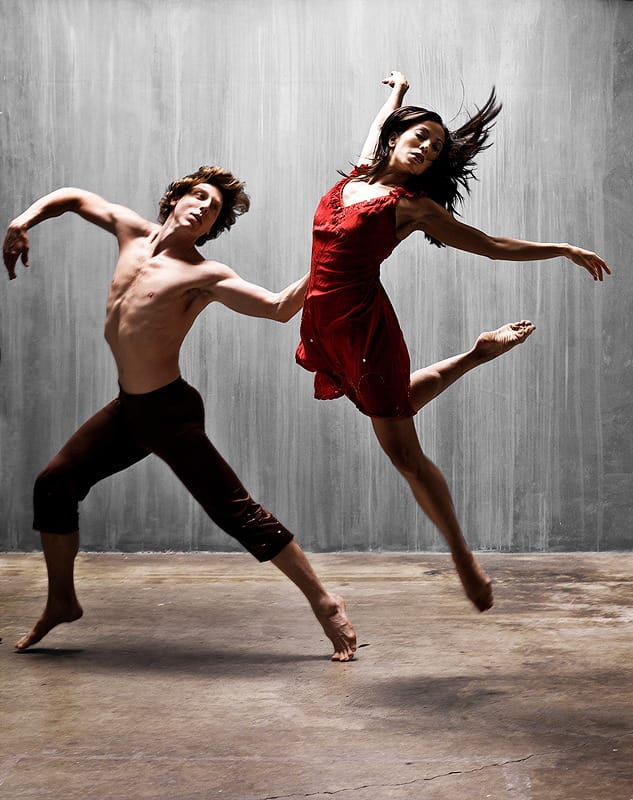
Movement of the body performed for expression, ritual or social purpose, generally in relation to rhythm. It is present in every documented human society, it leaves almost no direct archaeological record, and it is the art form most dependent on transmission from body to body.
Dance is action rather than object. It leaves no artefact, and before recording it could only be preserved by being taught to another person.
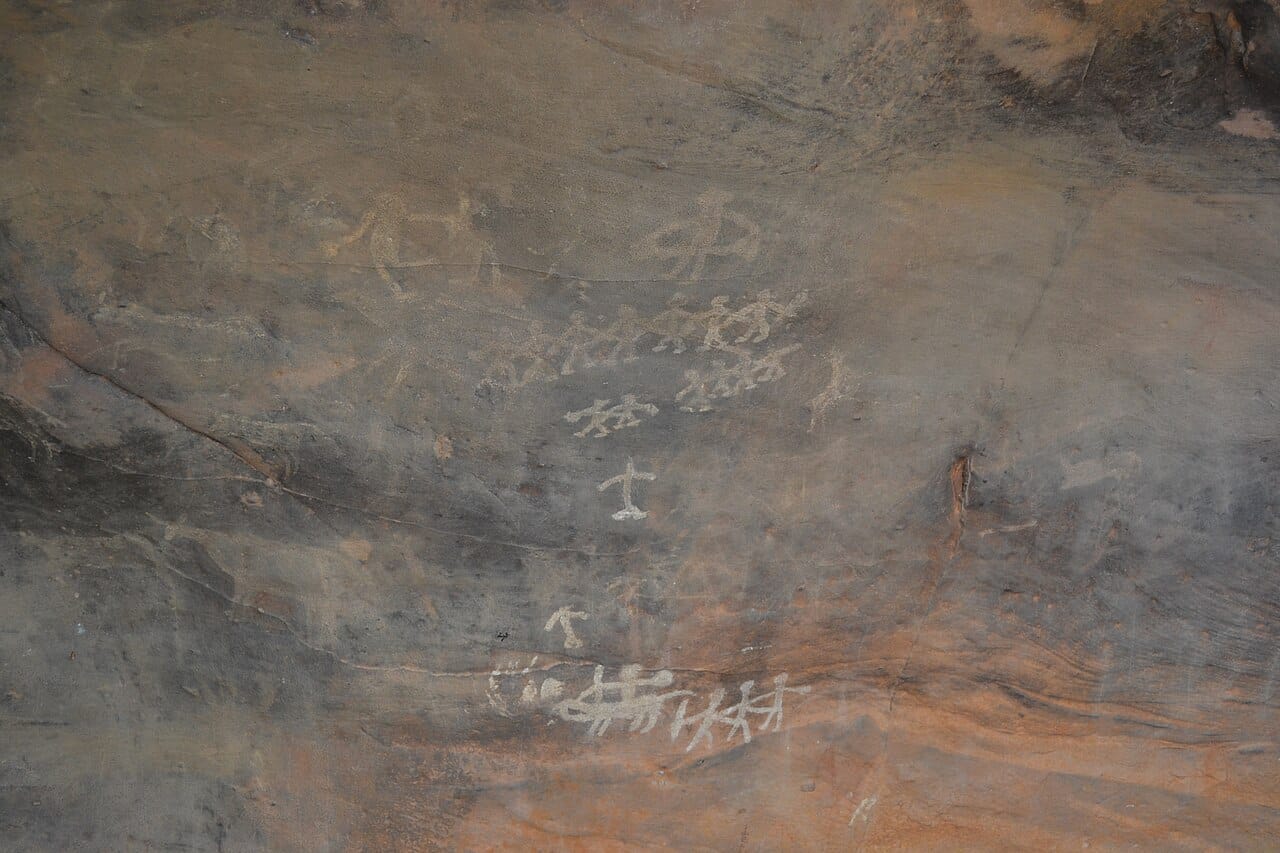
The evidence is therefore indirect: depictions in rock art, painting and sculpture, written descriptions, musical accompaniment, and the physical spaces built for it.
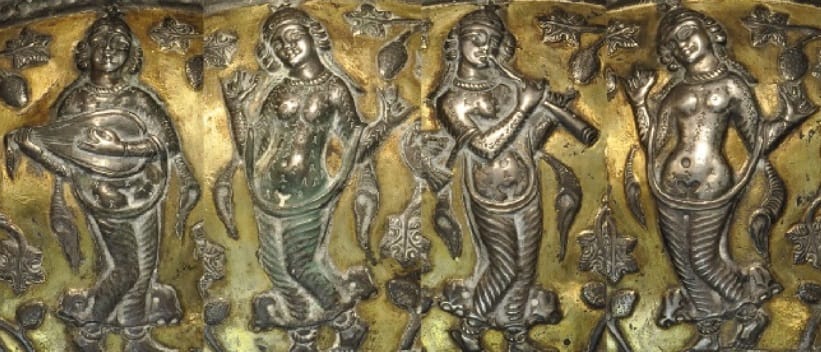
Depictions establish that dance existed and rarely establish what it looked like in motion, since a still image cannot record sequence, timing or quality of movement.
Notation systems have been devised repeatedly and none achieved general adoption. Labanotation, developed in the 1920s, records movement in detail and is used by specialists and is not the medium through which most dance is transmitted.
Film changed this fundamentally. Dance from before about 1900 is known through description and reconstruction; dance after it can be seen.
Ritual and religion. Dance appears in religious practice across traditions, including possession and trance forms, temple traditions, and the ecstatic practices of several religious orders.
Social bonding. Synchronised movement in groups produces measurable effects on cooperation and on perceived closeness, which has been demonstrated experimentally, and this may explain part of why the practice is universal.
Courtship and display, which is the dominant function of much social dance.
Narrative. Classical Indian dance forms encode specific meanings in hand positions and expressions, so a performance conveys a story with a precision that Western dance generally does not attempt.
Marking transition. Dance is frequently part of the rites described in the rites of passage capsule, and of festivals.
Performance for an audience, which is a specialised development rather than the general case.
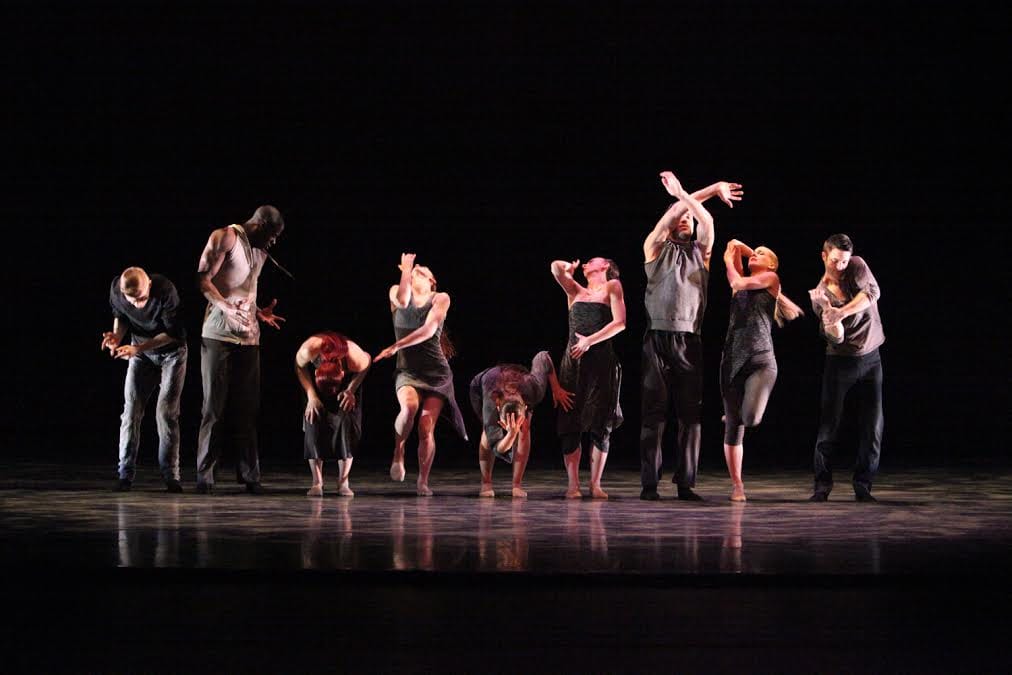
Ballet developed in Renaissance Italian and French courts and became codified with a defined vocabulary and technique. Its physical demands, including turnout of the legs from the hip and pointe work, produce a characteristic line and impose substantial injury risk.
Modern and contemporary dance developed in the early twentieth century in explicit reaction to ballet, rejecting its vocabulary, its verticality and its narrative conventions.
Indian classical forms including Bharatanatyam, Kathak and several others each have codified vocabularies, and their theoretical basis is set out in the Natyashastra alongside drama, as the drama capsule notes.
Chinese, Japanese and Korean traditions include forms integrated with theatre, and Noh and Kabuki are as much dance as drama.
African dance traditions are highly varied, frequently polyrhythmic with different body parts moving to different rhythmic lines simultaneously, and are generally participatory rather than performed to a seated audience.
Social and popular dances have repeatedly crossed from marginalised communities into general use, including tango, jazz dance, and the successive forms developed in African American communities from which much of twentieth century popular dance descends. That trajectory, from a specific community into mass adoption with the origin frequently obscured, is a recurring pattern.
Dance is physically demanding and its health effects are measurable, including cardiovascular fitness, balance and coordination.
Studies of dance in older populations have found effects on balance and on fall risk, and some evidence of cognitive benefit, with the usual caution that the participants differ from non-participants in other ways.
Dance therapy is used clinically, and evidence for specific conditions varies in quality, with Parkinson's disease among the better-supported applications, where the external rhythmic cue appears to assist movement initiation.
Injury rates in professional dance are high and comparable with contact sport, and the physical demands of classical technique in particular are associated with characteristic injuries.
Dance is universal across human societies, which places it with language, music and ritual in the small set of practices that appear everywhere, and the fact that a physically costly activity with no obvious survival function is universal is itself something requiring explanation.
Its transmission is also unusual among art forms. Until a century ago it survived only by one person teaching another directly, which means that dance traditions are more genuinely continuous, and more genuinely lost when broken, than forms preserved in objects or notation.