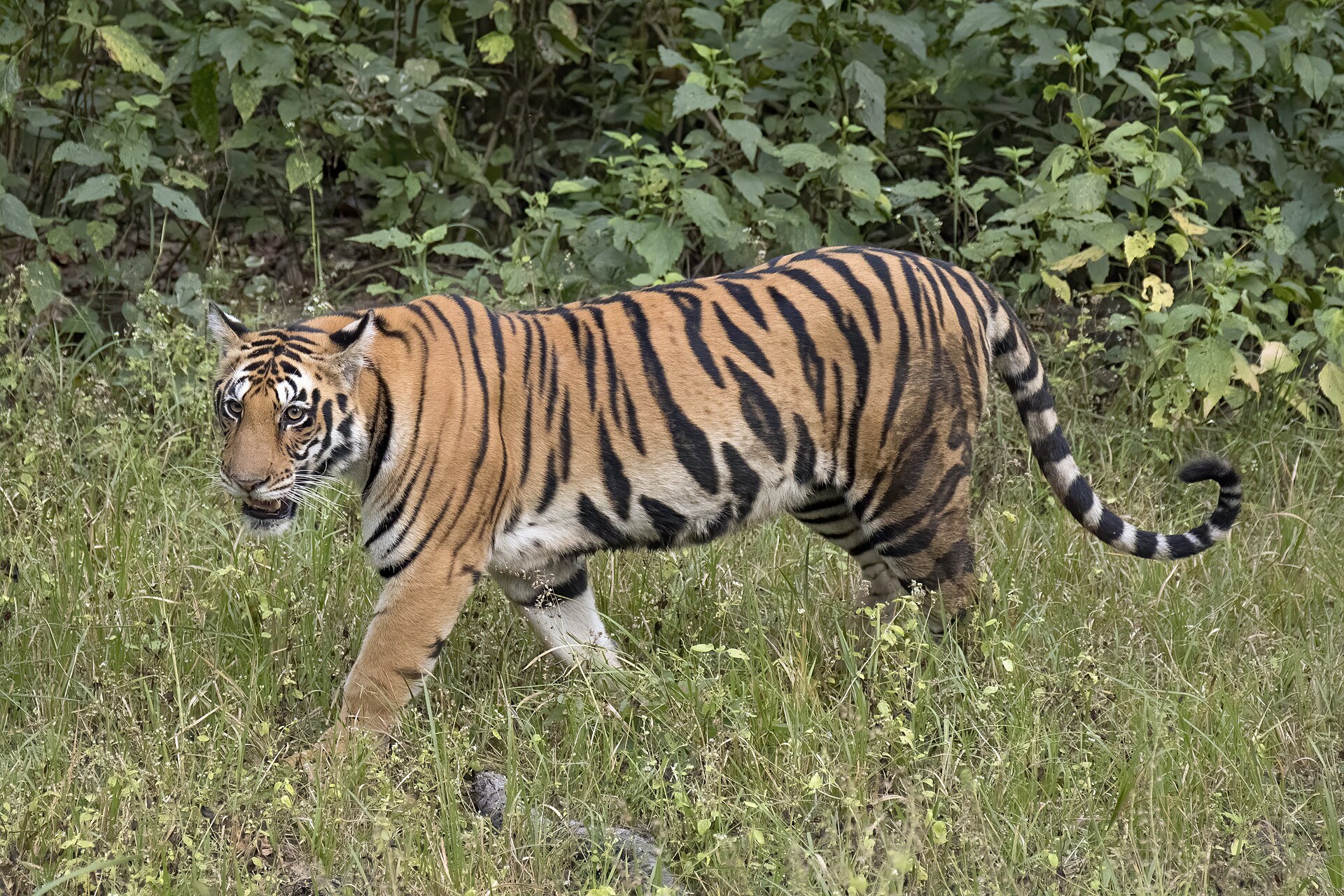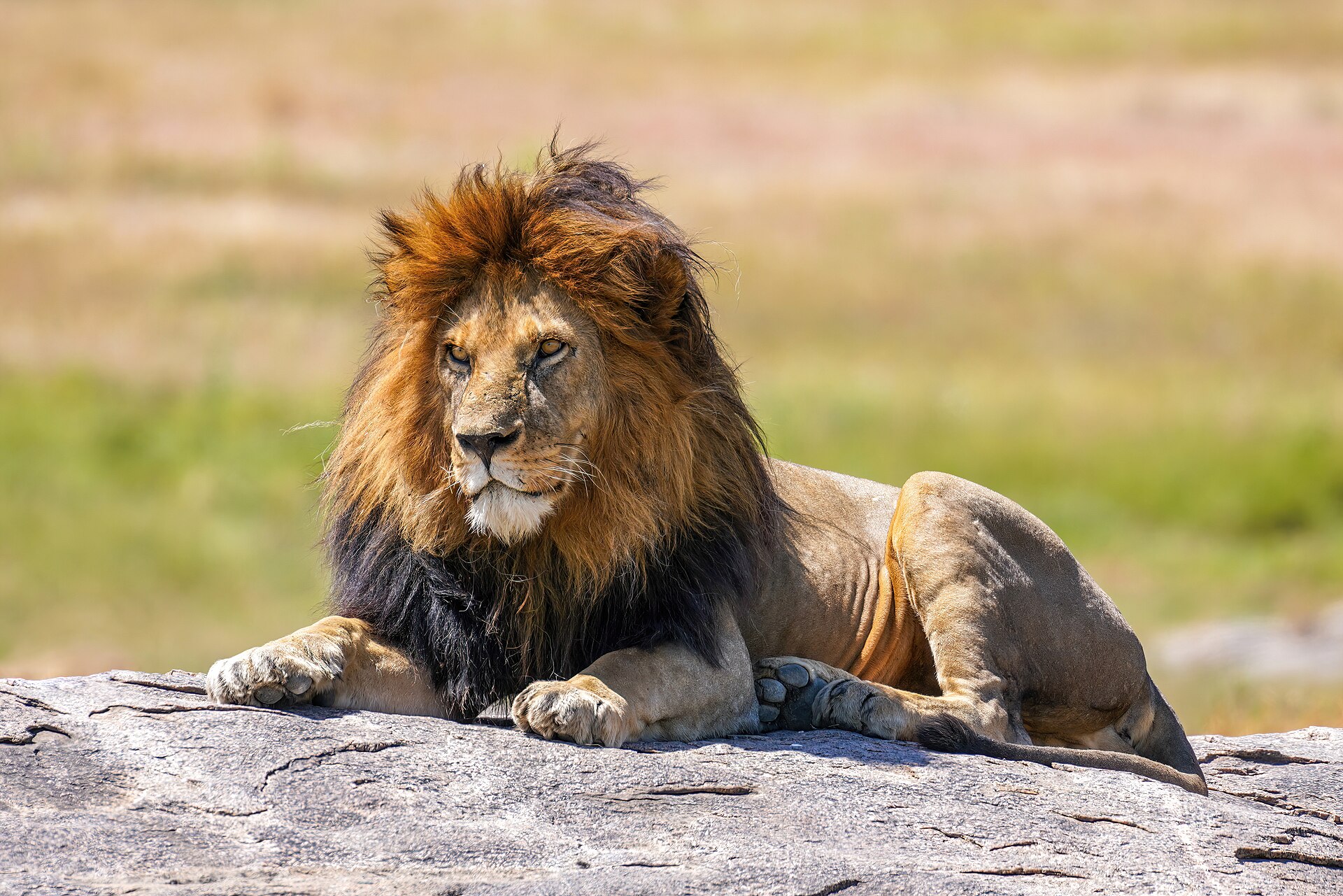
The lion, Panthera leo, is the only truly social cat and the second largest after the tiger. It once ranged from southern Africa through the Middle East to India and across most of Europe; it now holds a fraction of that, in scattered populations that are mostly declining. It is also the most heavily used animal in human symbolism, which has not helped it at all.
Lions are large: males typically 150 to 225 kilograms, females 110 to 180, with males carrying the mane that no other cat has. The mane is a sexually selected signal rather than armour. Work in the Serengeti found that darker manes correlate with higher testosterone and better condition, that females prefer them, and that rival males avoid them, but a dark mane also carries a real thermal cost, which is why lions in hot dry regions such as Tsavo are often nearly maneless.
Lions are built for short, powerful ambush rather than pursuit. They can reach around 50 kilometres an hour but only briefly, and most hunts fail. Success improves markedly at night, and lion night vision is roughly six times more sensitive than ours.
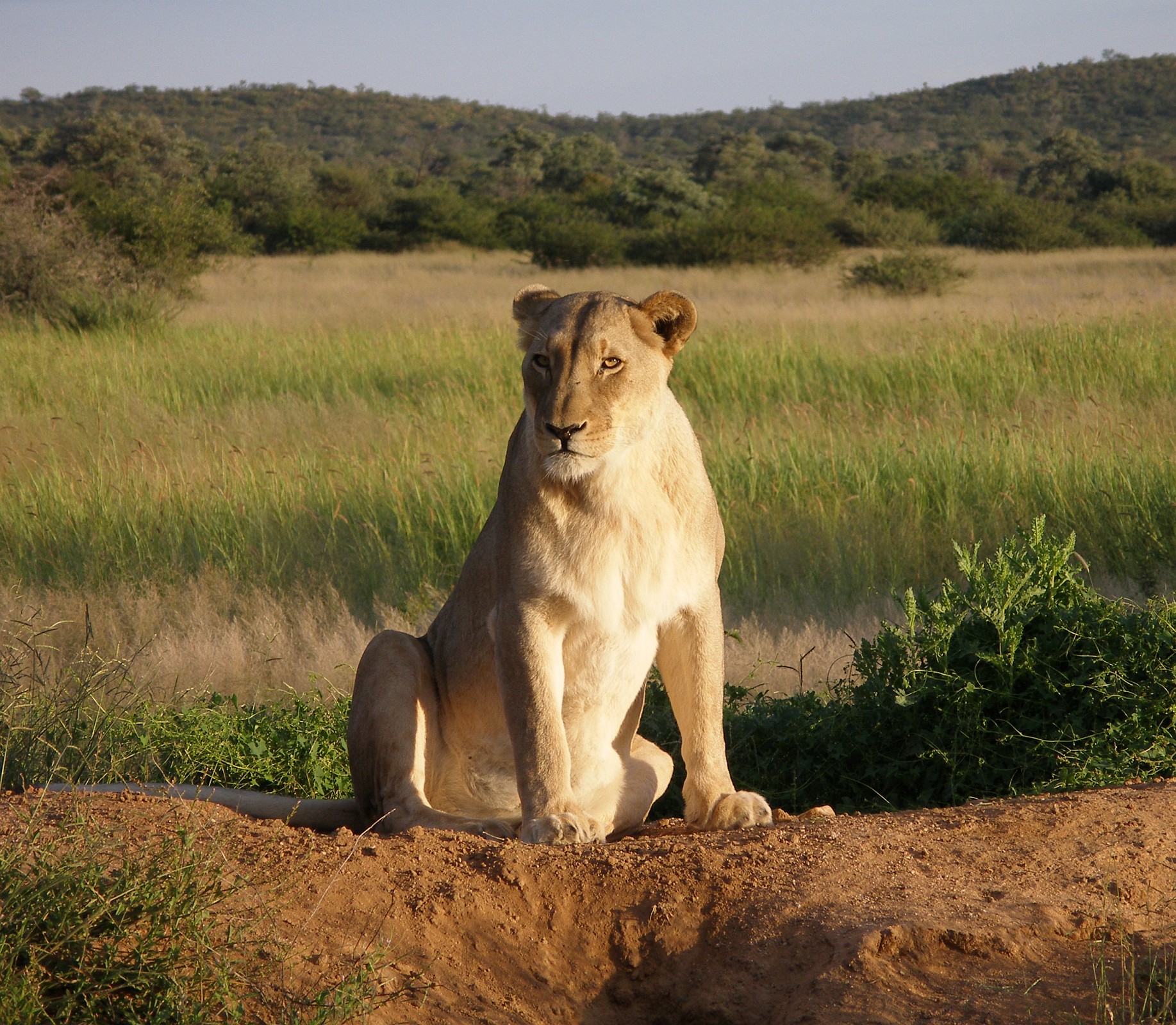
A pride is a group of related females, their dependent young, and a coalition of one to several adult males that is not related to the females. Females stay in the pride they were born into; males are driven out at two to three years old and spend a period as nomads before attempting to take over a pride of their own.
The females are the continuity. They hunt cooperatively, often in a rough encircling formation with individuals taking habitual positions, and they raise cubs communally, nursing each other's young and synchronising births so that cubs grow up in a crèche.
Male tenure is short, typically two to four years, and it ends when another coalition wins. A takeover is usually followed by infanticide: the incoming males kill cubs they did not father, which brings the females back into oestrus within days rather than the eighteen months they would otherwise take. It is a straightforward consequence of a short tenure, and females resist it, sometimes by mating with several males so that paternity is uncertain.
Why lions are social at all, when no other cat is, remains argued. Cooperative hunting does not obviously pay: solitary hunting success per lion is often comparable, and large groups mean smaller shares. The stronger explanations concern defending a territory and defending cubs against other lions, which is to say that lions are social because of other lions.
The African range has contracted to fragmented populations across sub-Saharan Africa, with strongholds in Tanzania, Botswana, Zimbabwe, Zambia and South Africa, and near-collapse in West and Central Africa. The IUCN lists the species as Vulnerable and estimates a substantial decline over three generations, with the West African subpopulation Critically Endangered.
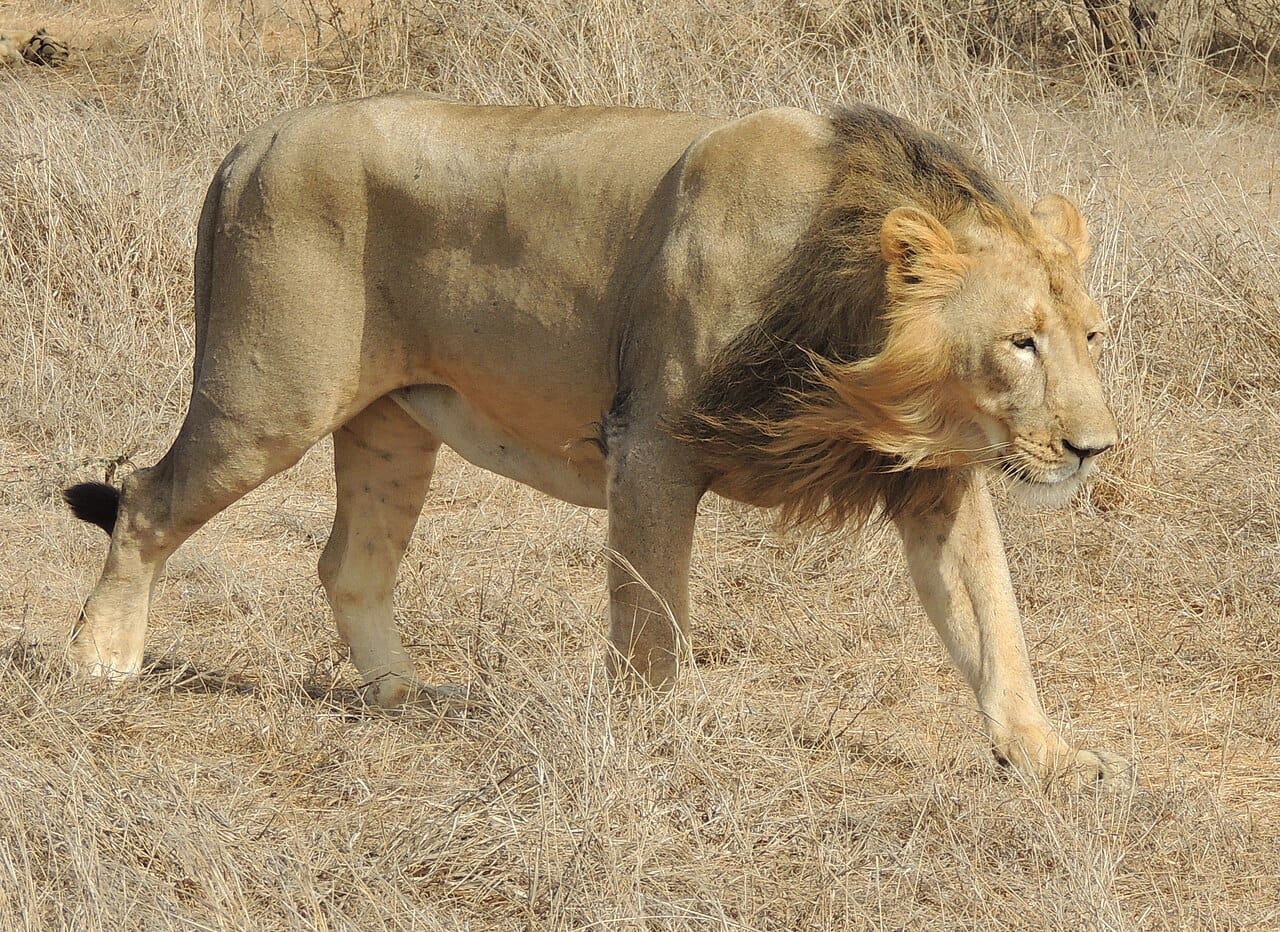
Every wild lion outside Africa lives in one place: the Gir Forest and surrounding landscape in Gujarat, India. That population recovered from a few dozen animals around 1900 to roughly 670 at the 2020 census and above 800 by 2025, which is a genuine conservation success and also a serious structural risk. A single population in one district is exposed to a single epidemic, and canine distemper killed a third of the Serengeti lions in 1994.
India's Supreme Court ordered in 2013 that some lions be translocated to Kuno in Madhya Pradesh to establish a second population. It has not happened. Kuno instead received cheetahs from Namibia and South Africa beginning in 2022, and Gujarat has resisted parting with an animal that has become a state emblem. The reasoning is political rather than biological, and the risk it leaves in place is real.
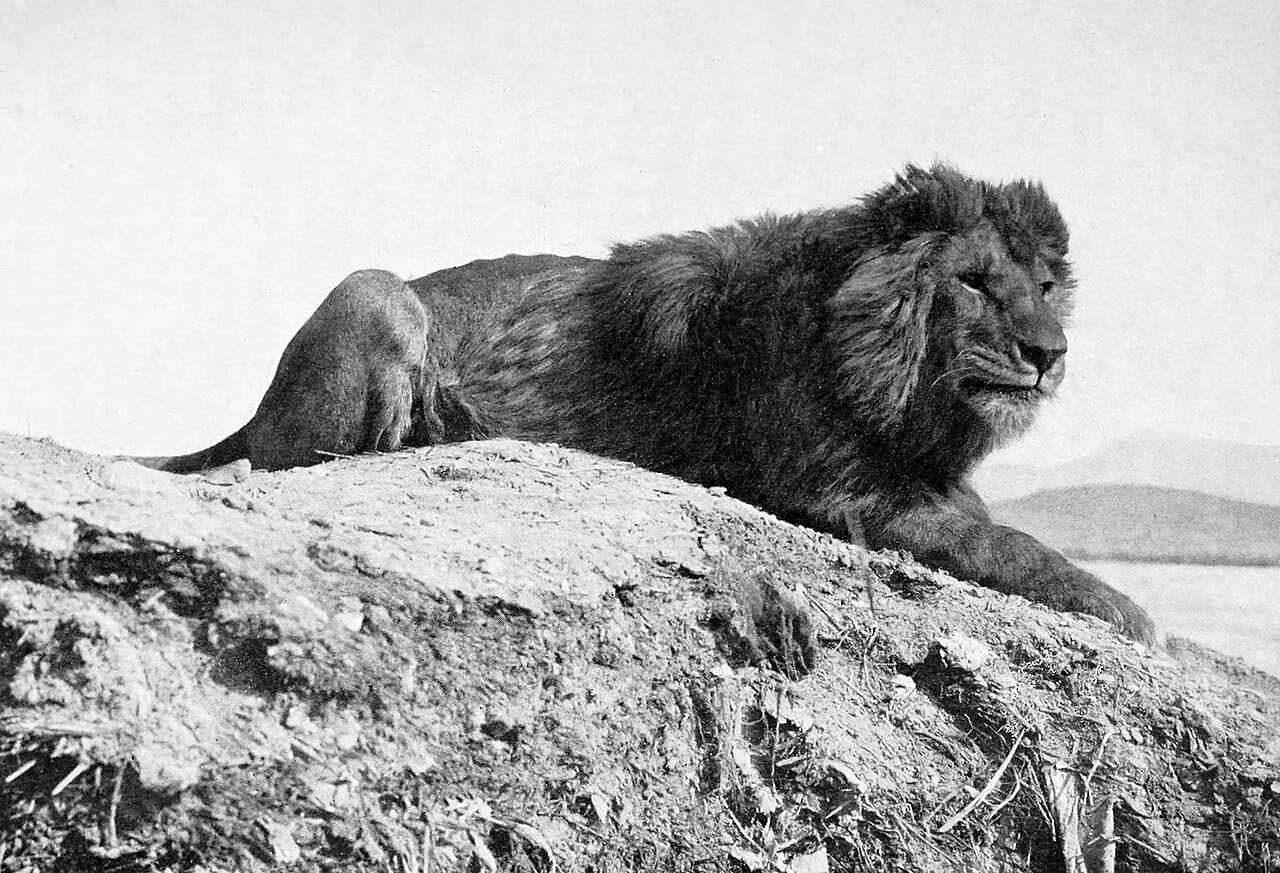
Lion taxonomy was rearranged in 2017. Where numerous subspecies had been named on appearance, genetic work reduced them to two: Panthera leo leo, covering North, West and Central Africa and India, and Panthera leo melanochaita, covering East and Southern Africa. The Asiatic lion therefore groups with the extinct Barbary lion of North Africa rather than standing alone, which is the opposite of what the older literature implies.
The Barbary lion is gone from the wild. It was the lion of Roman arenas and of later royal menageries, hunted out across the Atlas as firearms spread, with the last confident wild records from Morocco in the first decades of the twentieth century. Some captive animals, including a line descended from the Moroccan royal collection, carry ancestry from it.
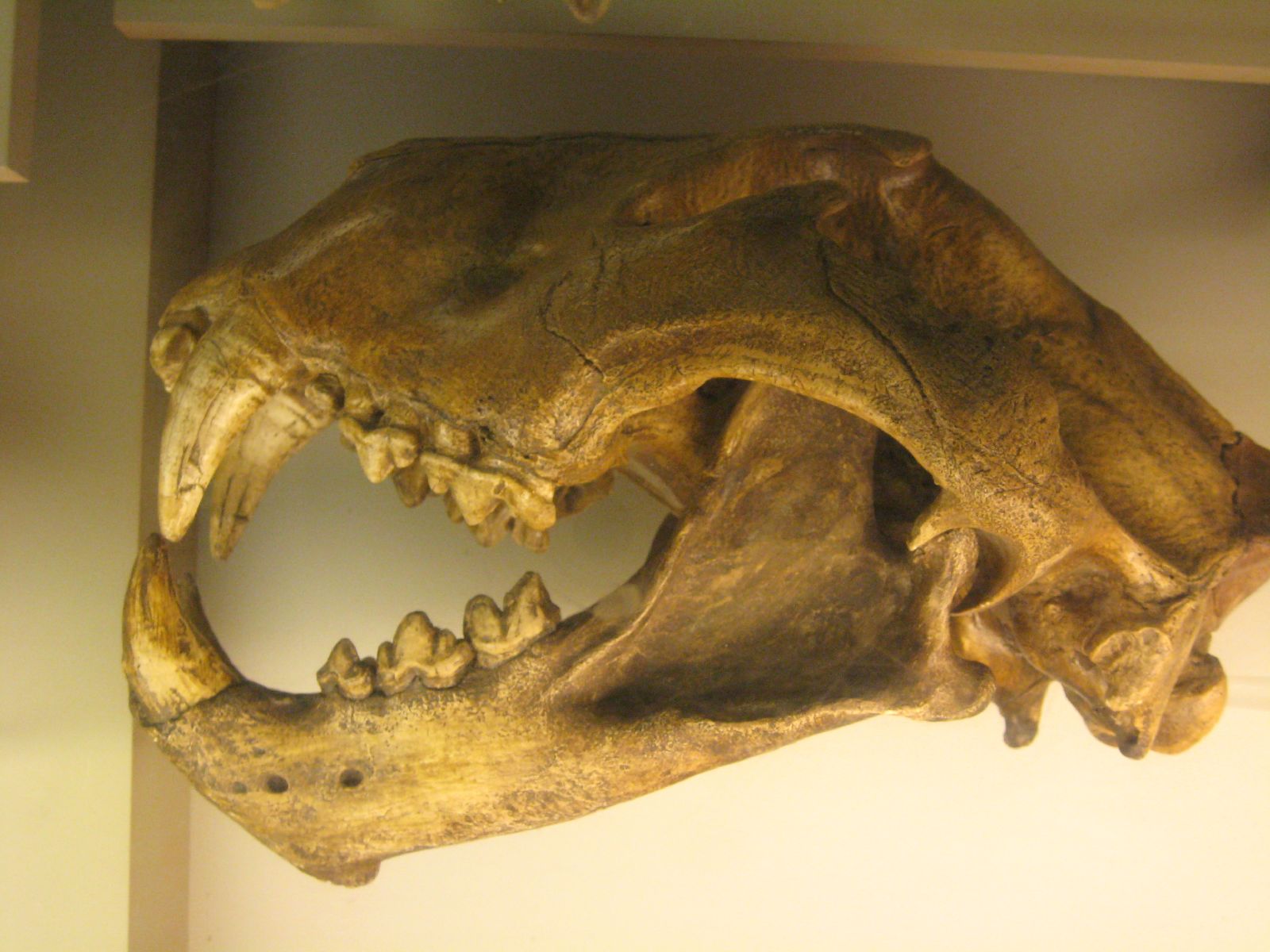
Two other big lions were lost much earlier. The cave lion, Panthera spelaea, ranged across Eurasia and Beringia and is depicted in the Chauvet cave paintings roughly 32,000 years ago, drawn maneless, which is taken as evidence that it genuinely was. The American lion, Panthera atrox, reached North America south of the ice and was among the largest cats that ever lived. Both disappeared in the late Pleistocene extinctions.
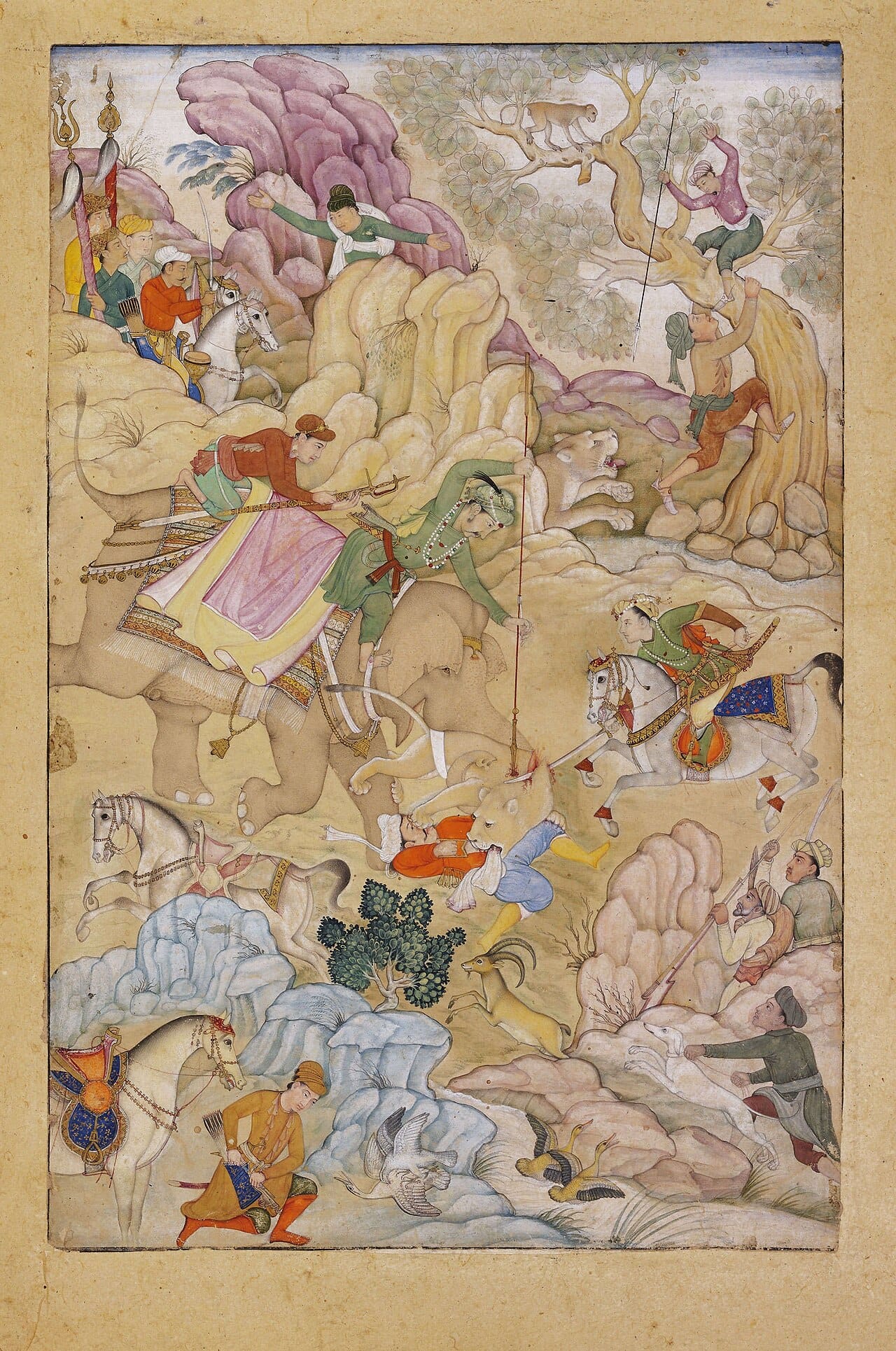
No animal carries more symbolic weight. The lion appears in Mesopotamian and Egyptian art, in the arenas of Rome, in Chinese guardian sculpture, throughout European heraldry, and on the national emblems of a long list of states that have no wild lions.
Some of that history was protective. The Gir population survives partly because the Nawab of Junagadh restricted hunting in the late nineteenth century when numbers had fallen to a remnant, having previously kept it as a private preserve.
Most of it was not. Lions were hunted from chariots, from horseback and eventually from vehicles, and the modern version of the problem is different: retaliatory killing after livestock losses, prey depletion by bushmeat hunting, and habitat conversion. Trophy hunting is argued in both directions, as a revenue source that gives lion habitat economic value and as an added pressure on the specific males whose deaths trigger takeovers and infanticide. The 2015 killing of a collared male in Zimbabwe made the argument public and did not resolve it.
Man-eating is rare and real. The two Tsavo lions that killed railway workers in 1898 have been examined repeatedly; dental disease and prey scarcity are both implicated, and analysis of hair in their teeth put the number of human victims well below the figure the hunter who shot them claimed.
The lion is the clearest case of the gap between symbolic importance and actual protection. It is on more flags, badges and crests than almost any animal alive, and it occupies a small and shrinking share of a range that once ran from the Cape to Greece. Being a symbol turns out to be worth very little to the animal.