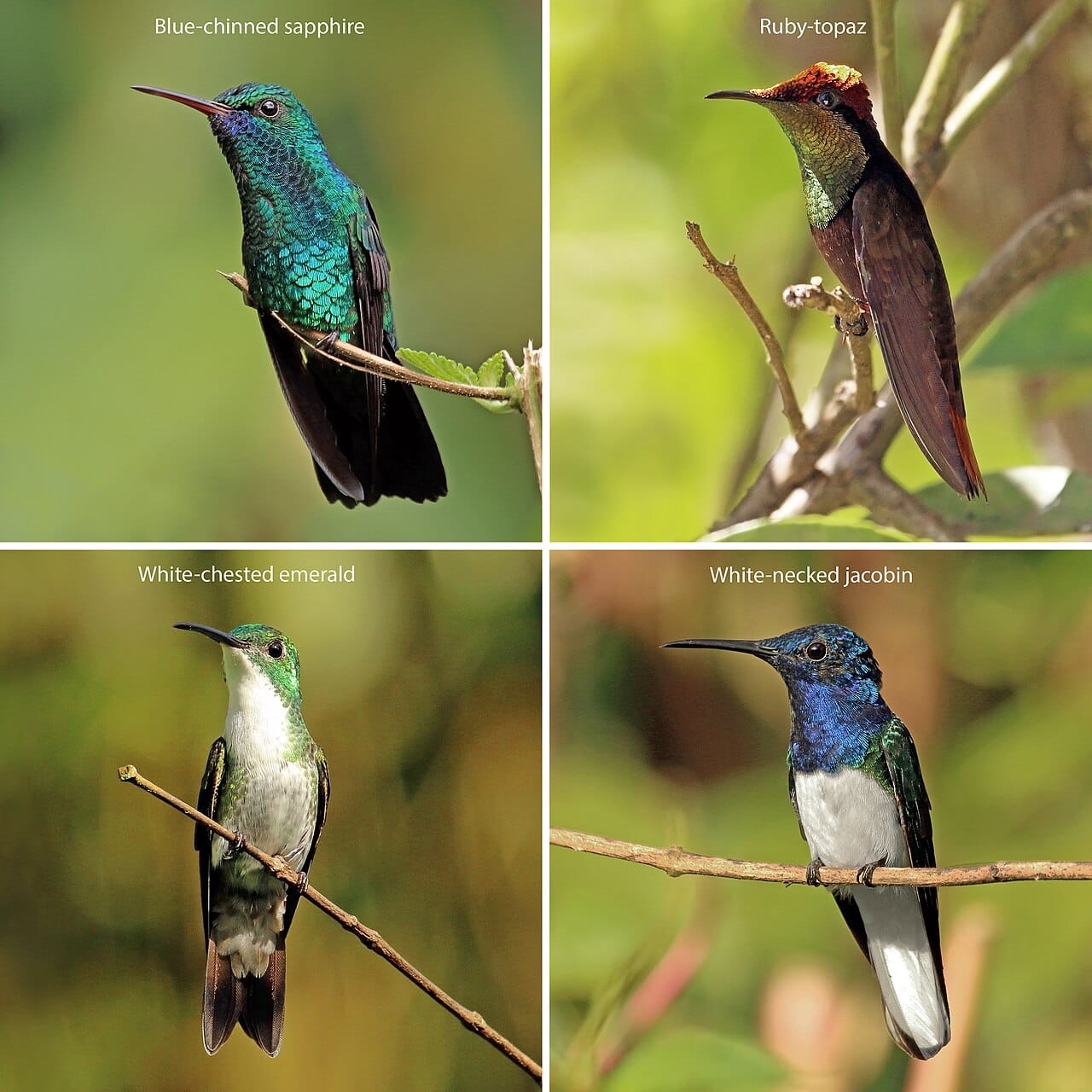
Hummingbirds, the family Trochilidae, are small nectar-feeding birds of the Americas that hover in sustained flight and run the highest mass-specific metabolic rate of any vertebrate. More than 360 species are recognised. Almost everything about them follows from the cost of the way they fly.
A hummingbird hovers by beating its wings in a figure of eight, generating lift on both the forward and the backward stroke. Most birds generate lift on the downstroke only. The shoulder joint rotates almost completely, and the wing is effectively rigid along its length with nearly all the movement at the shoulder.
The result is roughly seventy-five per cent of lift from the downstroke and twenty-five per cent from the upstroke, which is intermediate between an ordinary bird and an insect and is not matched by any other vertebrate. Hummingbirds are the only birds that can fly backwards in sustained controlled flight, and they can hold position in moving air well enough to feed from a flower swinging in wind.
Wingbeat frequency runs from about 12 beats per second in the largest species to over 80 in the smallest. The hum is the wingbeat.
The energetics are extreme. A hovering hummingbird's mass-specific metabolic rate is the highest recorded in any vertebrate. Heart rate reaches around 1,200 beats per minute in flight and can fall below 100 at rest. Breathing rate is roughly 250 breaths per minute at rest.
They feed on nectar, and they oxidise the sugar in it directly, within minutes of drinking it, rather than converting it to fat and burning that. This is unusual and it is what makes the accounting work: fuelling flight from recently ingested sugar is far faster than any storage route.
They cannot sustain this continuously. Every night, and during cold or food shortage, hummingbirds enter torpor, dropping body temperature by twenty degrees or more and metabolic rate by up to ninety-five per cent. A torpid hummingbird is stiff and unresponsive and takes many minutes to rouse. Without torpor, a bird this small would starve overnight.
Nectar alone does not supply protein, and hummingbirds take substantial numbers of small insects and spiders, which is frequently left out of popular accounts.
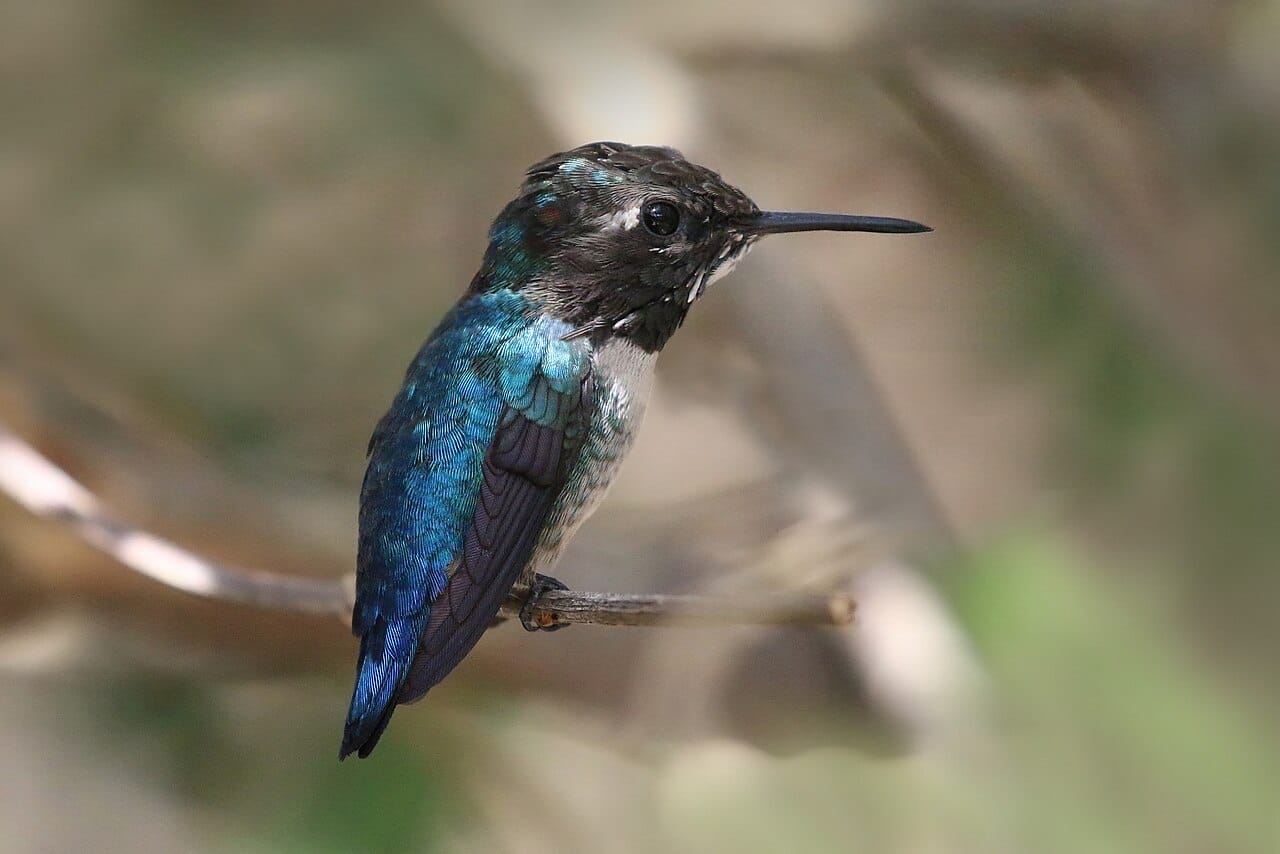
The bee hummingbird of Cuba is the smallest bird alive, at roughly five to six centimetres and 1.6 to 2 grams. That is smaller than many insects and is close to a hard lower bound for an endotherm: surface area to volume ratio makes heat loss the limiting problem, and torpor is what makes even this possible.
At the other end, the giant hummingbird of the Andes reaches about 23 centimetres and 18 to 24 grams. Work published in 2024 established that what had been treated as one giant hummingbird species is two, a resident northern form and a migratory southern one that had been mistaken for the same bird for two centuries.
Hummingbirds and the plants they feed from are the standard textbook case of coevolution, and in this instance the textbook is right. Bird-pollinated flowers in the Americas converge on a recognisable syndrome: tubular, often red, unscented, with dilute nectar and no landing platform, which excludes bees and rewards a hovering bird with a long bill.
Bill and flower shapes have tracked each other into extremes. The sword-billed hummingbird has a bill longer than its body excluding the tail, and feeds from Passiflora mixta, whose corolla tube is the same length. Neither can readily do without the other.
There is also cheating in both directions. Some hummingbirds pierce the base of a flower to rob nectar without pollinating, and some plants offer little reward.
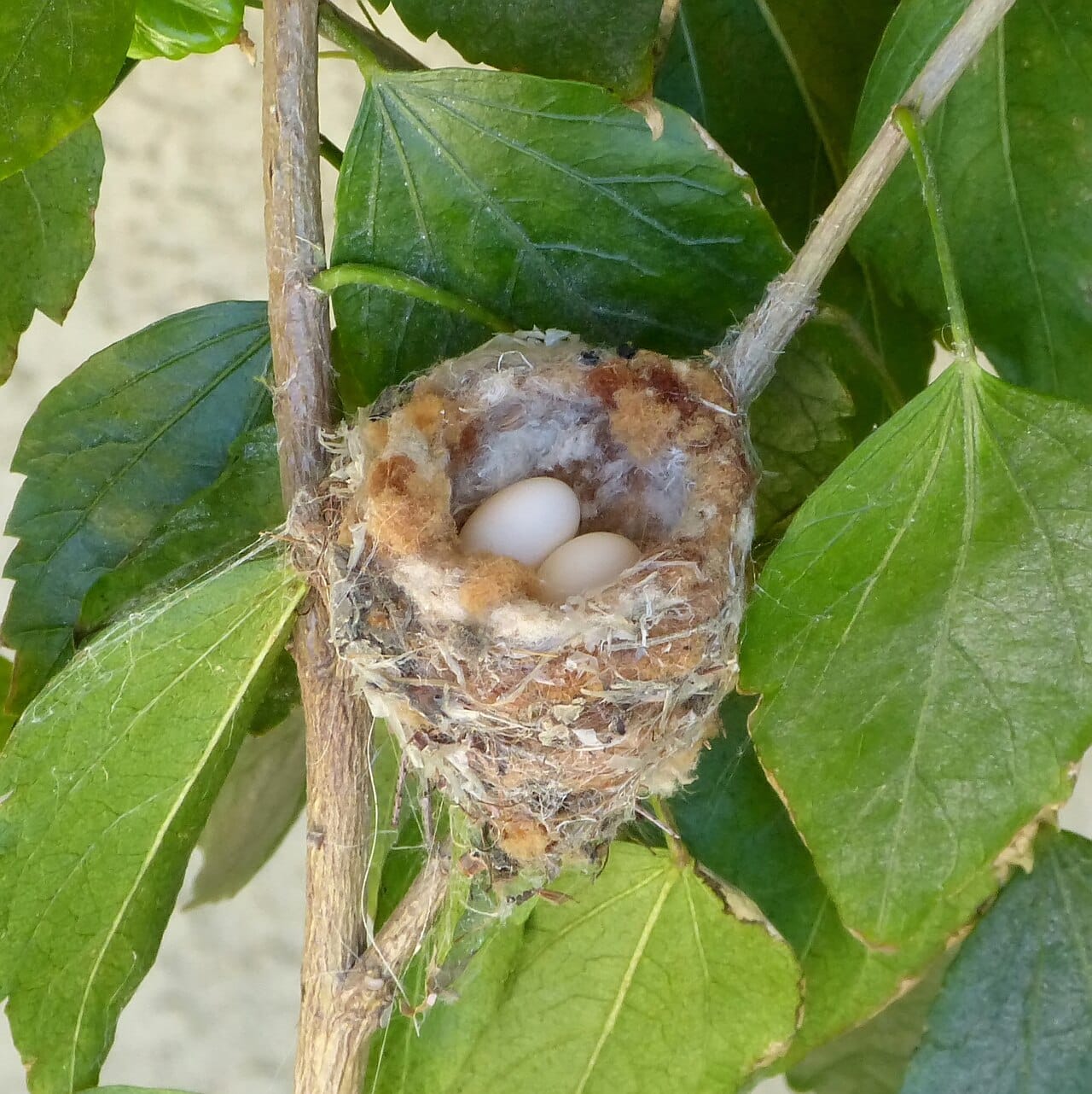
Nests are tiny cups of plant down and lichen bound with spider silk, typically the size of a walnut half, holding two eggs the size of a pea. The silk matters functionally: it lets the nest expand as the nestlings grow.
Males of most species play no part in nesting. The mating systems are frequently lek-based, with males displaying and defending display sites rather than territories with resources in them.
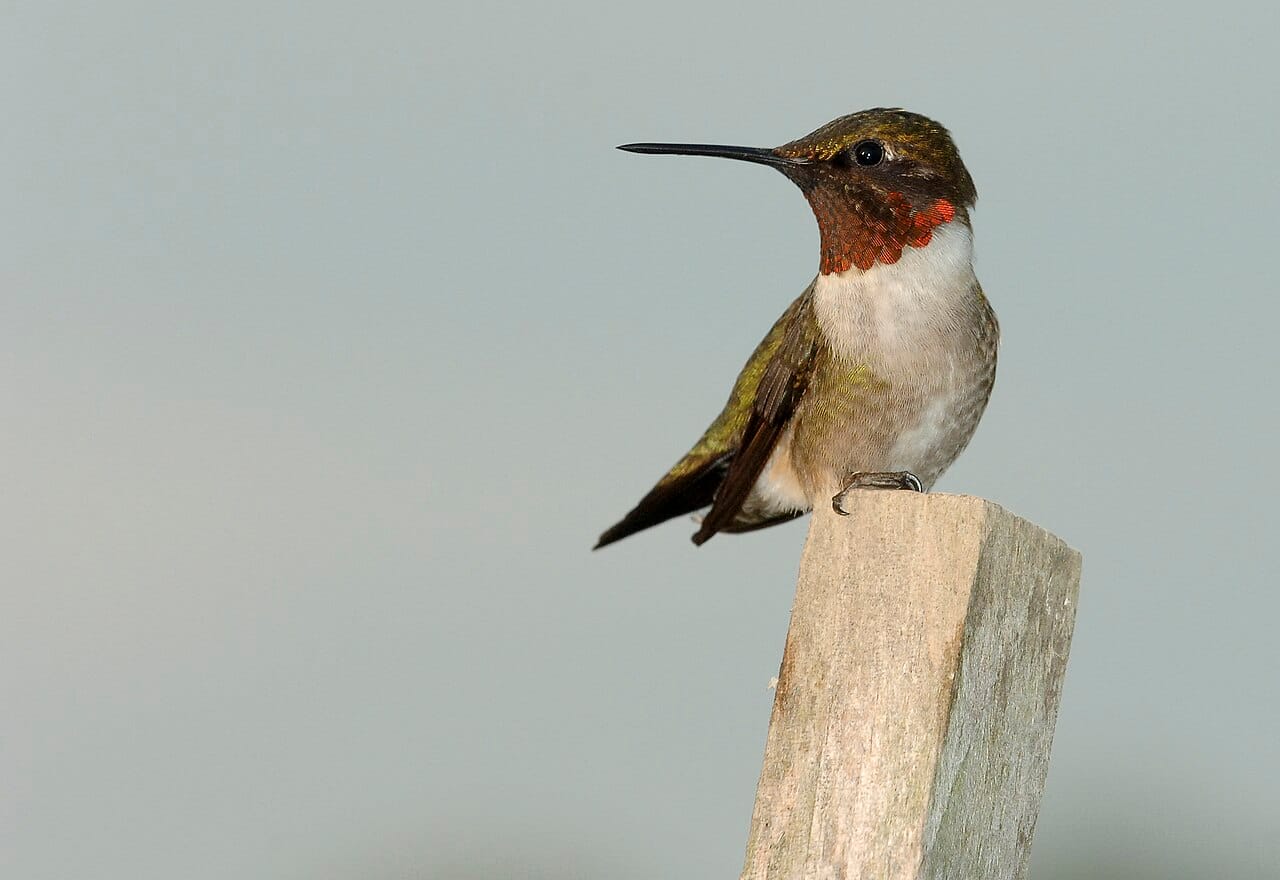
Migration in the family reaches an implausible extreme in the ruby-throated hummingbird, which crosses the Gulf of Mexico non-stop, roughly 800 kilometres over open water, in a single flight of around twenty hours, having roughly doubled its body mass in fat beforehand. The rufous hummingbird makes the longest migration relative to body size of any bird, from Alaska to Mexico and back.
Hummingbirds occur only in the Americas, from Alaska to Tierra del Fuego, with the great majority of species in the tropics and the highest diversity in the northern Andes. There are none in the Old World, and the sunbirds that occupy a similar niche in Africa and Asia are unrelated and mostly perch rather than hover, which is a clean case of convergence stopping short.
Many species have very small ranges on single mountains or slopes, which makes them vulnerable, and around ten per cent of the family is threatened. Habitat loss in Andean cloud forest is the principal pressure.
The hummingbird is the clearest demonstration that a body plan can be pushed to a physical limit. Nearly every feature, the torpor, the sugar handling, the wing rotation, the insect supplement, is a consequence of running an endothermic vertebrate at a size and a power output that ought not to work.