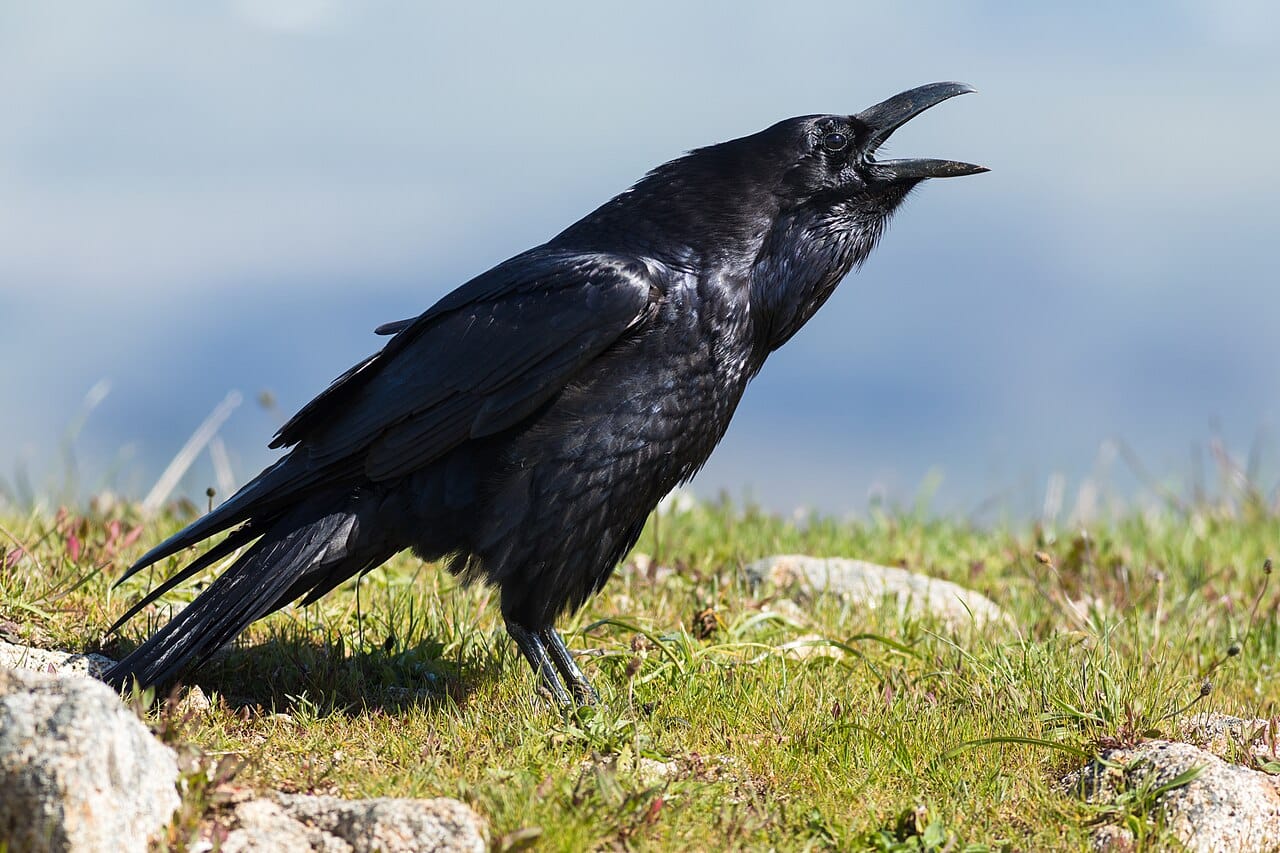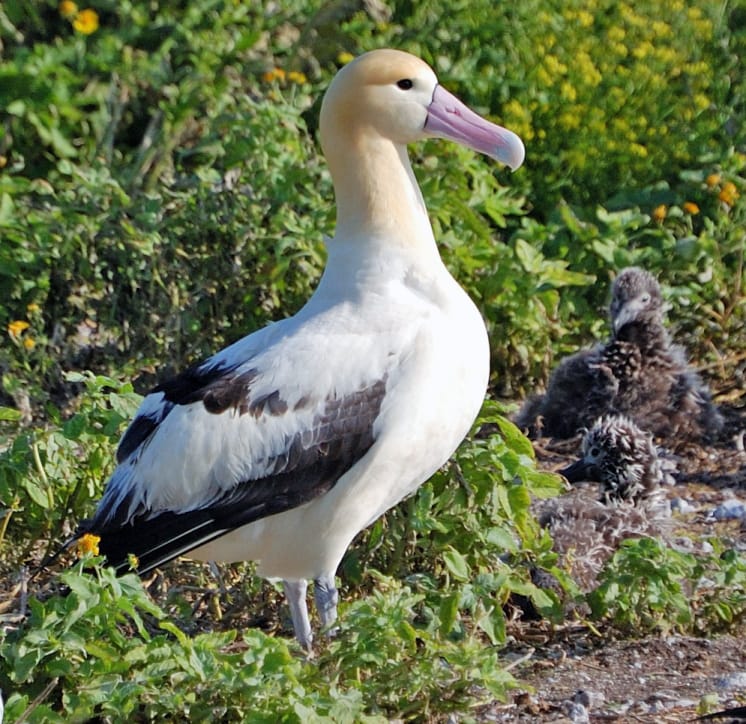
Albatrosses are large seabirds of the family Diomedeidae, with the longest wingspans of any living bird and a way of flying that costs them almost nothing. They spend the overwhelming majority of their lives at sea, breed slowly on remote islands, and are among the most threatened bird families on Earth, for a reason that is entirely fixable.
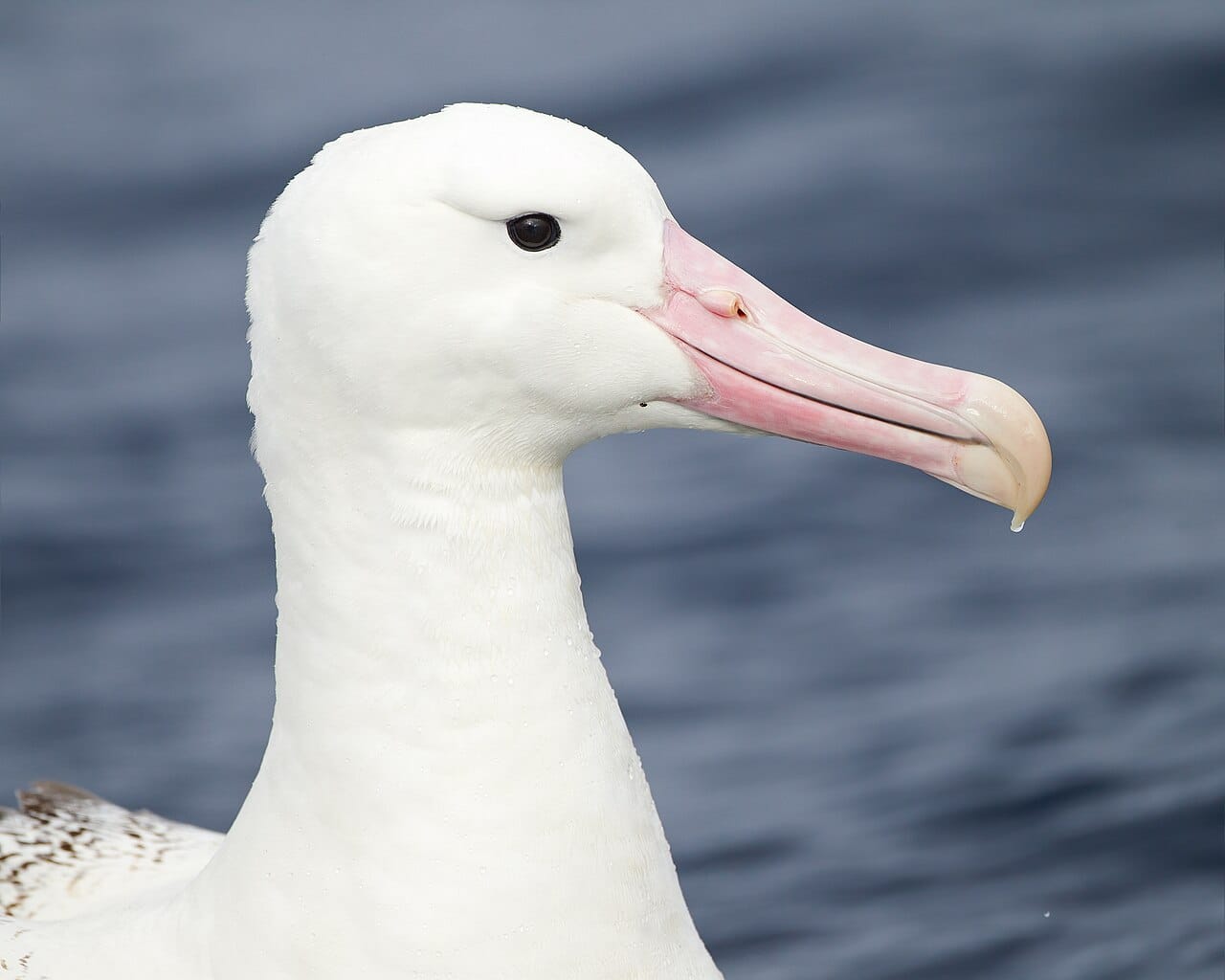
Twenty-two species are usually recognised, though the number depends on which taxonomy is followed and the family has been repeatedly split and merged. They belong to the Procellariiformes, the tubenoses, alongside petrels and shearwaters, and share the group's tubular nostrils and highly developed sense of smell.
The wandering albatross has the largest wingspan of any living bird, reliably measured to about 3.5 metres. The wings are extremely long and narrow, an aspect ratio suited to gliding rather than flapping, and are held extended by a tendon lock at the shoulder that allows soaring without muscular effort.
Albatrosses drink seawater. A salt gland above the eye socket excretes concentrated brine that runs out through the nostril grooves, which is what makes an entirely oceanic life possible.
An albatross crossing the Southern Ocean does not flap. It uses dynamic soaring, extracting energy from the vertical gradient of wind speed above the sea surface: climbing into faster-moving air at height, turning downwind, descending across the gradient, and repeating.
The energy comes from the wind shear rather than from the bird, and the measured cost is remarkable. Heart rate telemetry shows an albatross in flight running barely above its resting rate. Foraging trips of ten thousand kilometres and more are routine, and individuals have been tracked circling the globe.
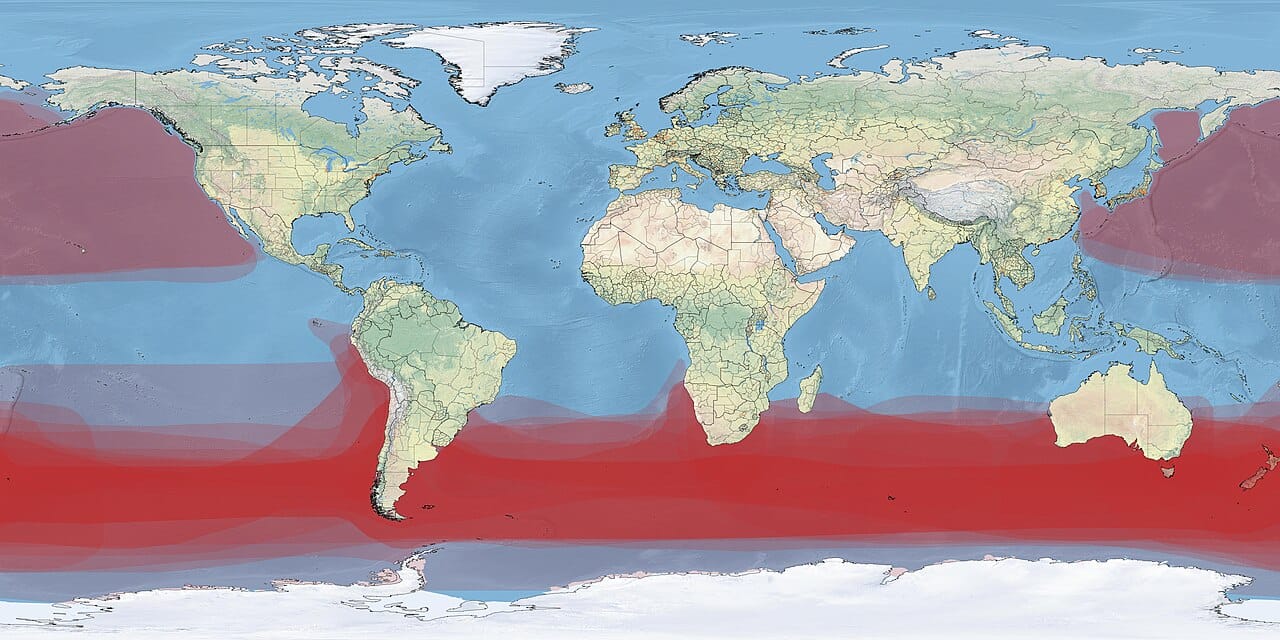
The constraint is the reverse of what one might expect: albatrosses have difficulty in calm conditions, needing wind to fly efficiently and needing a run-up or a slope to take off. They are largely absent from the equatorial doldrums, which is part of why the family is concentrated in the Southern Ocean.
Albatross life history is at the extreme slow end for birds. Most species do not breed until six to ten years old, and the great albatrosses raise a single chick over a cycle that takes more than a year, so they breed at best every second year.
Pairs are long-term and often lifelong, maintained by elaborate mutual displays of bill-clacking, sky-pointing and calling that pairs develop into something individual to them. Divorce occurs but is rare, and rates rise measurably in poor conditions.
The consequence of this life history is the central conservation fact about the family: a population that loses adults cannot compensate. There is no reproductive reserve to draw on.
Wisdom, a Laysan albatross at Midway Atoll first banded in 1956 as a breeding adult, is the oldest known wild bird, at least seventy-four years old and still producing chicks, which gives a sense of the timescale on which these animals operate.
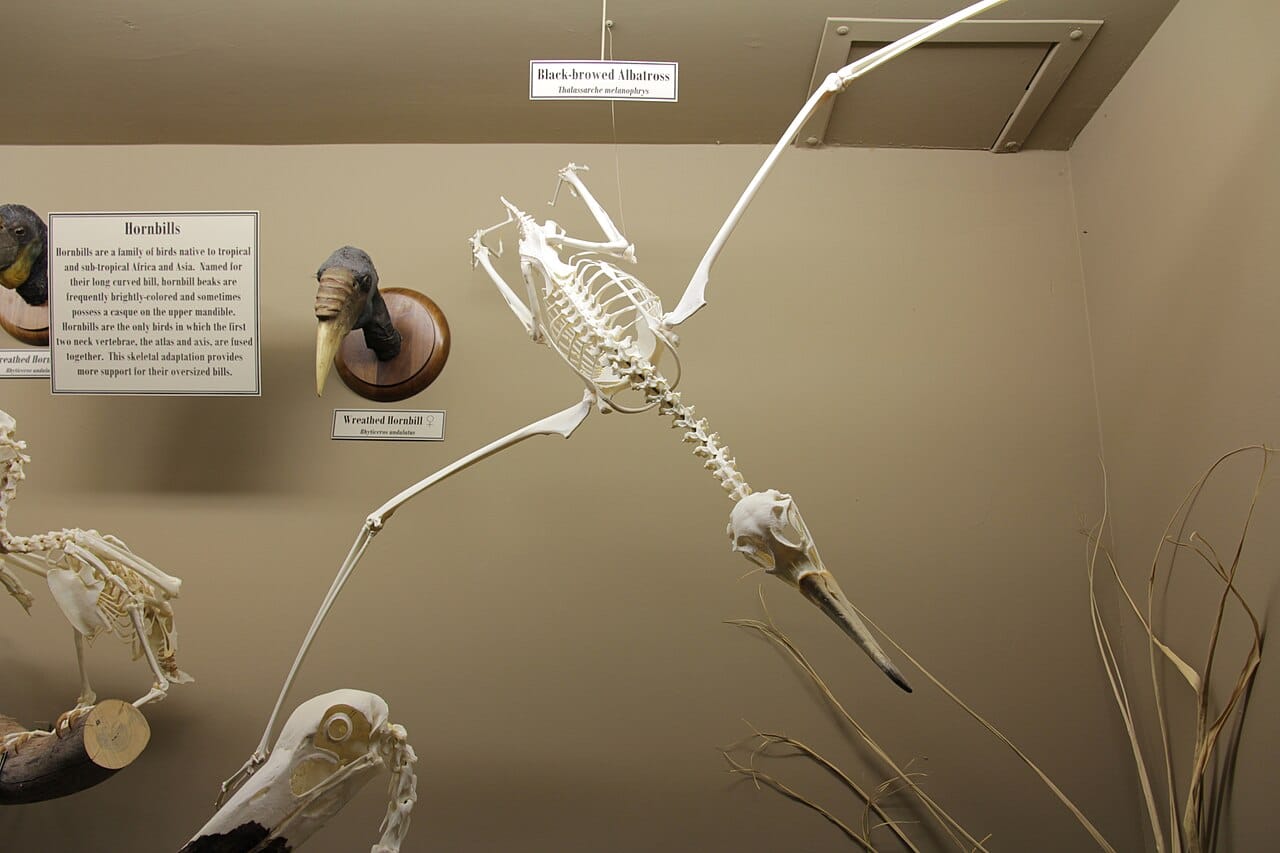
Most of an albatross's wingspan is feather rather than bone. The skeletal wing is relatively short and the enormous span is carried by the primaries, which keeps mass low and inertia manageable.
Albatrosses are an old group, with fossils from the Oligocene, and were once far more widespread in the North Atlantic, where none breed today. Their disappearance from that ocean predates industrial fishing and is not well explained.
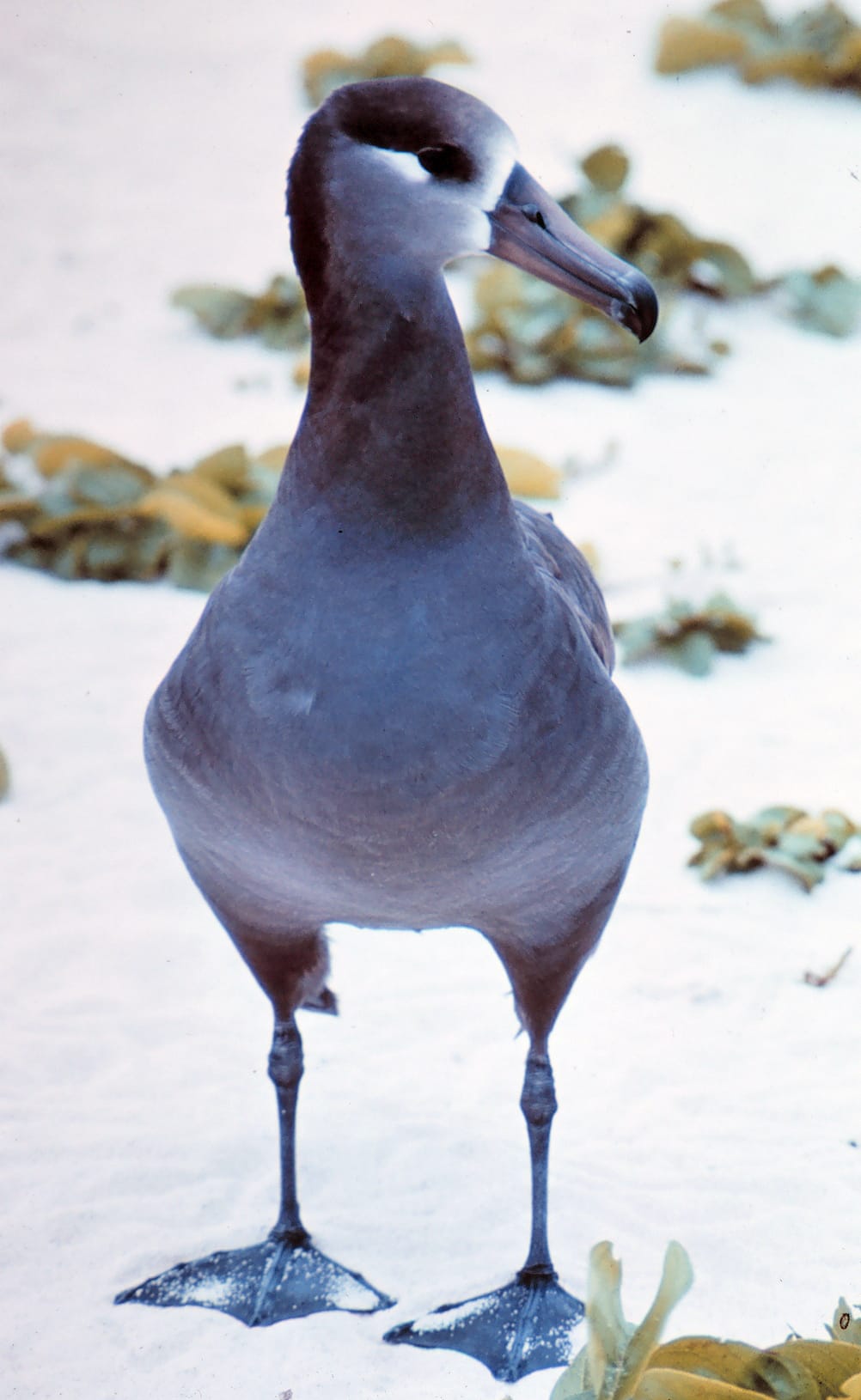
Fifteen of the twenty-two species are threatened, and the family is among the most endangered groups of birds. The dominant cause is bycatch: albatrosses follow fishing vessels, take baited hooks as longlines are set, and are dragged under and drowned. Tens of thousands are estimated to die this way each year, and because they are long-lived slow breeders, adult mortality on that scale is enough to drive decline on its own.
The unusual feature of this problem is that the mitigation is cheap and it works. Weighting lines so they sink quickly, setting at night, and towing bird-scaring streamer lines behind the vessel reduce seabird bycatch by very large margins, often over ninety per cent, at negligible cost and with no loss of catch. Where these measures have been mandated and enforced, seabird mortality has fallen sharply.
The remaining problems are enforcement in unregulated and illegal fisheries, invasive predators at breeding colonies, particularly mice and rats on islands, and plastic ingestion, which is severe in North Pacific species that feed by surface-seizing.
The albatross is the standard case of a conservation problem whose solution is known, tested, inexpensive and simply not applied everywhere. The bird is not failing to adapt to a changing world; it is dying on hooks, and streamers on the stern would stop most of it.