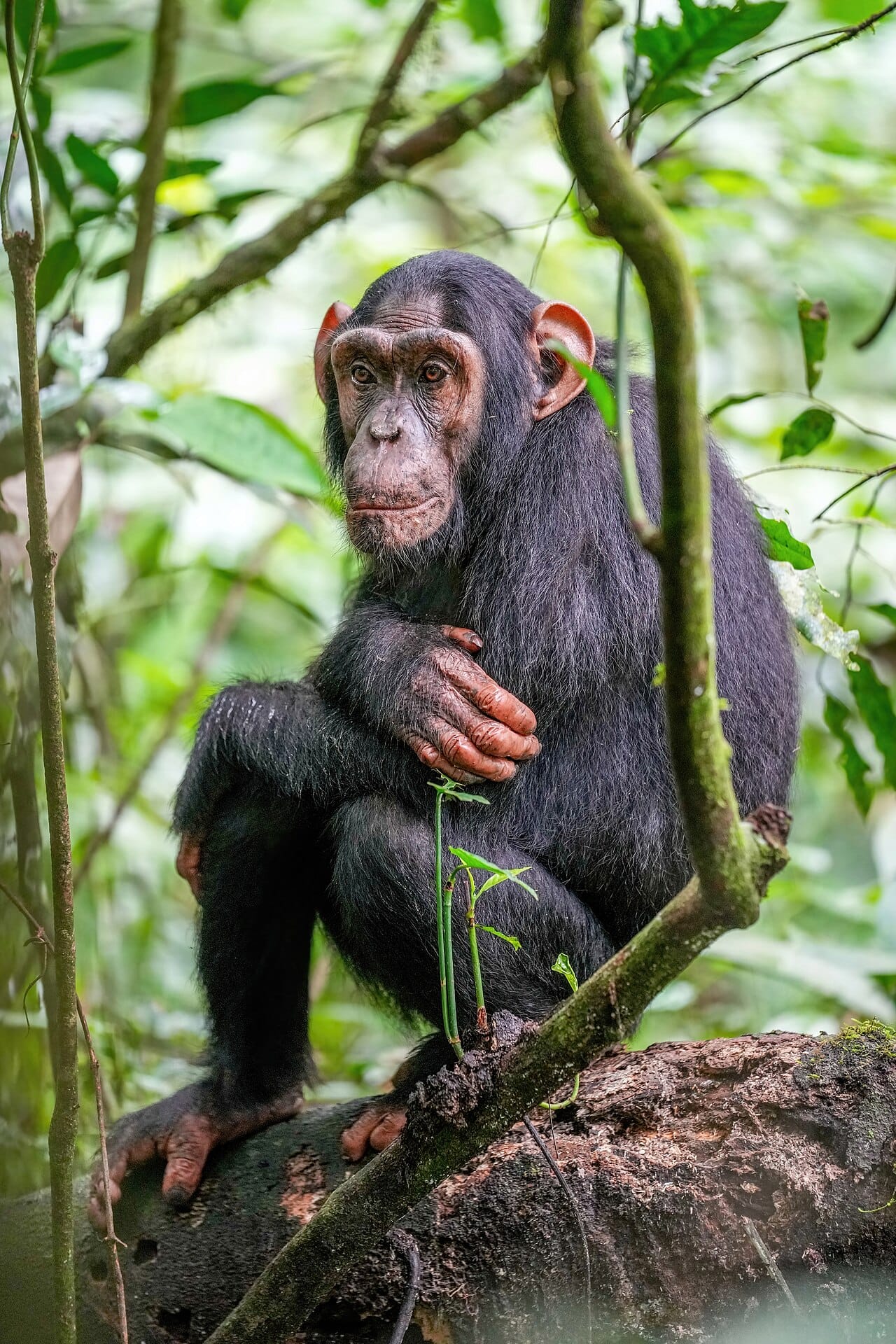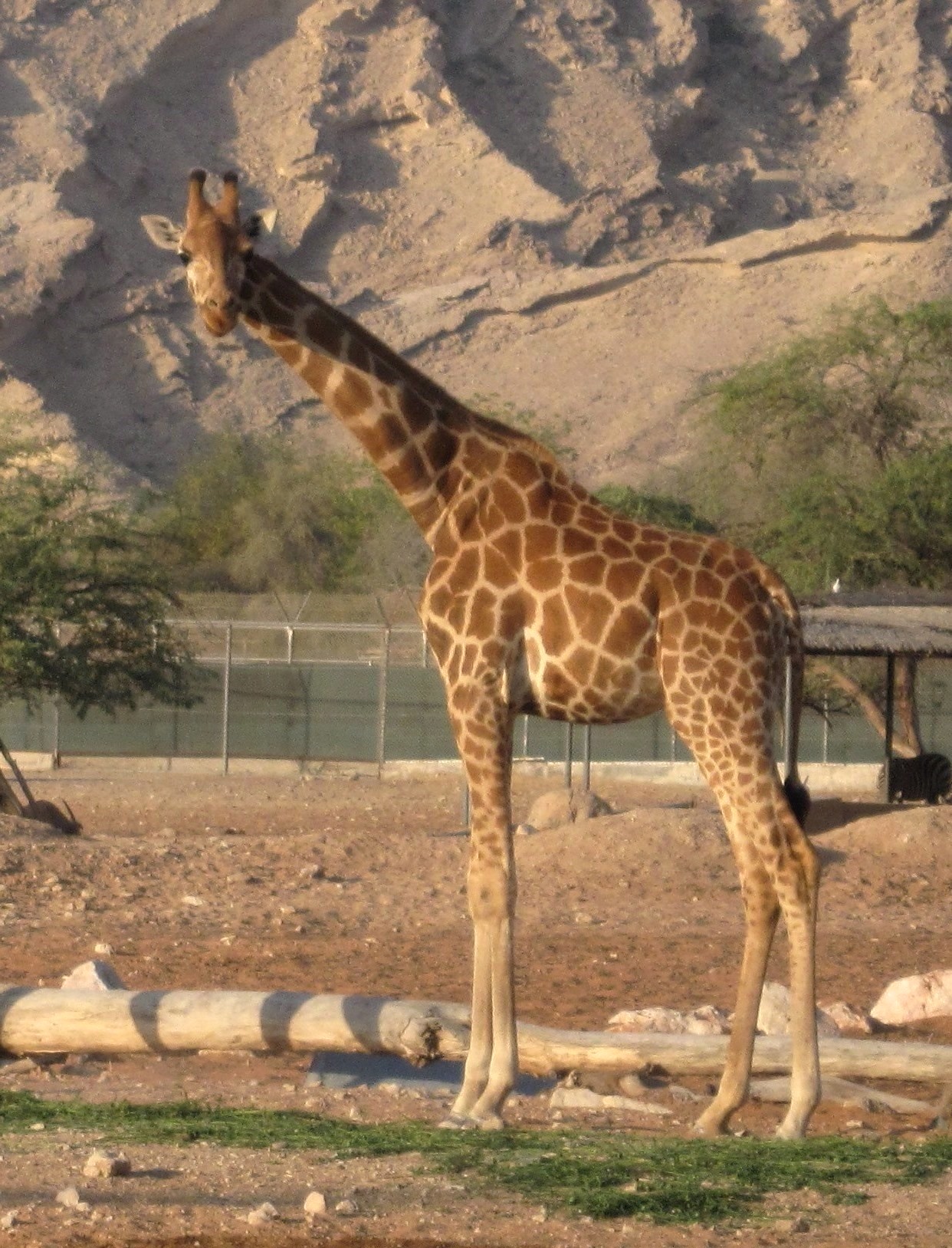
The giraffe is the tallest living land animal, at up to about five and a half metres. Almost everything distinctive about it follows from that height: the blood pressure needed to reach the brain, the valves and thickened skin that stop the system failing, and a neck that is the subject of a long argument about what it is actually for. Its taxonomy is also unsettled, in a way that matters for its protection.

A giraffe has seven neck vertebrae. So does a human, a mouse and a whale; the number is close to invariant across mammals, and giraffes achieve their neck by lengthening each bone rather than adding more. The exceptions to the rule of seven are sloths and manatees, which is a short list.
The neck is also not quite enough on its own. A giraffe cannot reach the ground with its mouth while standing normally and must splay its front legs or kneel to drink, which is the most vulnerable thing it does.
Circulating blood to a brain two metres above the heart requires an arterial pressure roughly twice that of a large mammal at ground level, and the giraffe carries an unusually thick-walled and muscular heart to produce it. Three problems follow, and each is solved.
Blood pooling in the legs is prevented by very tight, thick skin over the lower limbs acting as a compression stocking, which is the principle borrowed for pilot anti-gravity suits. Backflow when the head is lowered is limited by valves in the jugular veins. And the surge of pressure when the head comes back up is buffered by the rete mirabile, a mesh of fine vessels at the base of the brain that damps the pulse. Without these, the act of raising its head from a drink would knock the animal out.
The standard explanation is competitive browsing: a longer neck reaches foliage other herbivores cannot, particularly in the dry season. It is Darwin's account and it is intuitive.
It has real problems. Giraffes frequently feed at shoulder height or below rather than at full stretch, which is not what a feeding-competition explanation predicts. Females, which do the same feeding, have shorter necks than males.
The main alternative, put forward by Simmons and Scheepers in 1996, is sexual selection. Male giraffes fight by necking: swinging the head and heavy skull as a club at a rival's body and legs, sometimes hard enough to knock an animal down. Males have thicker skulls, heavier ossicones and disproportionately longer necks, and larger-necked males win and mate more. On this account the neck is a weapon and a display, and the feeding advantage is a consequence rather than the cause.
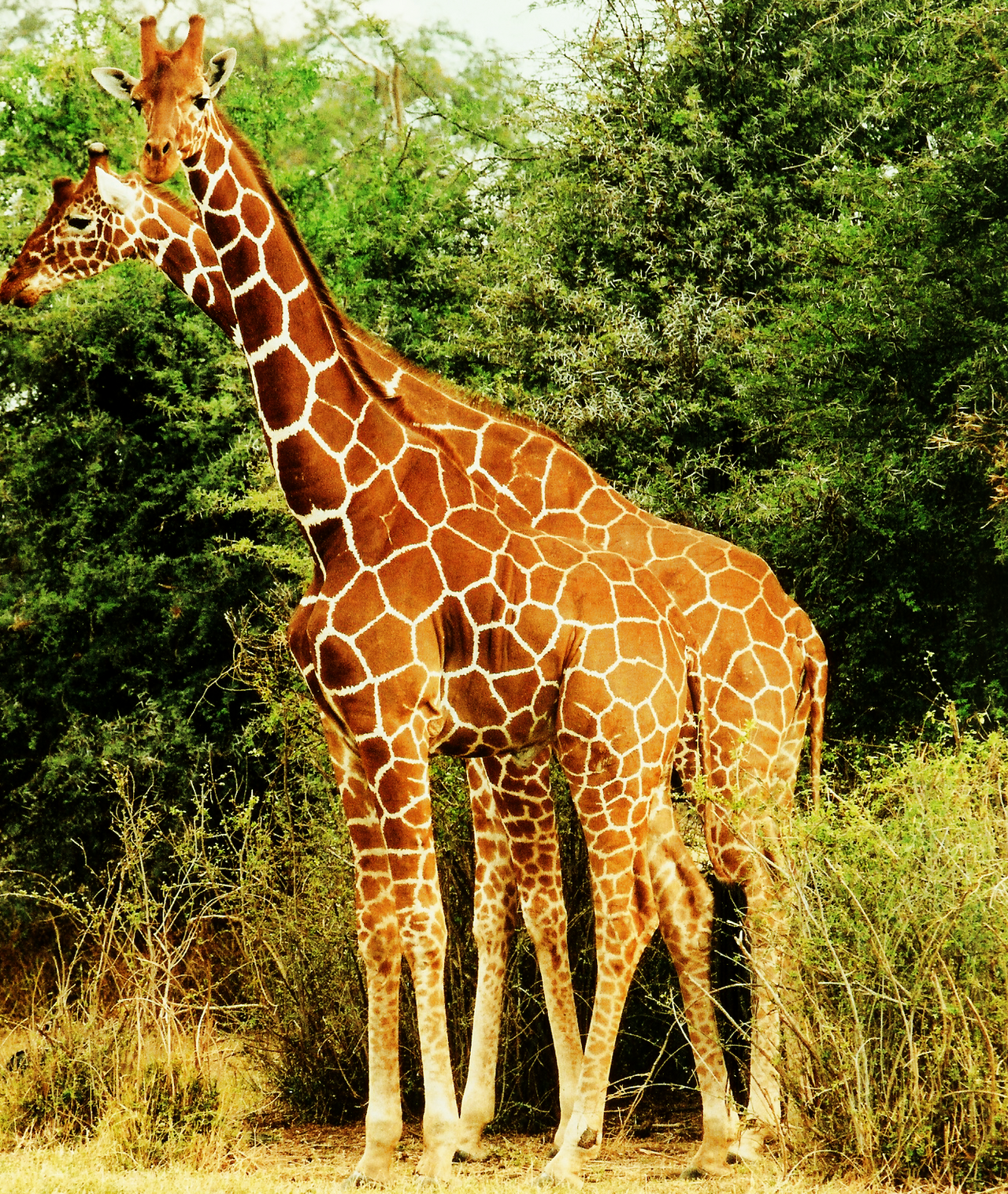
Neither account is settled and they are not exclusive. A 2024 analysis of feeding and morphology added support to the sexual-selection side for males while leaving the female pattern better explained by foraging. What is clear is that the schoolbook version, in which giraffes stretched for high leaves and that is the whole story, is not adequate.

Giraffes were treated for a century as one species, Giraffa camelopardalis, with nine subspecies distinguished by coat pattern and range.
Genetic work led by Julian Fennessy and colleagues in 2016 proposed four distinct species: northern, southern, reticulated and Masai. The mitochondrial and nuclear data showed deep divergences with little evidence of recent gene flow between some groups, on a scale comparable to that separating recognised species elsewhere. Later analyses have proposed three.
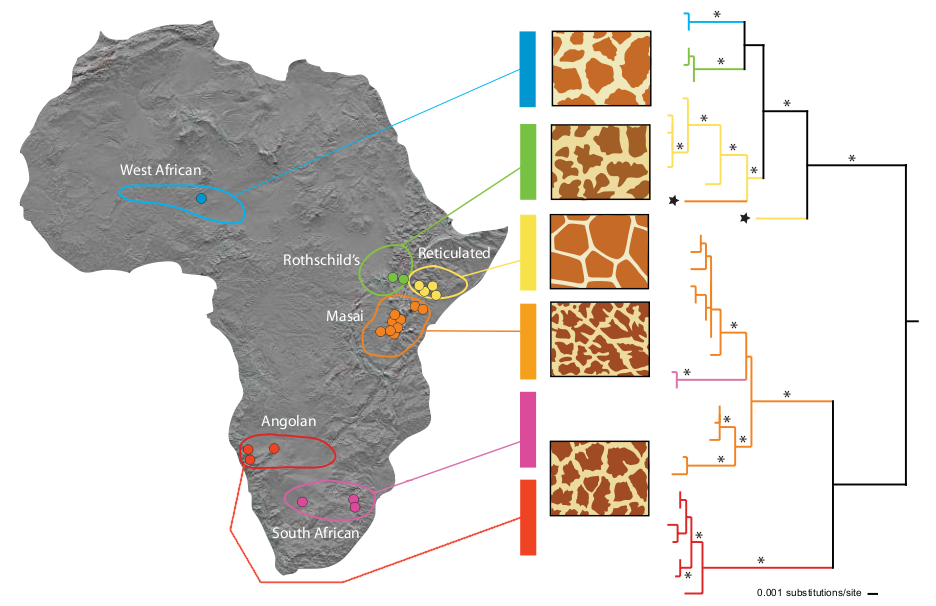
The IUCN has continued to assess a single species pending resolution, listing it as Vulnerable, with individual subspecies assessed separately and the Kordofan and Nubian populations Critically Endangered. Critics of the split point to hybridisation in captivity and in some contact zones, and to the risk of inflating species counts from limited sampling.
This is not academic. A distinct species with a few thousand animals attracts protection and funding that a subspecies of a Vulnerable species does not, and the northern giraffe populations are the ones in the worst position.
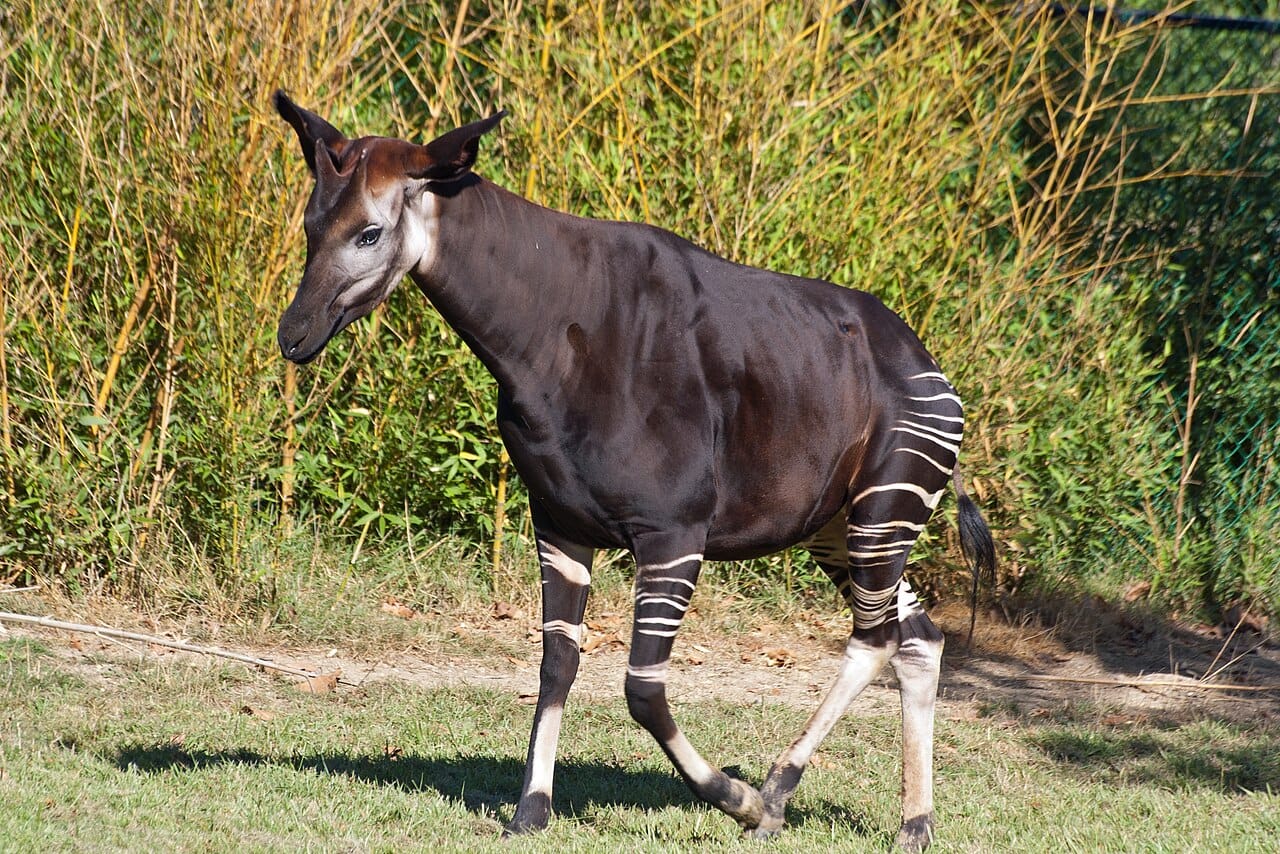
Giraffidae once held many genera across Africa and Eurasia. Two survive: the giraffe and the okapi, a forest animal of the eastern Congo with striped hindquarters, unknown to European science until 1901 and once assumed to be a kind of forest zebra. It shares the ossicones and the long dark prehensile tongue.

The most striking extinct member is Sivatherium, a massive short-necked giraffid with broad palmate ossicones that survived into the Pleistocene. Long necks are a giraffe feature, not a giraffid one.
The tongue is around forty-five centimetres, prehensile, and dark blue-black on the exposed portion, which is generally read as protection against sunburn during the many hours a day spent using it. The lips and tongue are tough enough to strip leaves from thorned acacia.
Giraffes sleep very little, often under an hour a day in short bouts, usually standing, and lie down only briefly. The coat pattern is unique to the individual and its shape and colour are heritable from the mother; darker males tend to be older and more dominant.
Calves are born after a fifteen-month gestation, dropping around two metres to the ground, and can stand within about an hour. Predation on calves is heavy, and mortality in the first year is high.
Giraffe numbers fell by around forty per cent over three decades to roughly 117,000, a decline that went largely unremarked and is often called the silent extinction, since the animal remained conspicuous in zoos and on television while disappearing from large parts of its range.
The causes are habitat loss and fragmentation, bushmeat poaching, and civil conflict across the northern range. Giraffes were listed on CITES Appendix II in 2019. West African giraffes in Niger, down to about fifty animals in the 1990s, have recovered to several hundred under protection, which shows the decline is reversible where anyone tries.
The giraffe is a case where the familiar and the understood came apart. It is among the most recognisable animals on Earth, it appears in every children's book, and basic questions about it, how many species there are and what the neck is for, are open. Being famous is not the same as being studied.