Baked dough of ground grain and water. It is among the oldest prepared foods, it supplies a substantial share of the world's calories, and its familiar risen form depends on a protein found in only a few grains.

Wheat flour contains two proteins, glutenin and gliadin, which combine with water to form gluten.
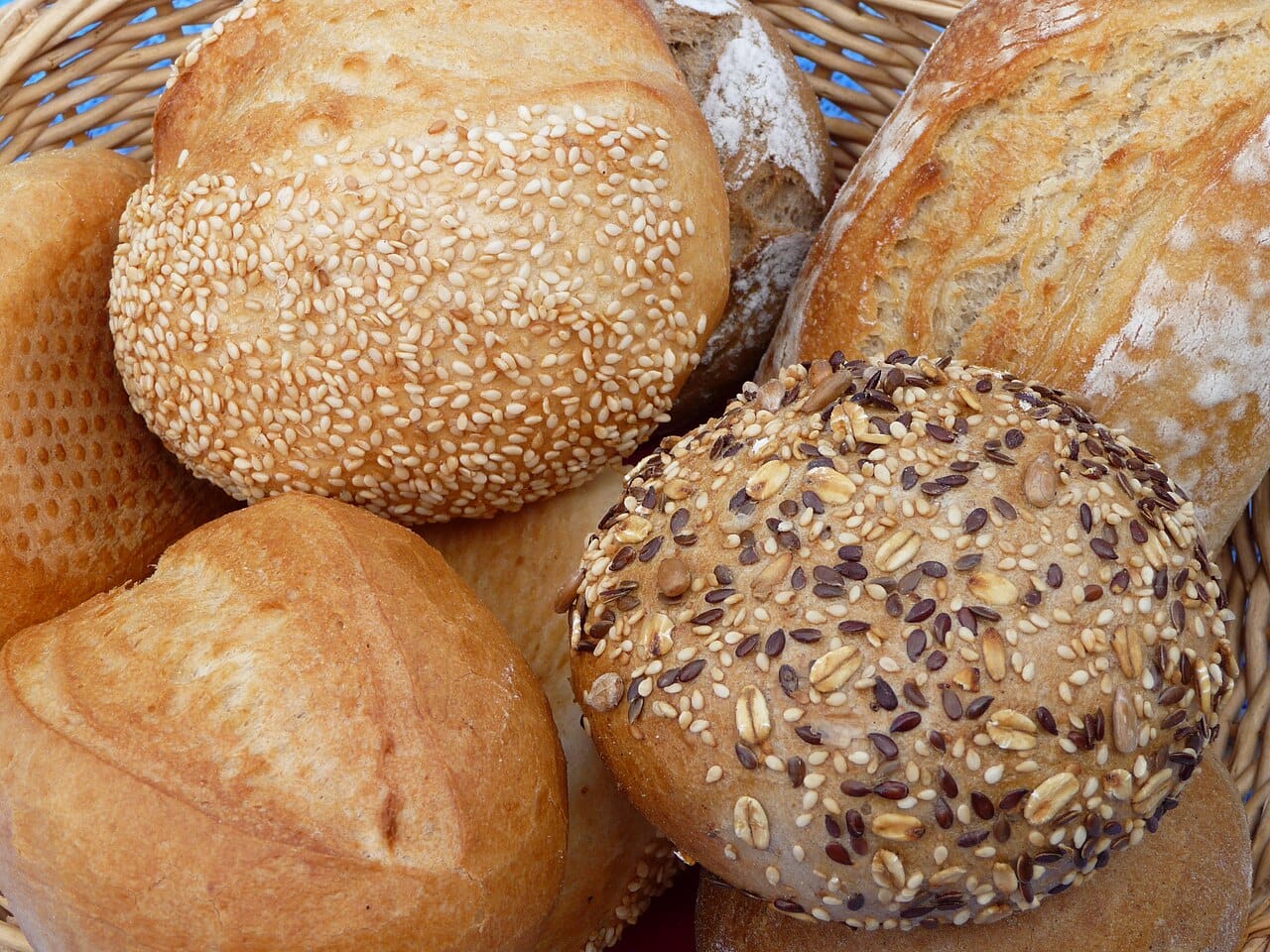
Gluten is elastic and extensible. Kneading develops it into a network that traps gas, which is why wheat dough rises and holds its shape while other grains do not.
Rye contains some gluten-forming protein and less of it, which is why rye bread is denser. Maize, rice, sorghum and millet contain none, which is why breads made from them are flat unless something else provides structure.
This single protein property explains most of the geography of bread. Raised loaves are a wheat phenomenon, and flatbreads are what most of the world's grains produce.
Leavening produces gas within the dough, which the gluten network traps.
Yeast fermentation converts sugars to carbon dioxide and ethanol, as the fermentation capsule describes. The ethanol evaporates during baking.
Sourdough uses a culture of wild yeasts and lactic acid bacteria maintained by regular feeding. The bacteria produce acids alongside the gas, which gives the flavour and also inhibits spoilage, extending keeping time.
Commercial baker's yeast, a selected strain sold in concentrated form, was industrialised in the nineteenth century and makes rising faster and more predictable.
Chemical leavening uses bicarbonate reacting with an acid to release carbon dioxide directly, which requires no time and produces soda bread and most cakes.
Unleavened bread is simply dough baked without gas production, and it is the older form and remains central to several cuisines and to religious observance.
Several processes occur together and each contributes to the result.
Gas expands with heat and the loaf rises rapidly in the first minutes, which is called oven spring.
Yeast is killed as the interior temperature rises, ending fermentation.
Starch gelatinises, absorbing water and setting, which converts a soft dough into a structure that holds.
Gluten proteins coagulate, fixing the network.
The crust forms as the surface dries, and browning occurs through the Maillard reaction between amino acids and sugars, which produces the colour and a large part of the flavour and aroma. Caramelisation of sugars contributes alongside it.
Staling is not simply drying. Starch recrystallises over time in a process called retrogradation, which is why bread firms even when sealed, and why warming a stale loaf temporarily reverses it.
Charred flatbread remains from Jordan have been dated to around fourteen thousand years ago, which is several thousand years before agriculture, so bread predates farming rather than following it.
Egyptian evidence for leavened bread and for the connection between bread and beer is extensive, and the two share the same fermentation and frequently the same production.
Bread became a staple across the Mediterranean, Europe and the Near East, and its supply was a political matter for millennia. Rome distributed grain to citizens, and bread prices have been a recurring trigger of unrest, including in the events preceding the French Revolution.
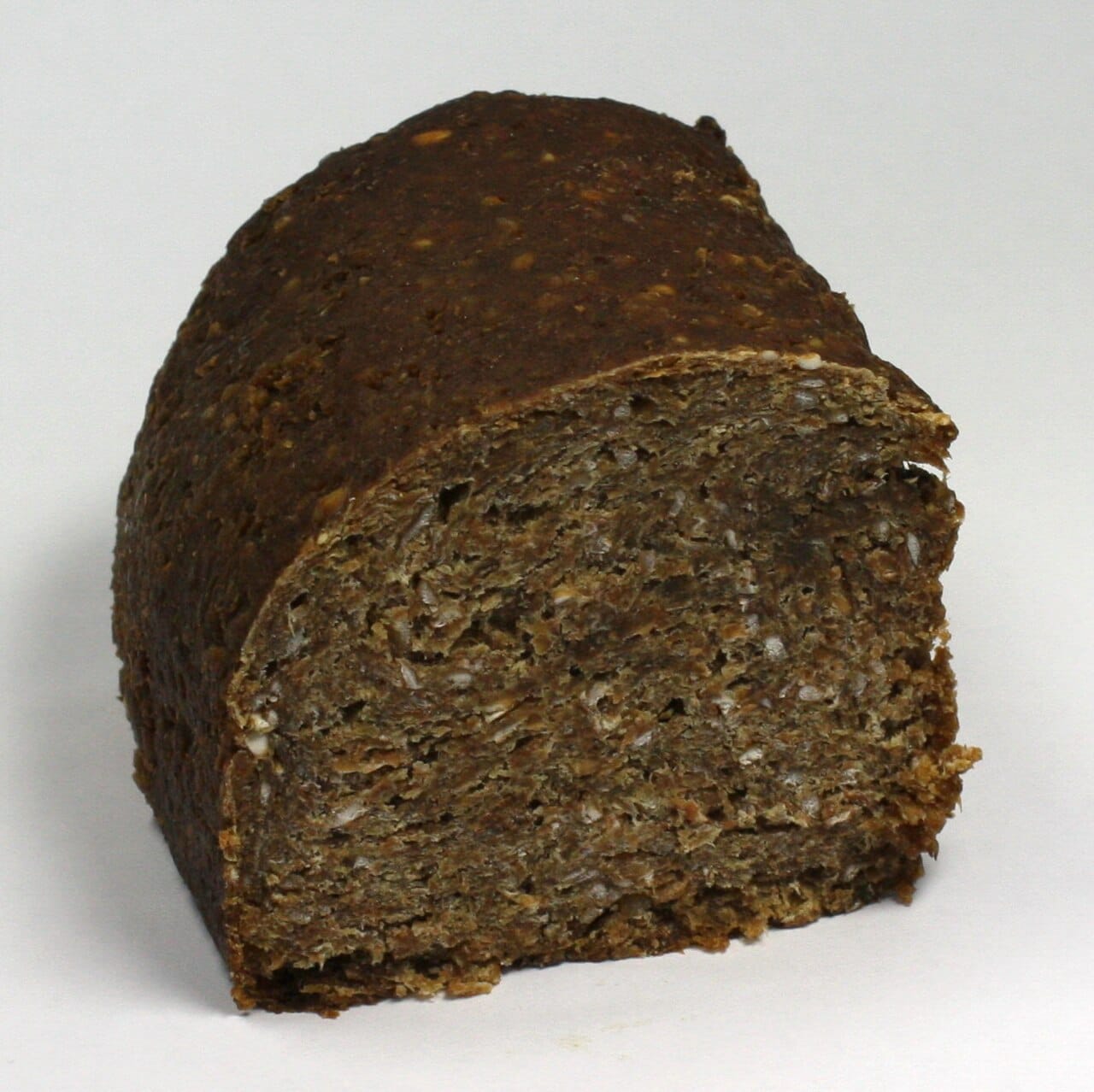
Roller milling from the late nineteenth century made white flour cheap by removing the bran and germ efficiently. This improved keeping quality, since the germ contains oils that go rancid, and removed most of the fibre and several vitamins, which is why flour is fortified in many countries.
Industrial baking processes developed from the 1960s reduced fermentation time from hours to minutes using intense mechanical mixing and additives, which cut cost and is associated with the sliced loaf that dominates several markets.
Whole grain consumption is associated with better health outcomes in large cohort studies, and refined grain with worse, which the dietary fibre capsule treats.
Coeliac disease is an autoimmune response to gluten affecting roughly one per cent of people, is diagnosable, and requires strict avoidance.
Non-coeliac gluten sensitivity is reported far more widely than coeliac disease and is contested. Blinded challenge studies have frequently failed to reproduce symptoms with gluten specifically, and some evidence points to fermentable carbohydrates in wheat rather than to gluten as the cause in many cases.
Long fermentation, as in traditional sourdough, reduces some of those fermentable carbohydrates, which is a plausible mechanism for reports that such bread is better tolerated, and the evidence is limited.
Bread converts grain, which is indigestible raw and stores well, into food that can be eaten immediately, and that conversion underpins the diet of a large share of humanity.
It also demonstrates how much of food technology rests on a narrow biochemical accident. The elastic protein network that makes a raised loaf possible occurs in a small number of grasses, and the entire baking tradition of several continents follows from that.