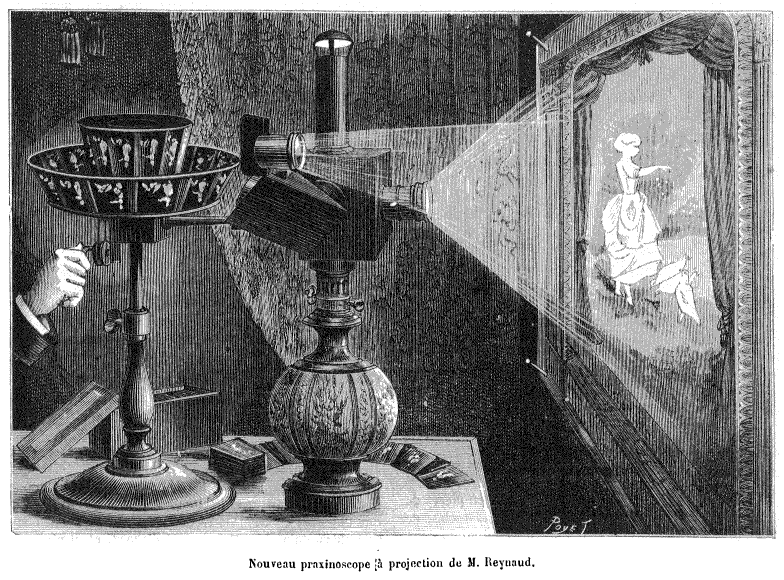
The selection and arrangement of shots into a finished film. It is the operation that distinguishes film from recorded theatre, and the conventions it uses had to be invented and then learned by audiences.
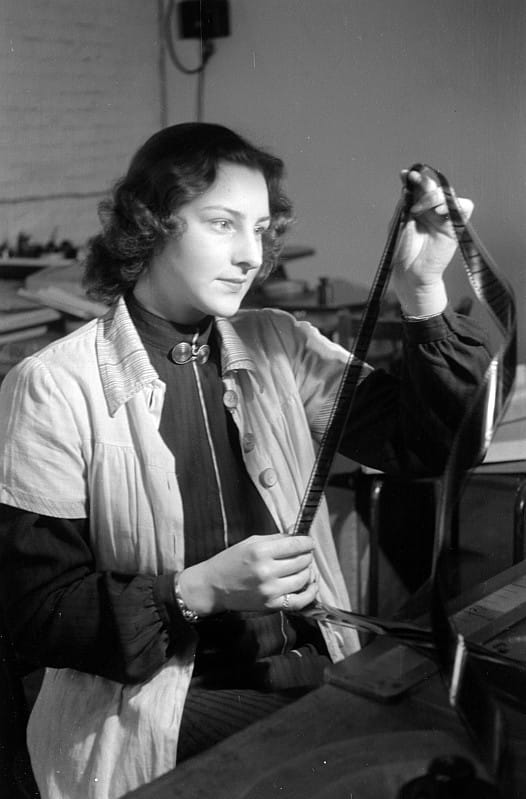
A shot is a continuous run of camera. A film assembles many, and the assembly determines what the audience understands.
Editing performs several functions at once.
It compresses time. A journey can occupy three seconds of screen time, and an audience accepts the omission without difficulty.
It changes viewpoint. Cutting from a wide shot to a close-up directs attention in a way a fixed camera cannot.
It establishes relationships between things filmed separately, which is the most consequential property and is discussed below.
It controls pace and rhythm, which affects the emotional character of a sequence independently of its content.
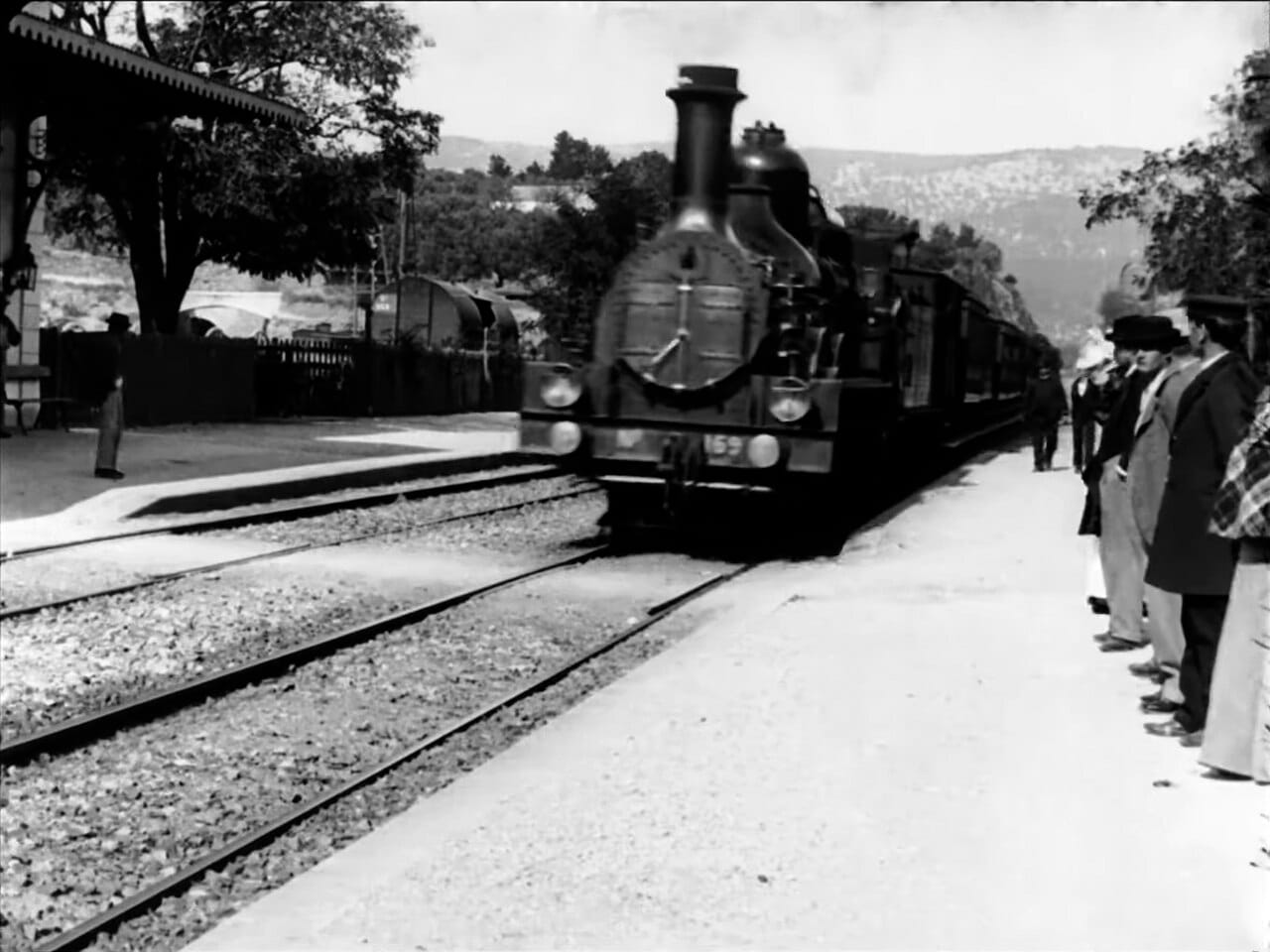
The earliest films were single shots with no editing at all.
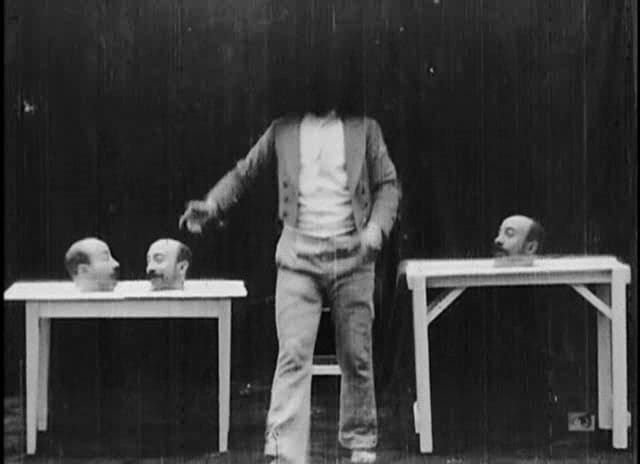
Georges Méliès discovered around 1896 that stopping the camera, altering the scene and resuming produced a substitution the audience read as transformation. This established film as a constructive medium rather than a recording one.
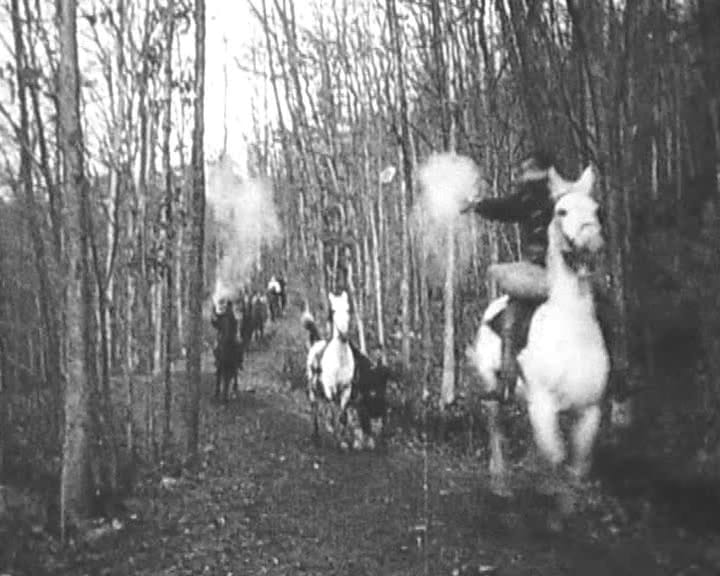
Edwin Porter's The Great Train Robbery in 1903 cut between separate locations, requiring viewers to understand that alternating shots depicted simultaneous action.
D. W. Griffith and others developed the grammar of continuity editing through the following decade: establishing shots, shot and reverse shot for conversation, matching action across a cut, and the eyeline match.
None of this was obvious. Early audiences had to learn that a cut to a close-up did not mean the actor had been decapitated, and the conventions became invisible only through familiarity.
Soviet filmmakers in the 1920s investigated editing systematically and produced the field's most important theoretical result.
The Kuleshov effect, demonstrated by Lev Kuleshov, intercut the same neutral shot of an actor's face with different subsequent shots. Audiences reported the actor expressing hunger, grief or desire depending on what followed, and praised the performance.
The finding is that meaning is produced by juxtaposition rather than residing in the individual shot. The face carried no expression; the audience supplied one from the combination.
Sergei Eisenstein developed the argument into a theory of montage, holding that colliding shots produce ideas that neither contains, and that editing is the medium's fundamental expressive resource.
The opposing position, associated with André Bazin, held that continuous shots preserve the ambiguity of reality and that heavy editing imposes an interpretation. The disagreement between them is the central theoretical argument in the medium.
Continuity editing, the dominant system, arranges shots so that the cuts are not noticed. The rules are specific: match on action, maintain screen direction, respect the line of action so that spatial relationships stay consistent.
The cut is the basic operation, an instantaneous change. Dissolves, fades and wipes mark larger transitions and are used sparingly in most contemporary practice.
The eyeline match cuts from a person looking to what they see, and the audience constructs the spatial relationship.
Cross-cutting alternates between simultaneous actions, and is the standard method of building tension.
The jump cut removes a portion of a continuous shot, breaking continuity deliberately. It was regarded as an error before Godard used it prominently in 1960, and it is now ordinary in documentary and online video.
Montage in the popular sense, a compressed sequence summarising a process, is a different use of the word from Eisenstein's.
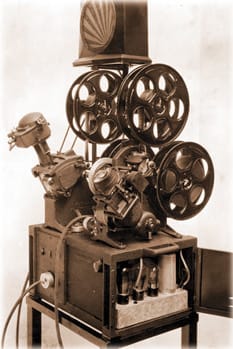
Editing was physical for most of the medium's history. Film was cut and joined, and the terminology of cutting, splicing and trimming is literal.
The vocabulary persists in digital editing, which is non-destructive: decisions are recorded rather than performed, and any version can be revisited.
The practical consequence is a large increase in the number of versions tried, and average shot lengths in mainstream film have fallen substantially over recent decades, which has been measured and is attributed partly to the ease of cutting.
Editing has been a field with unusually high representation of women from the earliest period, in contrast to most technical film roles, and several of the most influential editors in the medium's history have been women.
Editing is where a film is actually made. The same footage assembled differently produces a different film, and the decisions are largely invisible to the audience by design.
The Kuleshov effect also carries beyond cinema. It demonstrates that viewers construct meaning from juxtaposition rather than receiving it, which is directly relevant to how images are used in news, advertising and documentary.