Dating events and objects by counting and matching the annual growth rings of trees. It is the most precise dating method available for the last several thousand years, giving results accurate to a single year.
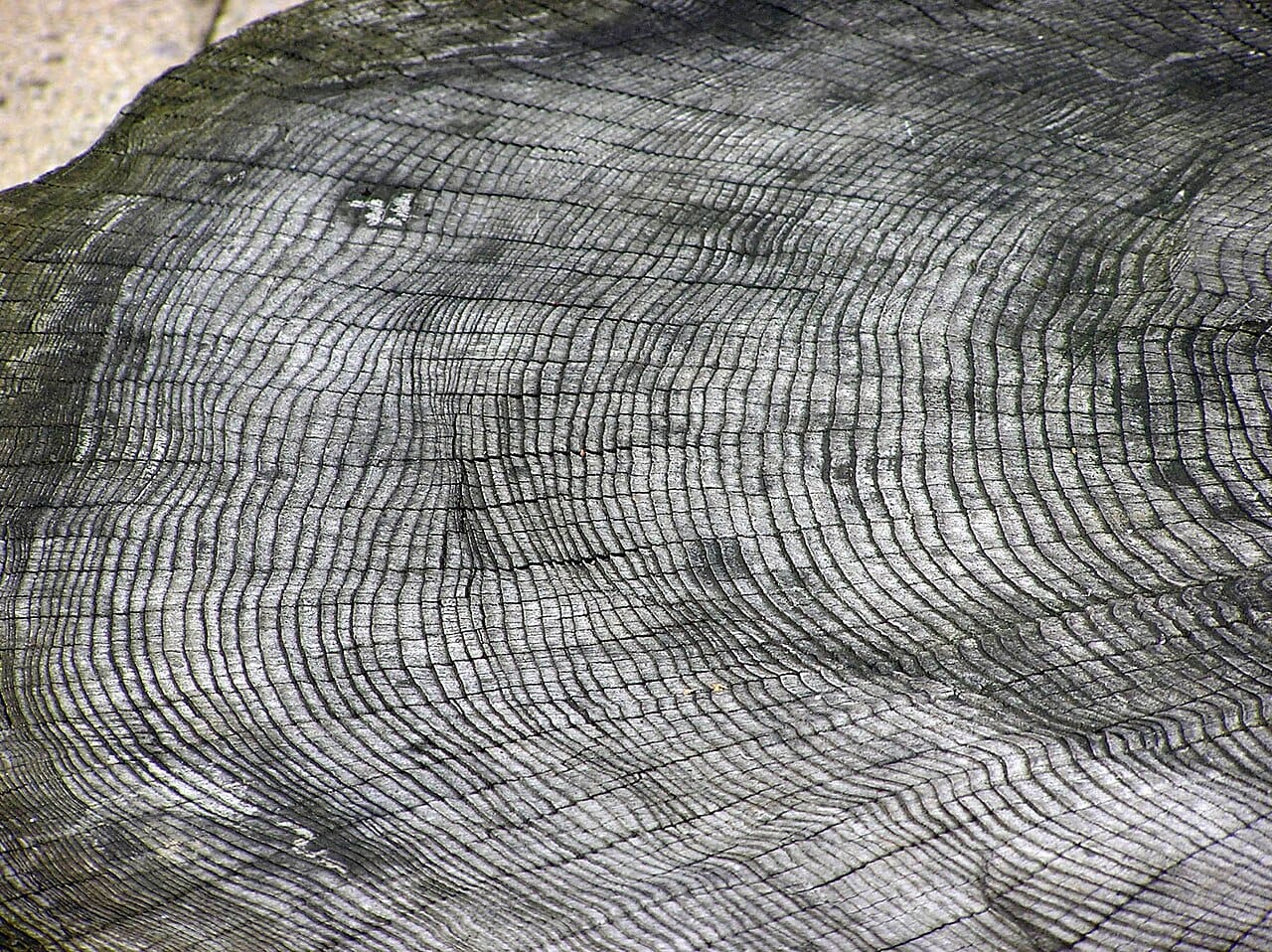
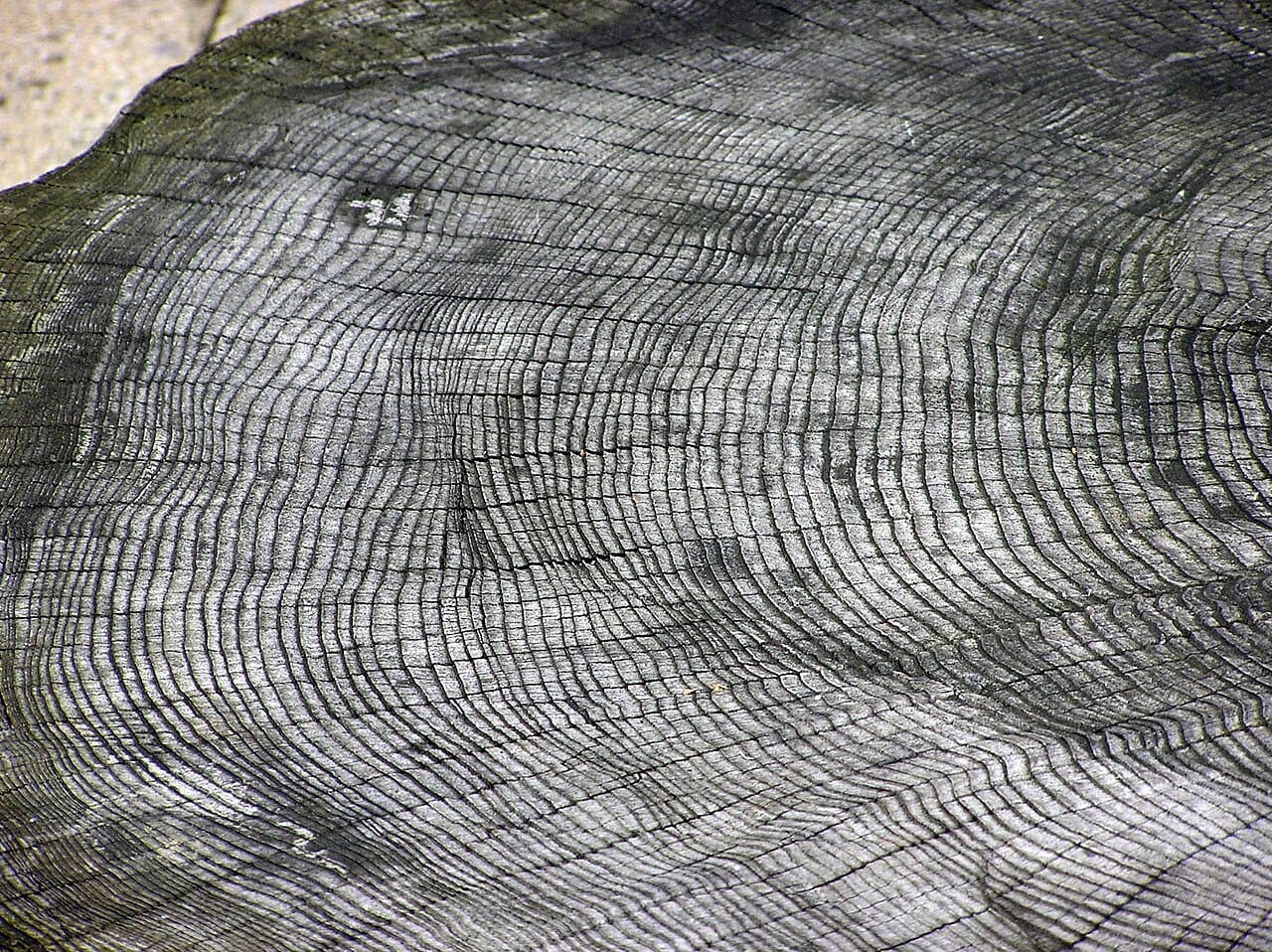
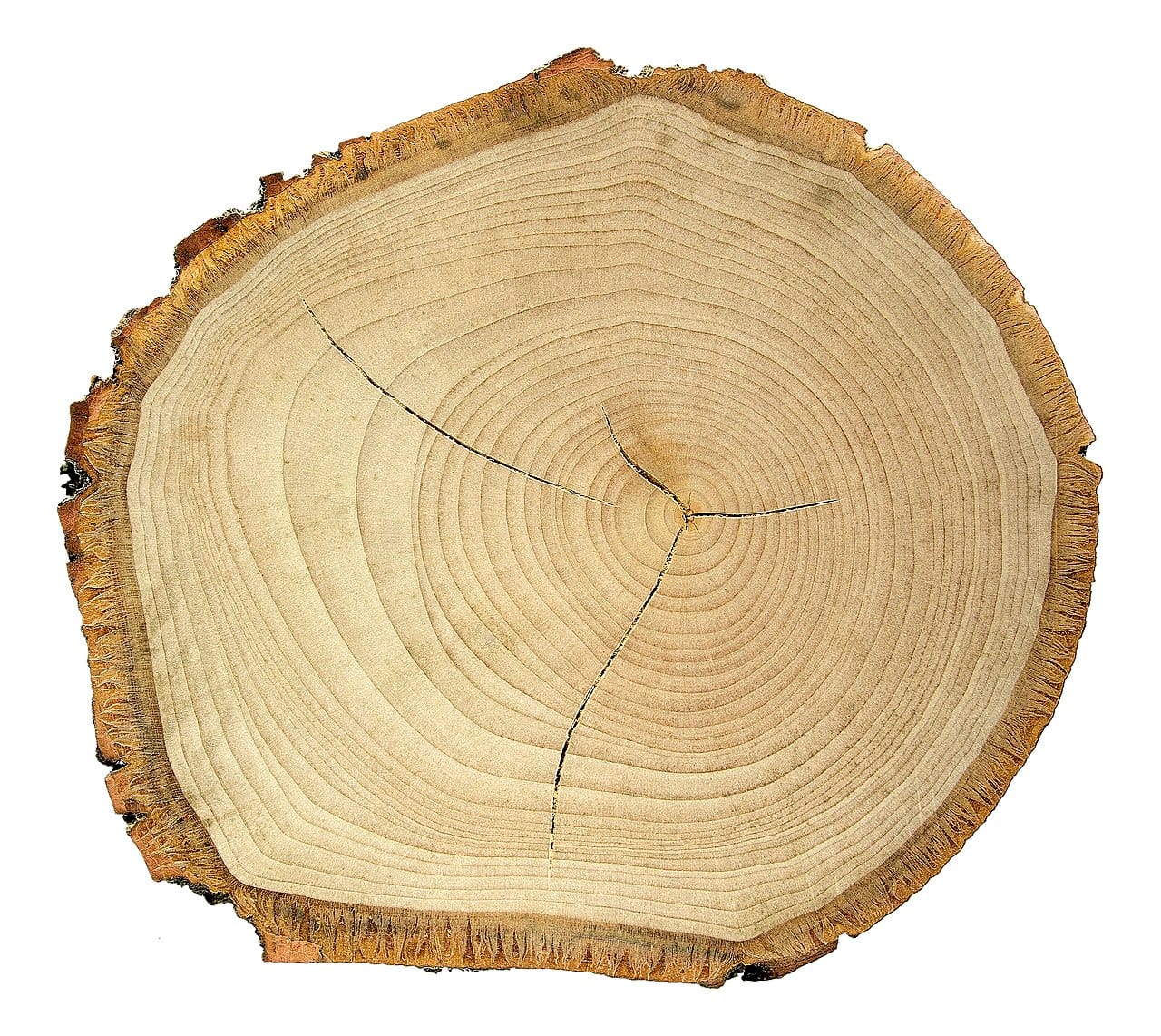
A tree in a seasonal climate grows quickly in spring, producing large thin-walled cells that appear light, and slowly later in the season, producing dense dark cells. One light and dark pair is one year.
Ring width varies with growing conditions. A year with favourable temperature and moisture produces a wide ring, a poor year a narrow one. Because trees in a region experience the same weather, they share a pattern of wide and narrow rings.
That shared pattern is what makes the method work. It is not the count alone but the sequence, which acts as a signature for a span of years in a region.
The technique, developed by the astronomer Andrew Ellicott Douglass in the early twentieth century, is called cross-dating.
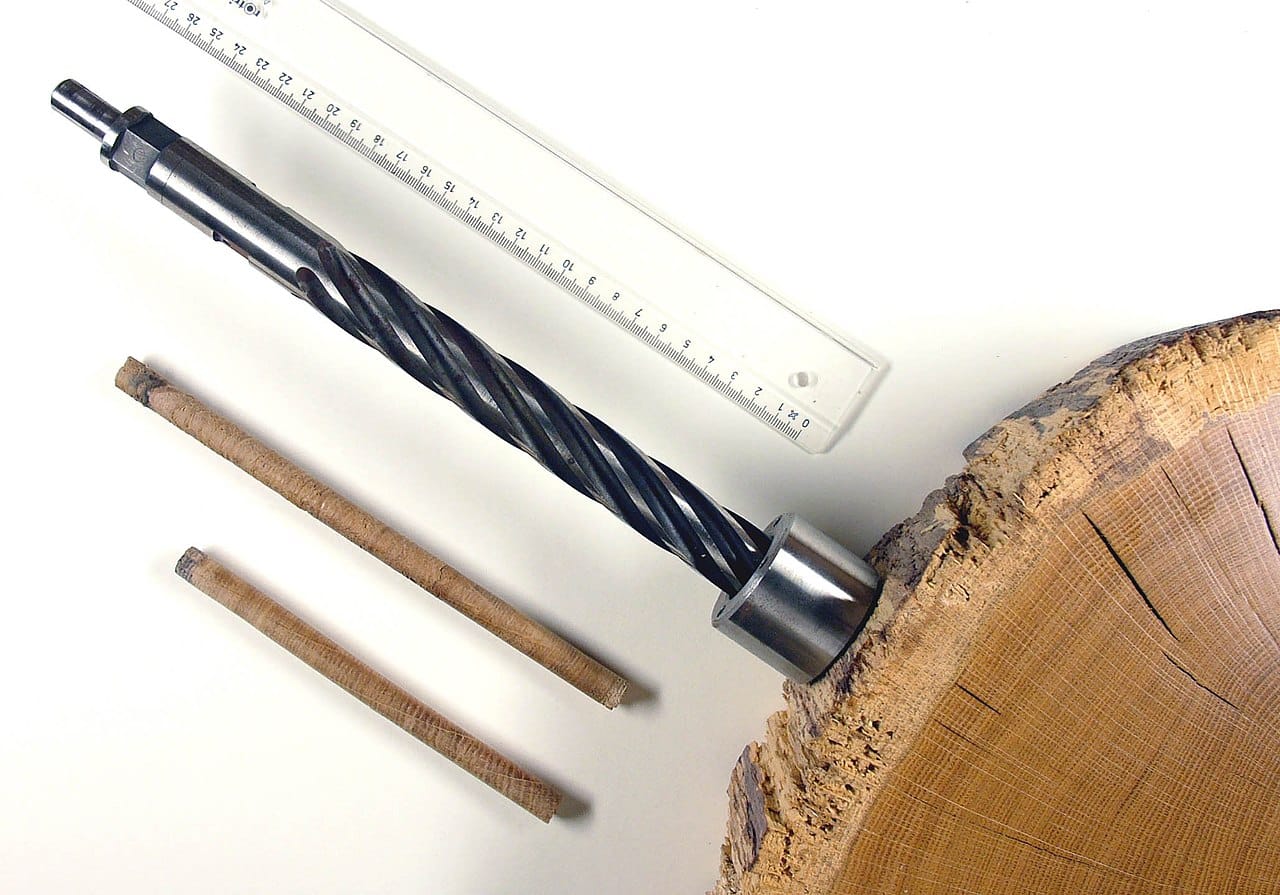
A living tree gives an absolute anchor, since its outermost ring is the current year. Its inner rings are matched against the outer rings of older timber, which overlaps in turn with still older material, and the chain is extended backwards.
The result is a master chronology for a region and species. European oak chronologies now extend continuously for more than ten thousand years, and bristlecone pine chronologies in the American southwest reach comparable depth.
Any piece of wood from that region can then be dated by matching its ring pattern to the master sequence.
The precision is the method's distinguishing feature. Where the outermost ring under the bark survives, dating is exact to the year and sometimes to the season, which no other method for this period approaches.
Archaeology and architecture. Timbers in buildings, ships, panel paintings and musical instruments can be dated, which establishes construction dates directly rather than by inference from style. Many medieval European buildings are dated this way.
Calibrating radiocarbon dating. Radiocarbon measures time in a way that assumes a constant atmospheric concentration of carbon-14, and that assumption is false. Tree rings supply wood of exactly known age, whose carbon-14 content can be measured, producing the calibration curve that converts a radiocarbon measurement into a calendar date. Radiocarbon dating in its modern form depends on dendrochronology.
Climate reconstruction. Ring widths, and the density and isotopic composition of the wood, record temperature and moisture, providing annually resolved climate records that extend well before instruments.
Volcanic and solar events. Frost damage rings and abrupt growth suppression mark severe years, and spikes of carbon-14 in individual rings have identified extreme solar particle events, including one dated precisely to 774 and 775.
The method works only where growth is seasonal. Tropical trees often grow continuously and produce no annual rings, which excludes much of the world.
It requires enough rings. A short piece of timber with too few rings has no distinctive pattern to match.
The species and region must have a master chronology, and building one takes decades of work.
Missing and false rings occur. A severe year may produce no ring at all, and a drought followed by regrowth can produce two in one year. Cross-dating against many trees is what detects and corrects these.
Reuse of timber complicates archaeology. A dated beam gives the felling date of the tree, not necessarily the date of the structure, since old timber was frequently salvaged and reused.
Dendrochronology provides the only absolutely dated, annually resolved record covering the whole of recorded history and beyond, and it is the calibration on which the most widely used archaeological dating method depends.
It also demonstrates a general principle in dating: a method that produces a distinctive pattern is more powerful than one that produces a single number, because a pattern can be matched uniquely while a number can only be compared.