The element that forms the backbone of all known life, occurs as both the hardest common substance and one of the softest, and forms more compounds than every other element combined. Its chemistry follows from one fact about its atoms.
Carbon has four electrons in its outer shell and needs four more to fill it, so it forms four bonds. Two consequences follow, and between them they account for nearly everything.
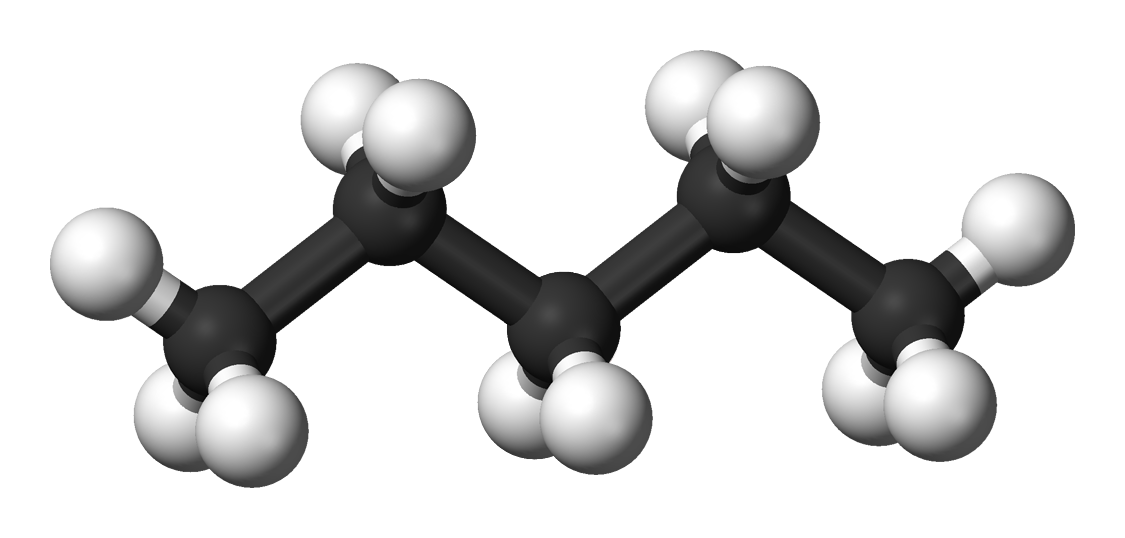
It bonds strongly to itself. Carbon to carbon bonds are stable enough to form chains, branches and rings of essentially unlimited length, which almost no other element manages to the same degree.
It bonds readily to hydrogen, oxygen, nitrogen, sulfur and phosphorus, all of which are common and light. So carbon skeletons can carry a wide variety of chemically active groups.
The result is that more than ten million carbon compounds are known, far more than the total for all other elements, and the study of them is a separate discipline.
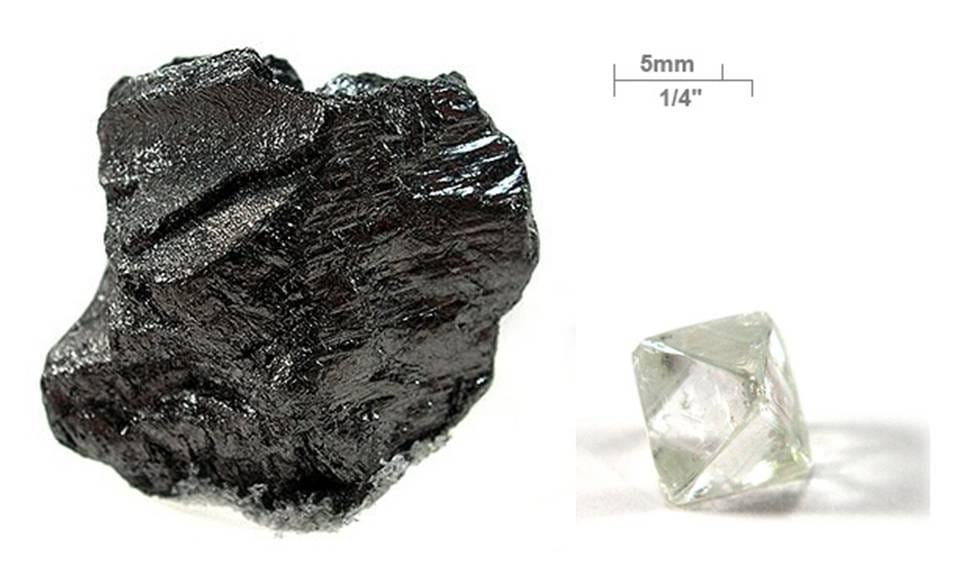
Diamond has each atom bonded to four others in a rigid three-dimensional lattice. It is the hardest naturally occurring material, does not conduct electricity, and conducts heat better than any other bulk substance at room temperature.
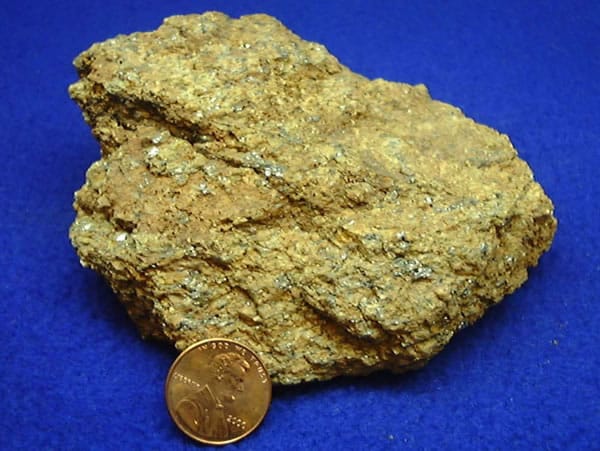
Graphite has each atom bonded to three others in flat sheets, with weak forces between sheets. The sheets slide over one another, which makes it soft and a good lubricant, and the fourth electron is delocalised within each sheet, which makes it conduct.
That two substances so different are the same element, differing only in arrangement, is the classic demonstration of what structure does in chemistry.
Other forms are more recent. Fullerenes, closed cages of sixty or more atoms, were identified in 1985. Carbon nanotubes are rolled sheets with exceptional strength along their length. Graphene, a single sheet of graphite one atom thick, is treated in its own capsule. Amorphous forms include soot and charcoal.
Every known living thing is built on carbon compounds. Proteins, nucleic acids, carbohydrates and fats are all carbon skeletons carrying other atoms.
Whether life must be carbon-based is a genuine question rather than a settled one. Silicon sits below carbon and also forms four bonds, but silicon to silicon bonds are much weaker, silicon dioxide is a solid rather than a gas so it cannot be exhaled, and no comparable variety of silicon compounds exists. On present evidence carbon is not merely the element life happened to use but the one best suited to the job.
Carbon moves continuously between the atmosphere, the oceans, living things and rock.
Photosynthesis removes carbon dioxide from the air and builds it into sugars. Respiration and decay return it. Dissolved carbon dioxide in the oceans exchanges with the atmosphere and is incorporated into carbonate shells, which settle and become limestone.
The slow part of the cycle, involving rock, operates over millions of years, and it holds by far the largest share of the planet's carbon. Fossil fuels are carbon that photosynthesis removed from the atmosphere over hundreds of millions of years, and burning them returns it in a period measured in centuries. That imbalance is the mechanism of anthropogenic climate change, treated in its own capsules.
Steel is iron with a small and carefully controlled amount of carbon, typically well under two per cent, and the amount determines hardness and brittleness. Carbon fibre supplies stiffness at low weight. Activated charcoal, with an enormous internal surface area, adsorbs contaminants and is used in filtration and in medicine.
Carbon-14, a radioactive isotope produced in the upper atmosphere, decays at a known rate and is the basis of radiocarbon dating, treated separately.
Carbon is the fourth most abundant element in the universe by mass, after hydrogen, helium and oxygen, and it is made inside stars by the fusion of three helium nuclei.
Carbon is the element around which both biology and a large part of industry are organised, and its two familiar forms are the standard teaching example that arrangement, not composition alone, determines what a material is. It is also the element at the centre of the largest environmental problem of the present century, which makes its cycle a matter of policy as well as of chemistry.