William Harvey demonstrated in 1628 that blood circulates in a closed loop driven by the heart. He proved it by measurement, against a doctrine that had stood for fourteen hundred years, and the argument he used is a model of how a quantitative claim can settle a question that observation alone had not.
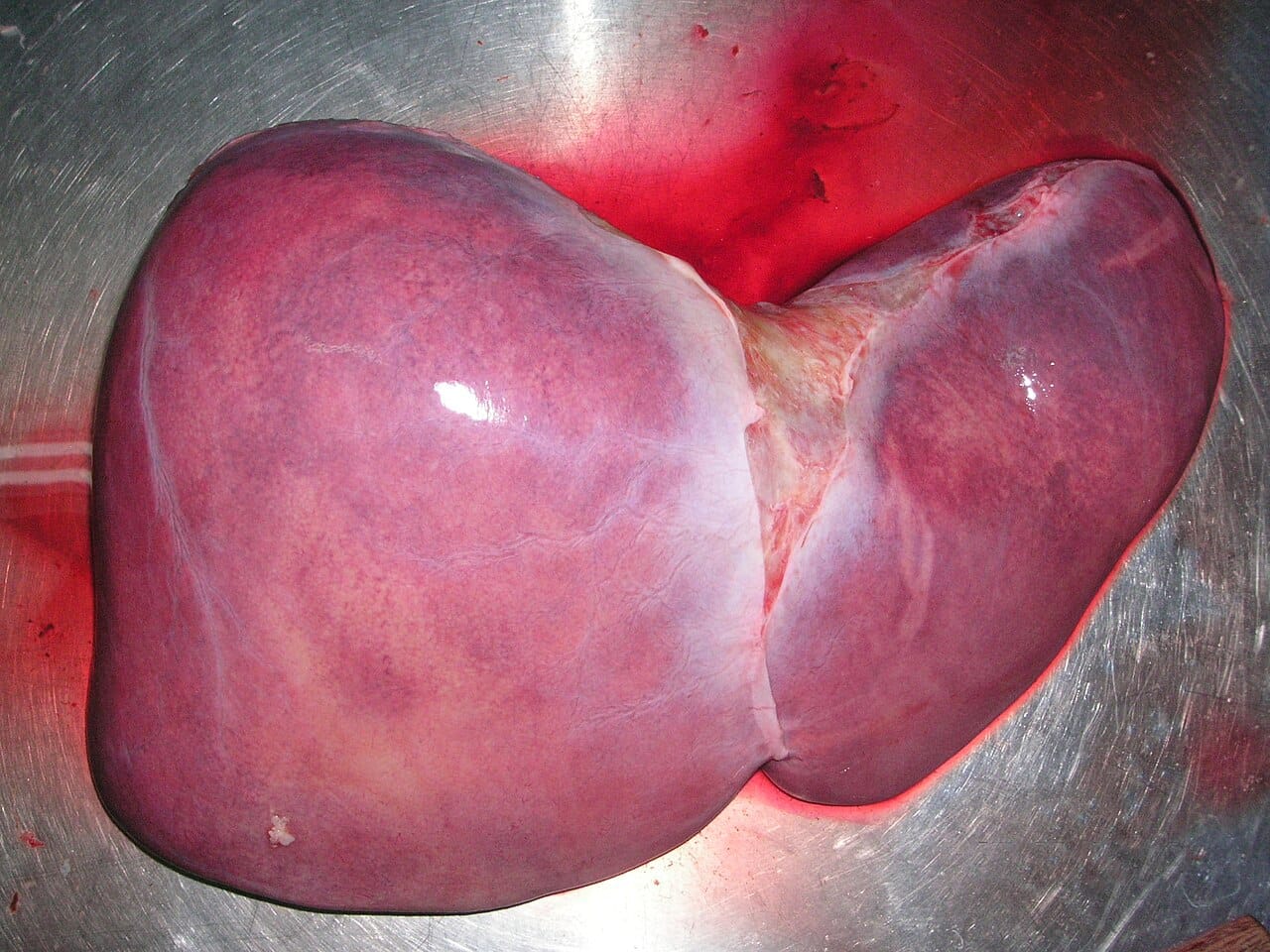
Galen, writing in the second century, held that blood was manufactured continuously in the liver from digested food, travelled outward through the veins, and was consumed by the tissues. Two separate systems existed: venous blood carrying nourishment, and arterial blood carrying a vital spirit from the lungs. Blood passed between the heart's ventricles through invisible pores in the dividing wall.
This was taught essentially unchanged for fourteen centuries. Its authority was such that Andreas Vesalius, who dissected carefully in the 1540s and could find no pores in the septum, published the observation while assuming the fault was his own.
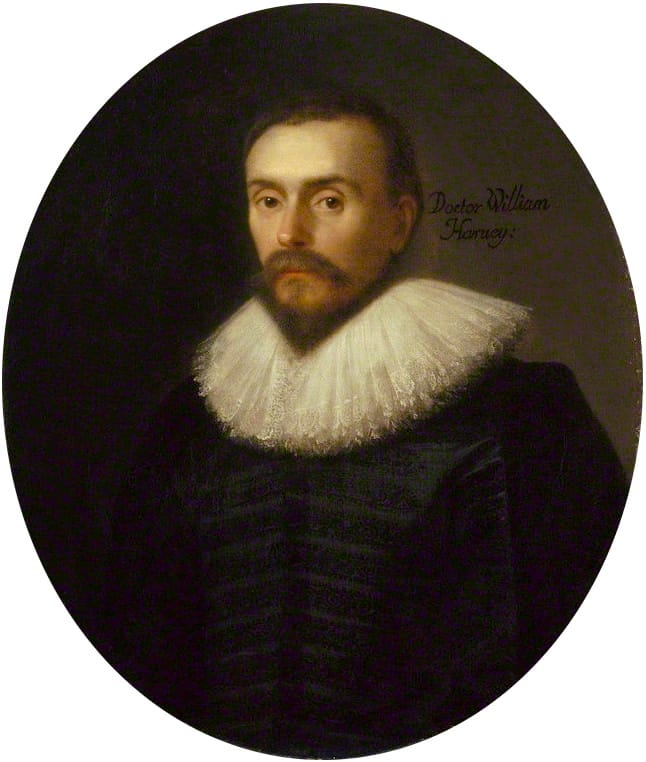
Harvey's decisive argument was arithmetic, and it is worth following because it required no instrument at all.
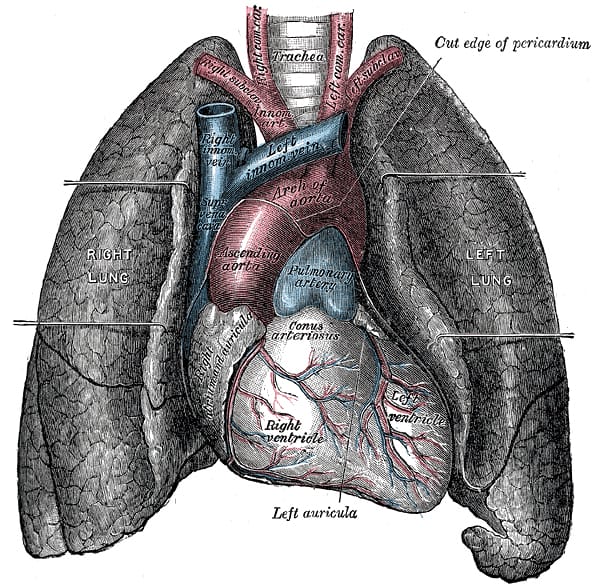
He estimated the volume the left ventricle ejects with each beat, took a conservative figure, and multiplied by the pulse rate. Even on the most cautious assumptions the heart pushes out something like the body's entire blood volume every few minutes, and many times the body's weight in blood each day.
No liver could manufacture that from food, and no tissue could consume it. The quantity was impossible. Therefore the blood must be the same blood, returning and passing through again.
This is the first application of quantitative reasoning to settle a physiological question, and it is the reason the work is regarded as the beginning of modern physiology rather than merely a correction to Galen.
Harvey supported the calculation with experiments anyone could repeat.
He tied a ligature on an arm tightly enough to stop arterial flow, and the arm below went pale. Loosened to stop only the veins, the arm swelled and the veins below the ligature filled while those above emptied. Blood was evidently entering by the arteries and leaving by the veins.
He pressed blood along a surface vein away from the heart and showed that it would not refill until the pressure was released, then showed that the same manoeuvre toward the heart worked freely. The valves in the veins, described by his teacher Fabricius but interpreted as slowing an outward flow, in fact permit movement in one direction only, toward the heart.
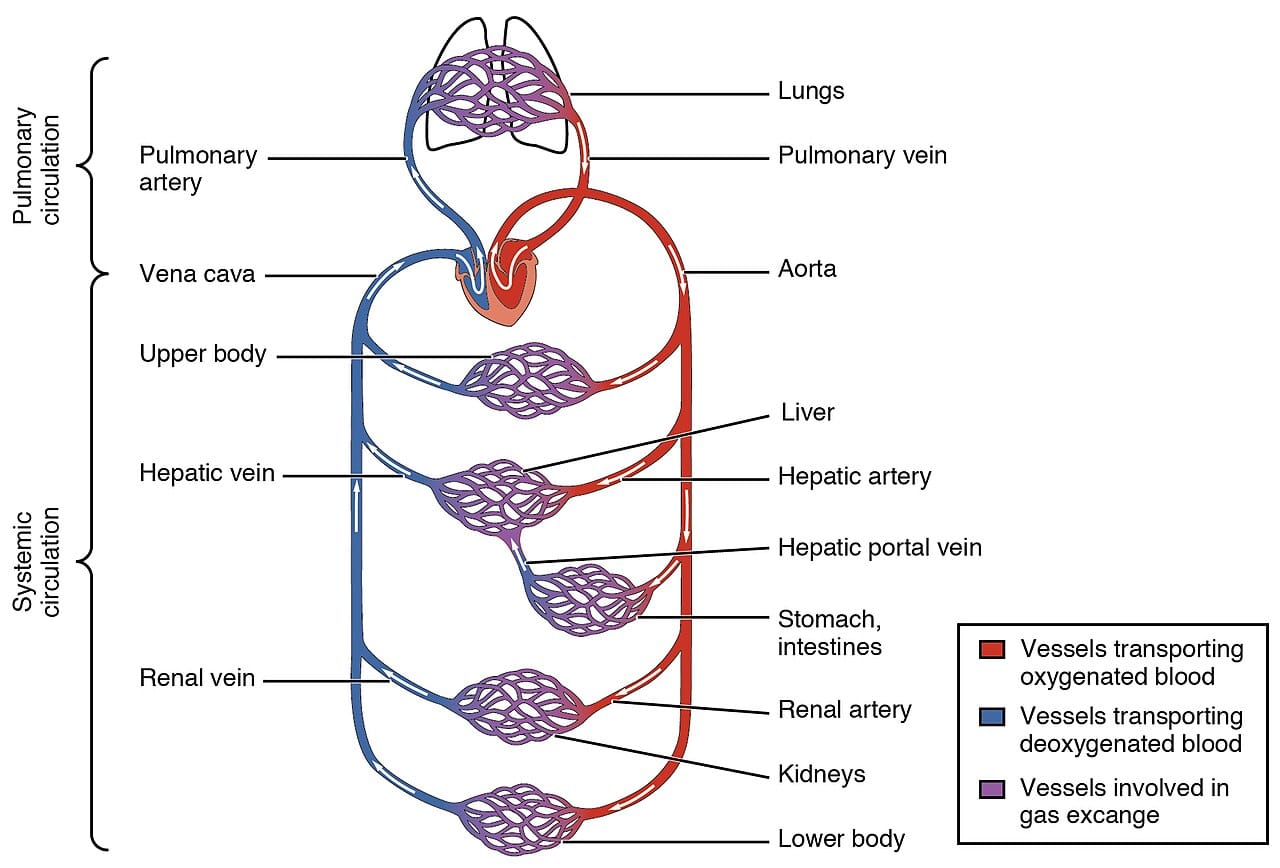
He also observed hearts in living animals of many species, including cold-blooded ones whose slower beat let him see the sequence of contraction directly.
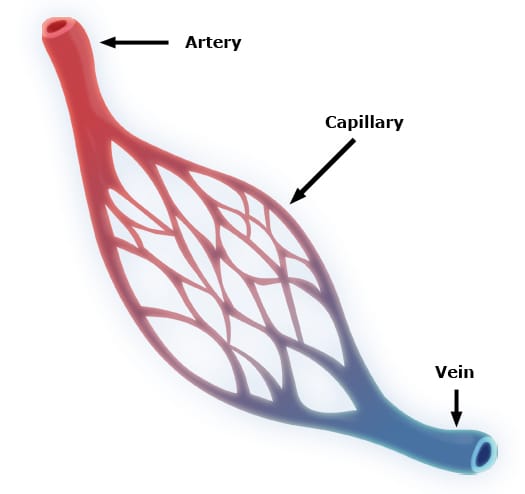
Harvey could not show how blood passes from arteries to veins. He argued it must happen through channels too small to see, and said so honestly, which was the weakest point in his case and the one his opponents pressed.
Marcello Malpighi found the channels in 1661 with a microscope, observing capillaries in a frog's lung. Harvey had died four years earlier. The inference from necessity was confirmed by observation within a generation.
Badly, at first. Harvey wrote later that his practice fell off after publication and that he was thought crack-brained. Jean Riolan, the leading Paris anatomist, attacked the work and Harvey replied at length.
Acceptance came within his lifetime nonetheless, which was fast for a claim overturning fourteen centuries of teaching. The demonstrations were reproducible and the calculation was hard to argue with, and those two properties did the work.
Circulation is the precondition for almost all of modern medicine. Intravenous administration, transfusion, anaesthesia, cardiac surgery and the whole concept of a drug distributed through the body by the blood require it to be true and known.
It also changed the standard of evidence. Harvey's method, measure the quantity and see whether the explanation can accommodate it, is now ordinary. It was not, and its introduction into medicine is arguably a larger contribution than the finding itself.