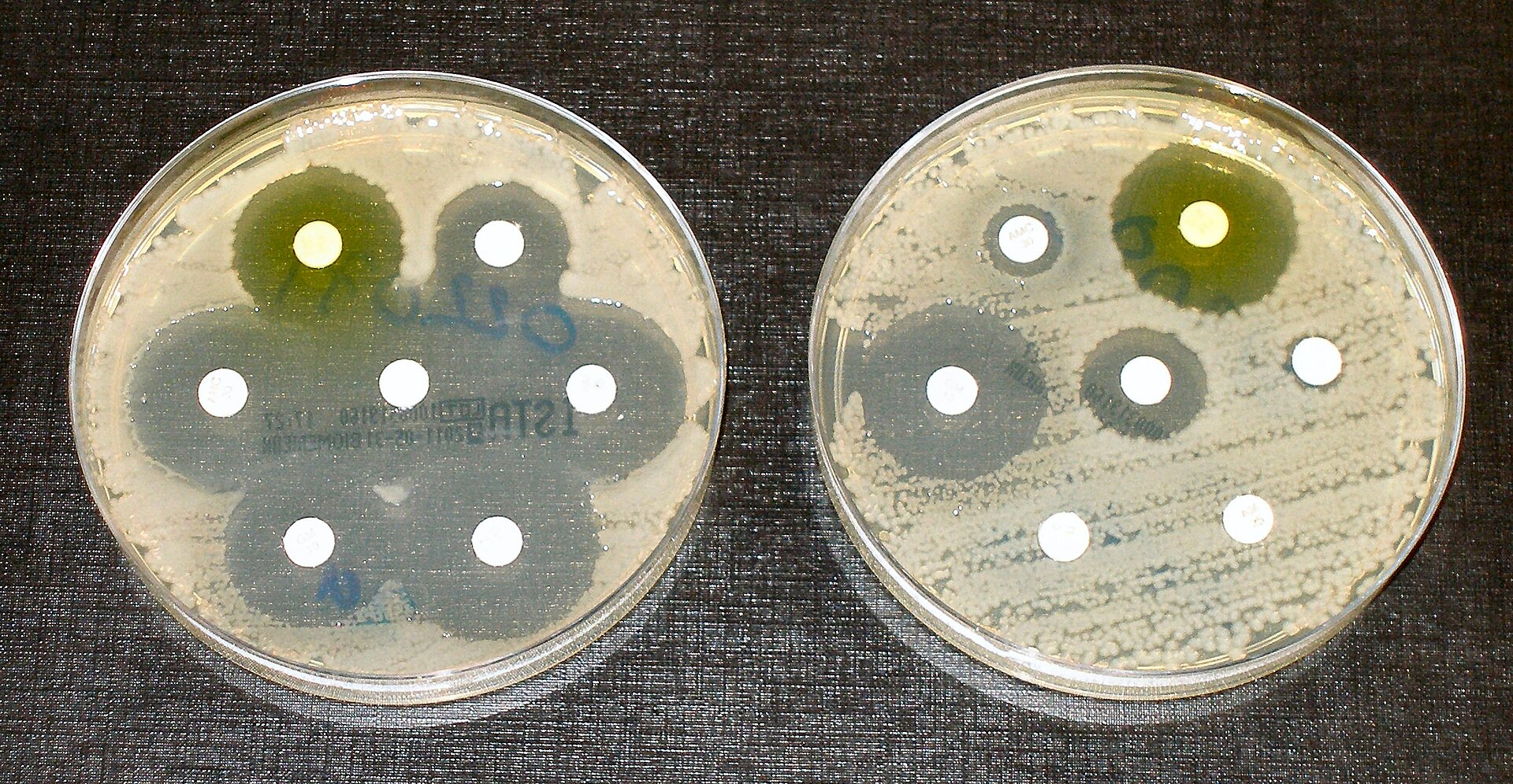
Antibiotic resistance is the ability of bacteria to survive the drugs designed to kill them. It is one of the most direct and observable examples of evolution by natural selection at work, unfolding in real time in hospitals and laboratories around the world. It is also one of the most serious threats to modern medicine, because the drugs that once reliably cured deadly infections are steadily losing their power.
When a population of bacteria is exposed to an antibiotic, most are killed, but any individual that happens to carry a trait allowing it to survive will live and reproduce. Its resistant descendants soon dominate. This is natural selection in its purest form, and it can be watched directly: in the laboratory, bacteria visibly evolve resistance within days, and the process has been filmed and measured countless times. There is no clearer proof that evolution happens.
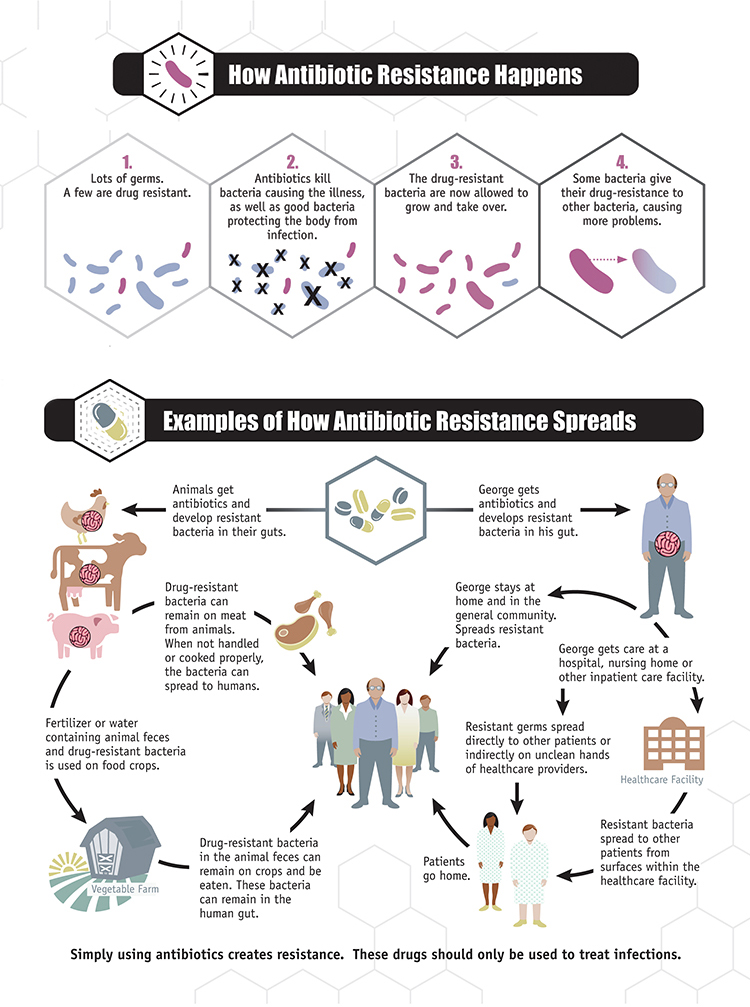
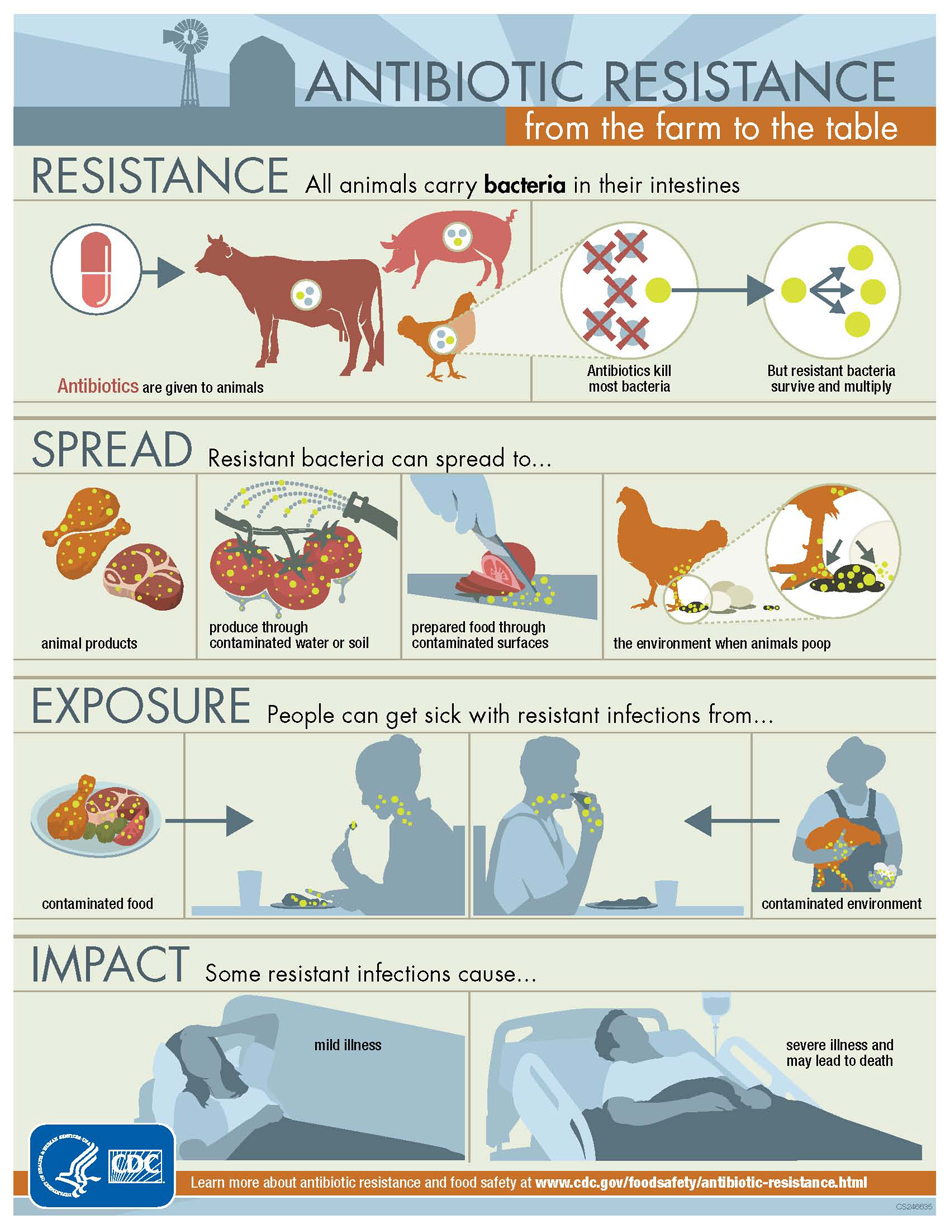
Resistance appears through random genetic changes and, crucially, can be passed directly between bacteria, even between different species, through small loops of shared DNA. This means resistance can spread far faster than ordinary inheritance would allow. The widespread and sometimes careless use of antibiotics, in medicine and in farming, dramatically speeds the process by constantly killing off the vulnerable bacteria and leaving the resistant ones to multiply.
The consequences are already serious. Some bacteria have become resistant to nearly every available drug, producing infections that are extremely difficult to treat. Once routine procedures, from surgery to chemotherapy, depend on antibiotics to prevent infection, and their weakening endangers all of modern medicine. Health authorities around the world regard antibiotic resistance as one of the great public health challenges of the age.
Resistance cannot be stopped entirely, because it is driven by evolution itself, but it can be slowed. Using antibiotics only when genuinely needed, finishing prescribed courses, reducing their use in agriculture, and developing new drugs all help. Understanding the problem as a matter of evolution is the key to managing it, since every unnecessary dose is, in effect, a lesson that teaches bacteria to survive.
Antibiotic resistance is both a practical crisis and a profound demonstration. The same process that shaped life over billions of years can be seen playing out in a petri dish over a weekend, a reminder that evolution is not only a theory about the distant past but an observable, measurable fact about the living world today.