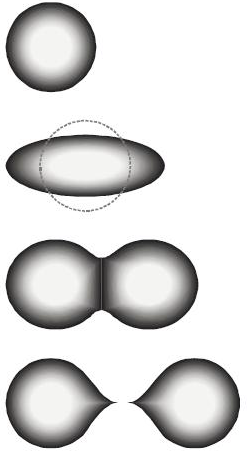
Radioactive Decay
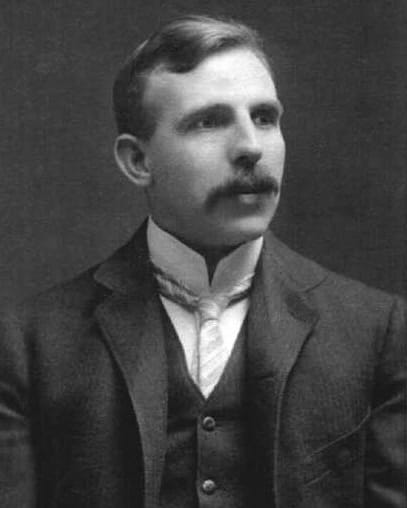
Radioactive decay is the process by which unstable atomic nuclei spontaneously break down, releasing energy and particles and transforming into other…
Matching your filter
Radioactive decay is the process by which unstable atomic nuclei spontaneously break down, releasing energy and particles and transforming into other…
The bending of starlight is the deflection of light by gravity, predicted by Einstein's general theory of relativity and confirmed during a solar…
Superconductivity is a remarkable state in which certain materials, when cooled below a critical temperature, conduct electricity with absolutely no…
The Higgs boson is a fundamental particle whose discovery in 2012 confirmed how other particles acquire mass. Long predicted but famously hard to…
The neutrino is a tiny, almost massless subatomic particle that barely interacts with anything, streaming through matter, and through us, in…
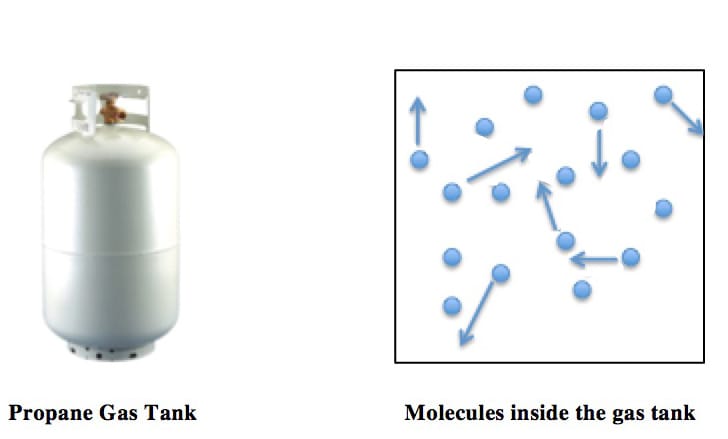
Brownian motion is the random, jittery movement of tiny particles suspended in a fluid, caused by their constant bombardment by the fluid's…
The photoelectric effect is the release of electrons from a material when light shines on it. Simple to observe yet impossible to explain with older…
Gravitational waves are ripples in the fabric of space and time, set off by some of the most violent events in the universe. Predicted by Einstein a…
The Coriolis effect is the apparent deflection of moving objects, such as air and water, when viewed from a rotating frame like the spinning Earth.…
The Doppler effect is the change in the observed frequency of a wave when its source and the observer move relative to each other. It is why the…
Newton's laws of motion are three principles, set out by Isaac Newton in 1687, that describe how objects move under the action of forces. For more…
The conservation of mass is the principle that, in any ordinary physical or chemical change, matter is neither created nor destroyed. The total mass…
The law of conservation of energy states that energy cannot be created or destroyed, only changed from one form into another. The total amount of…
The speed of light in a vacuum is a fixed, fundamental constant of nature, equal to about 299,792 kilometres per second. It is the fastest speed at…